The SA Joint Wellness Blog
The SA Joint Wellness Blog Facebook ad: “At 52, I was averaging three hours of sleep a night.”
Ran for 36 days, from August 7 to September 12, 2026, the last day Crush saw it.
Run by The SA Joint Wellness Blog on Facebook. Crush is not the advertiser and does not verify its claims. See this ad in Meta's Ad Library(opens in a new tab)
Want an ad like this for your product?
Crush makes new ad images for your product from this ad: your logo, your product photo, your offer.
Trials from $19.95 USD, then $79.95 USD a month. Cancel anytime.
About this ad
- Meta Ad Library ID
- 28477267608532814
- Platforms
- Facebook, Instagram, Audience Network, Messenger, WhatsApp and Threads
- Relaunches
- 0
Ad text
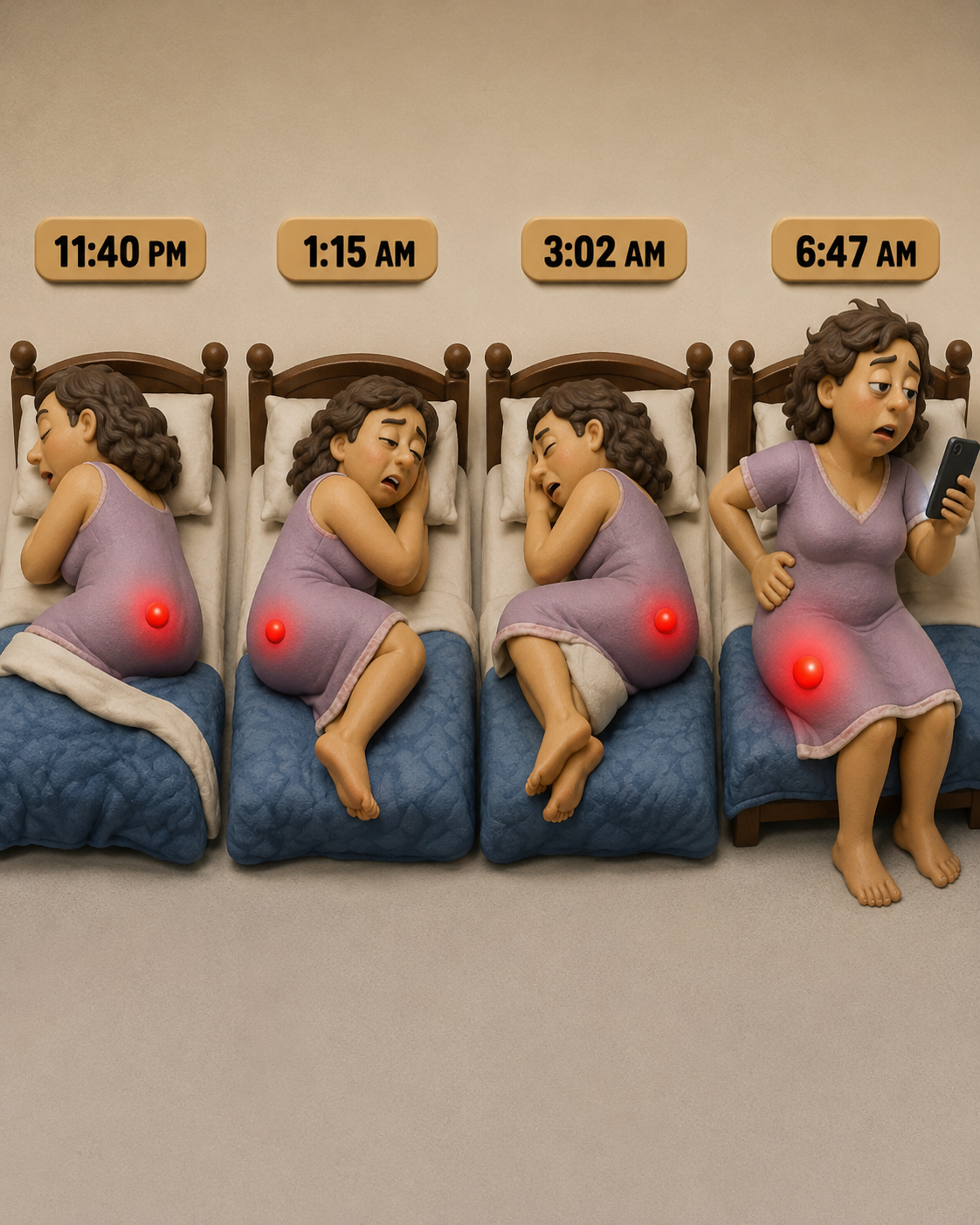
At 52, I was averaging three hours of sleep a night. Not by choice — because of the stabbing discomfort in my hip that hit every time I rolled over. If you're one of the countless women whose hip is stealing your sleep, what I'm about to share could change everything. Because what gets called "arthritis" or "normal ageing" may be something else entirely. I'm 54 now, and for three years I fought a hip nobody could properly explain. It started small — an ache on the outside of my hip after my morning walks. The kind of thing you brush off. Slept wrong. Need new shoes. Finally feeling my age. But it didn't go away. It got worse. It started waking me at night. I'd lie on my left side and within minutes a deep burning pressure would build, like someone slowly pressing a thumb into the bone, harder and harder until I couldn't take it. I'd flip to my right. Twenty minutes later, the same. Flip again. Left. Right. Stare at the ceiling. My husband started calling me a rotisserie chicken. I laughed the first few times. By month four I wanted to throw my pillow at his head. Here's what nobody tells you about ongoing discomfort. It's not just the discomfort — it's everything it takes from you. By month six I was getting maybe three hours of broken sleep and dragging myself up feeling like I'd aged twenty years overnight, ten minutes of shuffling around the bedroom before I could walk normally. Stairs became something I had to psych myself up for. I stopped my Thursday morning yoga. Cancelled on my sister's birthday dinner. Skipped my nephew's soccer because the metal stands were agony and standing on the sideline wasn't much better. I became the woman who always had a reason she couldn't come. That wasn't who I was — I used to be the one dragging everyone out, first on the dance floor, last to leave. I once spent a whole day walking a market from one end to the other just because I didn't want to miss anything. Now people had learned to stop inviting me. And the nights were the worst. I'd lie in the dark, mind spinning, convinced something was seriously wrong. I'd catastrophise for hours while my husband slept six inches away. One night he rolled over and rested his hand on my hip, half asleep, the way he had for twenty-three years. And I flinched. Pulled away. Even that soft pressure was too much. He didn't say anything. But I saw his face in the glow of the clock. We don't really touch the way we used to. I still think about that look. I had it looked at, of course. I was told it was probably bursitis, then arthritis symptoms, "common at your age" — take anti-inflammatories, ice it, it should settle. It didn't. I did the exercises, twice a week for two months. Every night the discomfort was the same. And somewhere in there people started looking at me differently, like maybe I was exaggerating. I drove home one afternoon and sat in my driveway for twenty minutes, engine off, wondering if this was just my life now. Here's the thing about those three years. Every single person who looked at it asked me the same questions. Where does it hurt. How long. Does it radiate. What makes it worse. But not one of them ever asked the question that turned out to matter: when did this start, relative to menopause? It never occurred to me to connect the two. Everyone warns you about the hot flushes, the night sweats, the weight that suddenly clings to your middle. Nobody mentions a hip that feels like a spike every time you lie on your side. Until 2:47 on a Tuesday morning. I was scrolling because sleep wasn't coming, and I came across something that asked, plainly: "Did your discomfort start around or after menopause?" I paused. Sat up. And I tried to remember when it really began — not the bad part, the first part. And I realised it was about eight months after my periods had stopped completely. Right around the time I'd finally decided menopause was "over." In three years, I'd never once connected those two things. And nobody had ever suggested I should. Here's what I came to understand. After menopause, the cushion inside the joints can thin out faster, and inflammation can quietly rise — and the hip, which carries you all day, is often where it shows first. A hip that's lost its cushion feels exactly like one that's simply "worn out." Same burning pressure. Same sleepless nights. Completely different cause. And a cushion that's worn thin can be supported and rebuilt. The thing that finally did it for me wasn't another anti-inflammatory, and it wasn't a single synthetic pill. It was a whole food. Green-lipped mussel, off the coast of New Zealand — the natural glucosamine and chondroitin that help rebuild the cushion and its fluid, plus dozens of natural omega-3s that calm the inflammation, all in one ingredient. Cold-extracted, so it survives. That's Outback Joint Support. Two a day with breakfast. The first couple of weeks, nothing much. Then the morning shuffle got shorter. A few weeks in, I slept on my side through the whole night for the first time in over a year — I lay there afterwards not knowing what to do with it. By about six weeks I was back at yoga, on the stairs without psyching myself up first. And one night my husband's hand settled on my hip, and I didn't flinch. If you've been fighting hip discomfort that doesn't show up on any test… if it started around menopause… if everyone keeps calling it arthritis or just your age while nothing helps… it may not be a hip that's finished. It may be a cushion that's worn thin — and that, you can do something about.
Where the ad sends people
news.outbackpainrelief.co.za
At 52, I was averaging three hours of sleep a night...
Oftentimes, the greatest change happens when someone becomes overly frustrated with the way things are, prompting them to create something better.
Learn more: news.outbackpainrelief.co.za(opens in a new tab)