Golden Living Daily
Golden Living Daily Facebook ad: “read this before you consider hearing aids”
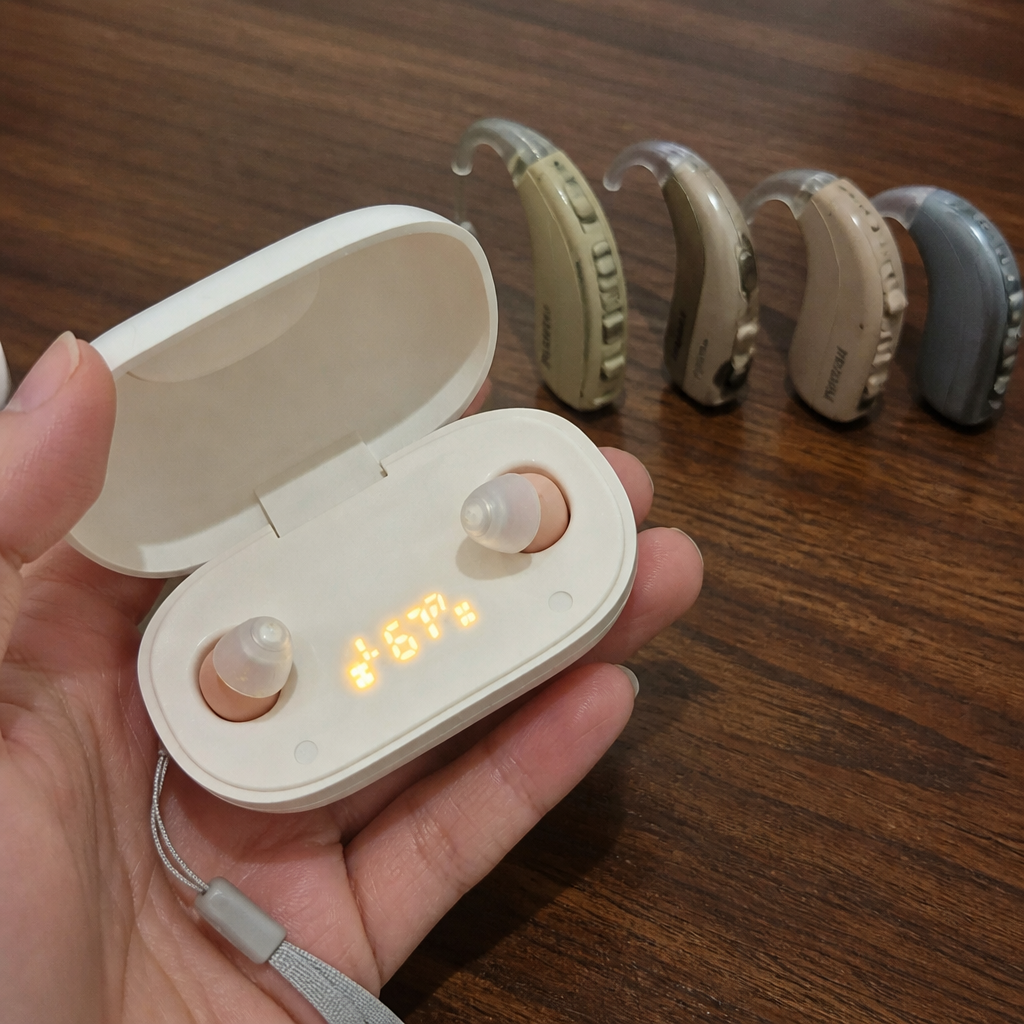
Ran for 13 days, from September 15 to September 28, 2026, the last day Crush saw it.
Run by Golden Living Daily on Facebook. Crush is not the advertiser and does not verify its claims. See this ad in Meta's Ad Library(opens in a new tab)
Want an ad like this for your product?
Crush makes new ad images for your product from this ad: your logo, your product photo, your offer.
Trials from $19.95 USD, then $79.95 USD a month. Cancel anytime.
About this ad
- Meta Ad Library ID
- 2861692070855100
- Platforms
- Facebook, Instagram, Audience Network, WhatsApp and Threads
- Relaunches
- 0
- Niche
- Clinics & Medical
Ad text
HearingLife quoted me $5,200 CAD. Costco offered me $1,800. I spent three weeks investigating the hearing aid industry from the inside out. The markup on a hearing aid is one of the most aggressive in any consumer medical product in Canada. --- I sat at my kitchen table staring at two pieces of paper. HearingLife invoice: $5,200 CAD. Costco quote: $1,800 for their Kirkland Signature pair. Five thousand dollars. Or eighteen hundred from the warehouse club. I'm Jim. 73. Retired civil engineer from Hamilton, Ontario. Forty-five years building infrastructure across this country. I know what things cost to make. I know what labour and components look like when they're priced honestly. And I know when a number on a piece of paper doesn't match the product it's supposed to represent. So I didn't accept the choice. I investigated instead. Three weeks. Every hearing aid option available in Canada. Every price point. Every technology claim. The components, the manufacturers, the supply chains, the markup structures. Everything. Here's what I found. --- **Option 1: Provincial Government Programs — $0 to $1,200 depending on where you live** Canada has no national hearing aid program. What you get depends entirely on which province you were born in. Ontario's Assistive Devices Program covers up to $500 per ear — $1,000 toward a pair that costs $5,200. You pay the remaining $4,200 out of pocket. Alberta's AADL program covers up to $1,200 per device. Low-income residents can receive full coverage. Quebec's RAMQ program covers the full cost for eligible residents through approved providers. Manitoba offers up to $2,000 every five years for seniors with household income under $80,000. BC, Saskatchewan, Nova Scotia, and New Brunswick offer minimal coverage for most working-age adults and non-pensioners. I live in Ontario. My provincial coverage was $500 per ear. On a $5,200 pair that left me $4,200 short. I spoke to a retired audiologist during my research. She described the provincial patchwork plainly. She said: "Whether you can afford to hear properly in this country depends on your postal code. That is the honest summary of Canadian hearing aid coverage in 2025." Verdict: The right answer if you live in Quebec or are low income in Alberta. For most working Canadians in most provinces a partial subsidy that doesn't come close to covering the clinic price. --- **Option 2: HearingLife — $3,500 to $6,000 CAD per pair** HearingLife is one of Canada's largest private hearing clinic chains. Professional. Visible. The name most Canadians encounter first when they search for hearing help. I went in. The audiologist was thorough. No complaints about the appointment itself. Then she walked me to the display cabinet. Here's what my investigation found about what you're actually paying for when you spend $5,200 CAD at HearingLife. The component that does the actual clinical work — the digital signal processing chip that separates speech from background noise across sixteen frequency channels — is manufactured by Knowles Corporation. They are the dominant global supplier of hearing aid DSP components. Their chips go into hearing aid devices across the entire price spectrum. That chip costs approximately $100 to $150 to manufacture into a complete device. The rest of the $5,200 is the building. The commercial lease on the clinic location. The audiologist on commission — standard practice in private hearing aid sales in Canada, which is why the premium range comes out of the display cabinet first in every appointment, every time. The area manager. The regional director. The head office. The national advertising that made you trust the name before you made the appointment. I spoke to three former private audiologists during my research. All three confirmed the commission structure. All three said the premium range was always the opening recommendation. One of them said: "The incentive structure isn't designed to find the right device for the patient's level of loss. It's designed to open with the device that generates the most revenue for the practice." Verdict: Good technology. Professional service. A markup built for the building not the hearing aid. --- **Option 3: Costco Hearing Centre — $1,500 to $2,000 CAD per pair** Better headline price than HearingLife. Costco's hearing centres carry legitimate hearing aids from reputable manufacturers including Phonak and Jabra. The salaried audiologist model means there is no commission incentive to push the premium range. The value proposition is real. The limitations are also real. Costco membership required. In Canada the warehouse network is significantly smaller than in the US — fewer locations, more concentrated in major metropolitan centres. For Canadians in smaller cities, rural areas, or provinces with limited Costco presence the access problem is genuine. The service model is appointment-based across multiple visits. Fitting, adjustment, follow-up — each requires returning to the same location. If circumstances change and you need to access a different location you may encounter proprietary lock-in issues with device programming. Consumer reviews I found during my research documented consistent feedback about wait times for appointments and limited flexibility in the service relationship once you've committed to a location. Verdict: Genuinely better value than private clinics. Still requires membership. Still location-dependent. Still $1,500 minimum. Still not accessible to a meaningful proportion of the Canadian population. --- **Option 4: Amazon Canada OTC — $50 to $200 CAD** I tested two. Both went back within two weeks. Here is why, stated precisely. The core components of a proper hearing aid — the DSP chip, the receiver, the microphone — cost $100 to $150 to manufacture properly. If a complete device sells for $60, those components are not inside it. What you receive is a basic amplifier. A microphone connected to a speaker with a volume control. It makes everything louder simultaneously — the voice you are trying to hear, the background noise you were already struggling with, the refrigerator, the traffic outside — with no separation between them. This is not a cheaper version of a hearing aid. It is a fundamentally different and inferior product wearing hearing aid packaging. Canada's OTC hearing aid category is less developed than the US market. The FDA's 2022 ruling that opened the American consumer hearing aid market has no direct Canadian equivalent. This means the devices available to Canadian buyers on Amazon are particularly inconsistent in quality and classification. Some are legitimate OTC devices. Most are amplifiers dressed in hearing aid packaging. The distinction matters enormously for anyone with actual diagnosed hearing loss. Verdict: Not real hearing aids in most cases. No processing chip. No channel separation. No clinical function. The listing descriptions are deliberately misleading. Avoid. --- **Option 5: Future Hearing — $329 CAD** This is what three weeks of investigation led me to. A former military audiologist — twenty-six years fitting hearing aids across hospital and private practice settings — had published a comparative test of five options. Real patients. Side-by-side performance data. Technical specifications documented. Every price listed. No brand paid for its position in the results. Future Hearing. Same Knowles Corporation DSP chip found in the HearingLife and private clinic premium ranges. 16-channel digital processing — the technology that actually separates speech from background noise rather than amplifying everything indiscriminately. Rechargeable — charging case on the nightstand, no batteries. Completely in-ear. Nothing visible at normal conversational distance. Health Canada compliant. No clinic. No commissioned sales staff. No commercial lease. No area manager. No corporate overhead. Shipped direct to your door. $329 CAD. I called the audiologist whose report I'd found. She confirmed the Knowles component sourcing. She confirmed the 16-channel processing specification. She confirmed that for mild to moderate hearing loss — the most common diagnosis, the type I had — the performance was comparable to clinic devices costing fifteen times as much. I asked her why more Canadians didn't know about this. She said: "Because no one in the distribution chain has any incentive to tell them. The provincial program sends you to approved providers. The approved providers sell clinic devices. Nobody in that system points you toward the door you can walk through for $329." I ordered Future Hearing that evening. Five days to my door. Health Canada compliant packaging. Charging case. Six ear tip sizes. Manual written in plain English and French. Put them in at the kitchen table on a Saturday morning. Margaret was in the other room. "Any good?" she called through the wall. I heard every word. Not louder. Clearer. There is a difference and I understood it immediately because I'd spent three weeks learning exactly what 16-channel processing does. The chip separates the signal. Margaret's voice comes forward. The background noise stays back. That's the technology. That's what $100 to $150 worth of Knowles components actually does when it isn't buried inside $5,071 worth of overhead. "Say something else." "You're a stubborn old fool and I love you." Crystal clear. https://tryfuturehearing.com/products/future-hearing-comfort $329 CAD. 45-day trial. Send them back if they're not right. Jim Henderson, 73 Retired Civil Engineer Hamilton, Ontario Three weeks. Five options. One conclusion. $329 CAD. P.S. The first two weeks were an adjustment I want to document because I nearly sent them back on day four. When hearing loss has been present for months or years the brain adapts to the degraded input as its new baseline. When full signal is suddenly restored it initially feels like too much. Footsteps. The refrigerator. Margaret's voice at full resolution after two years of being partially filtered. That is not device failure. That is the auditory cortex recalibrating upward toward the signal it was always supposed to be receiving. It resolves within seven to fourteen days. Give it the two weeks. What is on the other side of day four is worth every minute of the adjustment.
Where the ad sends people
goldenlivingdaily.life
read this before you consider hearing aids
Golden Living Daily
Learn more: goldenlivingdaily.life(opens in a new tab)