
Active· since Aug 24, 2026
- 3
- days running
- 0
- relaunches
Ad copy
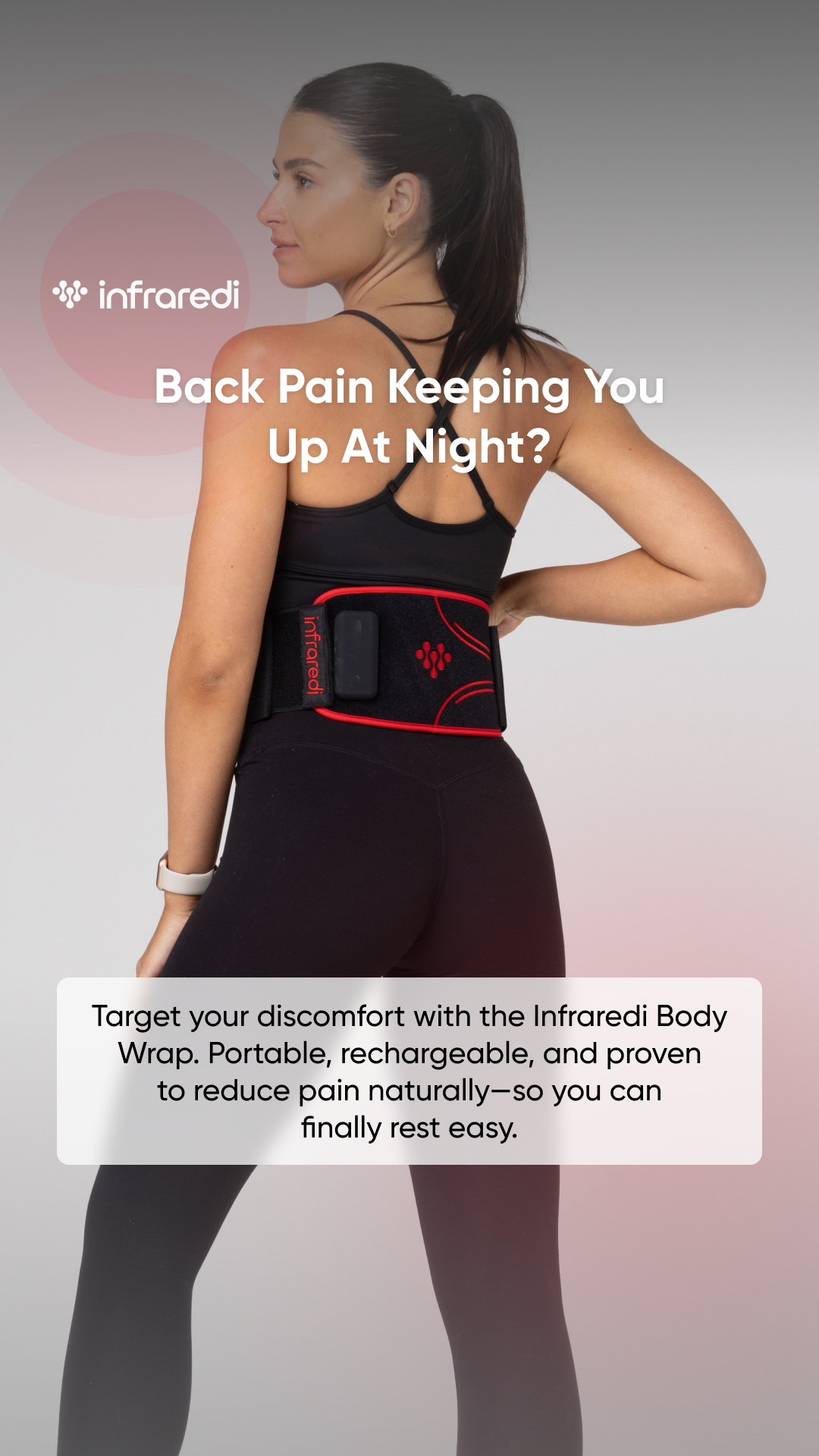
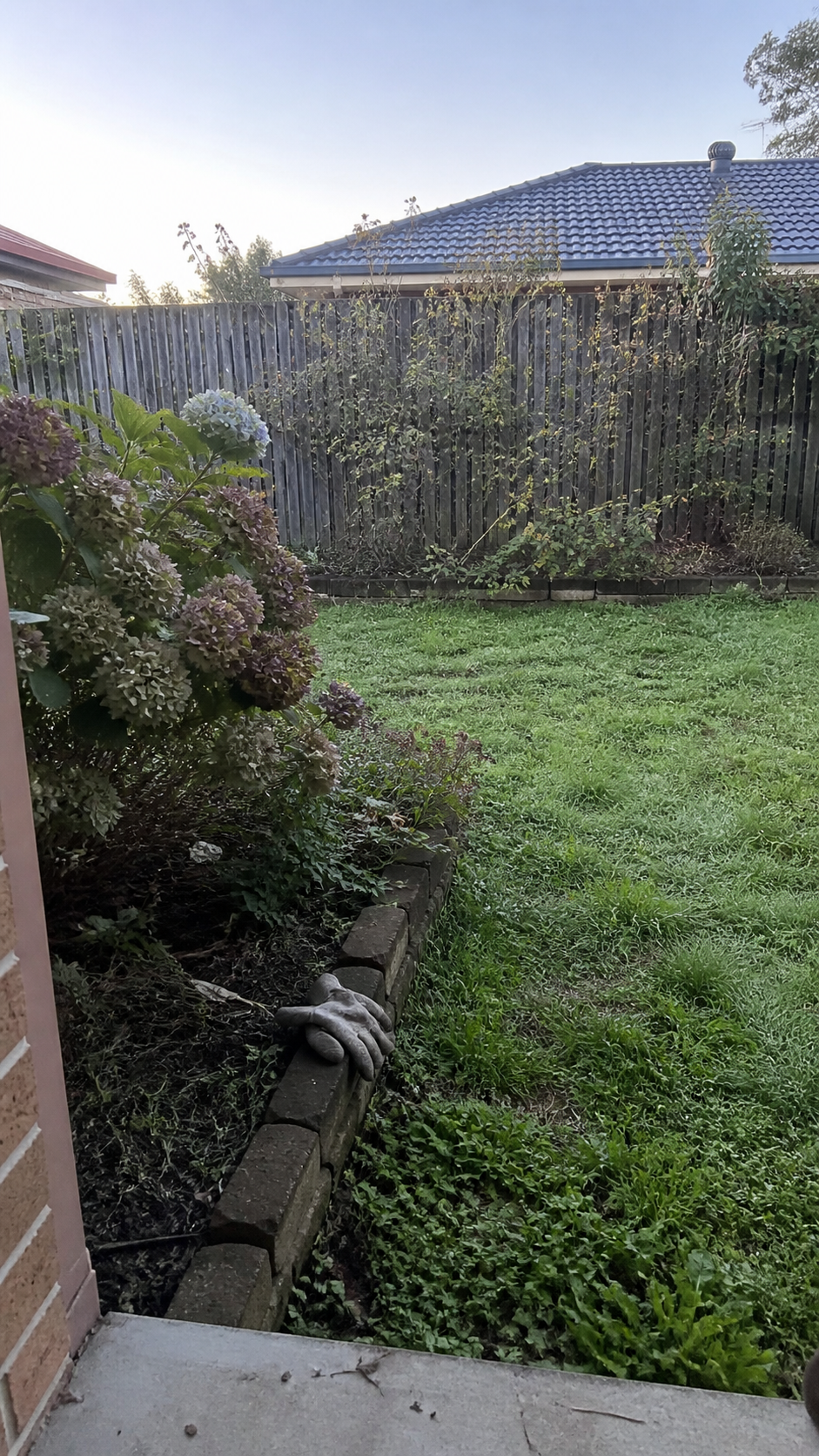
I had a stretch of three good weeks last winter and I almost forgot what was wrong with me. That's the part nobody warns you about. Not the bad days. The good ones. Because the good ones lie to you. They tell you maybe it's gone. Maybe you imagined it. Maybe you're fine. And then you reach across the passenger seat to grab your handbag and your lower back seizes so badly that you sit in a shopping centre car park for nineteen minutes waiting for it to pass, and you remember. My name is Margaret. I'm 61. I live in a brick veneer in suburban Brisbane with a back garden I've been meaning to get back to for two years, a kitchen window that looks out at a rose bed I planted the year Terry retired that has since been completely taken over by weeds, and a husband named Terry who coaches junior cricket on Saturdays and considers this his primary identity. He has coached the same under-12 side for eleven years. He knows every family by name. He once drove forty minutes each way to return a batting glove a kid left on the oval because he didn't want the boy to worry about it. I worked as a hospital nurse for twenty-four years. Theatre first, then orthopaedics, then a clinic role when my hips and lower back couldn't take the twelve-hour shifts anymore. I do three days a week now. I see patients, I manage referrals, I answer questions. I'm good at my job. I've been good at my job for a long time. I have one sister, Diane, who lives in Toowoomba with her husband Frank and two border collies that she treats better than most people treat their children. We have breakfast together when she comes down to the city, which is about once a month. We used to walk on Saturday mornings. A route we'd done for six years, down through the park near my place and back up the hill. We'd stop at the bakery on the way back. We'd talk about everything and nothing. It was the best part of my week. I stopped going about eighteen months ago. I told Diane I was busy. I wasn't busy. But I'm getting ahead of myself. Let me back up. I started feeling it about three years ago. Nothing dramatic. Just little things. I'd carry the shopping in from the car and have to lean against the kitchen bench before putting it away. I'd be fine all morning and then sit down at my desk and feel my lower back tighten, slow and deep, like a fist closing around something it didn't want to let go of. I'd wake up at 5:30 in the morning and my hips would ache before I'd even moved. Not sharp. Just there. Like they'd been working all night on something I hadn't asked them to do. I went to my GP. Dr. Patel. She's been my doctor for eleven years. Thorough, careful, reads everything twice before she says anything. Nice woman. She referred me to a physio named Glen who had a practice about ten minutes from my house and a very confident handshake. Glen was good. He gave me a set of exercises. Hip flexor stretches, some core work, a few things for the lower back. I did them every morning for two weeks and I felt noticeably better. I told Terry I thought I'd sorted it. He nodded and went back to watching the cricket. Then I got busy and stopped doing the exercises. The pain came back. I told myself I'd start again next week. I didn't. I went back to Glen three months later. He gave me the same exercises. I did them for ten days. Got busy. Stopped. Pain came back. This went on for the better part of a year. Meanwhile I was taking ibuprofen most mornings. Not a lot. Just enough to get through the first hour of the day without my back making every movement a negotiation. I'm a nurse. I know what long-term NSAID use does to the gut and the kidneys. I've explained it to patients. I've watched people come in with GI bleeds from years of anti-inflammatory use and I've sat with them while they worked out that the thing they'd been taking for pain had quietly been doing damage somewhere else. I kept taking them anyway. Because the alternative was not being able to get through a clinic shift without stopping at the bench and waiting for a wave of pain to pass, and I wasn't ready to be that person yet. That's what nobody tells you about chronic pain. It doesn't announce itself. It doesn't arrive one day and say: your life is changing now. It just slowly, quietly rearranges things. And each small adjustment feels so reasonable at the time that you don't notice you've been rearranging for years until you stop and look at what's left. I want to tell you what was happening to my life during those years of managing, because nobody at the clinic ever asked me. They asked about the pain. They never asked what it felt like to be the person living around it. It felt like I was slowly handing things back. I stopped walking with Diane on Saturday mornings. The hill on the way back made my hips ache for the rest of the day, and I didn't want to admit that to her, so I said I was busy. She believed me. Or she pretended to. I'm not sure which is worse. I stopped doing the garden. Just let it go entirely. The rose bed I'd planted with Terry the spring he retired — we'd spent a whole weekend on it, drove to three different nurseries, argued about which variety to put in the corner — went completely to seed. Weeds came in. The hydrangea along the fence took over. I told myself I'd get to it in spring. Then it was spring and I told myself I'd get to it when the weather cooled down. I stopped taking the stairs at the shopping centre. Started going twenty metres out of my way to find the escalator. I told myself it was faster. It wasn't faster. I just didn't want to feel my lower back tighten on the second flight and have to stop on the landing and pretend I was looking at my phone. I stopped meeting my colleague Robyn for the Thursday morning walk we'd been doing since her husband left. She needed those walks more than I did. I told her my schedule had changed. It hadn't changed. I gained eight kilograms without changing a single thing about how I ate. And the whole time, every few months, I'd sit in Dr. Patel's office and she'd ask how I was managing and I'd say fine. Because I was managing. That's what you do when you're a nurse and you're used to being the one who manages things. You adjust. You compensate. You make the small surrenders and you tell yourself they don't add up to anything. They add up to everything. I want to tell you about the car park now. Because it's important. It was a Tuesday in July. Cold morning, clear sky, the kind of Brisbane winter day that feels like an apology for the summer. I'd driven to the Westfield to pick up a prescription and a few things for dinner. Nothing significant. A normal Tuesday errand. I walked to the pharmacy, walked back. Got to my car. Opened the door. Leaned across to put my bag on the passenger seat. And my lower back went. Not sharp. Deep. Like something had been pulled tight for a very long time and had finally, quietly, run out of give. I straightened up slowly. Got into the driver's seat. Sat there. I couldn't drive. I couldn't really move. I just sat there in a concrete car park on a Tuesday morning with a bag of groceries and a prescription for someone else's blood pressure medication and I thought: this is not what 61 is supposed to feel like. I thought about the exercises I'd stopped doing. The physio appointments I'd cancelled. The ibuprofen I'd been taking every morning for the better part of two years. I thought about the rose bed and the Saturday walks and the Thursday mornings with Robyn. I thought about all the things I'd quietly handed back, one at a time, so gradually I'd barely noticed I was doing it. I sat there for nineteen minutes. I know it was nineteen minutes because I kept checking my phone, hoping every time I looked that more time had passed. At some point I noticed a woman standing near the car next to mine. She was maybe 68. Short white hair, practical shoes, the kind of face that has spent a lot of time outdoors. She'd been watching me for a minute or two. She came over and knocked on my window. I opened it. She said, "Are you alright? I saw you weren't moving." I said I was fine. I wasn't fine. She said, "I used to sit in car parks too." I don't know why that made me start crying. But it did. Not sobbing. Just leaking. The kind of crying where you don't make any noise and you don't realise it until something drips onto your shirt. Her name was Carol. She'd been a high school science teacher for thirty-one years. She lived about ten minutes from me, over near the river. Her husband had passed four years before. She'd had her own run with back and hip pain — degenerative disc, some arthritis that had been building since her fifties — and had spent years in the same rotation I was in. Physio. Anti-inflammatories. Small adjustments. Quiet resignation. She sat in my passenger seat and told me about it. She'd been using a red light therapy wrap for fourteen months when I met her in that car park. She wrapped it around her lower back every morning while she had her tea. Twenty minutes. That was it. She'd been doing it every single day since her daughter sent her one in the mail after Carol mentioned, offhandedly, that she'd had to stop her morning walks because of the pain. I asked her how she felt. She was quiet for a moment. She looked out the windscreen at the other cars in the car park. Then she said, "Like I stopped waiting for it to get worse." That sentence went into me like a hook. Because that's exactly what I'd been doing. Not managing pain. Waiting for it to get worse. Waiting to become the patient on the other side of the consultation room. Waiting to be the one sitting in the chair while someone else explained what was happening to my body. I went home. Terry was at cricket. I sat down at the kitchen table with a cup of tea and I went looking. I want to tell you what I found. Because in twenty-four years of nursing, nobody had ever explained it to me this way. And I think it matters. The thing they don't tell you about chronic joint and back pain is that the pain is a signal. Not the problem. The signal. The smoke. The fire is somewhere underneath it. Your body has a natural inflammatory response. In the short term, it's protective. It's what heals a sprained ankle or a cut on your hand. It sends blood flow to the area, it triggers repair, it does its job and then it stands down. But when inflammation becomes chronic — when it's been sitting in a joint or a disc or a muscle for months or years — it stops being protective and starts being the problem itself. The tissue gets stiff. The circulation gets sluggish. The cells in the affected area aren't getting what they need to repair properly. They're running on low energy. They're doing the best they can with what they've got, and what they've got isn't enough. That's the fire. Not the pain. The cellular environment that's been slowly degrading while you've been managing the signal it's sending. That's why anti-inflammatories help in the short term and stop helping over time. They suppress the signal. They don't do anything about what's causing it. The fire keeps burning. The smoke keeps rising. You just get better at ignoring it until one Tuesday morning in a car park you can't ignore it anymore. That's why physio helps when you do it and stops helping when you don't. It's working on the structure. It's not working on the cellular environment that the structure is sitting in. Red and near-infrared light works differently. When it penetrates into the tissue — and it does penetrate, several centimetres deep — it's absorbed directly by the cells. It supports the mitochondria, which are the parts of the cell responsible for producing energy. When your mitochondria are working properly, your cells have the energy they need to do their jobs. Better cellular energy means better circulation. Better tissue repair. A reduction in chronic inflammation not because it's been suppressed, but because the cells are actually doing what they're supposed to do again. Think of it like this. If you've been running your car on a flat battery for two years — jump-starting it every morning, nursing it through the day, hoping it doesn't cut out on the freeway — you're not fixing the battery. You're managing around it. Red light therapy is not the jump-start. It's the thing that helps the battery hold a charge again. I'm not a doctor. I'm a nurse who reads too much and spent three years managing around a flat battery while telling herself she was fine. But I've read enough to know that this isn't fringe science. The research has been building for decades. It's used in sports medicine, in wound care, in post-surgical recovery. It's just not something that comes up in a ten-minute GP appointment, because there's no prescription to write and no follow-up appointment to book. I sat at that kitchen table for four hours. Then I went looking for a device. I want to be honest about this part. Because I almost talked myself out of it three times. The first time was when I saw the price. Not outrageous. But not nothing either. I sat there and thought about the physio appointments I'd paid for over two years, the ibuprofen I'd been buying every month, the follow-up visits to Dr. Patel. I added it up roughly in my head. The number was uncomfortable. I kept looking. The second time was when I started reading about the category and realised how many cheap devices were out there. Devices for thirty dollars. Devices for fifty. Devices that claimed to do everything and had reviews that read like they'd been written by someone who'd never used them. I'm a nurse. I know what it looks like when something is being sold rather than recommended. I almost closed the laptop. The third time was when I found Infraredi and read through their website and thought: this is probably too good to be true. But then I read the reviews. Not the five-star ones at the top. I went looking for the ones that felt real. The woman with severe osteoarthritis in her back and hip who said after a month of using the wrap she was virtually pain free. The man with chronic knee pain who said he'd been able to reduce the number of painkillers he was taking. The woman who said she'd noticed less stiffness, less pain, and that her husband had started using it too without saying a word about it. That last one made me laugh out loud at the kitchen table. Because I knew exactly what that looked like. I kept reading. Infraredi had been operating since 2019. Thirty thousand customers. 4.8 stars across thousands of reviews. A 3-year warranty. And a 60-day risk-free trial — meaning if I used it for two months and felt nothing, I could send it back and get every cent returned. That last part is what got me. Not because I thought it was a trick. Because I thought: a company that offers a 60-day money-back guarantee on a device like this either knows it works or is prepared to lose a lot of money finding out. And a company that's been operating for seven years with thirty thousand customers and a 4.8-star rating is not losing a lot of money. I ordered the Body Wrap that night. I want to tell you what happened. Not the dramatic version. The real version, which is slower and quieter and more surprising for that. The first week, I didn't notice much. A little less stiffness when I got up in the morning. Maybe. I honestly wasn't sure if I was imagining it. I wore it every morning while I had my tea, twenty minutes, wrapped around my lower back. It was warm. It was easy. It didn't require me to do anything except sit there. I almost talked myself out of continuing at the end of week one. I told myself I'd give it another week. The second week, I noticed I hadn't taken ibuprofen in four days. I hadn't decided not to take it. I hadn't made a plan. I just hadn't needed to reach for it. I noticed this on a Thursday morning when I was getting ready for work and realised I'd gotten through my whole morning routine without my back making any demands. I stood in the bathroom for a moment and tried to remember the last time that had happened. I couldn't. Week three, I walked to the end of the garden and back without stopping to rest. It sounds like nothing. I want you to understand that it wasn't nothing. I hadn't done that without planning around it — without timing it, without making sure I had somewhere to sit if I needed to — for over a year. I stood at the back fence and looked at the rose bed. The weeds. The hydrangea that had taken over the corner. The work that needed doing. I went inside and got the gardening gloves. I spent forty minutes out there. I didn't finish. But I started. Week four, I took the stairs at the shopping centre. Both flights. I didn't think about it until I was already at the top. I stood there for a moment and looked back down. Then I turned around and walked back down and took them again. Just to be sure. Week five, I called Diane. We walked on a Saturday morning for the first time in eight months. Down through the park. Up the hill. We stopped at the bakery on the way back. She had a cheese scroll. I had a coffee. We talked about everything and nothing. She stopped on the footpath on the way back and looked at me. She said, "What are you doing differently?" I told her about Carol. About the car park. About the nineteen minutes. About the kitchen table and the four hours of reading and the wrap I'd been wearing every morning while I had my tea. She was quiet for a moment. Then she said, "Send me the link." She's been using one for four months now. I want to tell you the thing about Terry. Terry has had a sore shoulder from cricket for two years. His rotator cuff, probably. He has never once mentioned it to a doctor. He has never once asked me about the wrap. He has never once acknowledged that he is in any kind of pain, because Terry is the kind of man who would rather quietly suffer than admit his body is doing something he doesn't like. He has been this way for thirty-three years. I stopped trying to change it sometime around 2009. About six weeks after I started using the wrap, I noticed it wasn't where I'd left it. I found it in the lounge room. On Terry's side of the couch. Plugged in and charging. I didn't say anything. He didn't say anything. He's been using it every night for three months. His shoulder is better. He still hasn't mentioned it. Last week I caught him explaining to his assistant coach how red light therapy works at the cellular level. He said it like he'd known about it for years. I didn't say a word. I drove home from that oval thinking about Carol. About a Tuesday morning in July in a concrete car park. About nineteen minutes sitting in the driver's seat of my car wondering how I'd gotten here. About a woman with short white hair who knocked on my window and sat in my passenger seat and told me she used to sit in car parks too. I think about her every time I put the wrap on in the morning. Every time I walk up the stairs at the shopping centre without thinking about it. Every time I spend an hour in the garden and come inside without my back having made a single complaint. She gave me something in that car park. Not the wrap. Not the information. Something else. She gave me the idea that the thing I'd been waiting for — the getting worse — wasn't inevitable. That the slow handing-back of things didn't have to keep going. That there was another way to think about what was happening to my body, and another way to respond to it. I'm telling you the same thing she told me. You don't have to keep waiting for it to get worse. If you've been quietly rearranging your life around something that hurts — if you've been taking the escalator, skipping the walk, letting the garden go, cancelling the plans, telling yourself this is just what getting older feels like — I want you to know something. This is not what getting older feels like. This is what chronic inflammation feels like. This is what a body running on low cellular energy feels like. This is what happens when you manage the signal for long enough that you forget there's a fire underneath it. The Infraredi Body Wrap supports the tissue directly. Twenty minutes a day. Hands-free — you wear it while you have your tea, while you watch television, while you sit in the garden you've been meaning to get back to. It works while you're doing other things, which means it actually gets done. You're not adding something to your day. You're just doing what you already do, with the wrap on. 60-day risk-free trial. 3-year warranty. Free shipping. If it doesn't do anything for you, you send it back and you don't pay for it. That's the whole deal. I'm not a doctor. I'm a 61-year-old nurse who sat in a car park for nineteen minutes on a Tuesday morning in July and cried when a stranger knocked on her window. I'm telling you the same thing she told me. You don't have to keep waiting for it to get worse. 👉 infraredi.com.au P.S. The 60-day trial is the part I want you to sit with. When I was taking ibuprofen every morning for two years, nobody offered me a refund for the damage I was quietly doing to my gut. When I stopped walking with Diane, nobody offered to give me those Saturday mornings back. When I let the rose bed go to seed, nobody offered to return the season I spent not gardening. The trial is Infraredi's way of saying: we'll stand behind what we sell. Try it for two months. Wear it every morning. If your body doesn't tell you something has shifted, send it back. You're risking nothing. I spent three years quietly handing things back one at a time. Don't do what I did. P.P.S. If your husband is using yours without saying a word about it, that's your answer.
Like this ad? Make it yours.
Crush rebuilds this exact creative around your product — your brand, your colors, your offer — in about a minute.