Fictions by mo da
Fictions by mo da Facebook ad: “Fictions by mo da”
Ran for 132 days, from February 9 to June 21, 2026, the last day Crush saw it.
Run by Fictions by mo da on Facebook. Crush is not the advertiser and does not verify its claims. See this ad in Meta's Ad Library(opens in a new tab)
Want an ad like this for your product?
Crush makes new ad images for your product from this ad: your logo, your product photo, your offer.
Trials from $19.95 USD, then $79.95 USD a month. Cancel anytime.
About this ad
- Meta Ad Library ID
- 2963587800502020
- Platforms
- Facebook and Messenger
- Relaunches
- 0
Ad text
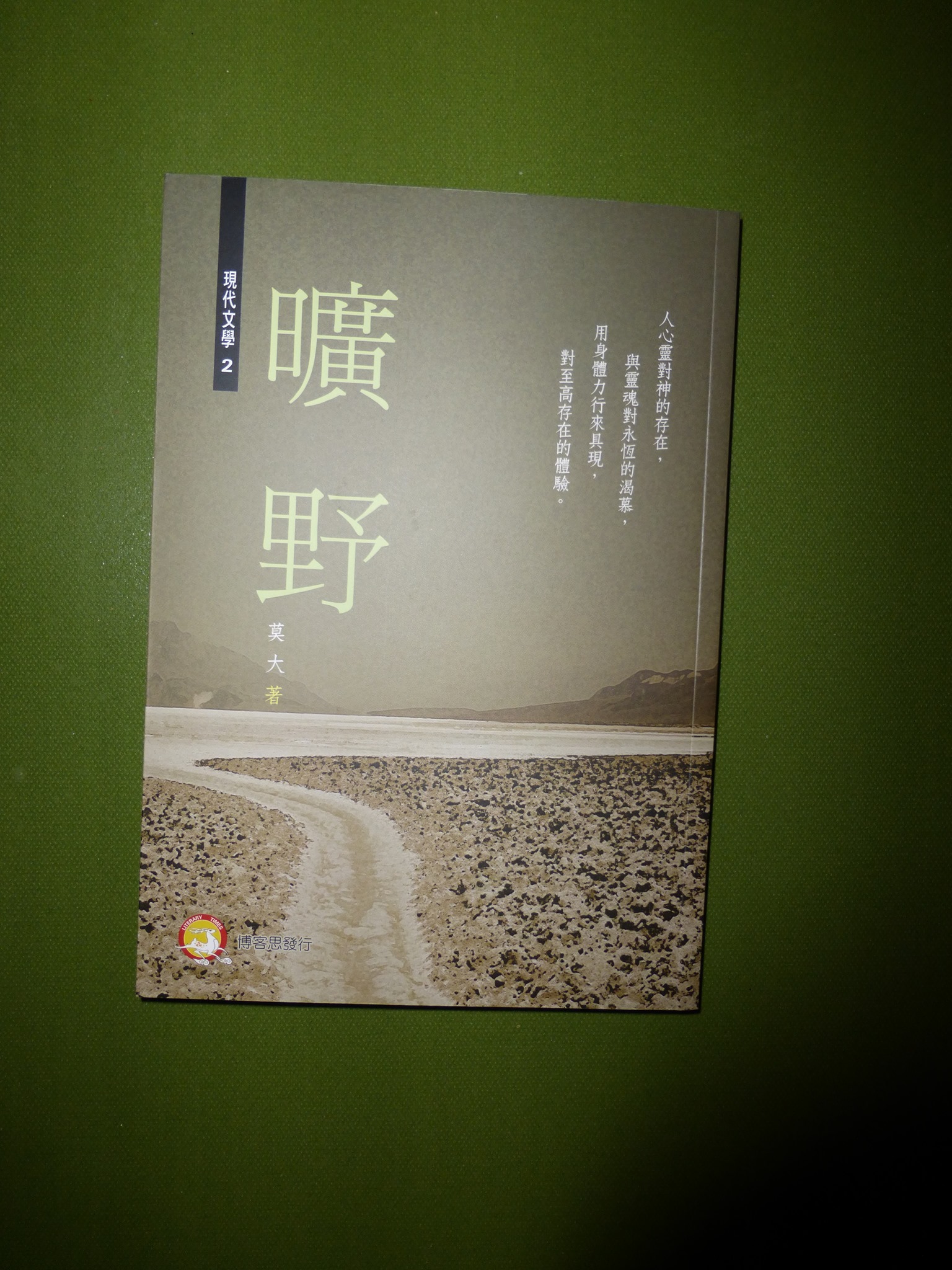
Fictions by mo da toprSnedos10f4m690a64ml剛62i0a9fghga26剛0425863f4550l7m4glamlt · The Great River Flows East People often ask me why I wrote a book like *The Great River Flows East*. What I want to say is that our generation of Chinese people, whose parents grew up in times of war, experienced displacement and territorial loss, suffering immense devastation. The War of Resistance Against Japan and the subsequent Chinese Civil War completely overturned and destroyed mainland China, leaving an indelible mark on all Chinese people. Although our generation was not directly affected by the war, this history is deeply imprinted on us, which is why I wanted to write such a work from a young age. However, as time has passed, my past understanding has changed. After repeatedly reviewing it, I realized that an article I wrote before perfectly expresses my current understanding and perception, so I'm reposting it below: B U R I E D Buried 1 It rained all day, the damp asphalt road dotted with tiny puddles, and the sky remained perpetually overcast and gloomy. After nightfall, the dim, widely spaced streetlights made it difficult to discern the smoothness or roughness of the road, and one could easily step into a puddle. My cousin Liao Tiancheng and I, each holding an umbrella, carefully trod along the curb, carefully stepping on the pavement that didn't reflect the water. Although we were relatives, we were still quite strangers; this was only our third meeting, the first two being at a relative's funeral. Somber with our hearts, we remained silent, not exchanging a word, and solemnly walked one after the other towards the train station. In the drizzling rain, the train station was empty of waiting passengers. The small waiting room, illuminated by fluorescent lights, appeared deserted and quiet, unlike when we had arrived during the day. We were waiting for the last train, but its arrival time hadn't arrived yet; we would have to wait a while. Finding a bright corner, I opened the book I had brought and continued my intermittent reading. "Cousin, I'll go wait for them on the platform." Liao Tiancheng greeted me and walked alone towards the ticket gate, which had no ticket inspectors. His thin frame made his high school uniform seem to float. Watching him briskly walk to the platform to wait and observe, I sensed his family huddled together, the older brothers lovingly looking after their younger siblings. Since graduating and going to Taipei for cram school and the college entrance exam, I hadn't seen my family for almost three months. After the exam, I stayed with relatives, which was inconvenient, but I didn't want to go back, planning to wait until after the results were announced. But this morning, I was suddenly woken from my sleep to answer a call from my father. His voice was trembling as he told me that the Taitung police station had notified us that my uncle had been murdered. He wanted me to come to Taitung immediately to meet my aunt and help with the arrangements. My mother and sister would leave from their home in Zhongxing New Village, take the train from Taichung to Taipei, transfer via the Suhua Highway to Hualien, and then take another train to Taitung. When my mother and sister's train arrived at the station, it was a chilly, late night. The exhaustion of a long day was etched on their bodies, and their sadness was clearly visible on my mother's face. She was easily moved to tears, and upon seeing my cousin and me waiting at the station exit, she burst into sobs. Between tears, she cried out to us: "Huixin, Tiancheng, your uncle is so pitiful!" Her voice was loud enough to be jarring, but my sister Lanxin and I were used to it. We urged her to come out, ignoring the curious stares of the ticket collector at the exit gate and the few other passengers. "Sister, why don't you call home? Dad and Mom are nagging endlessly." The four of us walked back towards the Qingquan Hotel where we were staying, and Lanxin, who was under the same umbrella as me, began to complain. "What's the point of fighting? I was going back the day after tomorrow after seeing the results." "Dad said you're like a wild goose, once you fly away you don't know how to come back." "What kind of comparison is that? You'll have even more to nag about after you get in and live at the university." I replied irritably. Back at the inn, when I saw my aunt, my mother burst into tears, sobbing loudly, crying, "Second brother, how miserable! How could that scoundrel treat you like this!" She kept crying, and I felt my mother's emotions changed so quickly. She had been talking to Liao Tiancheng so sweetly all the way there, even laughing and joking later. But as soon as she entered the inn and saw my aunt, she immediately started crying. The extreme shift in emotion happened in less than a second! My aunt cried too, and Lanxin shed tears as well. But I couldn't shed a single tear. Thinking of how good my uncle had been to us, of course I felt sad, but I couldn't cry like them. Lanxin wiped away the tears streaming down her face and tried to comfort her mother. Her aunt also urged her to go to her room and rest. My uncle had been conscripted to Taiwan. It was late in the Chinese Civil War, and defeated or scattered armies often conscripted deserters to fill vacancies or make do with laborers. My uncle had just gotten married in his hometown in Jiangsu. On the day he was conscripted, he was out shopping when he stumbled upon a company of soldiers conscripting or arresting deserters. He stood at the crossroads watching, and without a word, he was kicked and beaten and dragged into the barracks. He was then sent all the way to Taiwan, his family receiving no news whatsoever. Their fate was unknown. When they arrived in Taiwan, a large number of stragglers were concentrated in the Kaohsiung Harbor fortress, right after the Nationalist government withdrew from the mainland. Everything was still uncertain, and these soldiers were simply detained there, without training or drills, left to eat intermittently and go hungry. Not long after, the Kaohsiung Harbor fortress suddenly exploded, and everyone scattered and fled. My uncle, driven by the thought that "my sister is in Taipei," struggled his way up the harbor. According to my father, he was working at the Education Department at the time. One morning, he had just entered his office when a coworker led in a man who was emaciated and limping. The man had a dark face, and his simple clothes were tattered. The coworker told my father that this man claimed to be a relative of his and wanted to see him. The man quickly called out my father's nickname, saying he was Liao Guoxing. They had never met before, only heard of each other. My uncle, relying on what he had heard back home that his brother-in-law worked at the Education Department in Taiwan, had painstakingly searched his way up from the south. Penniless, he hitched rides along the railway tracks, hiding in the freight cars as he went. Upon arriving in Taipei, he asked for directions until he found the then-provincial government's Education Department. The limping man was injured in the explosion at the fortress. Hiding in a roadside air-raid shelter, he hastily bandaged himself, hoping only to stop the bleeding and pain, barely managing to drag himself along while dodging the military and police. Due to the delay in medical treatment, he was left with a lifelong limp, though this didn't prevent him from working and finding employment. Then, that year, my maternal grandmother followed my eldest uncle from Hong Kong to Taiwan. My eldest uncle later found a teaching job in Hualien, married, and had children there. My younger uncle remained alone in Taiwan. With the two sides of the strait cut off, there was no possibility of contact from the other side. In earlier years, he had clung to the hope of returning home for a reunion, but as the years dragged on, he realized that not only was a counterattack against the mainland hopeless, but seeing his wife again seemed impossible in this lifetime. It felt like he could never go back. Unexpectedly, the entire family would be buried on the island. After giving up the idea of returning home, the lonely younger uncle longed to remarry for many years, but he remained unmarried. Despite going on numerous blind dates and matchmaking attempts, nothing came of it. In the end, he was still alone and childless. When his eldest uncle was alive, seeing his younger uncle's loneliness and lack of heirs, he gave his youngest son, Tianyu, to him so that Yanxiang could continue his lineage. He loved children and was incredibly kind to us. Whenever he visited during holidays or ordinary days, he would generously give us gifts. My mother always said he didn't know how to save money, which was why he couldn't find a wife. My kind-hearted younger uncle would also chime in, blaming himself for not appreciating money. In the hotel room with its tatami mats and spread-out quilts, the space felt spacious and comfortable, unlike the cement floors of home where furniture filled the room. Lanxin and her young cousins quickly fell asleep, while the rest of the family sat on the tatami chatting. The mother and aunt lamented the impermanence of life, sighing that in less than three years, they had lost three of their closest relatives. First, their maternal grandmother, who lived with them, passed away from a stroke; a year later, their eldest uncle, who had been bedridden with cancer for almost two years, followed her. Now, our youngest uncle had died a violent death. The mother sighed, lamenting that all her flesh and blood were gone, leaving her all alone. Her words saddened the eldest aunt, who couldn't help but shed tears. "Your eldest brother worked hard his whole life, hoping only that his children would succeed. Now he can't see any of that. His children are still young. This illness before he died left us with nothing, and a huge debt. His dying wish was that all four of his children finish their education. I don't know how he'll manage." Tears streamed down her face as she spoke. "Sister-in-law, we know your suffering. We must see that your nephews are ambitious; we must continue to support them." "I didn't receive much education, so there's not much I can do. But now I'm willing to do anything—sew, polish marble. I help the children too." Tiancheng lowered his head, lost in thought. Compared to their family, we were almost fortunate. Although our parents often argued fiercely about money, causing us children worry and distress. Buried 2 The next morning, the sky cleared. Leaving my young cousins at the hotel, the rest of us went to accompany my mother and aunt to the court and prosecutor's office to complete procedures and conduct inquiries. The daily newspaper published a detailed report of my uncle's murder. From the newspaper, we finally understood the full story of how he was murdered for money. The circumstances were truly heartbreaking; how could someone be so greedy for another's money? Treating human life like dirt, the friendship and closeness of friends were used by the murderer to gain access and commit the crime. My uncle had worked at the city government for many years. His murderer was a sanitation worker driver. Although they worked in different units, they had known each other for many years, living in Taitung. The murderer was a gambling addict, and my uncle occasionally played mahjong with them; that's probably how they became acquainted. I remember once during the Lunar New Year, my family told me he had gambled away all his salary and refused to come to our house for the holiday. The newspaper reported that the murderer, Dai Bingkui, learned that Liao Guoxing had recently saved 20,000 yuan to present as betrothal gifts to the woman's family after his wife, Caiyun, introduced him to a potential girlfriend. Dai, already burdened by gambling debts and pursued by casinos, decided to murder Liao for money. On the day of the incident, he notified the single Liao to visit him that night. Liao, unsuspecting, even bought food and drinks to prepare dinner for him after work. Dai first tried to borrow money, but when refused, he used the excuse of retrieving something to retrieve a large iron hammer weighing over 20 kilograms that he had secretly placed outside the house. Returning inside, he struck Liao on the forehead while Liao's back was turned. The victim fell, and fearing he wasn't dead, he strangled him with a blanket in the pool of blood. He then calmly searched the house and left. The day after the murder, Dai Bingkui went to work calmly, as if nothing had happened. After the murder was discovered, Liao Guoxing's colleagues at the city government office recalled that Liao Guoxing had mentioned before leaving work that Dai Bingkui would be visiting after work, and he needed to prepare some snacks. This led to the discovery of a clue and the swift resolution of the case. Upon arriving at the courthouse, we reported to the prosecutor's office. Being in a relatively remote eastern region, major criminal cases were not frequent. The clerk quickly ascertained the details of the case, instructed the victim's family on the necessary procedures, and immediately directed us to the bailiff's office to have them fill out the required forms and identify which documents required the family's consent and signature. Since it was our first time handling matters at the courthouse, we vaguely understood what to do and simply followed instructions. Buried 3 The bailiffs in the office presented us with a stack of application forms to fill out and sign. My mother asked me to handle them. There were various forms, including applications for the removal of the crime scene seal, the return of the body, and the inventory and identification of evidence… While showing the documents to my mother and aunt, I filled in my name, date, and other details. But the most important one was the autopsy consent form. I felt my uncle's fate was already too tragic; to have his body disemboweled and examined after death, especially since the murderer was already apprehended and the case was clear, made another autopsy unnecessary. I asked my mother and aunt what they thought, and my mother also felt it was pointless to subject my uncle's already damaged body to further torture. I explained our situation to the bailiffs. They hesitated, implying that we absolutely had to agree because it was a criminal case. If we refused to sign, they would have to report to the prosecutor, but it seemed we had no say in the matter. They vaguely suggested we think it over and come back in the afternoon to sign. Everyone was undecided after hearing the advice. My mother thought we should ask my father's opinion first. While we were discussing outside the bailiff's office, another young bailiff approached me and said, "Ms. Qi, if you don't agree to an autopsy, you can go to the mortuary to see the body first." My mother asked him where the mortuary was. "It's at the funeral home. When you get there, just say you're relatives of Liao Guoxing, and they'll let you see it." My mother thanked him for the directions and asked where it was convenient to make a long-distance call. He kindly led us to the switchboard and asked the operator if we could make a long-distance call. The operator glared at us and scolded, "Even the victim's family can't use the court's public phone to make a long-distance call!" Her tone was unfriendly, but my mother was allowed to make the call anyway. While my mother was still on the phone, the young bailiff politely said goodbye to my aunt and me: "It's unfortunate that this happened; there's nothing we can do about it. My name is Chen Chaoshui. If there's anything I can help with, please don't hesitate to come to the bailiff's office." My aunt thanked him repeatedly. I stood to the side without replying. It was the first time someone had addressed me as Miss Qi, and it felt strange. Lanxin looked at me dismissively; she didn't understand what I meant—it wasn't like I had asked him for help. After finishing her call, my mother relayed my father's opinion. He also believed that the police and prosecutors must perform an autopsy in homicide cases, as it would be used as evidence by both the prosecution and defense during the trial. Although I still felt uneasy, it was required by criminal law, and we had to comply. So we didn't delay any longer and immediately went back to sign the consent form. While signing the form, the same bailiff said that regardless of our consent, the court would still conduct an autopsy. They said they had just received notification that the forensic pathologist would be coming from Taipei that evening, and the body should be returned after the autopsy the next morning. They told us to go to the funeral home the next day. When Chen Chaoshui saw us come out again, he suggested we go to the detention center to see the murderer. I said to my mother, "Go! Why not find out what kind of person killed our uncle?" I felt it was indeed necessary to see clearly what kind of heinous villain this person was, but Lanxin didn't want to go. Perhaps the ugly murderer frightened her, or perhaps her fear and caution prevented her from going to such a cruel place. She stood timidly behind my mother, wanting to go back to the hotel alone to look after her cousins. Chen Chaoshui arranged for the others to go to the detention center next to the courthouse. The detention center was actually quite simple, not as stern and terrifying as I had imagined. There were only about three or four cells in total. The partitions facing the corridor were the same iron bars seen in movies or described in novels. Peeking into each cell, I estimated three, four, five, or six people, either standing or squatting, all dressed in dark blue prison uniforms. Each prisoner glanced furtively at us walking down the corridor, but unlike the menacing stares in the movies, they seemed no different from ordinary people, just cramped and listless in their small cubicles. The warden called out a name to the first cell: "Dai Bingkui." A short, stocky man squatting inside the cell answered, standing up and leaning against the bars, facing us all outside. His face was full of menacing features. I wondered to myself how my uncle could have such a friend. "That's the suspect," the guard nodded to us and then stepped aside. We hadn't expected such a direct encounter. Dai Bingkui stared straight at us, as if to say, "Let's see what we're going to do." The other prisoners gathered around their bars, watching us. They hadn't expected this situation and were somewhat at a loss, unsure how to react. I felt we couldn't show weakness. I asked him directly, "Why did you so cruelly murder Liao Guoxing?" He didn't answer directly, but instead asked me, "What's your relationship to him?" "I'm his younger sister," my mother answered for me, then she scolded the murderer, "You killed someone for his hard-earned savings. Don't you have any conscience? Shouldn't we ask you why you did this?" "Sigh!" he sighed, "It's not as you say. Look at me now, locked up in jail, I have nothing left. Who will take care of my wife and children?" "You did such a terrible thing, didn't you think of them?" I retorted, "They were innocent victims too!" "You're just a young girl. Things in this world aren't always so simple. Everyone has their own difficulties. People don't do things unless they're desperate. I regret it too." "You also have a family. Didn't you think about your family? How much suffering they have to endure?" my aunt added. “Sister-in-law, it’s all unavoidable. It’s too late to say anything. It’s all because of gambling that I’ve been ruined. Now my family is going to be destroyed. I’m so sorry to Liao Guoxing, but I’m finished.” He was explaining himself in prison, and my mother couldn’t hold back her tears again. Having seen through the murderer’s true colors, there was no need to argue with him, and there was no point in staying. We had only intended to take a look, so we signaled to the guards, and I quickly helped my mother leave with the others. My aunt told my mother that the murderer seemed remorseful. Was he remorseful? I didn’t think so; I had no doubt about the sincerity of his words. After leaving the prison cell, the group went to the funeral home. The funeral home staff informed us that they were conducting an autopsy and then directed us to the morgue. The autopsy wasn’t as thorough as I had imagined; the forensic doctor seemed to finish very quickly. When the caretaker of the autopsy room came out to inform us waiting outside, none of us were mentally prepared. Suddenly having to go in and see our uncle's dissected body was a huge shock to all of us, especially my mother. My aunt said she probably couldn't bear it and didn't want to go in. Only Tiancheng and his younger brother Tianyou were allowed to go in. My sister and I also tried to persuade my mother not to go in, fearing she wouldn't be able to handle the scene, but she insisted on seeing how her second brother had been violated. Upon entering, I saw my uncle's body laid flat on a white-tiled platform with a water tap at the front, completely naked and exposed. The entire right half of his head was sunken in, a testament to the brutality and malice of the murderer. The body was a ghastly bluish-white, and the remaining half of his face still vaguely resembled his appearance in life. The room reeked of the chemicals from the autopsy. Everyone inside wore masks, but we, without masks, were completely immersed in the nauseating smell.. The abdomen, which had been cut open, had only been roughly cleaned, without any embellishment for the family's arrival. The whitish intestines and entrails were barely stuffed back in, not completely, with most still protruding. I noticed that the head and chest had also been cut open, but had been stitched back together. My mother stared wide-eyed at it; worried she couldn't bear it, I asked my sister to help her out. But she refused, and couldn't help protesting to the caretaker. "You should at least put his intestines back where they were! You can't leave them like this!" The caretaker replied that they would put them back, and then actually tried to stuff them back in. Fortunately, another staff member stopped him, telling us they would be fully restored in a moment and to rest assured. I helped my mother and Lanxin out. Lanxin leaned against the wall, trying to control her nausea, struggling against the urge to vomit. I felt I shouldn't have let her go in to see it beforehand; after all, she was only a sixteen-year-old girl who didn't fully understand the world. The cruel and brutal treatment of this quiet and refined girl was truly unbearable. Liao Tiancheng and Liao Tianyou, on the other hand, remained inside as if nothing was wrong, seemingly determined to uncover every detail. Finally, Lanxin vomited by the drain, her mother comforting and soothing her. After Tiancheng and his brother came out, they whispered to me, "The staff inside, after my daughter and I left, didn't even bother to avoid them. They just pushed the intestines and other internal organs back in. I had expected them to do that, but I felt that's just how things are, and there was no point in arguing. Perhaps the staff inside are used to handling corpses and have lost their sensitivity to them. We, as their family, might see it as disrespectful and inconsiderate. But what can we do?" I hinted to the brothers not to make a fuss, lest it upset our mothers. They both nodded in agreement. Buried 4. After the autopsy, the court didn't delay and immediately returned the body, meaning we could buy a coffin for burial or hold a funeral service. After discussing it, the mothers decided to have the body cremated at the funeral home on-site, and then bring the ashes back to Hualien to be buried next to my uncle's mother and brother. My uncle's belongings and real estate had no collateral or loans, so they could be easily and legitimately transferred to his adopted son, Liao Tianyu. Although the funeral arrangements were quite complicated, the experience from my maternal grandmother's and eldest uncle's previous funerals meant we weren't completely lost. Besides, this was a small place, unlike Taipei or even Hualien, where there were many elaborate schemes or pretexts. However, what was truly pitiful was that my uncle's tragic end meant he was all alone, relying solely on us, his women and children, to navigate the difficult and arduous process together. No friends offered to help. Of course, most people are hesitant to handle murder cases, but I was quite displeased that my father didn't come to help. Even though everyone who could come had come, we all seemed like inexperienced women and students, clumsy, unsophisticated, and inept at handling such a situation. "Your father has to work, and it's very inconvenient for him to take time off. Besides, we're not incapable of handling it," my mother explained, addressing my displeasure. "We only have these two uncles," I couldn't help but retort. "It's only right that they come." "Whether it's right or wrong is not for you to say," my mother scolded angrily. "Your father always protects you so much, and in the end, you're making up stories about him." "Aunt, don't be angry! Huixin is worried about the results, so it's understandable that she's anxious. Besides, she's still just a child. We've already put too much pressure on her," my aunt said, trying to calm my mother down. "Don't praise her anymore. She hasn't even stepped out the door yet, and she's already raised the flagpole. What will she be like later?" Everyone was downcast and sad. I remained silent, head bowed, and walked out. Standing alone outside, I leaned against the wall, calmly reflecting on my actions. After some quiet thought, I realized my mistake. I felt it was completely unnecessary to say those things to my mother, especially not to my aunt. How could my mother save face? Thinking about it carefully, everyone in our family, including my father, was the only one who cared for and cherished my uncle in his life. He lived a life of mediocrity, achieving neither fame nor fortune. Although he was such a good person, in the end, no one he knew came forward to help him, and no one even glanced back at him. No one truly values the life of an ordinary person. Of course, those with ulterior motives are an exception. "Cousin, are you alright? The radio will announce the results tonight." Liao Tiancheng approached me, looking somewhat uneasy. "Nothing? I'm fine." We both stood by the wall, unable to continue the conversation. I started to say, "I feel my uncle is so lonely!" He looked at me, not immediately grasping the meaning behind my words. "He went alone, without any family of his own, and not a single friend ever came." "Friends will come at the funeral. And my younger brother, Tianyu, was adopted by Uncle; he already has his own descendants." His thoughts were different from mine, direct and optimistic. Perhaps he was too young to understand my sadness. I felt sorrowful and deeply distressed. I explained: "I just feel heartbroken and terrified. I'm not talking about the crowd invited to the ceremony. I feel like they were friends of the living, and maybe they were just there to comfort the living. I thought about my own friends, and the process and feelings we shared. I thought about how one day I too will pass away alone, abandoned in some corner of the world, without friends or family, leaving no impression on anyone. Just like my uncle passed away, and all that's left of me in life." As I struggled to express my feelings, Lanxin came out to tell Tiancheng to set off to clean and tidy up uncle's house, and then said to me: "Sister! Mom wants you to stay at the hotel to rest so you can listen to the radio tonight!" "I don't want to stay. Helping with the cleaning will actually help me relax." My uncle's small house was a brick house, secluded by the roadside, standing alone on the edge of a field. A few huge trees densely covered the roof of the small front yard, making it seem gloomy and hidden. Perhaps because it was far from other people's residences, the murderer dared to come and commit the crime and steal without restraint. Tearing off the seal and opening the tightly closed door, a pungent, lingering stench of blood assaulted the nostrils. The house was stained with blood, and although the incident had occurred less than a week ago, the sweltering heat and rising steam created an overwhelming, pervasive smell of blood. Blood splattered everywhere, forming chaotic patterns on the walls. The blood had turned a deep black, and even the lighter shades that had flowed down the walls had turned a reddish-brown after a week. Pools of blood pooled on the floor, and the bed was soaked through, the entire quilt and pillow drenched in blood. There was so much blood. The thought of my uncle struggling for his life during the brutal attack was unbearable. The group stood in astonishment by the door, looking inside and out. They hadn't expected to see so much blood everywhere. They were stunned, unsure what to do. Their loved one's blood—what were they going to do? Wash it away? Even though it was dry, it clung tightly to its surroundings. This was the home our uncle had painstakingly built and cultivated with boundless enthusiasm and interest, a place he held so many hopes for—to marry his bride here, a lifelong dream almost fulfilled, perhaps soon to be settled down. Yet, this sudden tragedy struck without warning. Could we erase the familial bonds and grief that clung to it? The sorrow and grief were unimaginable; could we simply ignore it? But this was all property, a tremendous help to my impoverished aunt and young cousins. After calming down, Lanxin and I helped my tearful mother out and sat her outside. “It’s terrible!” she finally cried out. “Huixin, Lanxin, what do we do?” “It’s alright, I can manage. You and Lanxin go back to the inn to rest.” Lanxin was too fragile, both physically and mentally; she shouldn’t have come. The scene of this day had terrified her. My aunt's family and I struggled to wash away all traces of the crime, burning all the blood-stained bedding and fabrics outside. My aunt lit incense and murmured prayers, wishing uncle a peaceful passing. The four of us washed away so much blood... We were astonished by the abundance of blood and fluids contained within a human body. My aunt and Tiancheng, kept wiping the house clean, as if trying to erase every trace of my uncle's scent and presence. From our conversation, we learned that she would immediately begin the process of selling the house. I thought it was for the best; the sorrowful, haunted house would become sustenance for my uncle's son, Tianyu, as he strived for success. Enduring hunger and exhaustion, I dragged myself back to the hotel, arriving late at night under a sky full of stars. Before we even entered the hotel, Lanxin excitedly rushed out to greet us, exclaiming: "Qi Huixin, you got into National Taiwan University! Dad just called to congratulate you!" Everyone congratulated me, but I was too tired to do anything but lie down. After the funeral, both families had to rush back to their own affairs, so we took a bus north together. Upon arriving at Hualien Station, we transferred trains there. My aunt's family went back to their own home in the city. After parting ways, both families returned to their regular daily lives. Everyone said their goodbyes on the platform, their hearts heavy with sadness. Although it was a somber journey, everyone got along very well. My aunt's two young cousins were especially reluctant to part with Lanxin, who had spent so much time with them and liked them. My mother handed my aunt the urn containing my uncle's ashes, wrapped in a white cloth. My aunt assured my mother that she would take care of my uncle's grave as soon as possible so that we could visit it together next time we came to Hualien for the next ancestral grave sweeping. The train sped along the North-South Railway, carrying us away from the melancholy people and places of the east. My mother was unhappy that I had made the decision on my own, giving all of my uncle's belongings to my aunt's family. She scolded me, "Your uncle's property is all going to her family, and you're not satisfied? You won't even take one or two things as a keepsake. At least the stereo should be left to your sister; it's such a good brand. You know Lanxin has always wanted a stereo." I looked out the window at the scenery flowing past, not responding to her nagging. In my mind, however, I was already planning that once I entered university, I would find a tutoring job, determined not to let my parents bear the burden of my daily living expenses after I started university. This could be seen as a consequence of my insistence on handling things on my own, against their wishes. It wasn't punishment, just a statement that I should take responsibility for what I did. { Links } https://iyumobooks.com/ https://www.amazon.com/Great-River-Flows-East/dp/B0FWYWHMW9 { Story Summary } War tore China apart. Following the unprecedentedly brutal Sino-Japanese War, the subsequent chaotic and equally deadly Chinese Civil War between the Kuomintang and the Communist Party continued, a brutal struggle for survival. This story depicts the shattering of a family, but it also underscores the fragmentation of a nation. War, one family becomes the battlefield between loyalty and survival. The Great River Flows East stands among today’s most powerful Chinese historical fiction books, a sweeping Asian family saga about women, war, and the cost of courage.. Li Huifang is the youngest daughter of a Nationalist general. Her beloved sister has vanished into the Communist underground. Her home is bombed. Her father would execute her sister if he knew the truth. And now Huifang herself is hunted. Arrested, tortured, and left with nothing but her children, she embarks on a desperate flight across a collapsing country. Hunger, betrayal, and a perilous childbirth in the wilderness. Each mile toward Hong Kong becomes a test of faith and endurance. In the tradition of epic Family Saga Fiction Books and gripping Civil War Fiction Novels, Iyo Mo delivers a portrait of one woman’s fight to live when everything, class, ideology, and history, wants her destroyed. Readers who cravehistorical fiction about China, immersive Chinese war books, and heartfelt women's survival fiction will find this a standout among today’s most powerful fiction books about China, a breathtaking female protagonist survival story where courage flows as fiercely as the river itself. { REVIEW } Cody Anderson’s review Mo Da’s The Great River Flows East is a monumental work of historical fiction, a deeply researched, emotionally devastating, and ultimately triumphant saga that uses the intimate crucible of a single family to tell the epic story of a nation in turmoil. This novel belongs on the highest shelf of the genre, alongside works like The Four Winds and Pachinko, for itsbreathtaking scope, its unflinching portrayal of female resilience, and its masterful interweaving of personal destiny with the cataclysmic forces of 20th-century Chinese history. It is a story that doesn’t just recount history; it makes you feel its brutal, human heart in your very bones. The novel’s brilliance lies in its perfectly chosen premise and point of view. Li Huifang, the youngest daughter of a Nationalist general, is caught in an impossible vise. Her loyalties are fractured from within; her beloved sister has vanished into the Communist underground, where her father, a man of rigid principle, would execute that same sister if he knew. Huifang’s world is not merely politically divided; it is a personal battlefield where love and ideology wage a silent, deadly war. Various literary works created by moda
Where the ad sends people
Fictions by mo da