Uncovered Daily
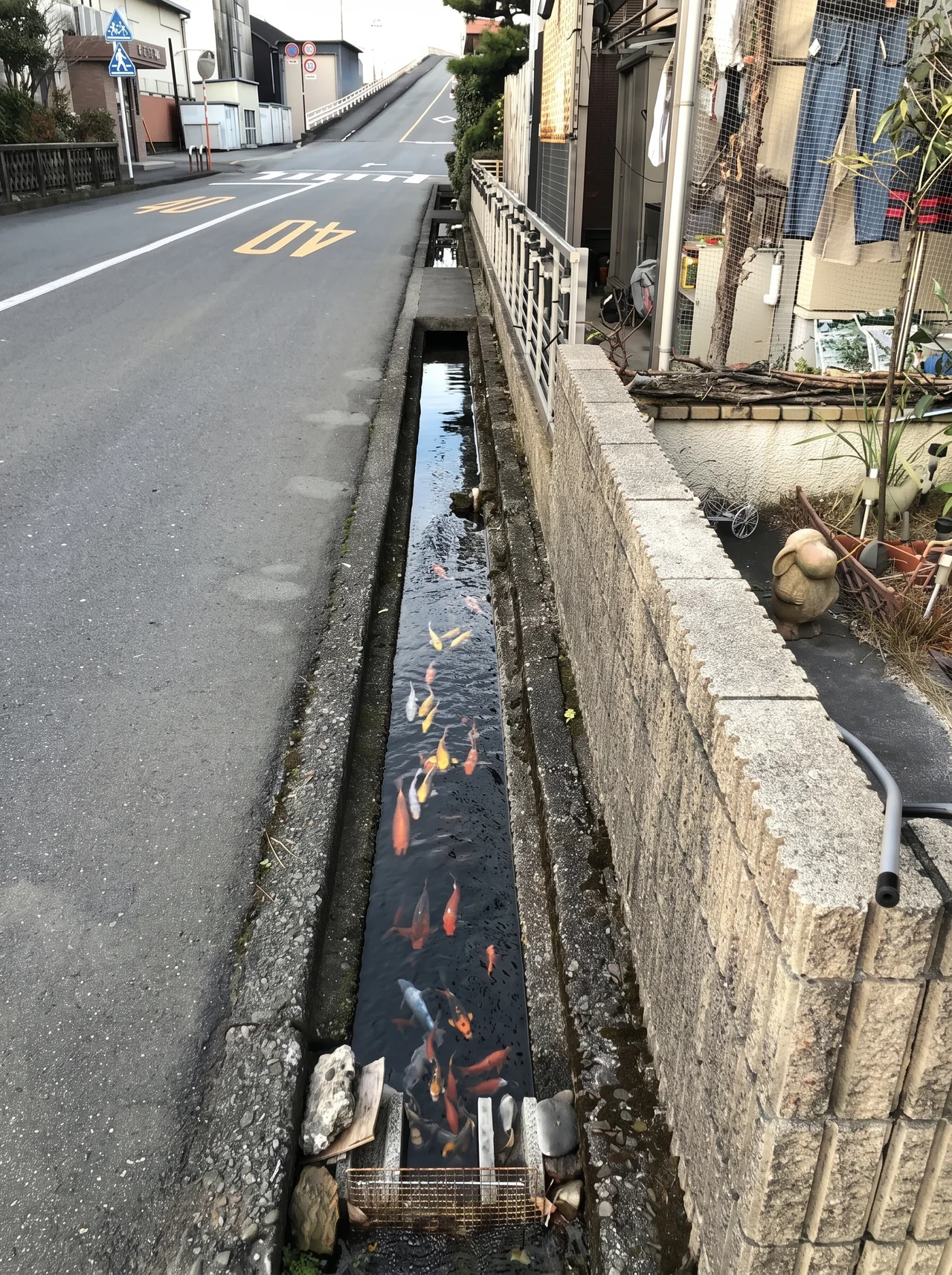
Uncovered Daily Facebook ad: “The Real Reason Japan Is So Clean”
Ran for 39 days, from August 2 to September 10, 2026, the last day Crush saw it.
Run by Uncovered Daily on Facebook. Crush is not the advertiser and does not verify its claims. See this ad in Meta's Ad Library(opens in a new tab)
Want an ad like this for your product?
Crush makes new ad images for your product from this ad: your logo, your product photo, your offer.
Trials from $19.95 USD, then $79.95 USD a month. Cancel anytime.
About this ad
- Meta Ad Library ID
- 2969136776757498
- Platforms
- Facebook, Instagram, Audience Network, Messenger and Threads
- Relaunches
- 0
Ad text
japan's drainage canals are so clean they have fish living in them and the reason behind it is bigger than you think Japan is arguably the cleanest country on earth. And it's not close. Their toilets have heated seats, automatic bidets, deodorizing filters, and sound machines to mask noise. Their bullet trains get fully cleaned in exactly 7 minutes between stops, with the cleaning teams bowing to passengers on the way out. Their kids scrub their own classrooms for 15 minutes at the end of every school day starting at age 6, because Japan doesn't hire janitors. Their homes have separate slippers for the toilet room so nothing from that room ever touches the rest of the house. And their World Cup fans famously stay after every match to clean the entire stadium themselves, section by section, using 3,000 blue trash bags they bring with them. Underneath every one of those habits is a Shinto belief that every object has a spirit and every spirit deserves respect. A toilet. A train seat. A body. If you use something, you clean it. If you touch something, you leave it better than you found it. That's not a marketing slogan. That's a thousand-year-old cultural law. Which means when Japan approaches body hygiene, they don't play. A Japanese shower takes 15 to 20 minutes minimum. Every inch of the body gets a real, deep, deliberate scrub-down. Every single day. There's a Japanese word for what comes off during this process — aka. It's the visible layer of dead skin, oil, and daily grime that lifts when there's real friction pulling against it. The entire ritual is called aka-suri. Literally, "removal of dead skin." Kids are taught aka-suri the same way they're taught to eat with chopsticks. And so the average Japanese adult can visually see the difference between being clean and being wet with soap. Most Americans cannot. It's not a personal failing. Nobody was ever taught the difference here. And then there's how you're showering. You've got a loofah, or a shower puff, hanging from your shower head. You don't remember when you bought it. You couldn't tell anyone how long it's been there. You rinse it after every shower and hang it back up wet, and it stays wet for the next 48 to 72 hours because that's how long a loofah takes to fully dry. Except you shower every morning, so it never dries. Ever. You've been washing your face. You've been washing your hair. You've been washing your armpits and your legs. But your back? Your shoulders? Your chest? You can barely reach them. And when you do, you're smearing yesterday's bacteria into your skin with a piece of mesh that would be considered a hygiene violation anywhere in Japan. That's what the Japanese Dermatological Association figured out in the late 1980s. Their researchers cultured used loofahs pulled straight from ordinary bathrooms and found five different pathogens growing inside every single one. E. coli. Pseudomonas. Staphylococcus. Every one of them causes skin infections, folliculitis, boils, and rashes. Once that research came out, Japan quietly moved on from loofahs. Bath shops stopped stocking them. Aka-suri washcloths took their place. Which is why three generations of Japanese women have grown up not knowing what a loofah even feels like. Americans never got that warning. In 1994, U.S. researchers published a study confirming everything the Japanese found. Same pathogens. Same conclusions. And it never made it out of the medical journals. Which is why loofahs are still hanging in almost every American shower right now, quietly incubating bacteria while everyone using them thinks they're clean. Here's exactly what happens. A loofah is a warm damp mesh sitting in a warm humid bathroom. That's the exact environment bacteria need to multiply. A single bacterium becomes over a million in just 7 hours. Which means every used loofah in circulation is home to hundreds of millions of bacterial colonies at any given moment. The mesh also traps every user's dead skin, body oil, and soap scum. That residue becomes food for the bacteria growing inside, which is why the bacterial load literally doubles every day the same loofah keeps getting used. Rinsing doesn't help. Water can't reach the bacteria growing deep in the mesh. It only pushes them further in and spreads them across more of the fabric. And that faint musty smell that shows up in a loofah after a few weeks isn't soap residue. It's the smell of bacterial colonies releasing gas. Go smell yours right now if you don't believe it. And then here's what happens the moment that loofah touches your skin. The rough mesh creates microscopic tears in the skin every time you scrub. Which sounds like normal exfoliation until you realize those tears are open entry points. And the bacteria growing inside the loofah gets pushed directly through them, into your body. The result is a condition dermatologists have specifically named. Loofah folliculitis. It shows up as small red bumps, chronic body acne, skin infections, boils, and stubborn rashes. Most of it appearing on the back, chest, and shoulders where people scrub hardest. The Japanese identified this pattern in the same research that traced the bacteria. Which is why most Japanese women have never dealt with body acne the way American women have. It's not genetics. It's not diet. It's not skincare products. It's the tool they were handed at age 6 versus the tool the American beauty industry sold your mother. And so you've been spending hundreds of dollars on prescriptions, cleansers, exfoliants, and dermatology visits. None of it works. Your friends deal with the same thing. Your sisters deal with it. Your mother dealt with it before you. And nobody has ever told you the actual cause is the loofah in your shower. Once you understand this, you can't unsee it. You've been fake clean your whole life. And it's not your fault. So what does Japan actually use? Aka-suri. The method has been around for over a thousand years. Passed down through generations. Taught in every household. Used in every onsen and sento in the country. And it's the reason loofah folliculitis basically doesn't exist in Japan. Because of aka-suri, Japanese skin, on average, looks different. Fewer body breakouts. Less bacne, less chest and shoulder rash. Less inflammation. Cleaner pores. The average Japanese adult never experiences the chronic body skin issues most Americans just accept as normal. Which means what looks like better genetics or a mysterious lifestyle secret is actually just a method with a specific tool. The women who have it don't know they have it. The women who don't have it don't know that's the reason. And here's what happens on the skin during a real aka-suri. The cloth pulls. Real pull. Dead skin lifts off in a way you can actually feel through your fingertips. The aka gathers under the fabric — visible on the skin, physical proof that something is being removed that wasn't being removed before. That single sensation is the difference between actually clean and wet with soap. The aka-suri washcloth wasn't engineered by a company. It was refined by centuries of daily use, and every feature exists because generations of Japanese bathers demanded it. It dries in about an hour. Where a loofah stays wet for 48 to 72 hours, the aka-suri washcloth is bone-dry by the next morning. Which alone eliminates the bacteria problem — bacteria need moisture and time to multiply, and this design gives them neither. Because the fibers themselves are antibacterial at the material level, not coated or chemically treated, bacterial and mold growth can't take hold. Which is why when Japanese researchers ran the same cultures on the aka-suri washcloth that they'd run on loofahs, they came back empty. It can be washed in a machine. Every couple weeks, you toss it in with the laundry and it comes out sanitized. Something no loofah has ever been able to do. And the scrub itself is deeper than a loofah, but softer — it removes real aka without creating the microtears that let bacteria into the body. Which means loofah folliculitis has nowhere to start. Best of all, using it doesn't require any technique. You wet it, work up a lather, and scrub. Exactly the same motion as a loofah. The difference is what actually happens on your skin while you do it. And it's long enough to reach your back with two hands. Meaning that filthy area of skin you've been giving up on for years finally gets cleaned. One aka-suri washcloth lasts months. Not weeks. Some Japanese families have used the same one for over a year. Until recently, this tool wasn't available in the U.S. Aka-suri washcloths were being made and sold across Japan for centuries, but almost none of them ever crossed the Pacific. American consumers had never had access. American retailers had never stocked them. Which is why most American women reading this are the first generation in their family who will ever have the option. That changed when someone finally decided to bring the real thing over. The brand is Sima. Japanese-owned. Japanese-made. Japanese-designed. It's not an American reinterpretation of the aka-suri washcloth. It's not a knockoff. It's the exact same brand Japanese families have been using in their bathrooms for generations, imported directly. Same manufacturing. Same materials. Same design the Japanese Dermatological Association has quietly recommended for decades. It just wasn't accessible to Americans until now. Every dermatologist trained in Japan has been quietly recommending it to their patients for years. Cleveland Clinic dermatologists who studied abroad use it in their own showers. And now, for the first time, so can you. Here's what happens in the first 30 days. The first shift happens in the first shower. You wet the cloth, work it into a lather, and start scrubbing your arm. Something registers immediately — the cloth is doing something no loofah has ever done. It's not moving soap around. It's pulling. Real pull. Aka lifting off in a way you can actually feel through your fingertips. And when you glance down at the fabric between passes, you can see the aka gathered on it — visual proof that something is coming off your body that never came off before. It's the exact sensation and sight Japanese women have grown up with since they were kids. By the time you're rinsed and drying with a towel, your skin already feels different. Lighter. Smoother. Water beads on it differently. Your body feels like it just got attention for the first time in your adult life. You stand in the bathroom running your hands over your arms, trying to figure out what changed. Then it clicks. This is what actually clean feels like. Nothing you've done in the shower for the last ten years has come close. By the first week, the physical changes start showing up. The small bumps on your back and shoulders begin to fade. Your skin tone evens. Old bacne scarring lightens. The chronic irritation you'd assumed was your skin type quietly disappears. You also start noticing you smell different. Not because of body wash. Cleaner underneath. By the end of the first month, something bigger has shifted. And it's not just physical. It's how you carry yourself. You lean in for a hug at the end of a date because you know exactly what you smell like. You take your shirt off at the gym like it's obvious. You wear the low-back dress you've been avoiding for two years and don't overthink it. You stand next to your coworker in a meeting after a full day and you're the cleanest person at the table. Not just yourself. The whole table. You get into bed at night and the sheets smell fresh in the morning because your skin isn't leaving anything behind on them anymore. And people notice. Your friend asks what you're doing differently. A coworker mentions your skin looks good. Your sister — still using a loofah — asks what you've changed and you have an answer she didn't know she needed. You catch a reflection of yourself in a window and don't look away. It's the same quiet confidence Japanese women have carried their entire lives without realizing it was a choice, because they never had the option not to be clean. And by that point, going back to a loofah feels the way it feels to a Japanese person. Physically wrong. So here's what to do right now. Throw your loofah out tonight. Not tomorrow. Tonight. Before you go to bed. And don't worry if your Sima hasn't arrived yet. Wash with your bare hands until it comes. Japanese researchers confirmed decades ago what most Americans still don't know — your bare hands are cleaner than a used loofah. Every wash removes bacteria from your palms. Every scrub with a loofah adds bacteria to your body. Bare hands are better than nothing. And nothing is better than a loofah. Sima's current offer is Buy 3, Get 3 Free. Which means one order lands six washcloths at the door. And the reason the bundle exists that way is because in Japan, no household has just one. Every bathroom has an aka-suri washcloth. Every family member has their own. The bundle exists so an American household can equip itself the way a Japanese household would — six washcloths for the main shower, the guest bathroom, the gym bag, and the family members who are still holding on to their loofahs even though they shouldn't be. The bundle also throws in two products that Japanese bathers have paired with the aka-suri washcloth for generations. A Kojic Acid Soap Bar, a traditional Japanese soap that gently evens skin tone and gradually fades dark spots. And a Shea Body Butter that locks in moisture after the shower. Both included at no additional cost. Six Sima washcloths, one Kojic Acid Soap Bar, and one Shea Body Butter for the price of three washcloths. To put it in perspective, a single dermatologist visit for a bacterial skin infection caused by a loofah runs between $150 and $300 before any treatment is prescribed. Prescription creams for loofah folliculitis average another $40 to $150. The entire Sima bundle costs less than one appointment. And it addresses the actual cause instead of chasing the symptoms. And if it doesn't feel completely different from anything you've used before, send it back. Sima has a 30-day money-back guarantee. No questions. No restocking fee. Keep whatever you've already used. If you've thrown out the loofah, used Sima for 29 days, and it did nothing for you, you get a full refund. You literally lose nothing. Orders ship from a U.S. warehouse the same day they're placed. A tracking number arrives within an hour. Two to three days later, six washcloths, the Kojic Acid Soap Bar, and the Shea Body Butter show up at your door. The first shower with a Sima happens the same night the box arrives. Which means the difference between the version of you who reads this and closes the tab, and the version who understands what actually clean feels like, is roughly 72 hours. Now here's what happens if you don't order tonight. Tomorrow morning looks exactly like every morning before it. The loofah stays hanging in your shower, wetter than yesterday because bacteria doubled overnight. You pick it up. You scrub yesterday's bacteria into your skin. You rinse. You hang it back up. And nothing changes. Not tomorrow. Not next week. Not until you finally throw it out. Meanwhile every woman in Japan is stepping out of her shower having just done a real aka-suri with the washcloth that's been in her family for generations. And she's carrying herself accordingly through the rest of her day. The research has been public for over 30 years. The Japanese Dermatological Association figured it out before any American manufacturer had a chance to sell a single loofah. Every dermatologist trained abroad has known. Japan just gets it. The only thing left is the decision. 👉
Where the ad sends people
bodyskinjournal.com
The Real Reason Japan Is So Clean
Sima
Learn more: tryfindmesafe.com(opens in a new tab)