Helen Glover
Helen Glover Facebook ad: “I didn't sleep for 3 years.”
Ran for 52 days, from June 7 to July 29, 2026, the last day Crush saw it.
Run by Helen Glover on Facebook. Crush is not the advertiser and does not verify its claims. See this ad in Meta's Ad Library(opens in a new tab)
Want an ad like this for your product?
Crush makes new ad images for your product from this ad: your logo, your product photo, your offer.
Trials from $19.95 USD, then $79.95 USD a month. Cancel anytime.
About this ad
- Meta Ad Library ID
- 3016919565168196
- Platforms
- Facebook, Instagram, Audience Network, Messenger and Threads
- Relaunches
- 0
Ad text
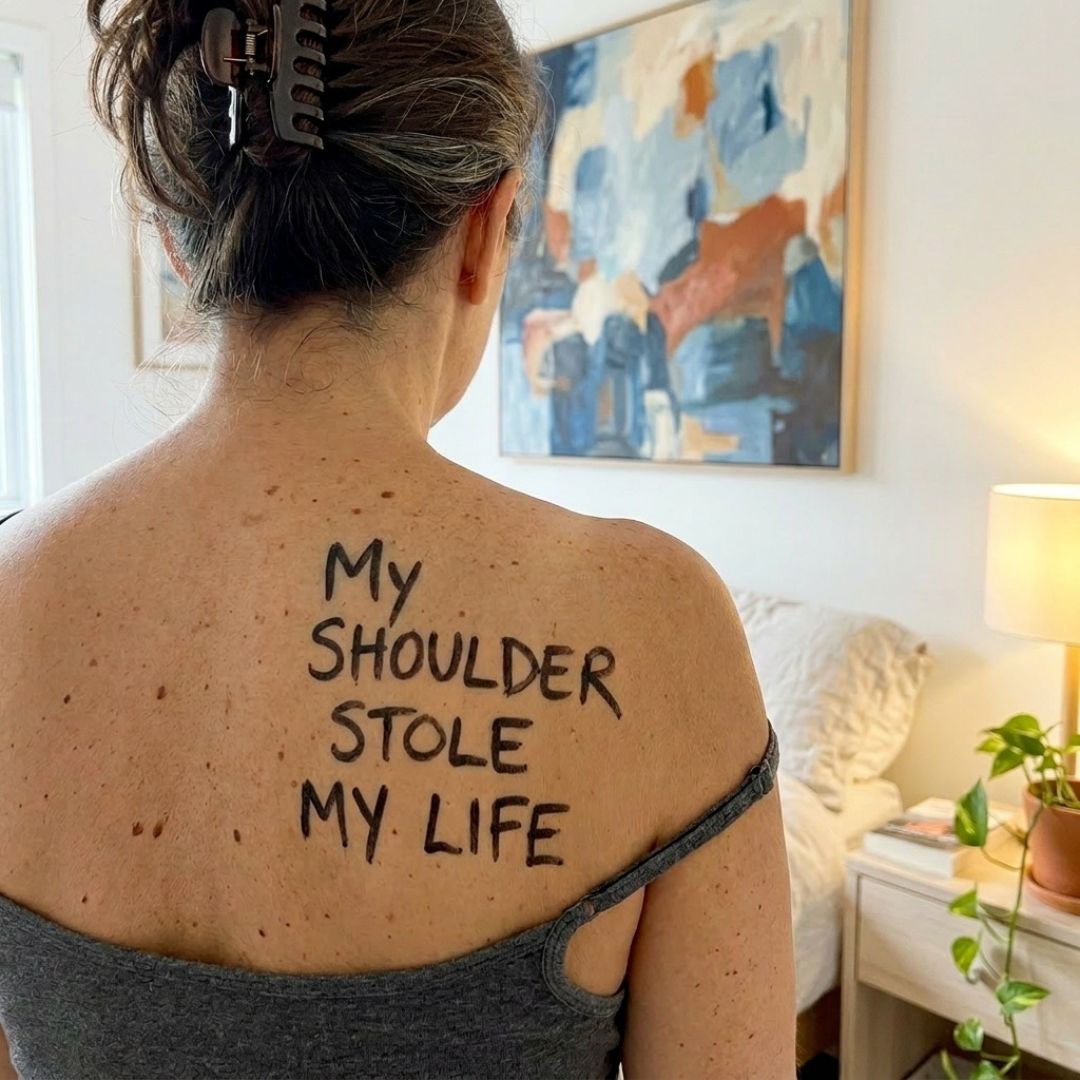
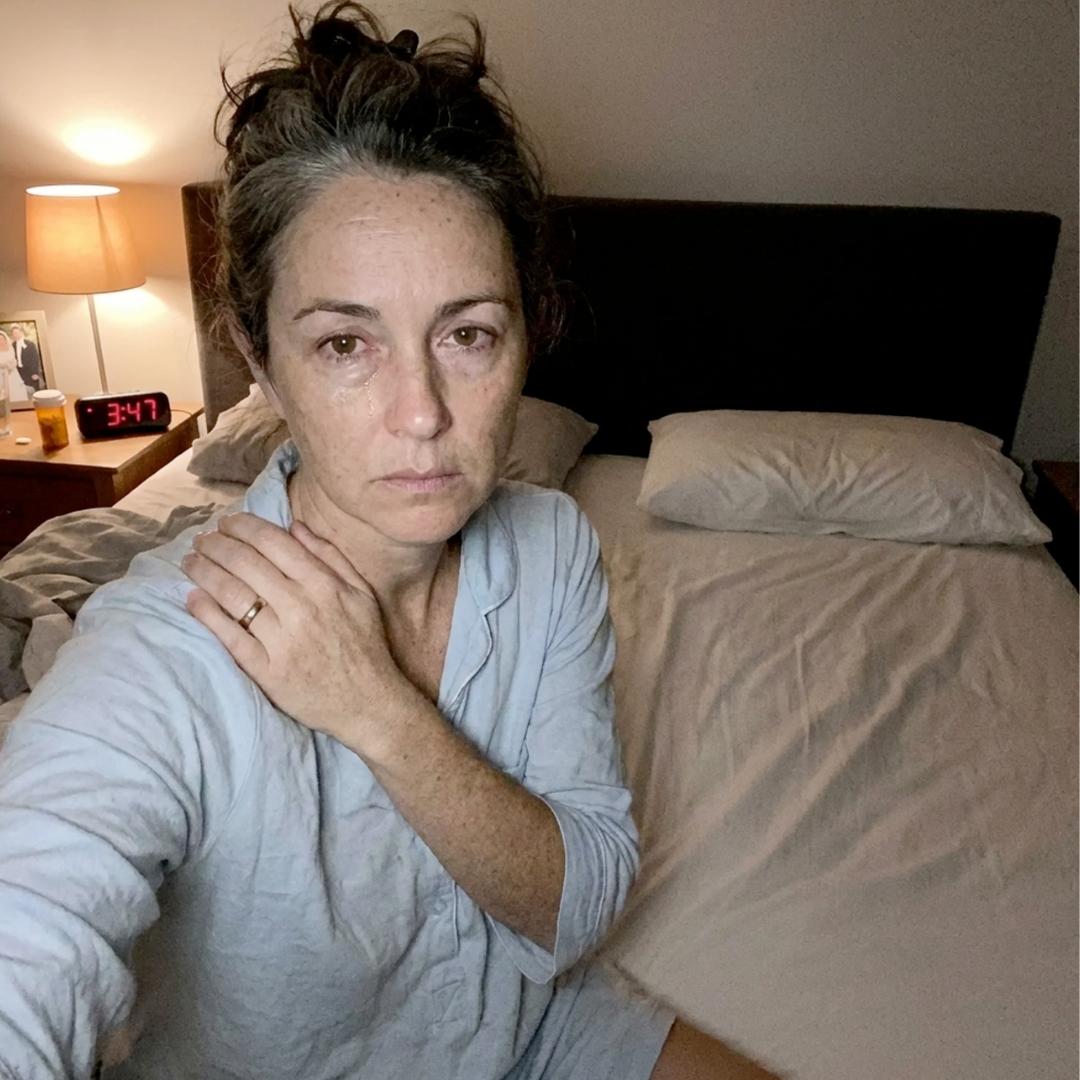
It started with a stiff neck. It ended with me convinced I was having a heart attack at parent-teacher interviews, on antidepressants I didn't need, and out of the classroom I'd taught in for twenty-eight years. All of it was because of my shoulder. Not my neck. Not my anxiety. Not my age. My shoulder. And not one of the seven specialists I saw over three years figured it out. Eventually a physiotherapist did. In about ten minutes. But not the first one I'd tried. My name is Helen Glover. I am 52. I taught Year 5 at a primary school in the Adelaide Hills for twenty-eight years until I couldn't anymore. This is what happened, and I am writing it because nobody told me, and somebody should have. The first stiff neck. It started on a Tuesday in March 2022. A small stiffness when I woke up. I stretched it out in the shower. By morning recess I'd forgotten about it. It came back the next week. Then the week after. I bought a new pillow from a sleep shop in Mount Barker. $179. Then a high-end down one from David Jones. $240. Worse. By Christmas I had four pillows in our linen cupboard and a daily stiffness that wouldn't go away no matter how I slept. Then came the headaches. A band at the base of my skull, climbing across my head over the course of the morning. By recess I sometimes had to close the classroom blinds and sit at my desk with my eyes shut for the ten minutes the children were outside. My GP measured my blood pressure. Normal. "Tension headaches. Probably stress. Anti-inflammatories. Come back if it doesn't settle." It didn't settle. By June 2023 I was taking ibuprofen every morning before school. I'd had two children without an epidural. I'd never been a person who took painkillers regularly. I rang my mother that month and lied through my teeth about it. The classroom. The dizziness started on a Wednesday afternoon in October 2023. Last period, Year 5 solar system. I was reaching for a textbook on the high shelf when I turned my head and the room tilted hard to the left. I grabbed the desk. Mia Patterson, eleven, second row from the back, asked me if I was okay. I told her I'd stood up too fast. I drove home at sixty kilometres an hour with my hands locked at ten and two. The ENT said my inner ear was fine. "Possibly mild dehydration." I sat in his carpark for thirty minutes before I drove home. I told my sister Catherine that night and said the words "something is really wrong with me" out loud for the first time, and I cried. Parent-teacher interviews. Now I have to tell you about February 13th, 2024. Parent-teacher interviews. My fourth family was a single dad called Greg Andersen, an electrician, thanking me for what I'd done for his son Tom. Four minutes into our slot my heart suddenly started beating very fast. Not nervous fast. Sprinting fast. I could feel it in my throat. My hands started shaking. I couldn't get a full breath. Greg saw my face change. "Mrs Glover? Are you all right?" I tried to tell him I needed a minute. What came out was the noise people make when they realise they cannot get air. Greg stood up and called for help. The deputy principal counted my pulse with his fingers on my wrist and said, very quietly, "Helen, that's a hundred and forty." I was sitting on the floor of my own Year 5 classroom, in front of a man whose son I had just praised, and my heart was running at a hundred and forty beats a minute. Michael drove me to the Royal Adelaide. Six hours. ECG. Bloods. A cardiologist at 11:40pm: "Mrs Glover, your heart is in excellent condition. This is almost certainly anxiety. Very common in women your age." The psychiatrist prescribed Endep two weeks later. "You're a woman in midlife with a stressful job." I started it that night. It made me feel like I was watching myself from underneath water. The year I disappeared. I'm going to compress 2024 because if I don't I won't be able to finish writing this. Two more episodes by April. Three days a week at school by May. By June Michael had moved into the spare room. We didn't talk about it. He just started "reading late," then "not wanting to disturb you." Thirty-one years of marriage. First time in separate beds. By July I'd missed three book clubs in a row. Sandra — sixty-one, retired teacher, my closest friend since 1998 — texted me on a Saturday: "Helen. I know you're not well. We are here when you can come back." I didn't reply for two months. By September I was crying in the school carpark before work. Once at the checkout of the Coles Bridgewater, because the woman in front of me bought a pillow. In November 2024 I wrote a resignation letter at our kitchen table on a Sunday afternoon while Michael was in the spare room. Two paragraphs. The principal cried. I didn't. I'd done all my crying weeks before. I was 51. I had no plan, a husband I was no longer touching, two friends who'd stopped calling, and a shoulder that hurt every time I lay down on it. In thirty-five months I had seen seven specialists: GP, physio, ENT, cardiologist, psychiatrist, an orthopaedic surgeon who charged me $310 to look at my MRI and tell me to "learn to manage it," and a pain management specialist who gave me three cortisone injections at $480 each. Total cost: roughly $6,800. The article. In late January 2025 my sister Catherine drove up to our house with a printout. A piece in a women's health newsletter had landed in her inbox the day before, and the headline had stopped her cold. It was about a condition called Shoulder Compression Syndrome. The article described a woman around my age with three years of unexplained headaches, intermittent dizziness, and what had been diagnosed as panic attacks. A physiotherapist had figured it out in a single session. I read it four times. I rang her clinic that afternoon. But the physio was on a holiday. But the receptionist told me there was another physiotherapist in Sydney who had trained with her and was treating the same condition. I flew to Sydney on February 14th 2025. Catherine came with me. Michael didn't, we hadn't yet talked about the spare room. The Sydney physio was a small, sharp, kind woman in her early forties with the focus of a person who has seen exactly what you have many times before. She took my history in fifteen minutes. She had me lie on her examination table on my left side, on a flat block. Then she pressed the top of my left shoulder. Just pressed it. The pain shot straight up the side of my neck and into the back of my head. The exact pain I'd had for three years. She sat back. "You have Shoulder Compression Syndrome. I see this every single week. And I have very rarely seen it caught by a GP." Your shoulder needs somewhere to go. If you take only one thing from this story, I want it to be this. She told me: "When you sleep on your side, your shoulder is the widest part of your body. Most pillows lift your head — but they don't make room for your shoulder. So your shoulder ends up pinned under the weight of your head and neck. It cannot rest. And because it cannot rest, it pushes up into the side of your neck. For eight hours every night." "That kind of compression doesn't just hurt your shoulder. It refers pain into your upper back and into the base of your skull. And — this is the part that gets missed — eight hours of it every night keeps your nervous system stuck in a stress response. Which is why side sleepers with chronic shoulder compression often present, eventually, with what looks exactly like anxiety. Headaches. Dizziness. Racing heart." "In clinical terms, brachial plexus compression with autonomic referral. In plain English: your shoulder has no room. Your neck is paying the bill. Your heart is filing the complaint." I sat on her examination table and I started crying. After a minute she said: "Helen. Your shoulder needs somewhere to go. Every single night. That is the entire problem." I asked her what I was supposed to do. "Stop sleeping on a flat pillow. Get one with deep shoulder cut-outs. The one I recommend is called Sleepsake. I recommend it to about eighty percent of my shoulder pain patients with cervical symptoms. It is not optional, for you." I bought one that night at the hotel on my phone. 100-night risk-free trial. Catherine looked at me and said: "Helen. If this works, I will buy you ten more." Five days. The pillow arrived Tuesday. I did not open the box. It was the humiliation. I had spent thirty-five months and almost seven thousand dollars and the answer was, apparently, a pillow with a funny shape. If it worked, every one of those months had been avoidable. I left the box on the dining table from Tuesday to Saturday. On Saturday morning Michael walked into the dining room and he looked at the box and he looked at me and he said: "Helen. I am going to open it." He cut the tape with our kitchen scissors. He pulled the pillow out — the cut-outs, the contour, the strange butterfly shape — and he said: "Helen. This looks ridiculous. Try it tonight." Your face is different. I woke up at 6:42am on February 24th 2025. My alarm was set for 6:15. I had slept past my alarm for the first time in over two years. I lay there in the dark for ten minutes. I was on my left side — the side I hadn't been able to sleep on since the headaches started. My shoulder did not hurt. My neck did not hurt. There was no band around the back of my head. There was no fog. There was just a 52-year-old woman lying in her own bed in the quiet of the Adelaide Hills, listening to a magpie outside the window and breathing easily. Michael walked in at 7am holding two cups of tea. He had been sleeping in the spare room for eight months. He sat on the edge of the bed. He looked at me for what felt like a long time. He said, very quietly: "Helen. Your face is different." My husband Michael is a retired electrician from Adelaide who has said maybe three poetic things to me in thirty-one years of marriage. That was the third. He moved back into our bedroom that night. Coming back. A week in I was sleeping seven hours. The headaches had not come back at all by the end of the first month. On March 18th I went back to book club. The same chair I had sat in for seventeen years. Sandra cried. Jenny cried. The other four women cried. I cried. We did not get to the book. By May I had agreed to go back to my school part-time as a literacy tutor. Mia Patterson — the eleven-year-old who had asked me if I was okay in October 2023 — was twelve now. She hugged me in the corridor. By August I had not had a dizziness episode in six months, a headache in four, or a panic episode since the day I left the clinic in Sydney. I have my life back. Eleven women in my life have bought a Sleepsake on my recommendation since March. Sandra texted me the morning hers arrived: "Helen. I've had this neck thing for seven years. Two days. Two days and it's gone." My own mother, 78, rang me on her birthday to tell me, in her exact words, that I had given her "the best winter sleep of the last decade." I need to be clear. I wrote this post for one reason. My daughter Emma asked me to, last month over a coffee in Carlton — because she watched her mother disappear for three years and she is tired of women being told to learn to live with pain that turns out to be a pillow problem nobody has bothered to name properly. The physiotherapists I saw are real practitioners. I have not given their names here to respect their privacy. The seven specialists who missed it are real and unnamed, because I have no interest in embarrassing people who were doing their jobs as they had been trained to do them. Catherine, Michael and Emma are all real and my actual family. I have lost three years of my life to a problem nobody connected to my shoulder, and I have it back because of a pillow I almost didn't open. If you are reading this. If you sleep on your side and cannot sleep any other way. If you have headaches that nobody can explain. If you have dizziness that the GP put down to stress. If you have a racing heart they told you was anxiety. If you have a shoulder that aches in a way you have stopped mentioning, because everyone is tired of hearing about it — please read what I am about to say twice. The problem might not be your age. The problem might not be anxiety. The problem might not even be your neck. The problem might be that your shoulder has nowhere to go for eight hours every single night, and your neck is paying the bill, and your heart is filing the complaint. The pillow is called Sleepsake. Reasonable cost. Free shipping across Australia. 100-night risk-free trial. No restocking fees. No shipping fees on return. After three years of my life, a pillow at a reasonable cost with a return policy was not a difficult decision. There is a morning somewhere with your name on it. You do not get to pick the morning. You only get to pick what your shoulder is resting on when it arrives. — Helen Glover Adelaide Hills, 2026 P.S. I lost three years I will never get back. I lost a job I loved. I almost lost a marriage. I lost two of my closest friendships and I am still rebuilding them. None of it had to happen. P.P.S. If you have a mother, a sister, an aunt, a wife — anyone over 45 who is suffering from shoulder pain — please send her this today. Not next week. Tonight. She shouldn't have to learn to "manage" pain that has a name and a solution. The next morning is going to come whether she is ready or not. She does not get to pick the morning. But she gets to pick one thing. Please.
Where the ad sends people
sleepsake.com.au
I didn't sleep for 3 years.
I'm a 52-year-old teacher from Adelaide Hills. Seven specialists misdiagnosed me. This is what happened.
See details: sleepsake.com.au(opens in a new tab)