Arterial Health Secrets
Arterial Health Secrets Facebook ad: “Surviving isn't recovering”
Ran for 110 days, from May 24 to September 11, 2026, the last day Crush saw it.
Run by Arterial Health Secrets on Facebook. Crush is not the advertiser and does not verify its claims. See this ad in Meta's Ad Library(opens in a new tab)
Want an ad like this for your product?
Crush makes new ad images for your product from this ad: your logo, your product photo, your offer.
Trials from $19.95 USD, then $79.95 USD a month. Cancel anytime.
About this ad
- Meta Ad Library ID
- 3169221026594582
- Platforms
- Facebook, Instagram, Messenger and Threads
- Relaunches
- 0
Ad text
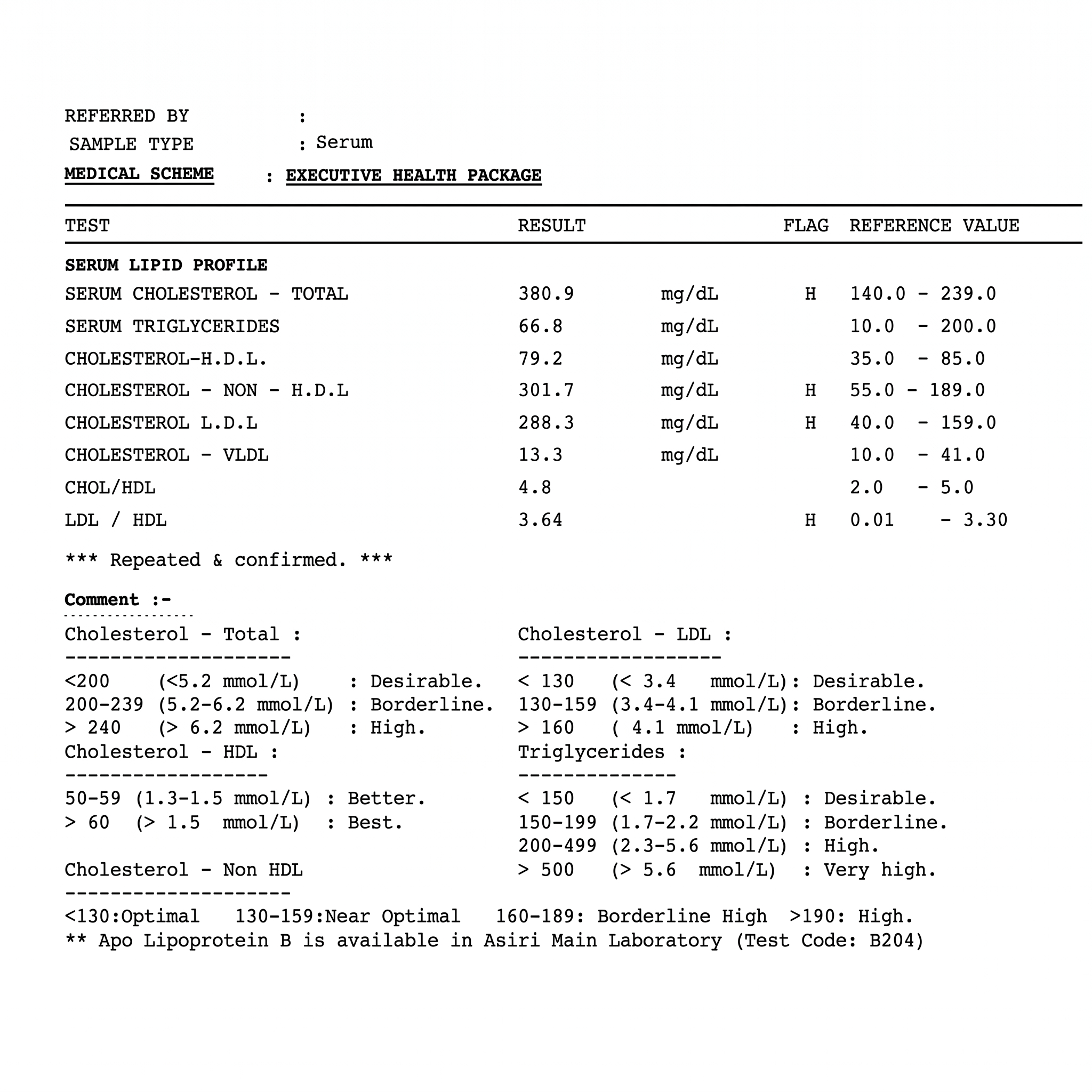
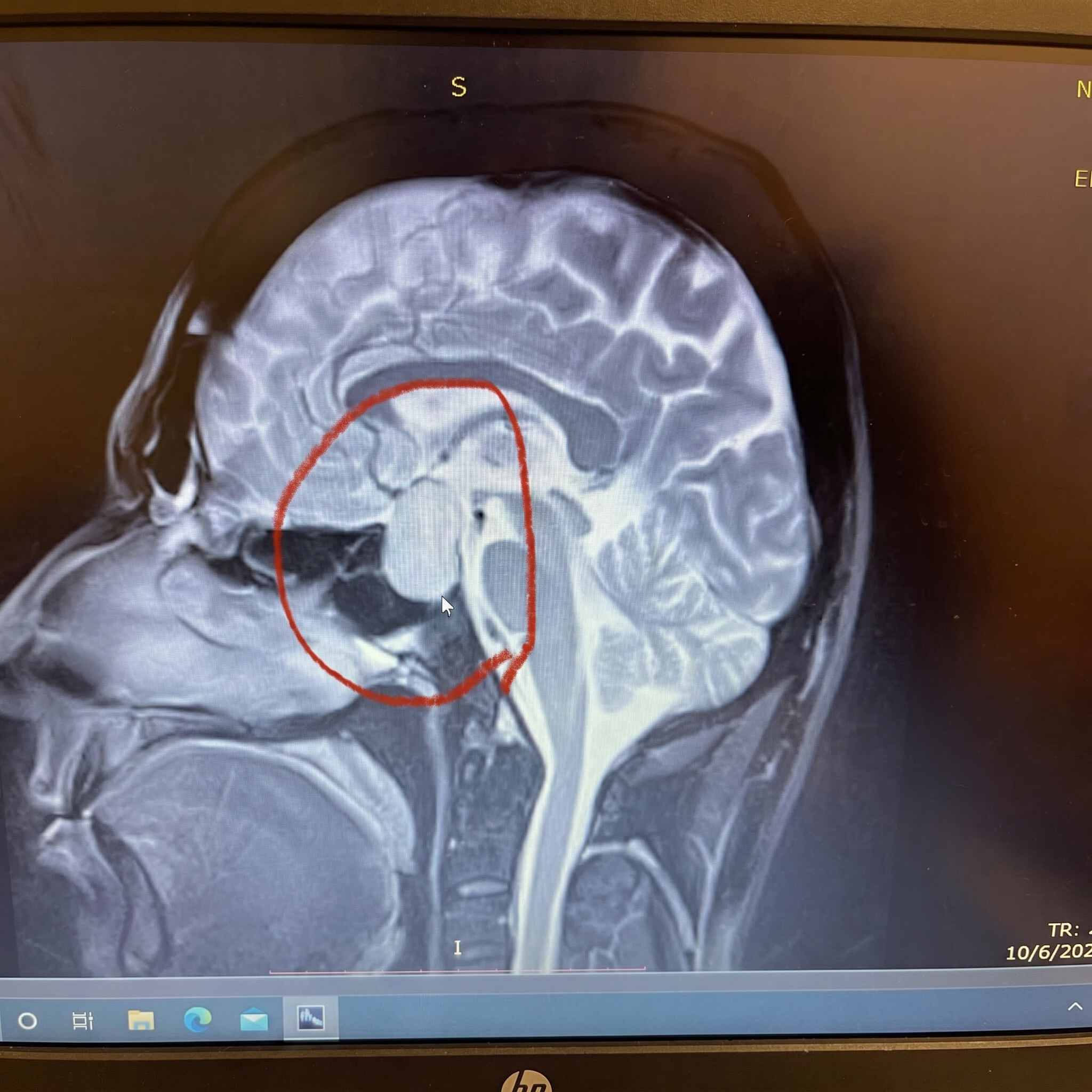
The American Heart Association classifies a coronary calcium score above 400 as the highest-risk category for major cardiovascular events within 5 to 10 years. Most men in that category are given a statin and told to come back for another scan. Nobody explains that the same plaque the scan is measuring in the heart is also building in the cerebral arteries — and that the rupture, when it comes, often comes in the brain first. Mine did. I was 58. I'm writing this 14 months after my stroke. From the same kitchen table where my wife found me on the floor. I want to write to one specific person. The man reading this who got a high calcium score back at some point in the last few years and was told to take a statin and come back for another scan. The man whose number was somewhere between 100 and 1000. The man whose cardiologist gave him a stack of prescriptions, a folder of lifestyle recommendations, and absolutely no explanation of what the underlying disease actually was — or whether you can do anything about it from your end beyond what's on the printout. If that was you four years ago, and you're still on the same medications, and your last scan came back higher than the one before — what I'm about to write is for you specifically. I had the warning. My calcium score was 412 at age 54. My cardiologist increased my statin, told me to lose weight, and asked me to come back in a year. I did everything he told me. My next scan came back at 487. The one after at 561. By the time I had my stroke at 58, the last scan he'd taken was 624. The medications didn't stop the progression. They slowed it. They reduced my LDL. They managed my blood pressure. They did exactly what they were designed to do — and the disease kept building underneath the entire time, until one of the plaques in my brain ruptured and cut off blood flow to the right side. That's what nobody told me in any of those twelve-minute appointments. The calcium score isn't the disease. The calcium score is the receipt. The disease had been progressing in my body for fifteen or twenty years before that first scan picked it up. The number on the printout is a measurement of how much calcified plaque has already built up in the walls of your arteries. It's not a prediction of what's coming. It's a record of what's already happened. And it was telling me that the same systemic vascular disease that produces strokes, heart attacks, erectile dysfunction, kidney disease, and cognitive decline had been silently building inside my arteries for two decades. A high calcium score doesn't just mean you might have a cardiac event. It means the systemic vascular disease that produces strokes is also progressing in your cerebral arteries, at the same rate, through the same mechanism. The coronary arteries get scanned because we have tools to measure them. The cerebral arteries don't get scanned the same way. But the disease is the same disease. The plaque is the same plaque. And when it ruptures in a cerebral artery instead of a coronary one, what you get isn't a heart attack — it's a stroke. I'm back to about 85% now. I walk with a slight limp my wife pretends not to notice. My left hand still won't do up small buttons. I take five medications a day, three for the rest of my life, and one that requires me to get blood drawn every six weeks to make sure I'm not about to bleed internally. The doctors saved my life. The medical system did exactly what it was designed to do. It pulled me back from the edge after I'd already walked off the cliff. But it didn't have to be this way. The warning was there. I had it for four years. Nobody had explained to me that the elevated calcium score meant the disease was progressing system-wide, not just in my heart. Nobody had explained that the same plaque the scan was measuring in my coronary arteries was almost certainly building in my cerebral arteries too. Nobody had explained that there was a body of research, fifteen years deep, on a mechanism that could have actually slowed the underlying disease — not just managed the markers. If you're sitting at home right now with an elevated calcium score and a folder of prescriptions, I need you to understand something that took me four years and a stroke to figure out. The medications you're on are protecting you. They are not healing you. And the disease the calcium score measures is the same disease that produces strokes. Three months into my recovery, my wife found an internal medicine specialist for me — Dr. Edmund Hale, 25 years in practice. I sat across from him and asked the only question I had left: "Is there anything I can do from my end, or am I just supposed to take these pills and wait for the next event?" For most of his career, his honest answer to that question was: take the pills and wait. That changed three years ago when he started reading the literature on a vascular receptor called TRPV1. TRPV1 is a receptor in the endothelium — the thin lining of every blood vessel in your body. When it's activated, it triggers sustained nitric oxide production directly inside the vessel wall. Nitric oxide is the molecule that tells your blood vessels to dilate. It's the molecule your endothelium stops producing as plaque accumulates. It's the molecule that, when restored, lets damaged vessels begin to function again and lets the body's natural mechanisms start reducing the inflammation that drives further plaque formation. The compound that activates TRPV1 most reliably in human tissue is capsaicin — the active molecule in cayenne pepper. This is the part Dr. Hale spent the most time on, because I asked him the same question you're probably asking right now. If this is about nitric oxide, why not beetroot? Why not L-citrulline? Why not just take more statin? Here's the answer. Statins lower LDL by blocking cholesterol production in the liver. They reduce one input into the disease — but they don't repair the endothelium, they don't restore nitric oxide production, and they don't address the inflammatory pathway that drives plaque progression. Cardiovascular research has shown that statin therapy alone, even with good LDL control, leaves roughly 50% of patients still progressing on calcium scoring over time. The score keeps climbing while the medication keeps doing its job. That's why my score went from 412 to 624 in four years even though I was compliant with every prescription I was given. Statins are part of the solution. They are not the whole solution. They were not enough to stop my stroke. Beetroot works through dietary nitrates. Your saliva converts the nitrates to nitrite, then your stomach acid converts the nitrite to nitric oxide. The conversion is inefficient, the effect peaks in 2 to 3 hours, and it doesn't reach the damaged endothelium directly. Useful for athletic performance. Not built for structural arterial repair. L-citrulline is the precursor your body converts to L-arginine, which is the precursor to nitric oxide via the eNOS enzyme. The problem is the eNOS pathway itself. In a damaged endothelium, that pathway is already broken. Giving your body more raw material doesn't help if the factory making the nitric oxide has stopped functioning. L-citrulline works for healthy endothelium. It doesn't repair a damaged one — which, by definition, is what you have if your calcium score is above zero. Capsaicin works differently. It doesn't lower one input, flood the bloodstream temporarily, or rely on a broken pathway. It activates a separate receptor — TRPV1 — that triggers nitric oxide production directly inside the vessel wall, on a sustained basis, through pathways that still function even when the eNOS pathway is compromised. And research has shown it does something none of the others do: it actively suppresses the NF-kB inflammatory pathway driving plaque progression, which lets the artery wall begin to heal rather than continuing to calcify. A 2010 study in Cell Metabolism showed sustained TRPV1 activation restored endothelial function in damaged vessels (Yang et al.). A 2017 study in Atherosclerosis showed reversal of early atherosclerotic changes in 67% of subjects over 90 days (Hao et al.). A 2020 randomized study of 51 metabolic syndrome patients showed 34% improvement in small vessel flow-mediated dilation after 12 weeks. A long-term cohort following metabolically compromised men over 18 months showed measurable reduction in coronary calcium progression rate compared to control. The evidence isn't speculative. It's been building quietly in vascular medicine journals while the rest of medicine focused on managing LDL. Then Dr. Hale was careful with me. He said what I needed to hear, and I'll say it to you the same way. Capsaicin does not undo a stroke. It does not regenerate dead brain tissue. It does not eliminate calcified plaque that has already formed. It does not replace your medications. It does not make you safe to stop your blood thinner, your statin, or anything else. If you stop those without your doctors' supervision, you can have another event and die. No supplement prevents that. What capsaicin does is two things at once: it slows the formation of new plaque by restoring endothelial function, and it stabilizes existing plaque by reducing the inflammation that drives rupture risk. The rupture is what causes the stroke. Stable plaque is far less likely to rupture than soft, inflamed plaque. For a man whose calcium score is already elevated — which includes me, four years before my event, and you, right now — the question isn't "can I get back to zero." That question is mostly gone. The question is whether you spend the next 10 or 20 years watching your score climb 15 to 25% per year while you wait for the rupture, or whether you slow that progression to something closer to flat and reduce the rupture risk at the same time. That's what the published research suggests is achievable. That's what I'm doing now. The man who reads this and acts on it is a different man from the one I was at 54. Dr. Hale recommended Aurivita Capsaicin Power. Three softgels deliver 3mg of standardized capsaicin per serving, suspended in cold-pressed oil. The lipid suspension matters because raw cayenne breaks down in stomach acid within minutes. The oil-suspended extract reaches systemic circulation in the form the research has used. Alongside the capsaicin, each serving contains hawthorn extract, berberine, beetroot extract, ginseng, and vitamins D3, K2, and E. The D3 and K2 combination matters specifically for men with elevated calcium scores — K2 helps direct calcium away from arterial walls and back into bone tissue, where it belongs. I took the protocol to my neurologist first, because I'm on a blood thinner now after the stroke. I asked specifically about the interaction with my apixaban. She told me capsaicin has documented effects on platelet aggregation, which means it can theoretically interact with blood thinners. She wanted to monitor my coagulation markers. She did not tell me not to take it. She told me to keep her informed. If you are on a blood thinner — apixaban, warfarin, clopidogrel, anything — you must speak with your prescribing physician before adding this or any supplement to your regimen. If you are on statins and BP medication only, the interaction profile is clean, but you should still inform your cardiologist of any additions to your regimen. I started six months ago with my neurologist's monitoring. The first thing I noticed was my hands. They'd been cold since the stroke. By week three, they were warm again. By week five, I had energy in the afternoons I hadn't had in two years. My BP started trending downward at the same dose of medication. My inflammatory markers, particularly hs-CRP, dropped significantly. I'm scheduled for my follow-up calcium scan in two months. I don't know what the number will be. Nobody can promise me it'll be lower than 624. But I know the trajectory the disease was on before I started this protocol, and I know what the published research predicts the trajectory looks like with sustained TRPV1 activation. My wife reached for me on a Sunday morning a few weeks ago in a way she hadn't in over a year. I'd been dreading the neurology appointment that morning. Holding her was the first moment I'd actually felt hopeful since the stroke. Aurivita backs every bag with a 120-day money-back guarantee. Four months to know whether your body is responding — whether your inflammatory markers are moving, whether your blood pressure is responding, whether your next scan tells a different story. If it doesn't, send the bag back, full refund. You did not cause your calcium score. The disease had been progressing in your body for decades before the scan picked it up. You missed it because the disease is silent until the scan catches it. You are not a man who failed to take care of himself. You are a man who was failed by a system that measures the disease but doesn't repair it. You got a warning early enough to do something about it. Most men don't. Most men get the warning at the moment they're being wheeled into the ER, or the moment their wife is calling an ambulance from the kitchen floor. The medications are protecting you. The score is still climbing. You got a warning I wish someone had explained to me four years before my stroke. What you do with it is the only part of this story you still control. — Written by a stroke survivor whose calcium score was 412 four years before the event 👉 https://aurivita.co/products/cayenne-pepper-softgels *Individual experiences vary. These statements have not been evaluated by the FDA. This product is not intended to diagnose, treat, cure, or prevent any disease. If you have an elevated coronary calcium score or any cardiovascular condition, you must consult with your prescribing physician before adding any supplement to your medication regimen, particularly if you are taking anticoagulants, antiplatelet medications, or blood pressure medications.*
Where the ad sends people
aurivita.co
Surviving isn't recovering
Support strong circulation today with our powerful cayenne pepper formula. 180 softgels and 60 servings per bag.
Learn more: aurivita.co(opens in a new tab)