
Inactive· since Aug 8, 2026
- 12
- days it ran
- 0
- relaunches
Ad copy
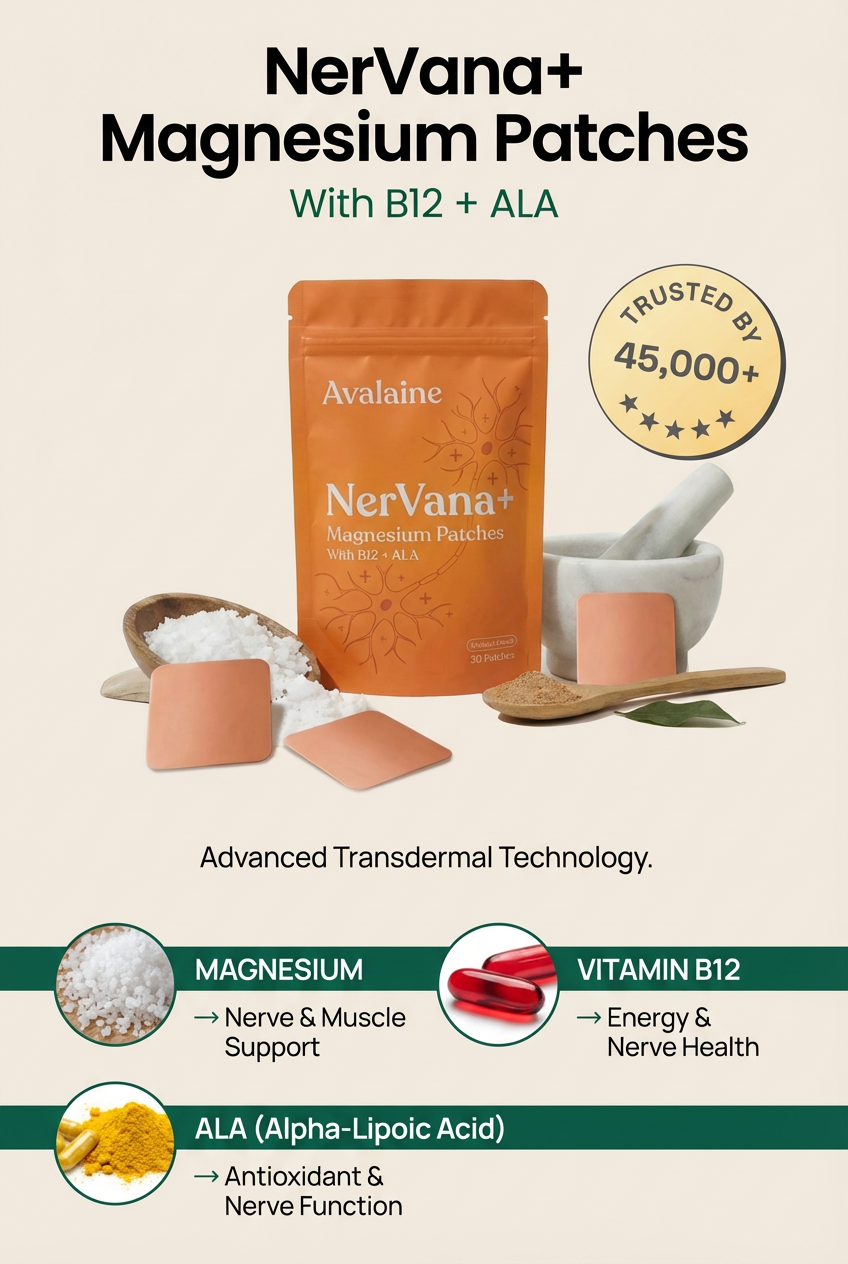
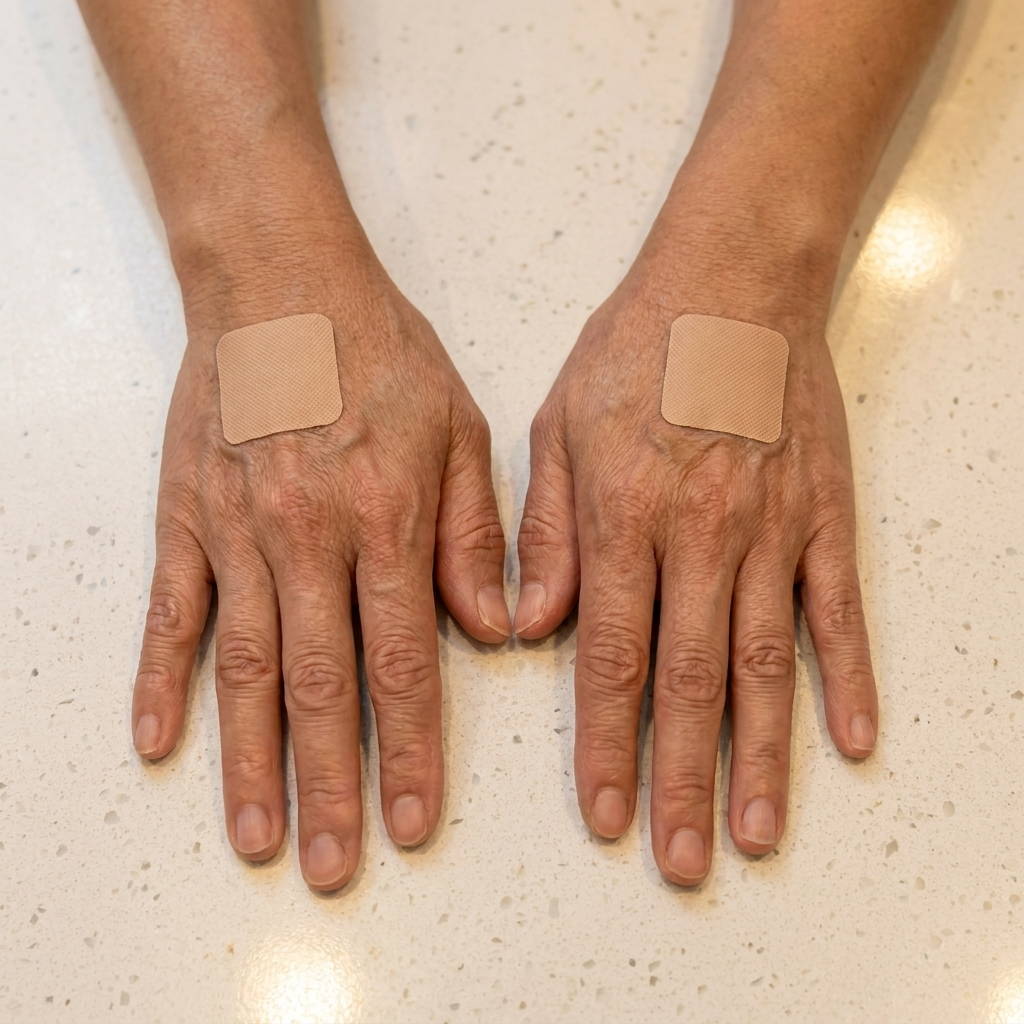
I'm a dentist. I clean out people’s mouths for a living. I know it’s not everyone’s favorite place to be, but I love it. About a year ago, for the first time ever in my career, I dropped an instrument while inside someone’s mouth. That was the last time I saw them. It didn’t slip. My hand just couldn’t feel it anymore and it dropped. Started bleeding immediately at a routine cleaning. I run a small practice two exits off the highway — four operatories, a hygienist named Pam who's been with me longer than my marriage, a fish tank in the waiting room that the kids love and the adults pretend not to look at. I grew up watching my mother do this same job. She practiced for thirty-one years two towns over, and some of my earliest memories are of sitting in her waiting room after school doing homework, listening to the suction sounds through the wall. She retired at sixty-three. Her hands just stopped letting her. I was mid-cleaning about a year ago, an ultrasonic scaler in my hand, a patient I'd been seeing twice a year for a decade. And it just — left my fingers. I didn't feel it start to slip. I felt it hit the floor. It caught the inside of her cheek on the way down. Not deep. But there was blood in her mouth, from my hand, in my chair, and in fifteen years I had never once had to say, "I'm so sorry, let me get you something for that," to a patient I'd nicked myself. My name's Grace. I'm 41. Married, two kids, and until about a year ago I'd never thought about my hands as anything other than the thing that pays for this life. I scheduled an appointment for myself, which felt strange because I'm usually the one asking the questions, not answering them in a paper gown. I squeezed it in during my Wednesday lunch, the one day a week Pam and I close a little early for inventory. My doctor checked my reflexes, ran a couple of tests, asked about my diet, my alcohol, my family history. When I mentioned my mother, she wrote something down and didn't tell me what. "It could be early signs of peripheral neuropathy," she said. "Let's not jump straight to medication. I want you eating better if possible, moving more, and cutting back on alcohol. We'll see where you're at in a few months, and if it's still progressing, we'll talk about what else is available." I sat in my car in the parking lot afterward and actually felt something close to relief. A plan. Something to do. I've said some version of that sentence to nervous patients more times than I can count — lifestyle first, medication if we need it — and it had always sounded reasonable coming out of my own mouth. It sounded different sitting in the passenger seat of it. So I did it. Actually did it, the way I wish more of my patients would when I hand them the exact same speech. I started running again, not far, just two miles a few mornings a week before the kids woke up, something I hadn't done since dental school. I stopped keeping wine in the house on weeknights, which my husband noticed before I said anything about why. I started doing the grocery pickup for the good produce place across town instead of whatever was closest, and paying for it without complaining about the total the way I used to. Six weeks in, I felt good. Not just about my hands, just good. Sleeping better. Down four pounds I hadn't been trying to lose. I remember standing at the sink one night thinking I'd actually done it, gotten ahead of something before it became a problem, which is not usually how anything in my life works. Then, at the start of week seven, I was giving a mandibular block, which is a local anesthetic injection, deep, close to a nerve bundle you do not want to miss and do not want to overshoot. I couldn't feel the needle in my own hand the way I needed to. Not numb exactly. Just... quieter than it should have been. Like trying to thread a needle wearing a thick cotton glove one size too big. I remembered the cleaning incident and thought I could feel the needle falling from my hand. I pulled away from my patient’s mouth somewhat abruptly, my assistant Tracy was watching my face instead of the patient's mouth because she's worked with me long enough to know when something's wrong before I say it. I froze for a second. Recalibrated. Went slower than I've gone since I was a resident, talked the patient through why, blamed a cramp in my hand, which wasn't entirely a lie. It went fine. Nobody was hurt. But I sat in my car in the parking lot afterward for the second time in two months, and this time I wasn't relieved. I was scared in a way the scaler hadn't scared me. A dropped instrument is an accident. A hand that won't tell you where it is during an injection is something else. That night I started Googling. I wasn't looking for what caused this numb feeling anymore — I already knew. I was looking at what came after "if it progresses, we'll talk about what else is available." Gabapentin. I've prescribed adjacent things before, written enough scripts and read enough drug interaction warnings to not be afraid of medication the way some of my patients are. I wasn't going to rule it out on principle. I actually leaned toward it, if I'm honest, a real answer felt better than another six weeks of hoping. So I read what people who'd actually been on it had to say. The word that came up more than any other was “zombie.” People who couldn't finish sentences. People who gained thirty, forty pounds and couldn't figure out why. One woman wrote that she'd stopped driving her grandkids anywhere because she didn't trust her own reaction time anymore. A man described it as feeling like you're watching your own life through foggy glass. Everyone disagreed on the dosage, the timeline, whether it was worth it. The only thing they could agree on was how much neuropathy sucks, and how gabapentin makes you feel like you're the walking dead. I wasn't ready to trade my hands feeling wrong for my whole head feeling wrong. So I went looking for anything else first. I picked a magnesium supplement, "highest rated" on Amazon, kept it in my desk drawer at the office and took it between patients every day for a month. Magnesium was one of the most common suggestions I saw. I didn’t know what kind or what brand, but I didn’t think it mattered. My hands didn't stop going numb. If anything they got worse — I started dropping things at home too, not just at work. A spoon. My youngest's hairbrush. Then I saw a comment on an unrelated Youtube video saying that the kind of magnesium barely absorbs at all, that your body mostly just passes it through. No explanation why. Just enough to make me feel stupid for not knowing that, given what I do for a living. I drove out to see my mother on a Sunday, which I don't do often enough and we both know it. I didn't tell her why I was really coming. I told myself I'd ease into it. She was at the stove when I got there, doing the thing she's done every afternoon of my whole life — kettle on, the good loose-leaf tea, two mugs down from the cabinet before I'd even said hello. Some habits don't need eyes to perform. I noticed the bandage on her right hand before she'd even handed me my cup. Index and middle finger, both wrapped, the kind of wrap you get from an urgent care, not something you do yourself. I asked what happened, expecting her to say something about a hot pan, gardening, nothing. She waved it off the way she waves everything off. "I burned myself on my tea mug. It's fine." It wasn't fine. Not from what I could see peeking out from under the gauze. I asked her to actually tell me, not the shorthand version she gives everyone else. She'd made her tea like always, kettle just off the boil, and she was standing at the counter on the phone with a neighbor, hand-hugging the mug the way she's done since before I was born — both hands wrapped around it, more for comfort than warmth. She said she just kept talking. Didn't notice anything. Didn't feel it get hot, didn't feel it get too hot, didn't feel anything at all until she went to set the mug down and looked at her fingers and the skin had already started to blister. Second degree, both fingertips. She'd held a near-boiling mug for what the urgent care doctor guessed was probably three or four minutes, based on the depth of it. Two weeks later, it still hadn't closed. "I didn't feel any of it," she said. "I didn’t even think about it until I put the mug down." I sat there with my own tea going cold in my hands, which I could still feel, and thought about the injection two weeks earlier. About how close "quieter than it should be" is to "nothing at all." Then I asked her the question I'd actually driven out there to ask. What had she tried. What had actually helped, if anything. She'd been on gabapentin for four years. I thought about every visit for the past four years where she'd seemed a little slower to find a word, a little quieter than the mother I grew up with, and I'd told myself it was just age. I'd read a stranger's post the week before describing exactly that — watching your own life through foggy glass — and never once connected it to the woman across the counter from me. I decided in her kitchen, holding a mug I could actually feel, that I wasn't doing that. Not the gabapentin, and not four more years of telling myself it was nothing. I picked up her prescription for the burn cream a few days later, silver sulfadiazine, the pharmacist said, standard for something that depth. I must have looked like I wanted to ask something else, because he asked if there was anything else going on. "Everything okay?" he asked. "It's for my mom," I said. "She burned her fingers pretty badly. She has neuropathy in her hands and didn't feel the mug was too hot until the damage was already done." Something crossed his face. Not surprise. More like recognition. The specific look of someone who's had this exact conversation before and is deciding whether to say so. I don't know what made me ask. Maybe it was that look. Maybe it was that I'd been carrying my own version of this for two months and hadn't said it out loud to anyone who wasn't already in my life. "Do you know if anything actually works for it?" I asked. "Neuropathy, I mean. Anything real." He leaned on the counter a little. "Well I hear a lot of complaints about gabapentin," he said sort of jokingly. Like he knew the reputation it had. "Most people try the cheap stuff first, the magnesium complex pills, whatever supplement's trending. Most people’s guts already don’t absorb those nutrients very well, and then your gut has to deliver them all the way to the furthest nerve endings in your body. It’s why pills just don’t work for most people that have neuropathy. Then a few months later I'm filling their gabapentin." "And the ones who don't end up on it?" He thought about it. "Honestly? I've only known of one. There's a woman that comes in a lot. I used to fill her gabapentin every month right alongside her acid reflux tablets. A while back she mentioned a patch she'd started wearing on her feet. Said it helped so much she fired her dog walker, because she can actually walk the dog herself now." He paused, like he was only just putting it together himself. "Come to think of it, I haven't filled her gabapentin in a while. Still see her every month. Just not for that anymore." "A patch," I said. "Yeah, like through the skin I guess. Don't know the brand off the top of my head. But she's not the type to say something like that if it wasn't true. She complains about everything else." I chuckled for the first time in a few months. I just said thank you and went back out to the car, and sat there for a minute before I turned the key. That night I searched something specific for the first time, not "neuropathy remedies," but "neuropathy patch." Most of what came up wasn't for neuropathy at all — generic magnesium patches built for sore muscles, or marketed as sleep and relaxation aids. Nothing that mentioned nerve damage specifically. Then I found one that did. NerVana+, by a small brand called Avalaine. Magnesium, B12, B9, alpha-lipoic acid — actually formulated for nerve support, not a repackaged sports or sleep patch wearing a different label. I've sat through enough dental supply reps pitching me miracle bonding agents to know what a good sales page looks like versus what real formulation looks like. I read the ingredient panel the way I'd read a materials data sheet, waiting for the part where it turned out to be nothing. "Magnesium chloride. Bioavailable methylcobalamin. Methylfolate. Alpha-lipoic acid. Released steadily over eight to ten hours, through the night. Third-party tested. 60-day guarantee." No proprietary blend hiding the actual doses. No vague "nerve support complex." Just the four things, named plainly, in forms that made sense. I ordered it that night. Told myself if a small company was willing to put a real guarantee behind it, that told me more than the marketing copy did. First two patches went on that night, one on each hand, just below my wrist. Nothing I noticed right away. The next morning at the office I did what I'd started doing every morning for weeks — ran my hands under warm water in the break room sink for a solid minute before I saw my first patient, testing my grip on a mirror handle before I trusted myself with anything sharp. Old habit by then. I didn't think about it. By day three I caught myself already halfway through a cleaning before I remembered I hadn't done the water-and-mirror routine that morning. I'd just... started. Trusted my hands without checking first. Week two, Pam asked if I was feeling better. I hadn't told her anything was wrong in the first place, so I asked how she could tell. She said I'd stopped standing at the sink every morning like I was stalling. Week four, a full day of back-to-back patients — the kind of day that used to leave my hands aching and unreliable by four o'clock. I got home, was helping my daughter with her violin case, and realized I hadn't thought about my hands once since morning. Not the burn, not the numbness, none of it. It had just gotten quiet, the way a room gets quiet when you finally turn off a fan you forgot was running. Around then, the good feeling sat next to a nagging doubt. Was this actually working, or was it working because my hands were never as bad as my mother's, and I wanted it to be true? I couldn't argue with what I was experiencing, but then I thought about her — real damage, years of it, hands that had already ended a career, fingers that still hadn't healed from a mug of tea. If this could do something for someone like her, that would tell me something six weeks on myself couldn't. I ordered her a pack, didn't make an announcement, just explained what they were and left them with her, the same way she'd have done it for me. Six weeks in, I had my own follow-up. It was the appointment I'd been quietly dreading. Same reflex and sensation tests. My doctor checked her notes, checked again. "This looks about the same as last time. Slightly better, actually, in a couple spots." I told her about the patches. She didn't endorse it, didn't dismiss it either. "Whatever's happening, it's not progressing. We can hold off on medication a while longer." A few months later, my mother's burn had finally closed — completely, no longer weeping, the scar barely visible unless you knew where to look. At her regular checkup, her doctor did a grip test, both hands, same as always. My mother's numbers had been declining slowly for two years, plateaued for the last several months on this doctor's own notes. This time they'd gone up. Not dramatically. But up. Her doctor didn't make a big production of it. Checked the number, checked the chart, checked the number again. "This is a good direction," she said. "Whatever you're doing, keep going." A few months after that, with the same doctor watching the whole way through, my mother came down off some of the gabapentin she'd been on for four years. She sounds like herself on the phone again. Finishes her sentences. Remembers what she was saying halfway through a story instead of trailing off and looking a little lost. I thought I'd caught mine early enough that it wouldn't turn into what my mother's was. Some part of me doubted it would do anything for someone whose hands had already been failing her for years, whose career it had already ended. And that's because I didn't understand what was actually happening yet. Her nerves were never a closed door. They weren't dead. They'd just been starved of what they needed for a lot longer than mine had. Here's what I want you to understand, because nobody explained it to me, and I had to hear it secondhand from a pharmacist filling a burn prescription to find it out: it was never really about whether magnesium or B12 work. They do. What's controversial — what makes every forum sound like it's arguing with the last one — is whether any of what you're swallowing survives long enough to reach the nerve that actually needs it. Most of it doesn't. That's not a supplement problem. That's a delivery problem. I can't say for certain it's going to help every type of neuropathy. I can't say for certain you'll feel anything from it at all, honestly. Everyone's body is different. Everyone responds differently to these things. What I can say is my hands aren't getting worse. I can hold an instrument the whole way through a procedure without wondering if I still will be. I don't run the water-and-mirror routine every morning anymore. My hands aren't something I think about constantly the way they were three months ago. What I can say is I watched my mother go from a woman who couldn't safely hold her own tea, to someone who FaceTimes her grandkids and holds the phone the entire call without having to set it down. What I can say is I watched her doctor lower her medication, slowly, deliberately, with real numbers behind every decision. I'm not telling you this because I think it's a miracle. I'm telling you this because for the first time in this entire process, something actually made sense. If you're where I was a few months ago — hands or feet going quiet at the worst possible moments, a doctor telling you to fix your lifestyle and wait, supplements that didn't do anything and no explanation why — you don't have to just accept that this is permanent. You just have to give your nerves what they're actually starving for, in a way that gets to them. 👉 https://uk.avalaine.com/pages/avalaine%C2%AE-magnesium-nerve-relief-patches-story NerVana+ comes with a 60-day money-back guarantee. If it doesn't do anything for you, you shouldn't pay for it. Right now Avalaine is running some sort of a promotion where you can try the patches for much cheaper than normal, but they're a small company growing fast and can't always keep up with demand. Fair warning, if you click the link below, it might show as sold out. People have apparently waited weeks for it to come back. My mother and I both keep a box on hand now, always. 👉 https://uk.avalaine.com/pages/avalaine%C2%AE-magnesium-nerve-relief-patches-story P.S. My hands stopped getting worse first. Then I stopped needing to warm them up and test my grip before I'd trust myself with an instrument. By week four I'd gone an entire day of patients without thinking about them once. Not a miracle. Just quiet enough that I forgot there was ever a problem. P.P.S. If you've had this for years and think a milder case like mine doesn't tell you anything about yours — that's exactly what I thought too, which is why I tested it on my mother before I fully trusted it myself. If it can heal a burn that sat unhealed for weeks and get a grip number moving in the right direction after years of decline, "mine's already too far gone" isn't a real reason to skip it. P.P.P.S. The 60-day guarantee means there's no real risk in finding out. The only thing waiting costs you is time your nerves don't get back.
Fix Neuropathy Naturally
"I've been feeling like my old self again since starting with these patches. Years of pain erased."
SHOP NOWLike this ad? Make it yours.
Crush rebuilds this exact creative around your product — your brand, your colors, your offer — in about a minute.