Avery Collins
Avery Collins Facebook ad: “Feel Like Yourself Again”
Ran for 12 days, from August 17 to August 29, 2026, the last day Crush saw it.
Run by Avery Collins on Facebook. Crush is not the advertiser and does not verify its claims. See this ad in Meta's Ad Library(opens in a new tab)
Want an ad like this for your product?
Crush makes new ad images for your product from this ad: your logo, your product photo, your offer.
Trials from $19.95 USD, then $79.95 USD a month. Cancel anytime.
About this ad
- Meta Ad Library ID
- 3408634745985945
- Platforms
- Facebook, Instagram, Audience Network, Messenger and Threads
- Relaunches
- 0
- Niche
- Hair Care
Ad text
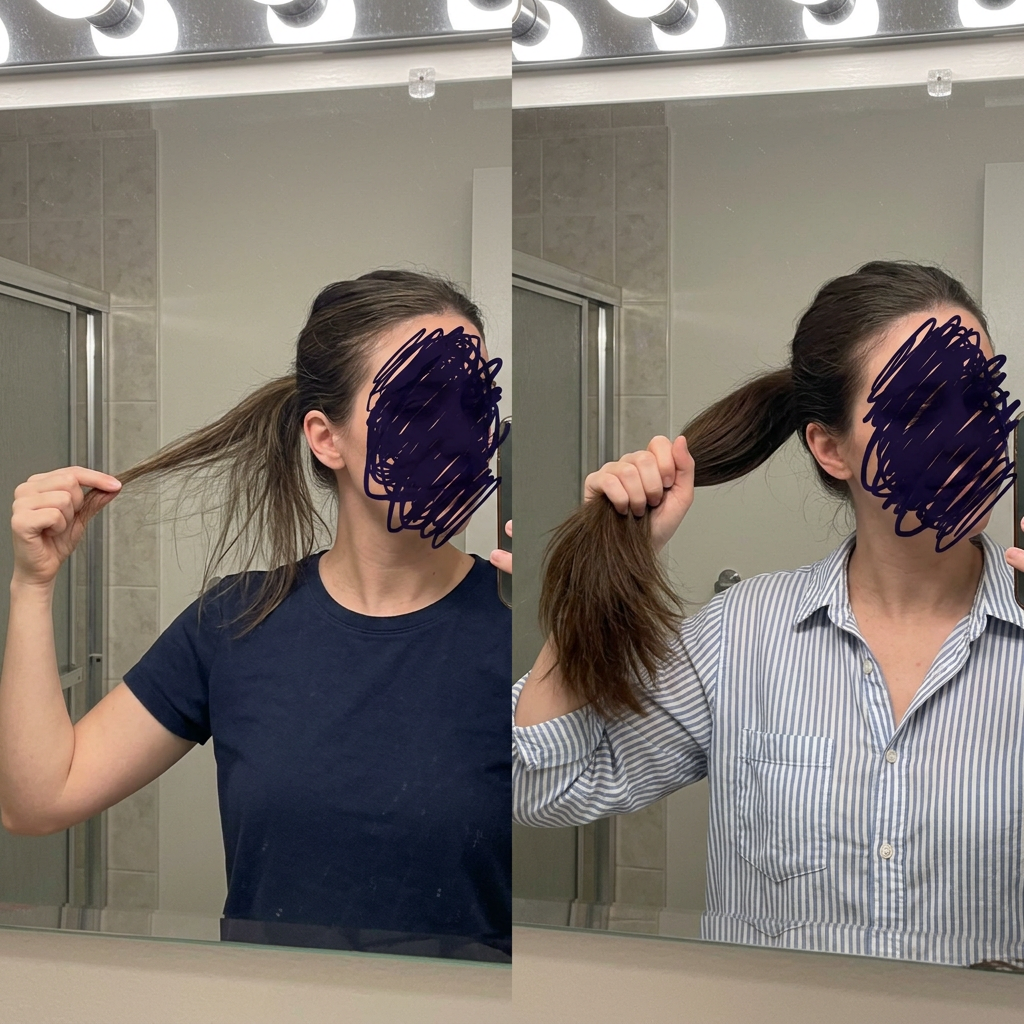
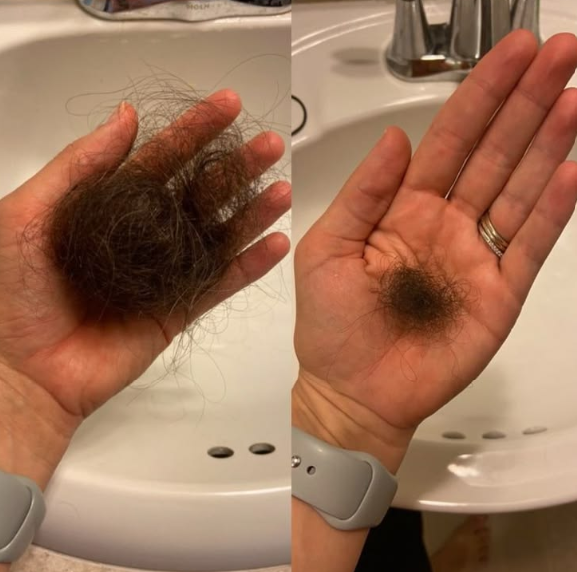
Please stop buying hair growth supplements until you find out what your body is doing at 2 AM. I spent over nine hundred dollars and nearly two years swallowing biotin, choking down collagen, and massaging serums into my scalp every night before bed. I work in a hair salon. I should have caught this faster than anyone. None of it grew back a single strand. And the reason none of it worked was so simple, and so infuriating, that when I finally understood it I sat in my car in the salon parking lot and cried before my first appointment. My body had been in survival mode for two years. Nobody had ever used those words with me, and it turns out they explain everything. I had been watching the woman who could have told me for nine years. She just never had a reason to bring it up. Until I finally asked her. I am Jessica, I am 41, and I have been a hairstylist for sixteen years with the last nine spent at the same salon working two chairs down from the woman who owns it. I used to have thick hair that other stylists would grab a proud fistful of while openly admitting how jealous they were as they sectioned it. It used to take me forty minutes just to blow dry it completely, and I even used to complain about how heavy and hot it felt on my neck during the summer months. I would give almost anything to have that problem again. I do not know exactly when the thinning started. That is the cruel part. It happens so gradually you do not notice until it is already bad. The very first warning sign was my own ponytail that I wear for every single shift at the salon. I had always wrapped the elastic tie around my hair exactly twice to keep it secure, but then one morning I suddenly had to wrap it three times. Then four. And it still felt loose in my hand. Shortly after that it required four full loops and the hair still felt completely loose and limp in my hand. I tried to tell myself that I was just imagining things because you would think a stylist of all people would know better than to lie to herself about hair health. I would catch myself staring at what came off my own head instead of hers while cleaning up the station. It was in the shower drain every single morning and wrapped around the bristles of the brush I use sixty times a day on other people. I would run my fingers through my own hair between clients and three or four strands would come away with my hand every single time. The terrifying moment where I could no longer pretend everything was fine happened at my daughter's birthday party. My sister took a quick photo of me from behind while I was leaning over the birthday cake to help her. That night I zoomed in on my phone and my stomach completely dropped as I stared at the screen. I could clearly see my own scalp right through my hair in a photo that was taken from only three feet away. My part looked like a wide highway and my crown where my hair used to be thickest was thin enough to show bright pink skin underneath. I stared at that awful photo for twenty minutes before deleting it out of pure frustration. The next morning I did exactly what every single client with this problem had ever done and started searching the internet for answers. Every single article recommended the exact same routine of biotin, collagen, protein, Nutrofol and expensive thickening shampoos. I faithfully tried high-dose biotin for three months and a forty-seven dollar tub of collagen peptides for another four months even though the texture made me gag. So I did all of it. Biotin, the ten thousand microgram ones. Three months. Nothing. I faithfully tried high-dose biotin for three months and a forty-seven dollar tub of collagen peptides for another four months even though the texture made me gag. Then I spent over three hundred dollars on a trendy hair supplement called Nutrofol for nothing. A thickening shampoo and conditioner system, another eighty dollars every couple of months, used exactly as directed. I even applied smelly rosemary oil three nights a week until my bathroom smelled like an Italian restaurant and my pillowcase was permanently stained. I sat down one night to do the math because I could not sleep anyway and realized I had wasted fourteen months and exactly nine hundred and thirty-seven dollars. Despite all that effort and money my hair was actually thinner than the day I first started trying to fix it. I finally went to my doctor for a full panel of bloodwork to find out what was wrong. My thyroid, iron, B12, and vitamin D all came back completely normal and perfect. "Everything looks great," she said. "It is probably just stress. Or hormones. Or genetics. It happens to a lot of women." She said it with the same casual tone people use when talking about the daily weather forecast. "It happens to a lot of women" is not an answer. It is a way of saying I do not know and I am not going to find out. I left that medical office feeling more alone than I had in years, which is a very strange thing when your entire job involves standing four inches from another person's scalp all day. But the thinning kept getting worse and I actually stopped wearing my hair up on shift which felt like a public confession of my failure. I started actively angling myself away from the mirrors on the salon walls that I had stood in front of comfortably for sixteen years. I parted my hair three different ways to hide my scalp but none of them worked. One night my husband found me crying in the bathroom while holding a fresh clump of hair from the drain and I snapped at him when he tried to comfort me. "You don't understand. I'm losing myself." That was not dramatic. That is exactly how it felt. I told him what my doctor told me. It happens to a lot of women. He asked what that meant and I did not have an answer, because nobody had given me one. Here is the part I have not told you yet. For nine years I have stood exactly two chairs down from a woman named Yolanda who owns the entire salon. She is 58, she has been doing hair for over thirty years, and somewhere north of forty thousand heads have sat in her chair since she opened the place. Every single morning before her first client arrives she quietly goes into the back room completely alone. She keeps a small purple jar zipped inside her canvas bag, taps a little bit of powder into her water bottle, and walks back out like nothing happened. I first noticed this quiet ritual during my second year at the salon but I never asked her what it was. You do not ask Yolanda questions before her seven a.m. color appointment. You set up your station. That is the rule nobody wrote down but everybody follows, because she built that place from a single rented chair and you do not waste her focus before the first client of the day. I simply assumed it was a standard protein powde or a basic vitamin. Something unremarkable. That is what I told myself for nine years. Three weeks ago my hands started shaking so badly while sectioning a client's hair that I had to set my comb down and step into the back room just to breathe. Yolanda was already back there mid-ritual with her mysterious purple jar open in her hand. She looked at my face and stopped what she was doing. "Sit down," she said. Not a question. I broke down and told her everything about the loose ponytail, the cake photo, the wasted money, and the doctor's "it happens to a lot of women." She listened without saying a word. Then, for the first time in nine years, I asked her. "What's in the purple jar?" She looked at me silently for a second before closing the lid "Not now," she said. "After my last color today. Buy me a coffee." That night in a quiet booth two doors down from the salon we sat together while still wearing our black work aprons. She told me "Your doctor said it happens to a lot of women." I said she did. "She is right. It does happen to a lot of women. That is the most useless true sentence in this entire business, and every single woman who has ever cried in my chair has been handed it. Nobody ever tells her why it happens to a lot of women." "So let me tell you why." She went through it herself eleven years ago, during the two years she was getting the salon off the ground alone. Seventy hour weeks, barely sleeping, running the place on adrenaline and coffee. Her hair started coming out in handfuls about three months after the worst of it, which made no sense to her at the time, because by then things had actually calmed down. "That is the part almost nobody explains," she said. "It does not show up while you are in it. It shows up months later. So you never think to connect the two." "Your hair is not just sitting there," she said. "It is on a cycle. Grow for years, rest for a few months, fall out, grow again. What keeps that cycle on schedule is a hormone called cortisol. And cortisol is supposed to run on a clock. High in the morning to wake you up. Almost nothing at night, so your body can rest and repair." "That drop at night is not a bonus. It is the whole point." I told her that I understood the science but I did not consider myself an especially stressed person since I love my job and my family is doing perfectly fine. She said that is the most common thing she hears when she explains this. "It is not just the big stressful things pressing that button. Look at what your day actually contains." She counted them on her fingers. "The processed food in almost everything anyone eats now. The medication a lot of people take every single morning. The air, if you live anywhere near a city. Traffic. And a phone going off in your pocket from the second you wake up until the second you try to sleep." "Those are completely different things," I said. "Your body reacts exactly the same way to all of them. Chemical, physical, digital. It reads every single one as danger." "And here is what your body does when it decides you are in danger. It goes into survival mode." "I want to slow down here, because this is the part nobody says out loud and it is the part that explains everything else." "Survival mode is not a feeling. It is not you being dramatic about a hard year. It is not something you can talk yourself out of. It is a set of physical instructions your body starts following the second it decides you are in danger." "And the first instruction is rationing." "When your body is in survival mode, it takes the nutrients out of everything you eat and sends them to the organs that keep you alive right now. Your heart. Your lungs. Your brain. Those get served first. That has never been negotiable." "Your hair is not a priority for immediate survival. It never has been. Your body has never once been convinced you need hair to get through the next hour." "So while your body is in survival mode, your roots get left starving. Not because anything is wrong with them. Because everything that would have fed them went somewhere your body decided mattered more." I sat there with my coffee going cold. "So it is not that my follicles are broken." "Your follicles are fine. They are being rationed. Your body is in survival mode and your hair is first on the ration list. It always is. For everybody. That is why it happens to a lot of women." "But every year has bad stretches," I said. "Why did mine never come back?" "Because of the second half, and this is the part I had to find out on my own." "Your body was never built to run on high alert around the clock." "Survival mode was made for short emergencies. Something happens, your body switches into it, the thing passes, your body switches back out. That is supposed to run hundreds of times in your life and you never notice it once." "But when the button gets pressed all day, every day, for years, the switch that is supposed to shut survival mode off eventually breaks. It jams. Stuck on." "So instead of dropping at night, cortisol just stays up. That is why you lie there wired at two in the morning even though you are exhausted. And your body never comes out of survival mode, because as far as it can tell, the emergency never ended." "Your follicles get one instruction on repeat the whole time. Stop growing. Start shedding." I told her about the good stretch I had the year before. A quiet spring. Nothing wrong. My hair came out the whole time anyway. She nodded like she had been waiting for it. "That is the whole thing right there. The stress passed and your body stayed in survival mode. The emergency ended. Nobody told your body." "And that is why 'try to relax' never worked for you. You cannot relax a jammed switch back into place. If your body is stuck in survival mode, rest does not fix it. A calm spring does not fix it. The switch has to be rebuilt." She let that sit for a second. "And listen. Your follicles are not dead. They are stuck. A whole batch gets pushed into their resting phase at once instead of the normal slow trickle. And because that resting phase runs about three months, the shedding shows up two or three months after whatever wore you down in the first place." "By the time it hits your brush, you have already forgotten what caused it." "That is exactly what happened to you. And to me." I asked her what she had tried before she figured it out. "Everything you tried, plus one more thing you did not. A cortisol herb everybody in the wellness world was recommending at the time. Ashwagandha. It brought my stress down some. My hair kept thinning anyway." "And that is when I almost gave up on the whole theory. I thought, fine, it is not stress after all." She shook her head. "I was half right and half wrong. It was stress. I just had not found the switch yet." "Because that herb turns the volume down on cortisol. It does not repair the switch. So your body stays in survival mode the entire time you are on it, just quieter about it. I took it three months, my hair kept falling, and I decided cortisol was not my problem." "It cost me two more years to find out the mechanism was right and the tool was wrong." Then she said the thing that made fourteen months make sense. "Your labs came back normal. They were right. You were never short on anything. You had a body in survival mode that stopped delivering. You cannot fix rationing by buying more supplies." She reached into her bag and set the purple jar on the table between us. Unscrewed it. Inside were pre-portioned packets, one for each morning. "Two things that work on this from two directions. One turns down how much cortisol your body makes under stress. The other rebuilds the switch that is supposed to end survival mode." "Then three things your follicles burn through while your body has been rationing, so the ones that do wake up have something to build with instead of coming in fine and weak." "The first is holy basil," she said. "An herb. Used in India for thousands of years. That is the volume." Then she stopped. "The second one I have to slow down on, because the name looks like something out of a lab and it is the opposite of that." She wrote two letters on a napkin. PS. "PS (also known as phosphatidylserine) is a healthy fat your body already makes on its own. It is the building block for your brain's stress system, the same way calcium is the building block for your bones." I told her I had never heard of it. "Almost nobody has. But nobody calls calcium a chemical, and nobody asks a woman our age why she takes it. This is the same idea. It is just for the part of you that is supposed to switch survival mode off." "And here is why you would need to put it back. It is not that you never had it. It is that two years of running in survival mode has been spending it, every day. Survival mode burns through the material your body uses to keep that switch working. PS is what it rebuilds the switch out of." One turns down the volume. One rebuilds the switch that ends survival mode. You need both. It does not force a follicle to grow. It restores the switch that decides whether growth is allowed to happen at all. "I have taken this exact one for six years. Corvela's Steady Base." It almost felt surreal to realize that the mysterious purple jar she had kept zipped away in her canvas bag all that time was just Corvela Steady Base. "I looked at what else was on the shelf first. Most of the cortisol category is one single herb, the one I already told you did not fully work for me, sold with instructions to cycle on and off and warnings about your thyroid. Most of the hair category is biotin and collagen and saw palmetto, which either feeds a follicle that has already been told to stand down, or blocks a completely different hormone than the one causing this." "Neither shelf touches survival mode. This is the only one built around ending it instead of just turning the volume down on it." "Why didn't you ever tell me?" I asked. "You never asked. And it never felt like my place to bring up someone else's hair unprompted. That is not a thing you do to a colleague." She closed the purple jar. "But you asked me today." I ordered it from my phone in the parking lot before I drove home. I will be honest with you the way she was honest with me. By week one, absolutely nothing had changed about my hair, but my nighttime routine took a massive step forward because I finally started sleeping deeply through the night. I stopped lying awake at two in the morning running through the next day's client list, which was incredible because waking up refreshed makes handling a demanding, busy schedule so much easier. By week three, the real hair transformation began because I noticed a massive drop in the amount of hair left in my brush and the shower drain. I actually counted the lost strands on a towel after one hundred brush strokes because I wanted a real number instead of just a feeling, and while my usual baseline had been an exhausting ninety-seven hairs, that morning it dropped down to a massive, undeniable reduction of just fifty-one. By week four, the daily shower drain panic completely disappeared after I went two full days without needing to clear it out at all. Week six, and this is the one I actually think about, Yolanda walked past my station while I was sectioning a client, stopped, and looked at my part in the mirror without me saying anything. "That's filling in." She said those exact words out loud, confirming that my hair was visibly gaining massive density right at the part line. By week seven, my daily brush count plummeted to an incredible twenty-two hairs, and I actually stood there in my towel counting twice because I could not believe how firmly my roots were locking back into my scalp. When week eight arrived, I could clearly see a heavy layer of tiny new growth along my hairline that had not been there two months earlier, forcing me to lean so close to the mirror that my breath fogged up the glass. My husband was standing behind me while I blow dried and said, "Is it just me, or does your hair look thicker?" This is a man who did not notice I repainted our bedroom for three weeks. Hearing him notice that massive visual change was the ultimate proof for me that my hair was undeniably thicker and fuller across my entire crown. By week twelve, the most emotional victory happened when I went to tie my hair back for my morning shift at the salon. I wrapped my work ponytail around exactly twice instead of three or four times, feeling the elastic tie sit perfectly snug against thick, heavy hair that was actually there to hold. I stood in the back room and cried again. A different kind of crying than the parking lot. Last month a client sat down in my chair and told me her doctor had run everything and it all came back normal and she had been told it happens to a lot of women. Nine years I stood next to somebody who could have told me, and never asked. I was not going to make her ask. So I told her. I told her that modern life presses a danger button all day, and her body cannot tell the difference between processed food and traffic and a real threat, so it reacts to every one of them the same way. That when her body decides she is in danger it goes into survival mode, and survival mode means rationing. That everything she eats gets routed to her heart and her lungs and her brain first, because those keep her alive. That her hair is not a priority for immediate survival, so her roots get starved first. Not because they are damaged. Because they are last on the list. And that a body was never built to run in survival mode around the clock, so after enough years the switch that ends it jams, and she can have the calmest year of her life and still be in survival mode the entire time. She was quiet for a second and then she said, "Nobody has ever explained any of this to me." Nobody had explained it to me either. For nine years the answer was sitting two chairs down in a purple jar. It has been four months. I still take it every morning, the same way Yolanda does, packet into water, before my first client. My hair is not back to where it was at twenty six. I do not know yet whether it will get all the way there, and I am not going to tell you it will. But it is undeniably better than it was four months ago, and it is still filling in. If you see yourself in this, and you have tried biotin, collagen, Nutrafol, a thickening shampoo, rosemary oil, or anything else that promised to help and did not, here is the part almost nobody tells you. The problem was never that you were not trying hard enough. None of it touches survival mode. Biotin and collagen feed a follicle that is already being rationed. A thickening shampoo works on the outside of a strand whose real problem starts two layers down. And if you tried a cortisol herb once and quietly decided stress was not your issue, you may have had the right mechanism and the wrong tool. That product turned the volume down and left your body in survival mode. That exact detour cost Yolanda two extra years. If your labs came back normal and someone told you it happens to a lot of women, they were right. It does. Go back and ask them why. Here is the whole thing in four sentences, because it took me fourteen months and nine hundred and thirty seven dollars to get them in the right order. Modern life presses your danger button all day, and your body reacts to processed food and traffic and notifications exactly the way it reacts to a real threat. When your body decides it is in danger, it goes into survival mode and starts rationing, sending everything you eat to your heart and lungs and brain. Your hair is not a priority for immediate survival, so your roots get starved first. And when that runs for years, the switch that ends survival mode jams, and your body never stands down again. The one Yolanda and I both take is Steady Base, from Corvela. Holy basil to turn down what is hitting the switch, and PS (also known as phosphatidylserine), the healthy fat your body uses to rebuild the switch that ends survival mode, the way it uses calcium to rebuild bone. Plus L-theanine for the nightly drop and the zinc, B6 and D3 your follicles need once they are actually building again instead of being rationed. No ashwagandha, so nothing to cycle and nothing that touches your thyroid the way the herb Yolanda tried first did. Corvela backs everything up with a sixty-day full refund policy where you can get your money back with absolutely no questions asked. After spending nine hundred and thirty-seven dollars on generic products that never reached the actual problem, a guarantee that matched the real biological timeline was the first honest thing anyone had put in front of me. They make it in small batches to hold the clinical dose in every packet, which is the right trade and also why it goes out of stock. Yolanda ran out once in six years and she was not pleasant to work next to for those three weeks. If it is in stock right now, that will not stay true forever. 👉 https://trycorvela.com/products/corvela-steady-base-capsules But if it works? If weeks one and two give you sleep before they give you anything on your head at all, because sleep is one of the first things survival mode gives back? If by week three you finally count what comes out on the towel, and it is not ninety seven anymore. It is fifty one. Then twenty two? If somebody who has stood next to you for years stops on their way past and tells you it is filling in, before you have said a word to anyone? If twelve weeks from now your ponytail takes two wraps instead of four? Your hair is probably not broken. It is being rationed by a body that never came out of survival mode. End survival mode. Then everything else you have already been doing finally has something to work with. ~ Jessica P.S. Weeks one and two you will feel it in your sleep before you feel it in your hair, and that is the mechanism working in the right order, not a sign that it is not. Sleep is the first thing survival mode takes and the first thing it gives back. The shedding eased around week three for me. The baby hairs showed up around week eight. The ponytail was week twelve. The order does not change even if the dates do. P.P.S. Sixty days, full refund, no questions. My biggest regret is the fourteen months I spent feeding a body that was rationing everything I gave it. If Yolanda had told me sooner, or if I had asked sooner, I would have saved nine hundred and thirty seven dollars and a lot of nights crying in a bathroom. P.P.P.S. It is ashwagandha free on purpose, and after hearing Yolanda's story I would not touch a cortisol product that was not. It turns the volume down and leaves your body in survival mode the whole time, and cycling on and off resets whatever you gained. That is exactly why she lost two years deciding the theory was wrong when it was the tool that was wrong. P.P.P.P.S. Once this batch runs out from the official link below, making more naturally takes a few months because extracting pure phosphatidylserine is a slow laboratory process. If the checkout button is working right now, it just means they have the raw materials ready to fill your order before this current group of inventory finishes. P.P.P.P.P.S. I asked Yolanda if I could write this down and post it. She said to leave her last name out and not to name the salon, because she has clients who have been sitting in her chair for twenty years and she would rather they keep talking to her about their hair than about hers. Everything else is exactly as it happened, including the nine years I spent assuming that purple jar was a protein powder. She still keeps it zipped into the same pocket of the same canvas bag, every single morning. 👉 https://trycorvela.com/products/corvela-steady-base-capsules
Where the ad sends people
trycorvela.com
Feel Like Yourself Again
Corvela Steady Base is a daily cortisol formula designed to do two things modern life makes hard: bring your cortisol down, and keep it on its natural rhythm.
Learn more: trycorvela.com(opens in a new tab)