
Inactive· since Jun 24, 2026
- 7
- days it ran
- 0
- relaunches
Ad copy
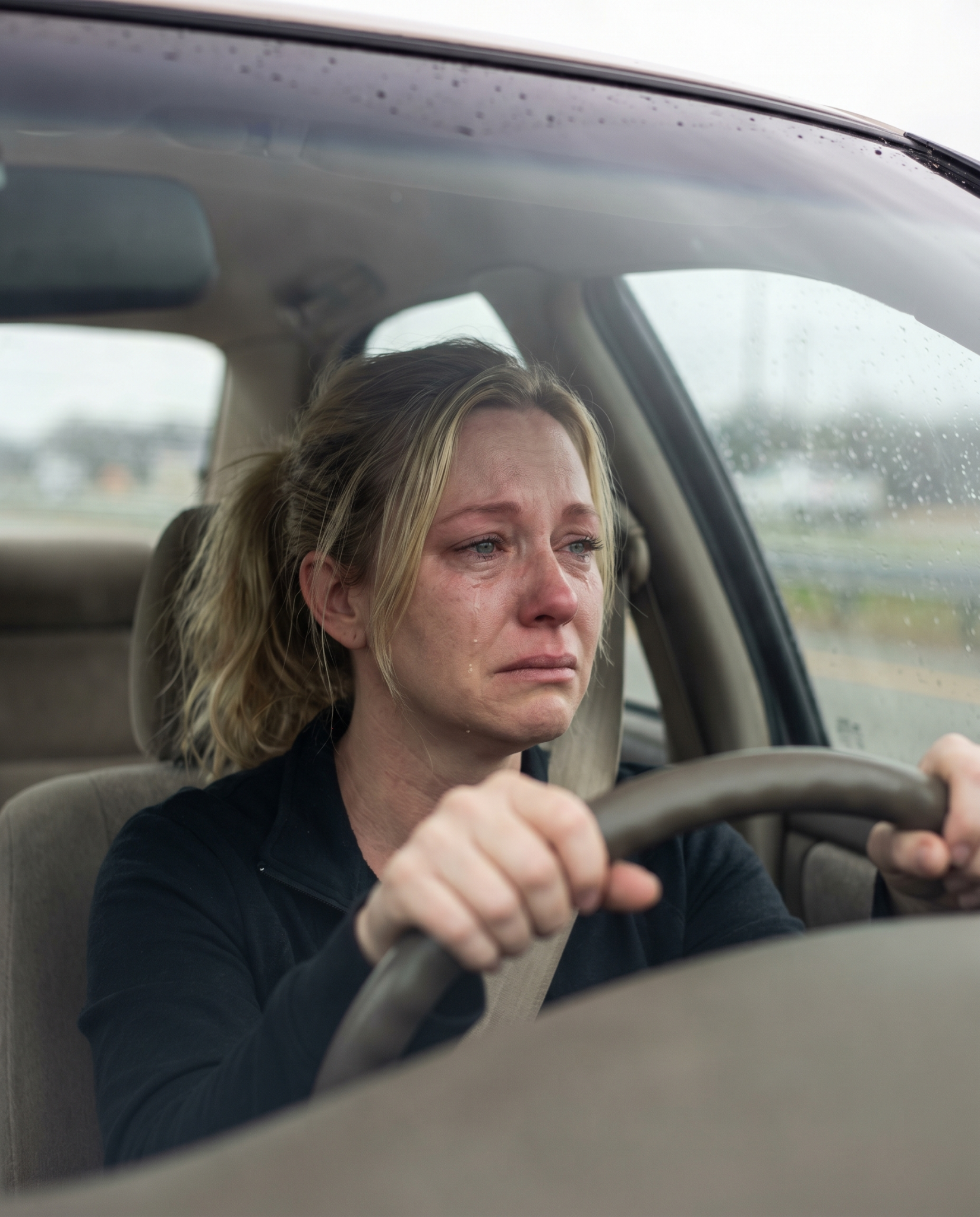
I lost my baby and opened my Bible looking for comfort. What I found made the pain worse. And I almost never opened it again. I need to tell you about the day I stopped believing God was good. It was a Tuesday. I was twelve weeks along. Everything had been fine at my last appointment — heartbeat strong, measurements normal, the nurse smiling at the monitor while I held my husband's hand. Two weeks later I was lying on the same table, in the same room, staring at the same monitor. And the nurse wasn't smiling. She was quiet. The kind of quiet that tells you everything before anyone says a word. There was no heartbeat. I don't remember driving home. My husband says I didn't speak for the entire ride. He says I walked into the house, sat on the edge of the bed, and stared at the wall for forty minutes before I cried. When I finally did, the sound that came out of me wasn't crying. It was something I didn't know I was capable of making. The kind of sound that scares the person next to you because they realize there's a place inside you they can't reach. I need you to understand something about me so you know where this story is coming from. Nobody would look at my life and think I was a woman who would fall apart. I taught Sunday school, led a small group for young moms at my church, and had a prayer journal with entries going back seven years. My faith wasn't shaky — or so I thought. But when they told me there was no heartbeat, something inside me broke that no amount of Sunday mornings had prepared me for. The first week was a blur. People brought food. People sent flowers. People said things they meant well by but I will never forget. "Everything happens for a reason." "God needed another angel." "It was God's plan." "He has bigger plans for you." One woman at church hugged me and whispered, "God must have known something we didn't." Like my baby was a mistake God caught just in time. A woman on a grief forum put it better than I ever could: "It is deeply hurtful and unhelpful for you to suggest my loving God is doing this to me." That's what it felt like. Every platitude, every card, every Bible verse texted to me without a single word of explanation — it all felt like the people I loved were telling me God did this on purpose. And something inside me snapped. Not my belief. Not yet. Something worse. My trust. I could not begin to fathom why God would take away this beautiful baby that was so wanted and so loved. A baby I had prayed for. A baby I had thanked Him for every single morning since the day that test came back positive. Was He punishing me? Did I do something wrong? Was there some sin I hadn't confessed, some prayer I forgot to pray, some part of my life that made God decide I didn't deserve to be a mother? I wrote in my journal three days after the loss: "I can't pray anymore. I feel so rejected, abandoned. Like I must have done something wrong. God must not want me." And for the next eight months, I believed every word. I stopped going to church. The sight of pregnant women in the lobby made me physically sick. The worship songs about God's faithfulness felt like lies. The sermons about "trusting God's plan" felt like salt poured directly into the wound. I stopped praying. What was the point? I'd prayed for this baby every day and God took it anyway. I stopped reading my Bible. Not all at once. There was one last attempt. And it's the reason I'm telling you this story. About three weeks after the loss, my mother told me to read my Bible. She meant well. She always means well. She said the Word would comfort me. So I opened it. I went to the verse everyone had been texting me. Romans 8:28. "And we know that all things work together for good to those who love God." All things work together for good. I stared at that verse and something inside me went cold. Because all I could hear was: God worked your baby's death together for good. God planned this. Your loss was part of His good plan. That verse didn't comfort me. It made me want to throw my Bible across the room. And I almost did. Then I turned to Psalm 139. The one they put on the sympathy card from the church. "For you created my inmost being; you knit me together in my mother's womb." You KNIT me together. God knit my baby together inside me. Fearfully and wonderfully made. Every day ordained before one of them came to be. So why did He knit something together just to take it away? Why did He ordain days that only lasted twelve weeks? Why did He create a life inside me — fearfully, wonderfully — and then end it on a Tuesday afternoon in a doctor's office while I held my husband's hand? The verse on the sympathy card was supposed to make me feel close to God. Instead it made me feel like God was cruel. Then Jeremiah 29:11. "For I know the plans I have for you, plans to prosper you and not to harm you." Not to harm you. NOT TO HARM YOU. How is losing my baby not harm? How is lying on a table watching a nurse go silent not harm? How is walking into a nursery I'd already started decorating and closing the door because I can't look at it not harm? I closed my Bible that night and didn't open it again for eight months. A woman who writes about miscarriage and faith described exactly what I was feeling in words I couldn't find myself. She said: "For a long time after my losses, these kinds of passages were incredibly difficult for me to read. I just couldn't comprehend how God could be so involved in the planning, forming and conception of life, and then simultaneously be so silent or absent when that same life fails or slowly ebbs away." That was me. Exactly. The God who knits together was the same God who was silent when it all came apart. And nobody could explain why. Not the church. Not the sympathy cards. Not the verses people texted me at 2am without a single word of context. Eight months I carried that silence. Eight months of an unopened Bible on a nightstand I couldn't look at. Eight months of avoiding church, avoiding prayer, avoiding every woman in my life who might ask how I was doing. My faith didn't die in those eight months. It just went somewhere I couldn't reach. Like it was behind a door I didn't have the key to anymore. My sister-in-law saw what was happening to me. She didn't say "pray about it." She didn't text me a verse. She didn't tell me God had a plan. She dropped off a package on my porch one afternoon with a note that said: "This helped me understand the Bible for the first time. I think it might help you too. No pressure. Whenever you're ready." Inside was a Bible study I'd never seen before. I didn't open it for two weeks. The package just sat on my kitchen counter while I walked past it every morning. Then one night I couldn't sleep. The nursery door was closed but I could see it from the hallway. And the silence in the house was so loud I needed something — anything — to fill it. But I didn't want to scroll my phone until 3am the way I'd been doing every night since the loss. I saw the package on the counter. And I opened it. I turned to the Psalms section. Not because I was ready. Because I had nothing else. And right there, before the reading even started, there was a page that explained what I was about to read. Who wrote it. When. Why. What was actually happening when those words were written. It said the Psalms aren't pretty poems. They're prayers from people who were at the end of themselves. People who were angry at God. People who felt abandoned. People who screamed "How long, O Lord?" and "Why have you forsaken me?" and "My God, my God, where are you?" David wrote those words while hiding in caves, running for his life, watching everything he loved get torn away. And God didn't punish him for the questions. God kept every word. Put them in the Book. For thousands of years. So that a woman sitting on her kitchen floor at midnight, eight months after losing her baby, could open to that page and see that she wasn't the first person to scream at God in the dark. And that God wasn't ashamed of the screaming. He expected it. He made room for it. He wrote an entire book of it. Then I found Lamentations. A book I didn't even know was in the Bible. Nobody at church had ever mentioned it. Nobody had ever read it from a pulpit or put it on a sympathy card. The study explained it was written after the destruction of Jerusalem — after the people of God lost everything. Their city. Their temple. Their children. And the writer poured out grief so raw that reading it felt like reading my own journal. "My eyes fail from weeping, I am in torment within. My heart is poured out on the ground because my people are destroyed, because children and infants faint in the streets." The Bible has a book of GRIEF. A whole book. And nobody had shown it to me during the worst eight months of my life. Then I went back to the verses that had wounded me. Romans 8:28. The study explained who Paul was writing to and why. He was writing to a church in Rome that was being PERSECUTED. Hunted. Killed for their faith. He wasn't saying "God plans bad things for good reasons." He was saying: even in the absolute worst suffering you can imagine, God has not left you. He is present. He is working. Not causing the pain — present inside it. That changed everything for me. "All things work together for good" isn't "God planned your baby's death." It's "even here, even in the worst night of your life, God has not abandoned you and your story is not over." Nobody told me that. Nobody at church. Nobody on the sympathy cards. Nobody in the text messages at 2am. They just sent the reference — Romans 8:28 — and left me alone with it. Psalm 139. The study explained that David was writing about the mystery of God's intimate knowledge of every life. Not a promise that every pregnancy will go to term. A declaration that every life — no matter how short, no matter how brief — was seen by God. Known by God. Loved by God. My baby wasn't an accident God corrected. My baby was a life God saw, knew, and held — even in the twelve weeks I didn't know would be all we had. That verse stopped being a wound and became the most intimate conversation between God and the child I never got to hold. Jeremiah 29:11. "Plans to prosper and not to harm." The study explained that Jeremiah was writing to EXILES. People who had lost their homes, their city, their children, their temple — everything. And God's promise wasn't "nothing bad will happen." It was: "even in Babylon, even in exile, even after you've lost everything — I am still here, and your story is not over." That's what He was saying to me. Not that the loss was good. That He was still there. And my story wasn't over. I sat at my kitchen table that night and cried the way you cry when something that's been locked inside you for eight months finally has a place to go. Not grief crying. Relief crying. The kind where your chest opens up and the air comes back in and you realize you've been holding your breath since the day the nurse went quiet. Week by week, I kept going. The study walked me through Job — a man who lost everything, including his children, and screamed at God, and God SHOWED UP. Not with punishment. With presence. The study explained who wrote Job, when, and why the book exists — and suddenly the most confusing book in the Bible became the most personal conversation I'd ever had with God about loss. John 11:35. "Jesus wept." Two words on a sympathy card that had meant nothing to me before. The study explained: Jesus wept at Lazarus's tomb KNOWING He was about to raise him from the dead. He entered the grief even when He could see the ending. He didn't stand above the pain. He stepped into it. A woman from a Reddit thread I'd been reading months earlier said the most healing thing she heard at her son's funeral was this: "Christ cries too. He's mourning with you." That's what the study showed me. A God who weeps with me. Not a God who planned my pain. A God who enters it. The Bible didn't change. The verses didn't change. What changed was that someone finally showed me what they actually say — in context, in history, in the full story of a God who has never once been silent in the suffering of the people He loves. He just sounds different when you can actually hear Him. I opened the nursery door last month. First time in over a year. I sat in the rocking chair and read Psalm 139 out loud. "You knit me together in my mother's womb. I am fearfully and wonderfully made." And this time, those words didn't wound me. They held me. Because I finally understood what David was saying when he wrote them — and I finally understood the God who kept them in the Book so a woman like me could find them at exactly the right time. It's already helped over 25,000 women finally understand the Bible they've been carrying their whole lives. It held me together in a season I didn't think I'd survive. And it turned the verses that almost destroyed my faith into the foundation that rebuilt it. Right now it's up to 62% off, and every order comes with a free pen pack. If you've been through something that made you close your Bible and you haven't opened it since — this is what finally made me open it again. If someone handed you a verse after your worst day and it made the pain worse instead of better — that verse has a context nobody showed you. And the context changes everything. Don't spend another month carrying grief in silence with an unopened Bible on your nightstand. The Word was written for the worst night of your life. You just need someone to finally show you what it says. Tap below and grab yours before they sell out. P.S. A woman from my grief group hadn't opened her Bible since her third miscarriage. I showed her the Romans 8:28 synopsis. She read it and said: "Nobody told me Paul was writing to people who were suffering the way I was. He wasn't saying God planned it. He was saying God was in it with me." She took the study home that night. P.P.S. If you're angry at God right now — the Bible is full of people who were too. David screamed from caves. Job questioned from ashes. God kept every word. Your anger isn't a sin. It's a prayer He's been waiting for. P.P.P.S. The 62% off won't last. Don't sit on it.
Like this ad? Make it yours.
Crush rebuilds this exact creative around your product — your brand, your colors, your offer — in about a minute.