
Inactive· since Jun 9, 2026
- 64
- days it ran
- 0
- relaunches
Ad copy
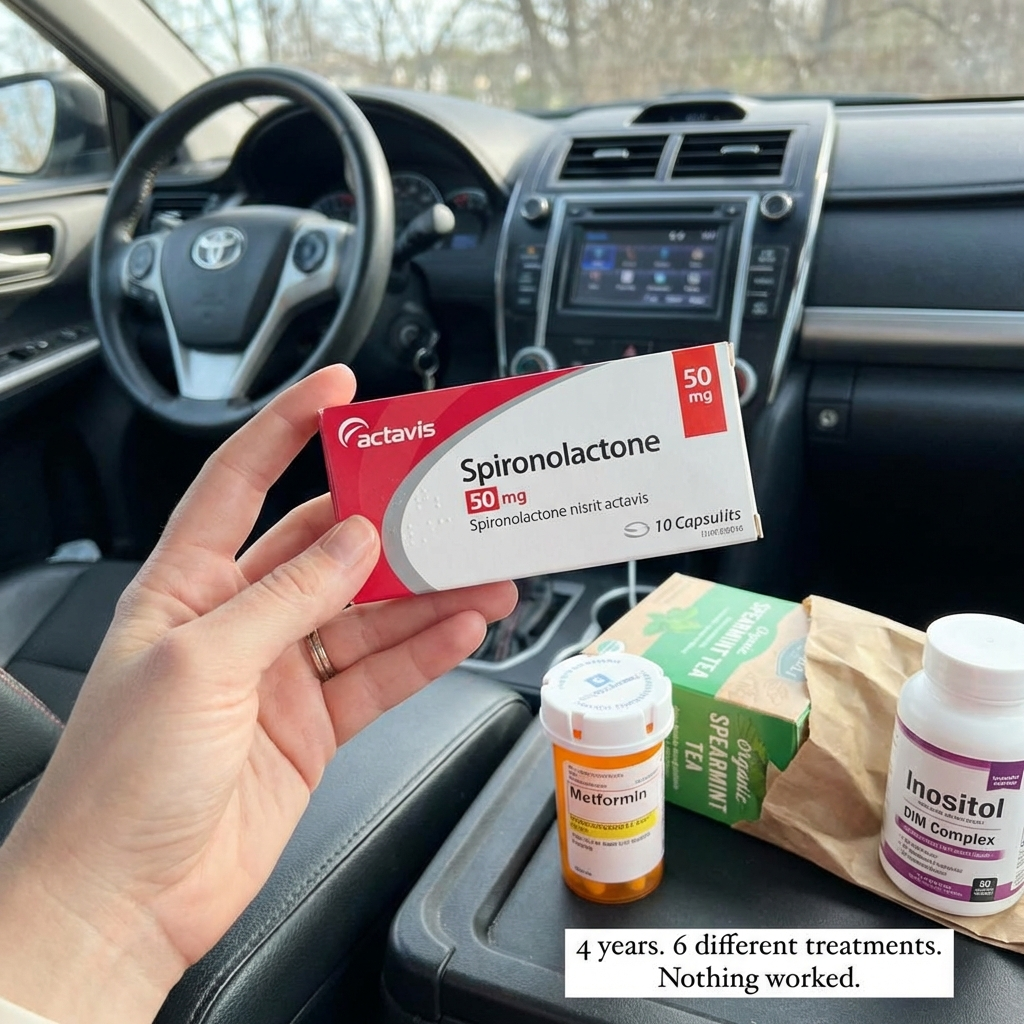
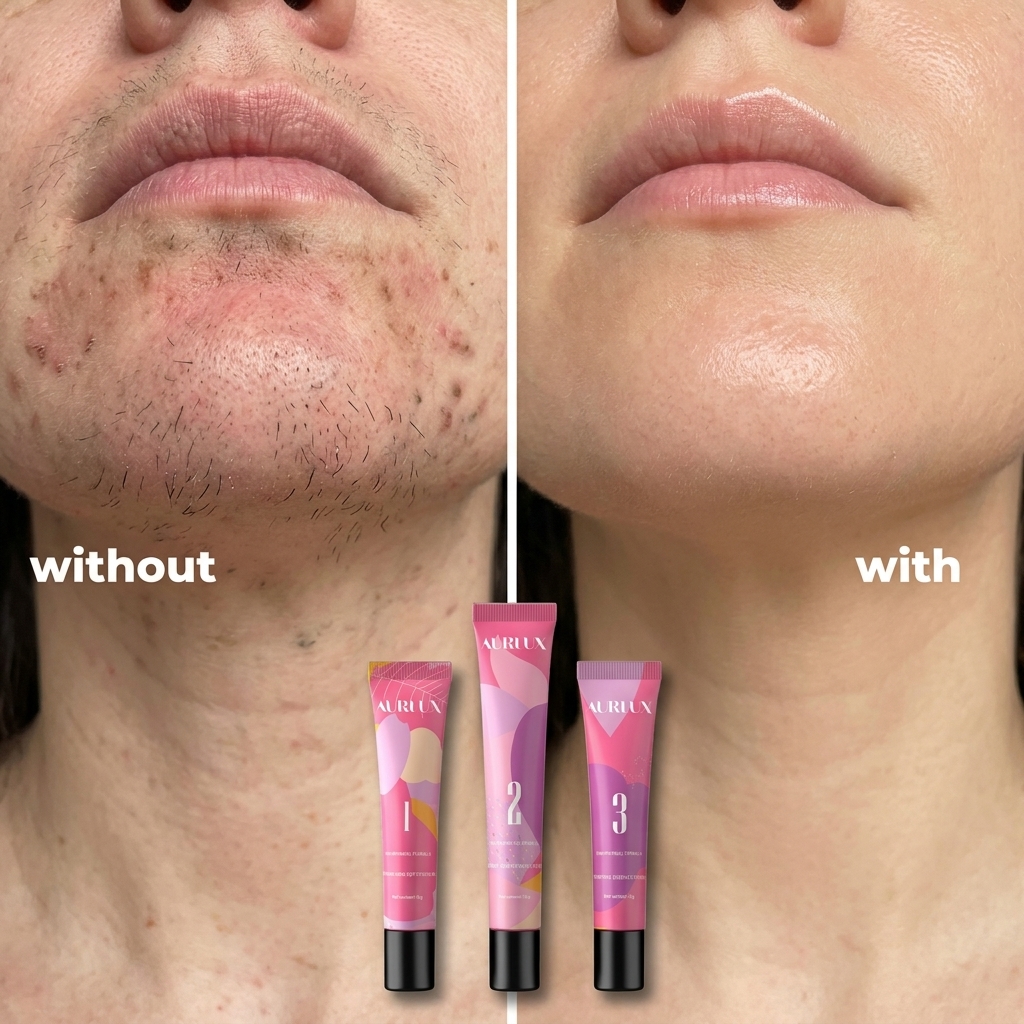
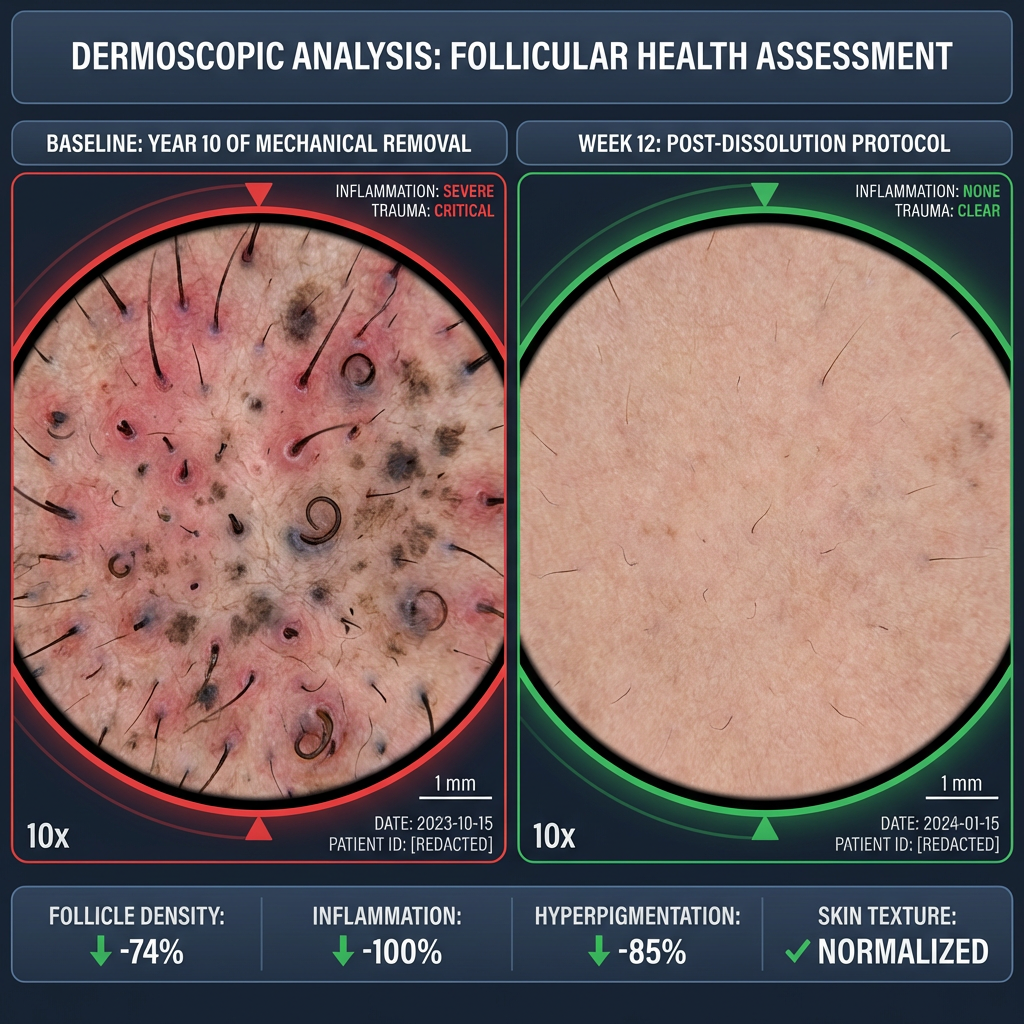
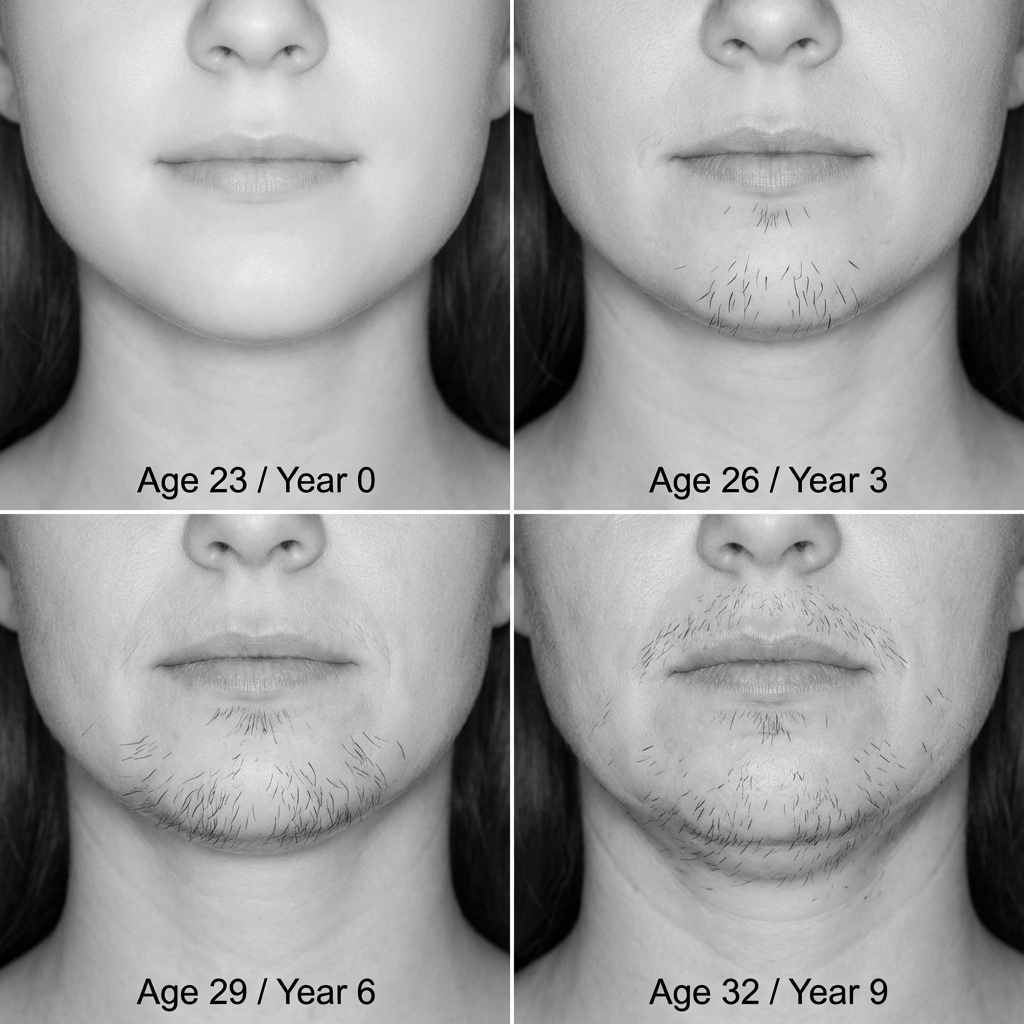
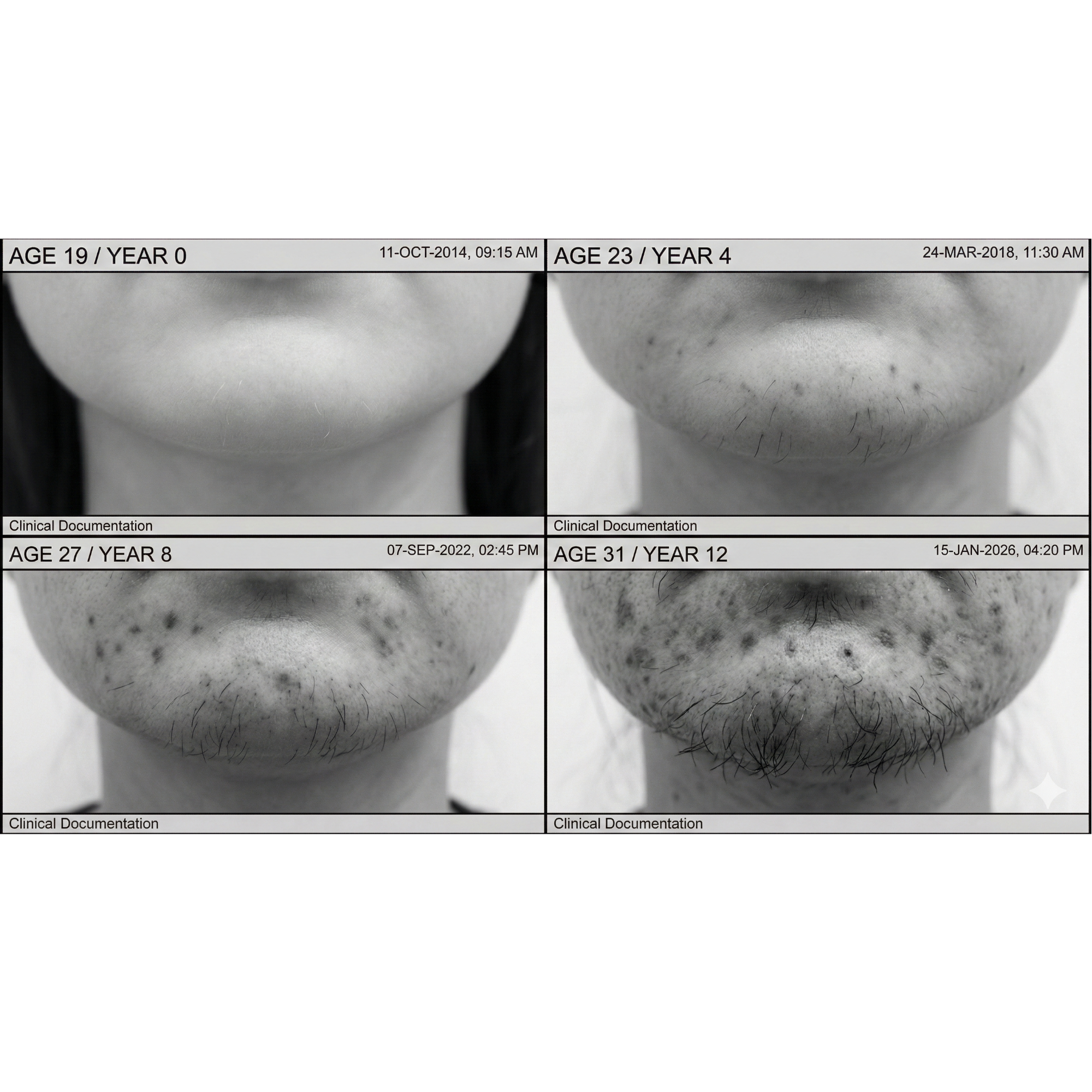
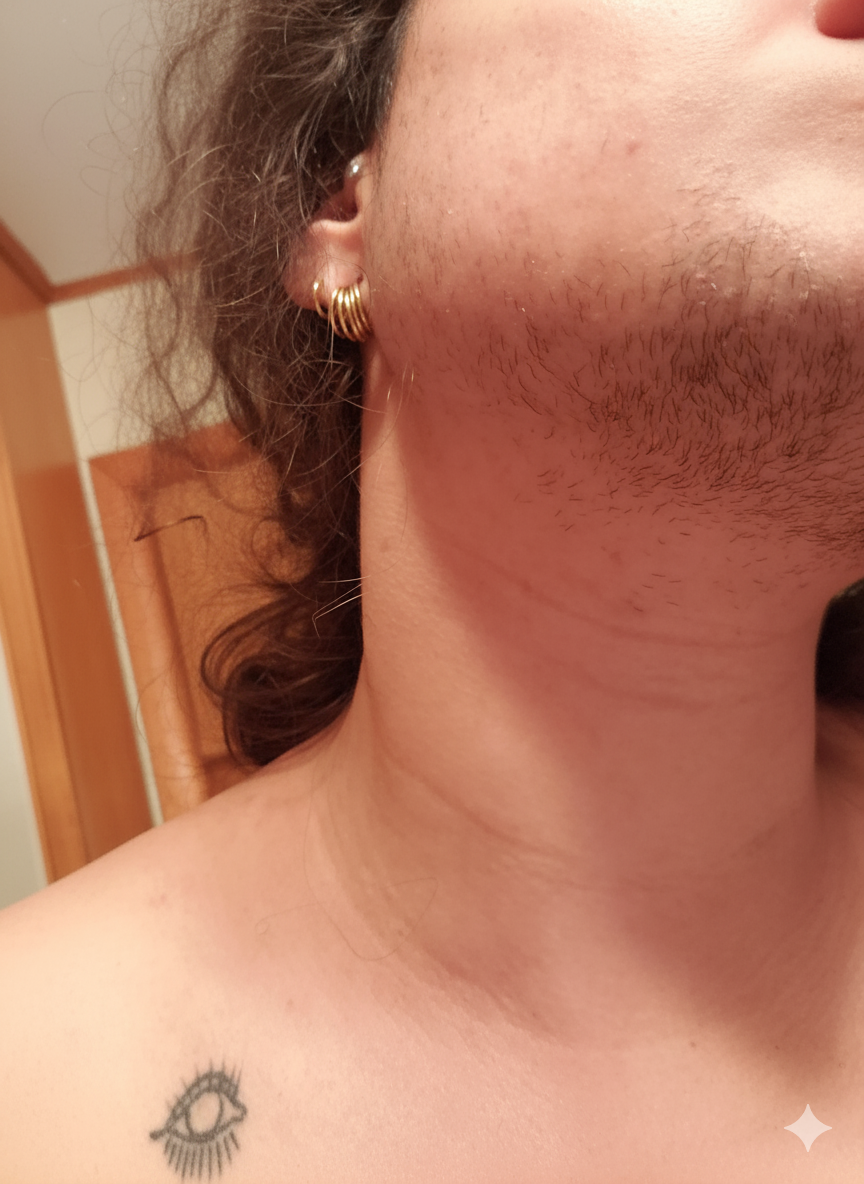
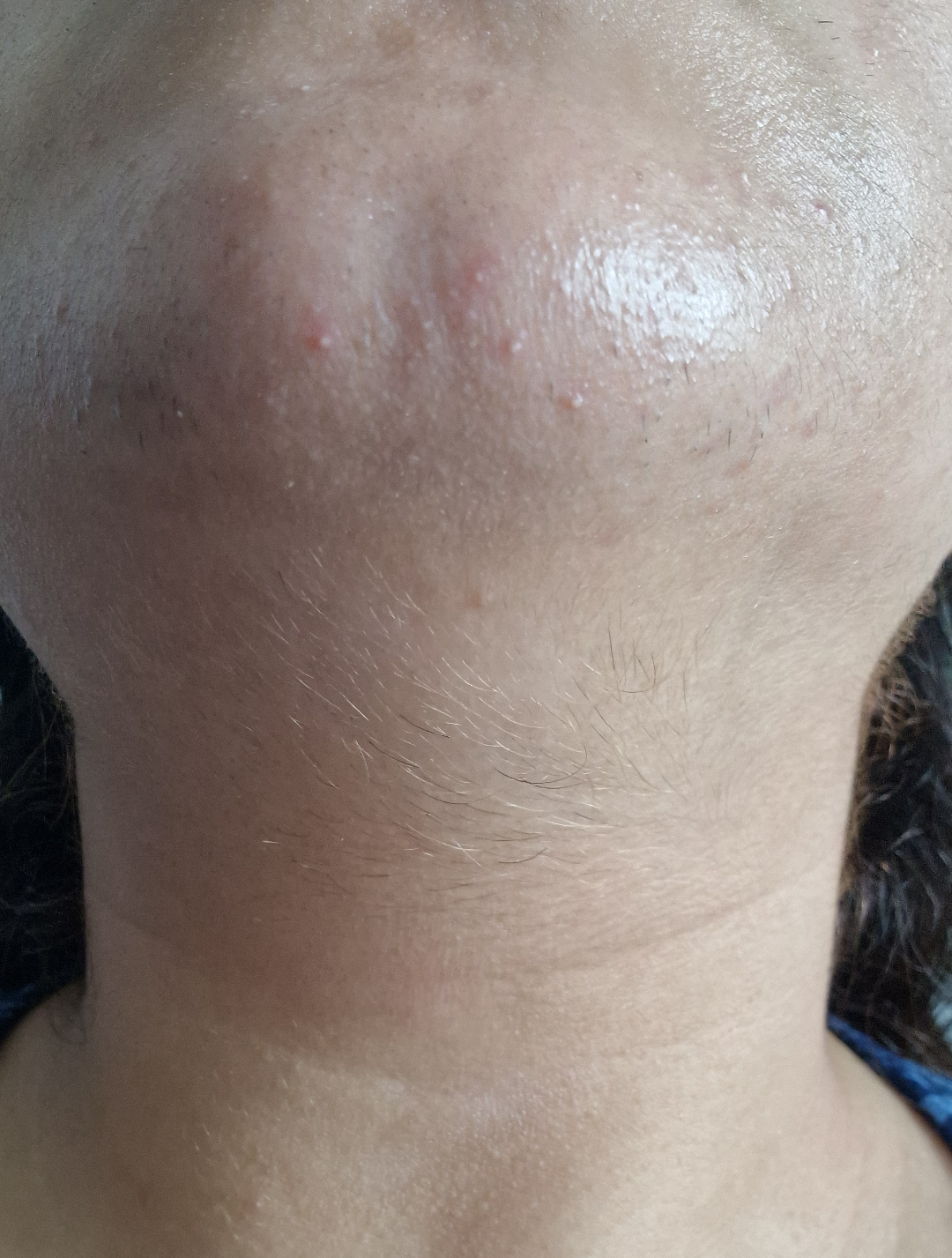
If you've been on Spironolactone for months and you're STILL plucking every night, you don't have a patience problem. You have an existing hair problem. I was in my sister's bathroom, tweezers in my hand, staring at the dark spots on my chin. I was supposed to be enjoying dinner. My niece just got accepted to college. Everyone's celebrating in the dining room. But my aunt's eyes drifted to my left chin during our conversation, I saw it happen and I excused myself. The tweezers were already in my purse. They're always in my purse. I lean closer to the mirror. Twelve coarse black hairs have grown back since this morning. The dark spot is darker than it was last month. A year of constant plucking has left a mark that's more noticeable than the hair ever was. I start plucking. It's been over a year since my doctor prescribed Spironolactone. Over a year of taking it every single day. Over a year of "give it time" and "be patient" and "these things take a while to work." Over a year. And I'm still here. Hiding in my sister's bathroom. Plucking the same hairs I plucked this morning. How long am I supposed to wait? My doctor said six months when she first prescribed it. "Give it six months," she said. "These medications take time. Your hormones need to balance out." Six months passed. Nothing changed. I was still plucking every night before bed. Still carrying tweezers in my purse, my car, my desk drawer at work. Still avoiding overhead lighting because it shows every single hair. So she increased the dosage. "Give it more time," she said. "We're getting your levels right. Be patient." It's been over a year now. I'm still plucking every single night. The dark spot on my left chin is darker than it was six months ago, constant trauma from tweezing, she says. I've tried every concealer at Sephora. They cake. They rub off on my collar. People's eyes still drift to it during conversations. I see them trying not to look. I've started saying no to morning coffee dates because I don't have time to pluck before work. I stopped making eye contact at family dinners. I position myself away from windows at restaurants because natural light is brutal. I want to leave every gathering early. The bathroom breaks are getting more frequent. I'm taking my medication every single day. I'm doing everything my doctor told me to do. My prescription bottle is right there in my purse next to the tweezers. So why am I still living like this? It's not like I haven't tried everything. Before the diagnosis, before the medication, I spent three years trying to fix this myself. Laser hair removal first. Eight sessions, $3,200. It worked for two months. Then the hair came back thicker than before. The technician said "hormonal hair is unpredictable" and suggested I keep coming back indefinitely. Waxing every week after that. Forty five dollars every Tuesday. My skin was red and inflamed for three days after each appointment. The hair was back in less than a week. I couldn't afford $180 a month forever. Threading made me cry every time. And I had to let the hair grow out for days before each appointment just to have something to thread. I couldn't go anywhere those days. I tried every drugstore cream. Nair burned my skin. Veet left a chemical smell I could still detect hours later. The generic brands did nothing. And no matter which one I used, the hair was back in six hours. Daily shaving gave me a five o'clock shadow by noon. I could feel the stubble texture all day. It made the dark spots worse. That's when I finally went to a real doctor. Got the blood work done. Got diagnosed with PCOS. Got prescribed Spironolactone. Finally, I thought. A real solution. Not another temporary fix, actual medication that treats the root cause. I was so relieved. Except the medication fixed tomorrow. It did nothing about today. If you've been on Spironolactone for months and you're STILL plucking every night, you don't have a patience problem. You have an existing hair problem. And medication wasn't designed to fix that. Here's what I didn't understand: Spironolactone works on your hormones. It blocks androgens from activating NEW follicles. It's stopping FUTURE hair from forming. That's what it does. That's what it was designed to do. What it doesn't do and what it CAN'T do is anything about the thousands of follicles already activated by years of hormonal imbalance before you started the medication. Those existing follicles are already there. Already primed. Already producing coarse, dark hair. And they're going to keep producing that hair for months, sometimes years, while the medication slowly prevents new follicles from joining them. That's the timeline split nobody tells you about: Tomorrow's hair? Your medication is preventing it. Today's hair? Still there. Still growing. Still coarse. The medication is working. It's doing exactly what it's supposed to do. It's just working on a timeline that protects your future but leaves you suffering in the present. That's why you're still plucking six months in. That's why the dark spot on your chin is getting worse, constant trauma from removal that won't stop. That's why you're still hiding in bathrooms at family dinners. That's why you're still avoiding eye contact, still positioning yourself away from windows, still carrying tweezers everywhere. You're doing everything right. The medication is doing everything right. But you're still suffering while it works. I didn't know any of this. I just knew I was still plucking. Still hiding. Still waiting for relief that kept not coming. And then I found something that actually handled the hair that was already there. Not the future hair. Not the new follicles. The existing hair, the stuff my medication couldn't touch because it was already formed, already producing, already ruining my life while I waited for hormones to balance. This isn't replacing Spironolactone. It's filling the gap. It's a three-step system that works on the hair structure itself while the medication works on the hormones. Step 1: Pre-Treatment Cleanser Opens the follicles that are already active and producing, the ones your medication can't turn off overnight. Step 2: Clinical-Grade Hair Removal Cream Uses thioglycolate (the same ingredient dermatologists use) to dissolve hormonal hair at the root level. Not the surface where shaving cuts it. Not the middle where drugstore creams weaken it. The ROOT where it's actually being produced by those activated follicles. Step 3: Soothing Serum Calms the inflamed follicles from years of trauma. Prevents the constant irritation that creates dark spots. And slows the regrowth rate of those existing activated follicles while your medication does its job in the background. The science is different from what Spironolactone does. Spironolactone works on your hormones. That's a 6-18 month timeline. This works on the hair structure. That's a 3-4 week smooth skin timeline. Which means while your medication prevents new follicles from forming, this handles the hair already there. No more plucking every night. No more bathroom breaks at family dinners. No more worsening dark spots from constant trauma. You can actually WAIT for your medication to work without suffering through every single day of the waiting period. Week one: Smooth skin. No stubble by noon. Week three: Still smooth. Not plucking before bed. Week four: Still smooth. The dark spots are starting to fade because you're not traumatizing your skin every single night. And in the background? Spironolactone is doing its job. Preventing new follicles. Balancing your hormones. Protecting your future. This just handles the existing hair your medication can't touch. I didn't believe it at first. I'd tried everything. Laser, waxing, every cream, every razor, every supposed solution. But I was desperate enough to try one more thing. I found it at a PCOS support group. I don't usually go. Listening to everyone's struggles just makes me feel more hopeless. But I'd had a particularly bad week, my doctor had just increased my Spiro dosage again and I was starting to lose faith that anything would ever change, so I went. Someone asked the question I'd been thinking for months: "I've been on Spiro for eight months. When does the facial hair actually stop?" The moderator started giving the usual answer about patience and timelines. And then another woman spoke up. "Well, the medication takes time," she said. "But in the meantime, I only deal with my facial hair once every three to four weeks now." Everyone stopped. "What do you mean once every three to four weeks? We're all still plucking every night." She explained she'd been using this three-step system while waiting for Spiro to fully kick in. She pulled out her phone and showed us photos from the past month, different lighting, different weeks, all smooth. Someone asked if her medication had just worked faster than everyone else's. "No," she said. "I've been on it the same amount of time as most of you. Eight months. It's working, I can tell from my other symptoms improving. But facial hair takes the longest because those follicles are already so active. This just handles the existing hair while the medication prevents new growth." I was skeptical. "I've tried everything," I said. "Laser, waxing, every cream at the drugstore." "Those don't work on hormonal hair," she said. "The creams are calibrated for fine body hair and peach fuzz. Not the thick, coarse hair we actually have. This is clinical-grade. The same concentration dermatologists use for permanent hair removal procedures." She wrote down the name for me: Aurlux Hair Removal Trilogy Kit. I went home that night. Stared at the tweezers on my bathroom counter. Looked at the dark spot on my left chin that was darker than it had been six months ago. I ordered it. Three weeks later, I understood why she had those photos saved on her phone. Because you don't forget what it feels like to finally stop hiding. The first morning I woke up and didn't immediately check my chin, I thought I'd forgotten. I walked past the bathroom mirror without stopping. The tweezers sat untouched on the counter. I kept waiting for the stubble to appear, the texture I could feel by mid-morning no matter how carefully I'd plucked the night before. It didn't come. Three weeks later, my sister had her birthday dinner. Same house. Same kitchen with the overhead lights that show everything. Same aunt who always seems to be looking at my chin when we talk. I sat down at the table under those lights. My aunt looked at my face. Her eyes didn't drift. She just smiled and asked about my job. We talked for twenty minutes. I made eye contact the entire time. Didn't touch my chin once. Didn't excuse myself to the bathroom. I stayed until the end. My sister walked me to my car. "You seem different tonight," she said. "Like... lighter." I am lighter. I'm still taking Spironolactone every day. My doctor says it's working, my other symptoms are improving, my hormone levels are getting better. She says to keep taking it, that the facial hair will continue to slow down over the next several months as the medication fully takes effect. And I believe her now. Because I'm not suffering while I wait. I'm not plucking every night. The dark spot on my left chin is fading, no more constant trauma from tweezers. I'm not avoiding overhead lighting. I'm not positioning myself away from windows. I'm not carrying tweezers in every purse, every drawer, every glove compartment. I'm not touching my chin unconsciously during conversations. I'm not planning my entire day around bathroom access. I'm not hating every photo of myself. I'm not wanting to leave every gathering early just to get back to the safety of my own bathroom. The medication has time to actually do its job now. Because I'm not living in hell while it does it. I thought I had to choose: suffer now, or wait for the medication to maybe work later. I didn't know I could have relief NOW while the medication does what it needs to do. The medication is still working. It's doing what it's supposed to do. But now I'm not suffering through every single day of the 6-18 month timeline. If you're reading this and you're still plucking every night while waiting for your medication to work, you don't have to keep living like this. You're not giving up on Spironolactone. You're not being impatient. You're not doing anything wrong. You're just refusing to suffer while it does its job. The Aurlux Hair Removal Trilogy Kit is the bridge between starting medication and seeing results. Your medication handles tomorrow. This handles today. You get the complete three step system: Pre-Treatment Cleanser (opens active follicles) Clinical-Grade Thioglycolate Cream (dissolves hair at root level) Soothing Serum (calms inflammation, prevents dark spots) Three to four weeks of smooth skin while your medication works in the background. No more daily plucking. No more worsening dark spots from constant trauma. No more hiding in bathrooms at family dinners. This isn't replacing your medication. It's filling the gap your medication can't. And if it doesn't work, if you're still plucking every night after three weeks, send it back. Full refund. No questions. Your medication needs 6 to 18 months to fully work. You don't have to suffer through every single one of those months. You can keep plucking every night, touching the dark spot on your chin, avoiding eye contact, waiting for the medication to maybe, eventually stop the hair. Or you can handle the existing hair NOW while the medication prevents future hair. You're already doing the hard part, taking your medication every day, trusting the process, believing it will work eventually. Let this handle the waiting period. You deserve relief now. Not just someday.
Like this ad? Make it yours.
Crush rebuilds this exact creative around your product — your brand, your colors, your offer — in about a minute.