
Inactive· since Dec 3, 2025
- 82
- days it ran
- 0
- relaunches
Ad copy
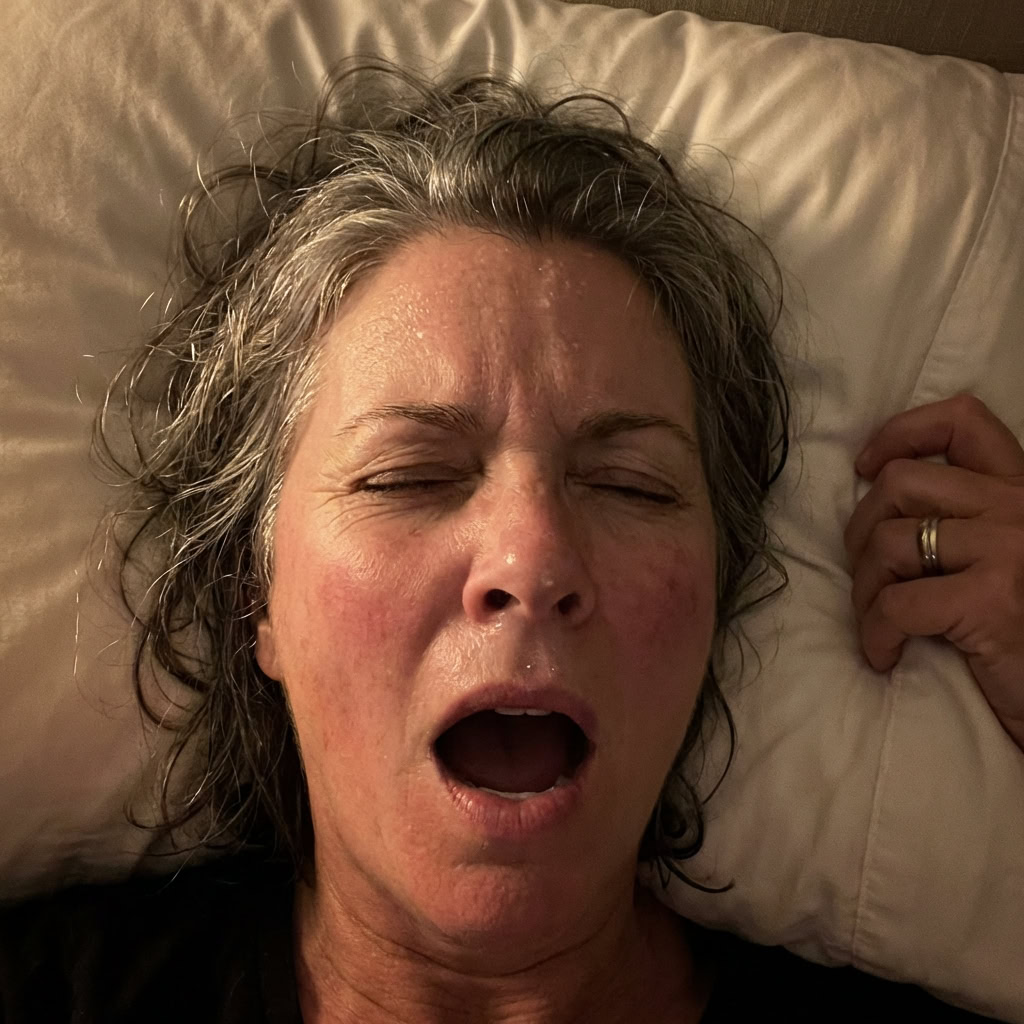
My best friend of 15 years didn't speak to me for three weeks after last Christmas – all because of the menopause gift I thought was "helpful." Let me explain what happened. Christmas morning. Her house. The usual chaos of wrapping paper and laughter and too much coffee. I handed Sarah her gift – beautifully wrapped, carefully chosen. A "Menopause Survival Kit" I'd spent two hours assembling. Cooling spray. Herbal supplements. A portable fan. One of those silk sleep masks. Even a funny card that said "I'm not having a hot flash, I'm just a little bit closer to hell." I thought I was being the perfect friend. Thoughtful. Supportive. Acknowledging what she was going through. She opened it slowly. The room went quiet in that way rooms do when something's gone terribly wrong. She looked at everything laid out in front of her. Then she looked at me. And I will never forget what I saw in her eyes. Not gratitude. Not appreciation. Hurt. "Thanks," she said. Just that one word. Flat. Cold. She excused herself to help in the kitchen and didn't come back. I went home confused. Hurt, honestly. I'd tried so hard. Three days later, still nothing. No texts. No responses to my messages. A week passed. Then two. I finally drove to her house on January 15th. Just showed up. Demanded to know what I'd done wrong. That's when she said it: "That gift told me you see me as broken. As a collection of symptoms to be managed. Like I'm not a person anymore – just a hot flash with legs." I tried to defend myself. I was trying to help. I was acknowledging what she's going through. "No," she said. "You were acknowledging that you have no idea how to actually help me. That fan? I have three. The supplements? I've tried them all. That card? It made a joke out of the worst thing that's ever happened to my body." She wasn't angry anymore. Just tired. "I don't need someone to hand me a band-aid and walk away feeling good about themselves. I need someone who actually believes there's a way through this." I went home and cried for two hours. Because she was right. I had no idea what I was doing. I'd bought her the equivalent of thoughts and prayers wrapped in tissue paper. That night – 11:47 PM, I remember because I couldn't sleep – I started searching. Not "menopause gift ideas" this time. I searched: "What do women going through menopause actually need?" I fell into forums. Support groups. Hundreds of women describing the exact same pattern. Friends and family giving them cooling products. Supplements. Joke gifts. Books about "embracing the change." And every single one of them said the same thing: "It just made me feel more alone." Because here's what I didn't understand: Sarah didn't need me to acknowledge her symptoms. She needed me to believe there was something that could actually stop them. Every gift I'd considered – every single thing in that gift basket – was designed to help her cope with menopause. To manage it. To laugh about it. To cool down during it. But what she actually wanted? What she was desperately searching for at 3 AM when she couldn't sleep? Something that might make it stop. Not forever. Not a cure (she's not naive). But actual relief. The kind where she wakes up and realises she slept through the entire night. Where she can sit through a meeting without feeling that familiar panic rise. I'd been giving her survival tools for drowning when what she needed was someone to pull her out of the water. I spent three more nights researching. Reading medical studies. Consumer reviews. Trying to understand what actually works versus what just makes the giver feel helpful. HRT – she'd tried it. Made her anxious. Stopped taking it. Supplements – her bathroom cabinet looked like a pharmacy. None of them did anything. Cooling products – she had a drawer full. They manage the flush while it's happening but don't prevent anything. I was about to give up. And then on night four, at 1:23 AM, I stumbled across something that made everything click. A medical article explaining what actually happens in the body during menopause. And suddenly I understood why nothing was working. Here's what I learned: When menopause hits, oestrogen drops. Everyone knows that part. But what nobody talks about is what happens next. When oestrogen drops, cortisol spikes. Cortisol – the stress hormone. The fight-or-flight chemical. And when cortisol floods your system, it completely throws off your autonomic nervous system. The ANS is what controls everything automatic in your body. Your temperature regulation. Your heart rate. Your sleep-wake cycle. The sudden surges of panic and heat. That's why hot flushes feel like a panic attack combined with standing in an oven. Because that's literally what's happening in your nervous system. Your body thinks it's under attack. And here's the thing that made me want to scream: Every single product I'd bought Sarah was designed to treat the symptom – the heat, the sweat, the anxiety. But none of them addressed what was actually causing it. The spiked cortisol. The haywire nervous system. That's why the fan didn't help. That's why the supplements failed. That's why she could cool herself down externally but the flushes kept coming. Because you can't fix a hormone problem with a towel. I sat there at 2:14 AM with this realisation, and I felt sick. I'd been so focused on finding something to give her that I never stopped to understand what was actually broken. Then I kept reading. And I found something unexpected. Apparently there are specific pressure points on your fingers that, when stimulated consistently, can actually lower cortisol. It's been used in traditional Chinese medicine for centuries for stress and hormonal balance. The constant, gentle pressure tells your body to release the fight-or-flight response. To calm down. And when your cortisol levels drop, your autonomic nervous system can finally rebalance. I kept digging. That's when I found the magnetic therapy rings. These weren't just jewellery. They had small magnets positioned at specific points that press against acupressure points on your finger. All day. Every day. Just by wearing it. The magnets provide constant, gentle pressure to the exact spots that signal your body to lower cortisol. No appointments. No remembering to do anything. Just wear it. I'll be honest – it sounded too simple. Almost too good to be true. But then I found review after review from women describing the exact same experience: They wore the ring for a few days. And the surges just... stopped. Not because they were cooling themselves down. But because their cortisol was finally dropping. Their nervous system was finally getting the signal to calm down. One woman wrote: "It's not that I don't get hot anymore. It's that my body stopped treating every tiny thing like an emergency. The panic is gone." That's when it clicked. Sarah didn't need something to manage the heat. She needed something that would tell her body to stop producing the cortisol that was causing the heat in the first place. But here's what made these rings different from everything else I'd looked at: They're jewellery first. Beautiful. Delicate. Something you'd choose to wear even if it did nothing. That meant if it didn't work – if the whole acupressure cortisol thing was nonsense – Sarah wouldn't have another "menopause product" sitting in her drawer reminding her of her symptoms. She'd have a ring. A piece of jewellery. From me. And if it did work? If the constant pressure on those acupressure points actually helped lower her cortisol and rebalance her system? Then I'd given her the one thing every other gift had failed to provide: Something that addressed the actual root cause instead of just putting a pretty bandage on the symptoms. I ordered one immediately. Paid for expedited shipping. Had it gift-wrapped with a card that said simply: "I'm sorry for last year. This isn't about managing symptoms. It's about believing you can feel like yourself again. I believe that for you. – M" I gave it to her on February 3rd. Not a holiday. Not her birthday. Just a random Tuesday. She opened it carefully. Looked at the ring – simple, silver, genuinely beautiful. "It's a magnetic therapy ring," I said. "I know it sounds weird, but I learned that when oestrogen drops, cortisol spikes, and that's what's causing all the chaos in your nervous system. This ring has magnets that press on specific acupressure points that can lower cortisol. It's constant, all day, just by wearing it. And even if it doesn't work, it's still just a beautiful ring. No pressure." She was quiet for a long moment. Then she put it on. "Thank you," she said. "Not for the ring. For actually trying to understand what's happening to me instead of just handing me another fan." That was three months ago. Last week, she texted me at 7 AM: "I just realised I've slept through the night for two weeks straight. The surges have basically stopped. I don't know if it's the ring or if my body just needed time, but I'm not taking it off to find out." Yesterday she sent another text: "I feel like myself again. I didn't realise how much I'd lost until I got it back." We're okay now. Better than okay. But here's what I learned: When someone you love is suffering, the worst thing you can do is give them a gift that says "I acknowledge you're drowning, here's a floatation device." What they need is someone who says: "I understand why you're drowning, and I found something that might actually address the real problem." If you're shopping for someone going through menopause this Christmas, please don't make the mistake I made. Don't give them something to help them cope with the symptoms. Give them something that addresses why the symptoms are happening in the first place. Something that understands it's not about the heat. It's about the cortisol. And there's actually a way to help with that. That's what they're really asking for. That's what I wish I'd understood a year ago.
Like this ad? Make it yours.
Crush rebuilds this exact creative around your product — your brand, your colors, your offer — in about a minute.