ONA
ONAONA Facebook ad: “The vet said my dog would need Apoquel for life. This $30…”
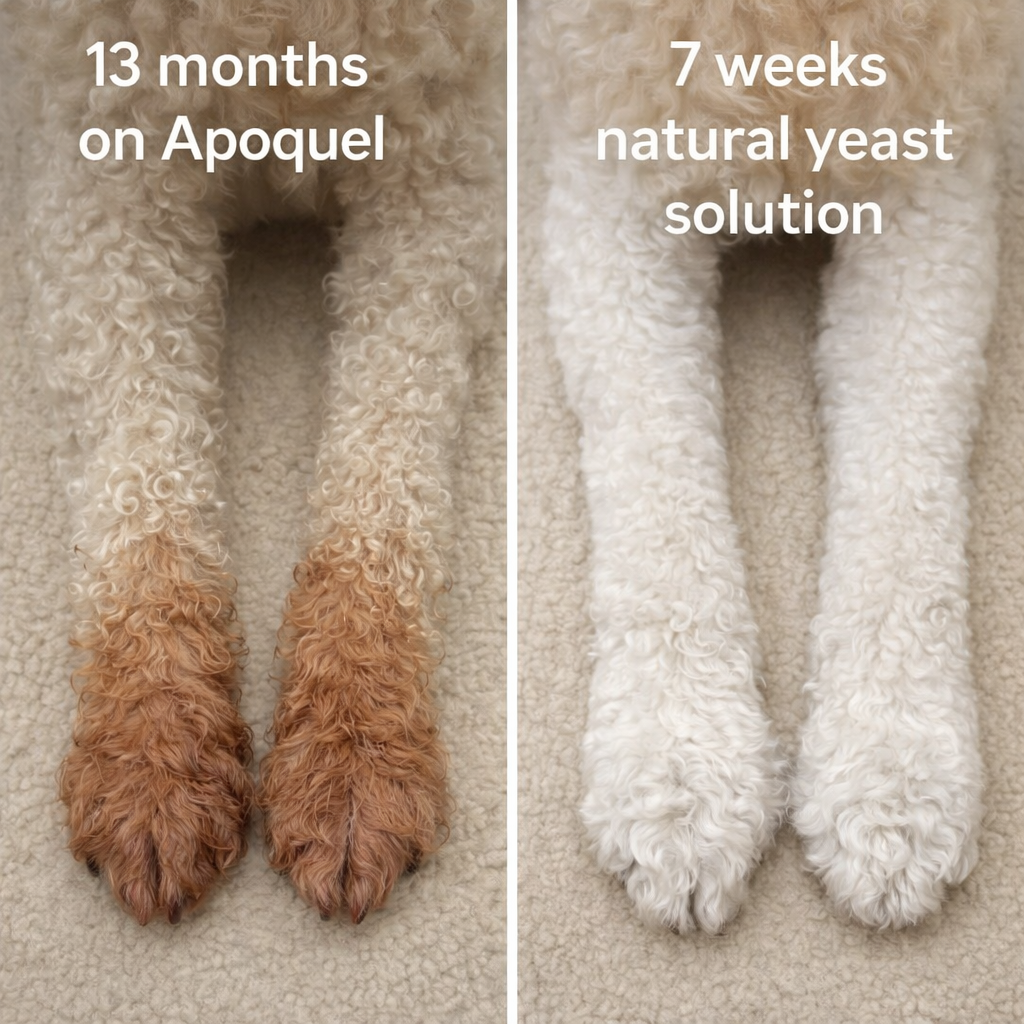
Ran for 81 days, from January 2 to March 24, 2026, the last day Crush saw it.
Run by ONA on Facebook. Crush is not the advertiser and does not verify its claims. See this ad in Meta's Ad Library(opens in a new tab)
Want an ad like this for your product?
Crush makes new ad images for your product from this ad: your logo, your product photo, your offer.
Trials from $19.95 USD, then $79.95 USD a month. Cancel anytime.
About this ad
- Meta Ad Library ID
- 3882882858678361
- Platforms
- Facebook, Instagram, Audience Network, Messenger and Threads
- Relaunches
- 0
- Niche
- Food & Beverage
Ad text
The veterinary dermatologist at our clinic stopped me in the parking lot and said, "Whatever you're doing differently, every dog owner dealing with chronic yeast needs to know about it." I'd just mentioned, casually, that we hadn't been back for an ear infection in four months. Total. No emergency visits. No weekend panics. She stared at me like I'd said we'd cured cancer. Here's what you need to understand: I run a boutique marketing firm. I've optimized everything in my life. Our house runs on systems. The Roomba cleans on schedule. The thermostat learns our patterns. Our grocery delivery auto-repeats every Tuesday. But every three weeks like clockwork, I was still driving 40 minutes to the vet, sitting in a waiting room that smelled like disinfectant and fear, paying $240 for someone to look in Cooper's ears for 90 seconds and hand me another bottle of Zymox. Twelve visits last year. Minimum. That's $2,880 annually just on ear infections. Not counting the Apoquel ($160/month), the special shampoo ($34 every two weeks), the grain-free food ($89/bag), and the enzymatic wipes I panic-ordered at 2 AM when the smell got unbearable. My husband called it "just part of having a Frenchie." I called it a hostage situation. We have a phone that recognizes our face and a car that parks itself, but we were treating our dog's yeast infection with the same approach veterinarians used in 1987? It bothered me. Really bothered me. Not just the money – though losing $5,000+ annually hurt – but the sheer primitive cycle of it. Infection. Vet visit. Antibiotics. Two weeks of relief. Relapse. Repeat. Like being trapped in a medical Groundhog Day where the only winner was my vet's retirement fund. I mentioned this at a dog park meetup. You should've seen the looks. Like I'd complained about having to feed him daily. "It's just chronic yeast," someone said. "Some breeds are prone to it." But why? We've solved harder problems. Why are we still treating infections with temporary Band-Aids instead of addressing why they keep coming back? I started researching one night after Cooper fell asleep. Not desperately. Methodically. The same way I research potential clients. "Chronic yeast infections in dogs." 3,240,000 results. All variations of the same exhausting advice: change the food, try probiotics, clean the ears more often, reduce moisture, consider allergy testing. Even the "holistic" solutions just added more products to buy. Like treating a burning house by purchasing better fire extinguishers. Then I found something different. An actual explanation of what was happening inside Cooper's system. My first thought: This is either going to change everything or break my heart with false hope. I dove into the research. Most supplements were garbage. Cheap chews full of fillers. Reviews from desperate owners: "worked for two days then stopped," "dog won't eat them," "complete waste of money." But buried in a veterinary journal about biofilms, I found something interesting. Yeast doesn't just sit on surfaces. It builds fortresses. Literally. Microscopic shields called biofilms that make the colonies up to 2,000 times more resistant to normal treatments. That's why the Zymox worked for two weeks. It was killing the surface yeast. But the protected colonies underneath? Completely safe. Ready to rebuild the second treatment stopped. The antibiotics made it worse. They wiped out the good bacteria, creating a biological vacuum that yeast rushed to fill. Every round of meds was actually setting up the next infection. We weren't losing the war against yeast. We were accidentally helping it win. But what if someone targeted the actual problem? Not just the yeast, but the biofilm fortress protecting it? I kept searching. At 2:13 AM, I found it. A small company in Colorado. Founded by a holistic vet whose own Rottweiler nearly died from antibiotic-resistant yeast. She'd spent five years developing a liquid supplement that actually worked. The formula was insane. Pau d'arco to inhibit fungal energy production. Ginger to reduce inflammation and support digestion. Apple cider vinegar to restore pH balance. Dandelion to support liver detoxification. And marshmallow root to soothe and heal the gut lining. Not a single filler. Not one cheap ingredient to hit a price point. Just pure, therapeutic-grade botanicals in a liquid base for maximum absorption. It cost $30 per bottle. Less than a single vet visit. And it promised actual root-cause resolution instead of temporary relief. I ordered two bottles immediately. They arrived a week later in packaging that looked medical. Which, essentially, it was. That night, I didn't expect miracles. Just handed Cooper his dinner with two pumps of this dark, herbal liquid mixed in. He ate it. No hesitation. No picking around it. I waited for results. Not overnight miracles. Real change takes time. Week one: Nothing dramatic. Cooper ate it fine mixed with his food. No picking around it. I reminded myself this wasn't a pharmaceutical knockout—this was internal rebalancing. Week two: His paws smelled less like Fritos. Noticeably less. I stopped second-guessing myself when my husband mentioned it unprompted. Week three: He slept through the night without the obsessive licking that usually woke us at 4 AM. Three nights in a row. Then five. Then it just... stopped. Week four: I checked his ears during our morning routine. The waxy, brown buildup that I cleaned daily? Significantly reduced. The inflammation? Calming down. The smell? Nearly gone. I made a note in my calendar to watch for the relapse. The inevitable return that happened every single time. Six weeks passed. No relapse. Eight weeks. Nothing. Two months later, I did something I hadn't done in over a year: I skipped our standing vet appointment. Then I cancelled the next one. At six weeks, I bought veterinary-grade ear solution just to test. Swabbed his ears. The solution came back nearly clean. Not perfect yet, but dramatically improved from where we started. His paws – the ones that used to be stained rusty red from constant licking – were fading back to white. The porphyrin staining I thought was permanent? Visibly lighter week by week. I did the math. At $30 per bottle lasting 4-6 weeks, this liquid cost roughly $0.71-$1.07 per day. Our previous vet-prescription cycle cost $6.89 per day. And actually made things worse. Three months later, at Cooper's annual checkup, Dr. Martinez was confused. "Where's the chronic yeast?" "Gone," I said. She examined him three times. Ears clear. Paws clean. Skin normal. No elephant-like thickening. No inflammation anywhere. "What did you change?" That's when she pulled me aside in the parking lot asking what we were doing differently. She explained what I'd learned through desperate research: most treatments focus on killing yeast. But yeast isn't the real problem. The biofilm fortress is. And the gut imbalance that allows yeast to take over in the first place. You can kill surface yeast all day. But if you don't dissolve the protective shield and restore internal balance, you're just buying temporary relief on an endless subscription. It's not about trying harder. It's about targeting the actual problem. The company I found? They can barely keep up with demand from owners who found them through desperate late-night Googling. No influencer ads. No veterinary kickbacks. Just word-of-mouth from people who can't believe they spent years – and thousands of dollars – treating symptoms instead of causes. They don't sell on Amazon. Won't dilute the formula to increase margins. They'd rather make 10,000 bottles that actually work than 100,000 that just "help a little." I respect that. It's the same philosophy I use with my clients: do fewer things exceptionally well. My mother-in-law visited last month. Watched me give Cooper his dinner with two pumps of liquid mixed in. "That seems too easy," she said. Exactly. That's the point. Everything about dog ownership is hard enough. Why should basic health maintenance require a pharmacy degree and a second mortgage? Last week, I did something unusual. I bought five bottles and gave them to families in our Frenchie Facebook group. Call it an experiment in community problem-solving. The group chat has been validating. Owners discovering their dogs sleep through the night after three weeks of consistent use. One woman said she almost cried when she realized she hadn't bought Zymox in two months. Another cancelled her standing monthly vet appointment after eight weeks of clear ears. We're not bad dog owners because we want solutions instead of management. We're good dog owners for recognizing that constant vet visits and medication cycles aren't normal – they're symptoms of treating the wrong problem. Every month now, I have an extra $400 in my account. Four hundred dollars that used to disappear into vet visits, prescriptions, and emergency ear cleaning supplies. But more than that: I have a dog who doesn't wake up scratching. Who doesn't smell like a Frito factory. Who isn't in constant, low-grade misery that I pretended was "just his breed." That's worth more than the money saved. If you're still doing the vet-antibiotic-relapse cycle, you're not being thorough. You're just using an outdated approach that benefits everyone except your dog. The future is internal. It's liquid. It's biofilm-breaking. And it actually addresses the root cause. Your vet will be shocked. Your dog will sleep better. And you'll wonder why nobody explained biofilms and gut-immune balance when you first asked for help. I'm explaining it now. The only question is whether you'll try it or keep doing the three-week cycle because that's what your vet keeps prescribing. Your bank account is worth more than that. Your dog's quality of life definitely is.
Where the ad sends people
getpacthealth.com
The vet said my dog would need Apoquel for life. This $30 bottle proved them wrong.
If your dog's paws smell like Fritos and the licking keeps you up at 4 AM, you're not alone. I tried everything—grain-free food, Cytopoint shots, medicated shampoos. Nothing worked. Then I discovered why: I was treating the symptom, not the biofilm fortress protecting the yeast. This liquid change...
Shop now: getpacthealth.com(opens in a new tab)