New Growth
New Growth Facebook ad: “Natural Support for Your Daily Routine”
Ran for 28 days, from July 1 to July 29, 2026, the last day Crush saw it.
Run by New Growth on Facebook. Crush is not the advertiser and does not verify its claims. See this ad in Meta's Ad Library(opens in a new tab)
Want an ad like this for your product?
Crush makes new ad images for your product from this ad: your logo, your product photo, your offer.
Trials from $19.95 USD, then $79.95 USD a month. Cancel anytime.
About this ad
- Meta Ad Library ID
- 3926253271004302
- Platforms
- Facebook, Instagram, Audience Network, Messenger and Threads
- Relaunches
- 0
Ad text
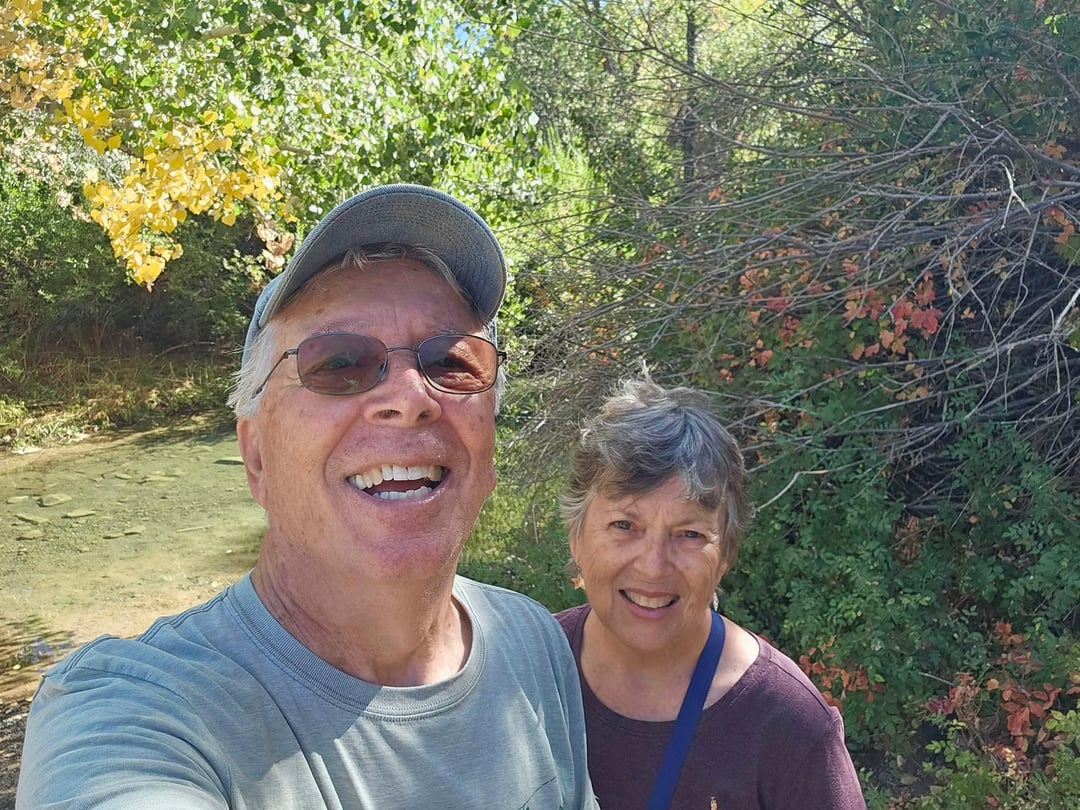
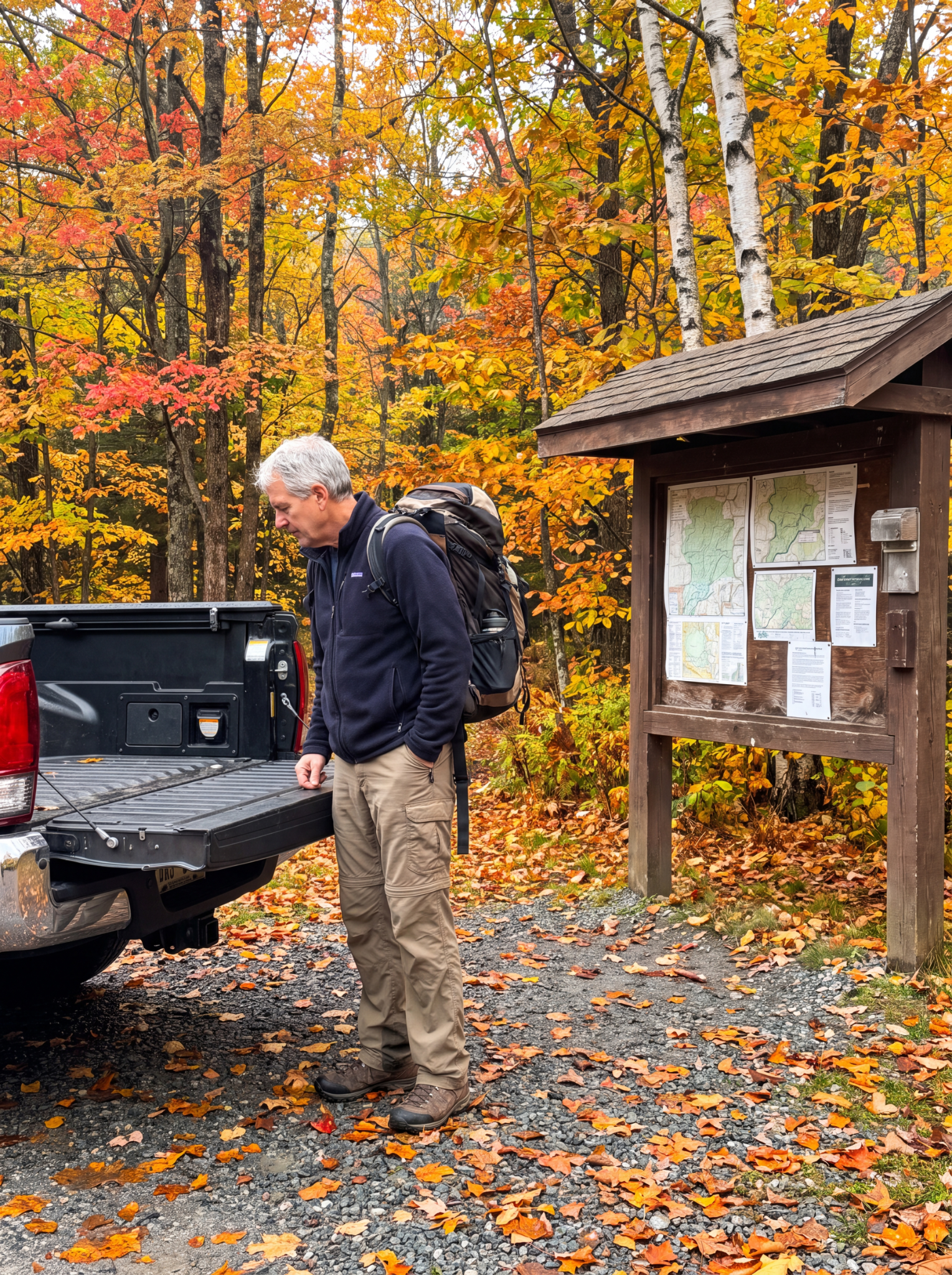
My Husband Used to Be the First One Out of the Truck at the Trailhead. Last Fall I Realized He'd Started Letting Me Go First. This is about my husband, Russell. He's 65. We've been married 41 years this November. Russell was a high school history teacher for thirty-two years. He retired three years ago. He's the kind of man who reads three books at a time. The kind of man who plans his Saturday by Tuesday. The kind of man who keeps a hand-drawn map of every trail we've ever hiked in a binder on the bookshelf in the den. We've been hiking together since the first year we were married. Day hikes, mostly. State parks within a couple hours of home. We're not the people who fly to Colorado and do the fourteeners. We're the people who drive an hour, walk for three or four, and stop at the same roadside diner on the way home for pie. We've done it almost every Saturday in spring and fall for forty years. It's our thing. It's also how I noticed. For most of those forty years, Russell was the first one out of the truck at the trailhead. He'd park, kill the engine, open his door, grab his pack from the back seat, and be standing at the trail sign before I'd even unbuckled my seatbelt. It wasn't a thing he did to show off. It was just how his body moved. He was always already going somewhere. I'd catch up, take his hand, and we'd start walking. For forty years it was the same. Sometime in the last couple of years, that stopped. It happened so gradually I didn't see it. Looking back now, I think it started about three years ago — right around when he retired. At first it wasn't about speed. It was about the trail itself. He'd study the map in the parking lot a little longer than he used to. He'd glance down the trail and then glance back at the truck. I didn't think anything of it. Then he started asking a question he'd never asked before. "Is there a restroom at the first shelter?" Russell has hiked this state for forty years. He knows every privy and every outhouse on every trail within two hours of our house. He didn't need to ask. But he was asking. Then it became something else. He'd get out of the truck and before he even grabbed his pack, he'd walk over to the pit toilet near the trailhead kiosk. Every time. Even if we'd stopped at a gas station twenty minutes earlier. By two years into retirement, the pit toilet at the trailhead was the first stop every single Saturday. And then the trail itself started to change. He'd get about an hour and a half in and start looking off to the side of the trail. He'd say: "Give me a second, Helen." He'd step into the woods. He'd come back and we'd keep walking, but there was a tightness around his eyes that I recognized as embarrassment. My husband — a man who'd been stepping into the woods on trails since he was twenty-four years old — was embarrassed. Because it was happening too often. Because he knew I was counting. I wasn't counting. But he thought I was. I didn't say anything. I told myself men in their sixties need to go more often. I told myself that's what retirement is — your body being allowed to do what it's been holding off on. I told myself it didn't mean anything. Then the nights changed. For most of our marriage, Russell slept straight through. He's always been a solid sleeper. Seven hours, sometimes eight, no interruptions. About two years ago, I started waking up at two in the morning to the sound of the bathroom door closing. Then I'd hear the toilet flush. Then the bathroom door would close again and he'd come back to bed. That was once a night. Then it was twice. By last spring it was three times some nights. He never said anything about it. I never said anything about it. But I was awake for every single one. Last October we drove up to a state park about an hour and a half north of us. We've been there probably eighty times over the years. The trail we usually do is six miles, moderate grade, a loop that ends at a waterfall. It was a perfect day. Blue sky. Leaves turning. The kind of fall morning we used to drive farther for, just because. I parked the truck. I killed the engine. I sat for a second the way you do when you've been driving and you want to take in the quiet. Then I opened my door, grabbed my pack, and got out. When I turned around, Russell was standing at the trailhead kiosk. But he wasn't reading the map. He was reading the sign that listed trail distances to each shelter. He turned to me and said: "The waterfall loop doesn't have a restroom until mile four. What about the ridge trail instead? There's one at the shelter at mile two." I looked at him. The waterfall loop is our trail. We've done it eighty times. It's the whole reason we drive an hour and a half. He wanted to skip it because there was no restroom until mile four. I said: "Sure, sweetheart. Let's do the ridge." We did the ridge trail. It was fine. It wasn't our trail. I drove home. He napped in the passenger seat for the last forty minutes. We didn't stop at the diner that day. He said he just wanted to get home. I drove the rest of the way thinking about the look on his face when he said "mile four." He was 65. I'm 63. We're not old. We are not the people who skip the waterfall because there's no restroom until mile four. I went to bed that night with a knot in my stomach and a question I didn't know how to ask. About three weeks later, I went to my daughter's house for her son's eighth birthday party. Russell wasn't with me — he had a long-standing Saturday morning thing with two old friends from the school district and he doesn't miss it. I was at my daughter's, in the backyard, watching the kids run around. I got to talking to another grandmother — a woman named Doreen who'd brought her grandson, who was friends with my grandson from school. We'd met a couple of times before at school events. She was probably in her late sixties. We were standing by the snack table watching the kids and we ended up talking about our husbands. She asked me how Russell was. I gave the polite answer. Then I paused. Then I said: "Doreen, can I tell you something? We went hiking three weeks ago and Russell asked to skip our usual trail because there wasn't a restroom until mile four. I haven't been able to stop thinking about it." She looked at me for a second. Then she said: "Can I tell you about my husband Walt?" I said yes. She told me Walt was 71. He'd been a mail carrier for 38 years. He'd retired at 64 healthy as a horse — walked twelve to fourteen miles a day on his route for almost four decades. But somewhere in his late sixties, she said, the bathroom thing had started. He'd get up two, three, sometimes four times a night. He'd be working in the garage and need to come inside every forty-five minutes. They'd stopped going to movies because he couldn't sit through a two-hour film without needing to get up. They'd had season tickets to their local college's football games for twenty years. He'd given them up because walking to the concourse restroom three times in four quarters felt like too much. He'd been to his doctor. His PSA was normal. His bloodwork was fine. The doctor had said his prostate was "a little enlarged" — the exact words — but that it was "normal for his age" and there was "nothing to worry about." Walt told Doreen he was tired of planning his entire day around where the nearest bathroom was. That's the line he used. Planning his day around the nearest bathroom. I felt the back of my neck get warm when she said it. Because Russell had been doing the same thing. I just hadn't named it yet. She told me what had helped. She said she'd done some reading about prostate health and the things that support healthy bladder function in men over sixty. She said her sister-in-law — a nurse — had mentioned pumpkin seed oil. Not pumpkin seeds. Not the kind you scoop out of a jack-o'-lantern. Pumpkin seed oil — cold-pressed, in a softgel. She told me pumpkin seed oil had been used in Europe for decades for prostate and urinary health. Her sister-in-law said it was one of the better-studied natural ingredients for supporting healthy bladder function in men. Doreen had called Walt's doctor first. She'd asked the nurse if there was any reason Walt shouldn't add a pumpkin seed oil softgel to his morning alongside his existing medications — a low-dose blood pressure pill and a daily aspirin. The doctor had called back and said it was a sensible thing to add. No interactions. Worth trying. Doreen had put one softgel on the saucer next to Walt's coffee mug the next morning. He took it. He didn't argue. That had been almost a year ago. She said Walt was different now. Not a different man. Her Walt. But more of him. He'd slept through the night four nights in a row the previous week. He'd gone back to the football games. She said: "Last Saturday he sat in that stadium for four hours and got up once. Once. At halftime. Like a normal person. He came home and I almost started crying over the pot roast because I realized I'd forgotten what it looked like when he didn't have to think about it." She said she couldn't tell me which part of what they'd changed was the part that mattered most. They'd also started walking together after dinner. They'd cut back on caffeine after noon. They'd started going to bed at the same time. But the pumpkin seed oil was the piece Walt himself kept coming back to. He told her the first thing he noticed — about three weeks in — was that he wasn't getting up at two in the morning anymore. Then it was that he could work in the garage for a couple of hours without coming inside. Then it was the football games. She wrote the name of the brand on a napkin from the snack table. Everly. She said: "Talk to Russell's doctor first. That's the part that matters most." I put the napkin in my purse. I drove home from the birthday party thinking about Walt. About the football games. About planning your day around the nearest bathroom. About a man who'd walked twelve miles a day for thirty-eight years and was giving up season tickets because he couldn't sit through four quarters. That was Russell. Not exactly. Russell hadn't been a mail carrier. Russell was a teacher. But the shape of the problem was the same. A man whose body was healthy by every standard measure, quietly rearranging his life around something his doctor had called "normal for his age." I sat with it for a few days. I did some reading. What I learned was that pumpkin seed oil has been studied for decades — particularly in Europe — for its role in supporting prostate and urinary tract health. The active compounds include fatty acids, phytosterols, and zinc — nutrients that support the prostate gland and the smooth muscle of the bladder. These aren't exotic lab chemicals. They're the same nutrients that have been in pumpkin seeds for thousands of years, concentrated into a cold-pressed oil. Pumpkin seed oil supports healthy urinary flow. It supports healthy bladder muscle function. It supports the prostate tissue that naturally changes as men move into their sixties and seventies — the kind of changes that don't always show up as a red flag on a PSA test but are doing real work underneath. Pumpkin seed oil is a structure-function ingredient, not a medication. It supports healthy prostate size already within the normal range. It supports healthy urinary frequency. It doesn't replace anything else a person is doing — it works alongside it. That last part is what made me comfortable thinking about it for Russell. I wasn't going to ask him to come off anything. He's on a low-dose statin for his cholesterol and a daily multivitamin — that's it. But I wasn't going to make a decision about adding anything to his morning without his doctor's blessing. Before I ordered anything, I called Dr. Lambert's office. Dr. Lambert has been Russell's doctor for about eight years. I spoke to his nurse. I told her exactly what I was thinking. Told her the brand. Told her Russell takes a statin and a daily multivitamin and that's it. Asked if there was any reason Russell shouldn't add the pumpkin seed oil softgel in the morning. She talked to Dr. Lambert and called me back the next day. He said it was a sensible thing to add. No interactions to worry about with anything Russell was on. Have Russell mention it at his next appointment so it gets in the chart. I ordered the bottle. When it arrived, I told Russell about it at dinner. I told him about Doreen. About Walt. About the football games and the garage and the pot roast. I told him about the look on his face at the trailhead when he said "mile four." I told him I'd called Dr. Lambert and gotten the okay. I told him I wanted to put one softgel on the saucer next to his morning coffee. I told him I wasn't asking him to change anything else. Russell listened the way Russell listens. When I finished he set down his fork. He said: "Helen. I counted last Tuesday night. I got up four times. I didn't tell you because I didn't want you to start worrying." I said: "Honey. I've been awake for every one of them." He said: "I know." That was the conversation. He took the bottle and put it on the kitchen counter next to the coffeemaker. The next morning when I came downstairs the empty saucer was sitting next to his mug. I'm not going to tell you Russell was different in seventeen minutes. I don't think these things work like a switch flipping. But over the next couple of months, things started to shift. The first thing I noticed was the nights. I'm a light sleeper. I've always been. When Russell gets up, I know. About three weeks in, I woke up one morning at 6:15 and realized I hadn't heard the bathroom door a single time. He'd slept through the night. I didn't say anything. Neither did he. The next night, same thing. And the next. By the end of the fourth week, Russell was sleeping through the night five or six nights out of seven. The one night he did get up, it was once. At 4 a.m. Once. He didn't make a thing of it. I didn't either. But I could see it in his face in the mornings. He looked rested in a way he hadn't in two years. The second thing was the drives. Russell and I drive to our daughter's house about once a month. It's an hour and forty-five minutes each way. For the last couple of years, Russell always asked to stop at the rest area on the highway about an hour in. About six weeks after he started the softgel, we drove to our daughter's and he didn't mention the rest area. I passed the exit. He didn't say anything. We drove the whole way without stopping. I didn't say a word. But I noticed. The third thing was the trail. About two months in, we drove up to the same state park for a Saturday hike. I parked. I killed the engine. I sat for a second. Russell opened his door and was out of the truck before I'd even reached for my pack. He was standing at the trailhead kiosk when I caught up to him. He turned to me and said: "Waterfall loop?" Not the ridge trail. The waterfall loop. Our trail. Six miles, moderate grade, no restroom until mile four. He didn't mention mile four. He took my hand the way he'd been doing for forty years. We started walking. He stepped into the woods once, around mile three. Normal. The way any person does on a six-mile hike. At the waterfall we sat on the flat rock and ate sandwiches and he wasn't looking around for the tree line the way he'd been doing. He was just sitting there. On the rock. With me. Eating a sandwich. Like a man who wasn't planning around anything. I didn't say anything. I didn't need to. At Russell's next appointment with Dr. Lambert, his numbers were the same as they'd been before. Good. Where they should be. Dr. Lambert didn't put him on anything. He didn't change anything. He asked Russell how he'd been feeling. Russell told him. The nights. The drives. The trail. He mentioned the pumpkin seed oil. Same brand, same dose, every morning. Dr. Lambert nodded. He said it sounded like a reasonable addition and he was glad I'd called the office before we started it. He said: "Russell, whatever combination of things you and Helen have been doing, keep doing it. You seem more comfortable today than you did at your last visit." That was about ten weeks ago. I want to be careful about what I'm claiming. I don't know how much of Russell's improvement is the pumpkin seed oil. I don't know how much is the after-dinner walks I started suggesting we take — short ones, like Doreen described. I don't know how much is the fact that we both cut back on coffee after noon and started going to bed at the same time. I don't know how much is just the fact that I told him I'd been awake for every bathroom trip, and he told me he'd been counting, and we stopped pretending for each other. It's probably all of it together. Bodies are different and lives are different and I can't tell you that what worked for Russell would work for your husband. What I can tell you is what I did. I noticed what was happening to my husband and I stopped explaining it away as "normal for his age." I talked to a woman at a birthday party who told me what had worked for her husband. I called my husband's doctor's office before I added anything new to his morning. I waited for the doctor to call back. When he said it was a sensible thing to add, I ordered the bottle. Russell never came off anything Dr. Lambert had recommended. He never went against his doctor's guidance. He added one softgel to what he was already doing — alongside everything else we changed together. Talk to your doctor or pharmacist before adding any new supplement to your husband's existing care, especially if he's on medication for blood pressure, prostate health, or any other condition. That one phone call is what made me comfortable. It's what I'd tell anyone else to do first. The brand I added to Russell's morning is Everly. Pumpkin Seed Oil Softgels. Cold-pressed. One softgel with a glass of water in the morning. That's the whole thing. https://try.shopeverly.shop/esl P.S. I saw Doreen at the school holiday concert in December. Our grandsons were in the same chorus. I told her about Russell. About the nights, the drives, the waterfall trail. She laughed and squeezed my arm and said: "Welcome to the club. The whole point of the club is that nobody knows we're in it. We just have our husbands back and we keep going." I drove home thinking about that. There's a quiet sisterhood of wives who notice what their husbands are losing and do something about it. I didn't know I was joining it the day I went to that birthday party. P.P.S. Everly has a money-back guarantee. If you're not satisfied for any reason, every penny back. No questions asked. I think that's a sensible policy for a supplement — it gives you time to actually see whether it does anything. I'd give it a few weeks at minimum. Bodies are different. Some people notice something within the first week or two. Others take longer. P.P.P.S. I keep an extra bottle in the house now. Russell doesn't like being down to his last few softgels. He's the kind of man who notices when the bottle's getting light and gets anxious about it, so I just keep a spare under the bathroom sink. P.P.P.P.S. Here's what I'd tell you to do if you're in a similar place with your own husband. Call his doctor's office first. Tell the nurse exactly what you're thinking and exactly what he's on. Wait for the doctor to call back. If the doctor approves, put one softgel on the saucer next to his morning coffee mug. Don't change anything else without your doctor's input. Just put it there. Let him take it quietly. Give it a few weeks before you decide anything. And in the meantime — walk with him after dinner. Cut the caffeine after noon. Go to bed at the same time. Build the foundation with him, not for him. The softgel is one piece of it. P.P.P.P.P.S. We drove up to the same state park last Saturday. The waterfall trail. Six miles, moderate grade. Russell was first out of the truck. He was standing at the trailhead kiosk with his pack on when I came around the front of the truck. He didn't look at the shelter distances. He didn't mention restrooms. He took my hand and we walked. At the waterfall we sat on the flat rock and ate sandwiches and he stood up and said "Ready?" the way he used to — without scanning the trees first. We stopped at the diner on the way home. He ordered the pecan pie. I ordered the apple. We split them. Forty years of marriage and we still split the pies. https://try.shopeverly.shop/esl Individual experiences vary. These statements have not been evaluated by the FDA. This product is not intended to diagnose, treat, cure, or prevent any disease.
Where the ad sends people
try.shopeverly.shop
🎃 Natural Support for Your Daily Routine
“I’ve been feeling stronger and more balanced since taking Everly Pumpkin Seed Oil. My bladder feels so much calmer, I’m sleeping through the night again, and my hair feels thicker than it has in years. I love how natural it feels — just pure support for my body.”
Learn more: try.shopeverly.shop(opens in a new tab)