Dr. Megan Caldwell, - Pediatrician
Dr. Megan Caldwell, - Pediatrician Facebook ad: “Stop Watching Your Child Suffer”
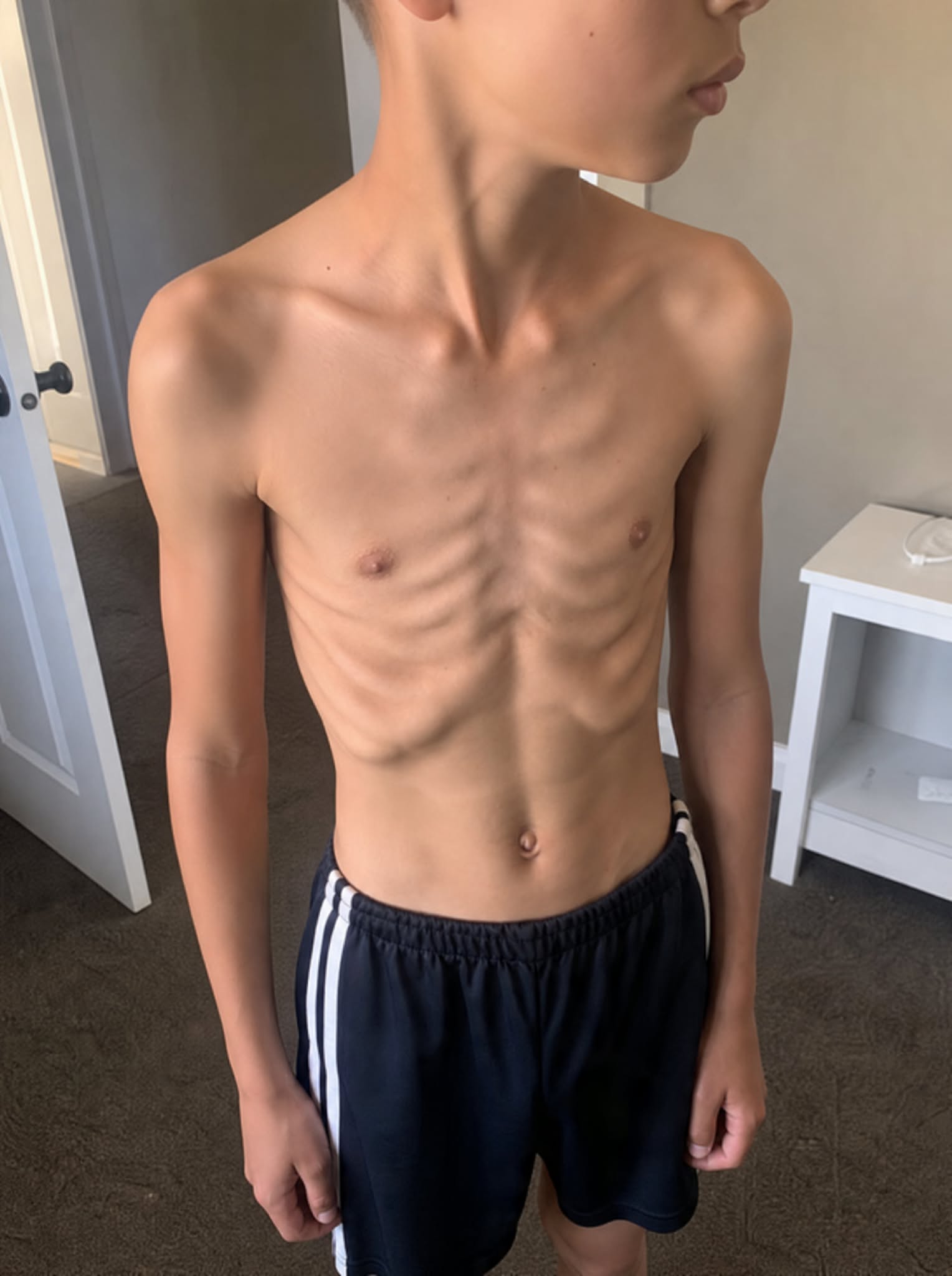
Ran for 7 days, from July 25 to August 1, 2026, the last day Crush saw it.
Run by Dr. Megan Caldwell, - Pediatrician on Facebook. Crush is not the advertiser and does not verify its claims. See this ad in Meta's Ad Library(opens in a new tab)
Want an ad like this for your product?
Crush makes new ad images for your product from this ad: your logo, your product photo, your offer.
Trials from $19.95 USD, then $79.95 USD a month. Cancel anytime.
About this ad
- Meta Ad Library ID
- 4085299664938166
- Platforms
- Facebook, Instagram, Audience Network, Messenger and Threads
- Relaunches
- 0
- Niche
- Parenting & Kids
Ad text
I've evaluated more than 1,500 children for ADHD in nineteen years as a child psychiatrist. I've written more prescriptions for stimulant medication than I can count. Last spring my own daughter got the same diagnosis I deliver every week. I would not write today's prescription for her. I am going to tell you why. My name is Dr. Megan Caldwell. I'm board-certified in child and adolescent psychiatry, trained at Hopkins, and I have spent nineteen years in clinical practice — almost all of it with children between five and seventeen who could not sit still, could not stop a meltdown, Children who had put a fist through a bedroom wall, Children who had hit their mother in a moment they could not explain afterwards. Children who had been suspended twice before second grade, Children who could not understand why everyone around them was disappointed by 9am. What follows is not what most people on the internet write when they have something to say about ADHD and children. I am not anti-medication. I have prescribed ADHD medication across nearly every formulation a child psychiatrist sees, and I have watched it change a school week in ways that gave a struggling family their evenings back. It works. That is the part nobody writing about this honestly will tell you. But there is another part. Over nineteen years I have also watched that same medication take something from a child that I did not understand I was helping take. I have watched eight-year-olds stop laughing the way they used to laugh. I have watched seven-year-olds stop wanting breakfast and lose four pounds in a season on a prescription their pediatrician had described as well-tolerated. I have watched ten-year-olds tell me they do not recognise themselves in photographs from a year ago. I have watched twelve-year-olds sit in this chair completely still and look at their hands. I have watched mothers come back four months after a first prescription and tell me, quietly, that their child does not feel like their child anymore. Until I had a daughter old enough to lose the same thing, I did not know what to do with any of it. And for four years I have been quietly ignoring a clinical study sitting in my inbox, because reading it carefully would have required me to ask a question I was not ready to ask. That is what this is about. If your child has been diagnosed with ADHD, or you are sitting in a waiting room next week with a referral form in your bag, I want to tell you what I would tell my sister if she called me tonight. Three things. One — the medication that helps your child sit still in the classroom is real, and it works, and there is also something it is taking from them that nobody at the appointment is going to itemise for you. Two — every supplement you have stacked on the kitchen counter trying to fix what the medication breaks is hitting one piece of a four-piece problem. That is why nothing has moved the needle. Three — there is a clinical study from 2019 that I would have called fringe science five years ago, that has been peer-reviewed and replicated since, that nobody who writes you a prescription is going to mention to you. I want to tell you what is in it. Stay with me. A few months ago a mother sat in my office with her eight-year-old son. I have seen this scene a thousand times. She had brought his school file in a manila folder, the way mothers in my practice always do, with three different teachers' notes paper-clipped together because she had been keeping them for two years and could not throw them away. The boy sat next to her with his arms crossed, small for his age, and he stared at a point on my desk and did not look up when I asked him his favourite thing about second grade. His mother answered for him. I asked the boy directly, gently, again. He shrugged. So I turned to her and asked how things had been at home. She started crying. She told me the mornings were a war, that her husband had stopped trying to help because the trying was making it worse, that her older daughter had stopped inviting friends over. She had read about magnesium and fish oil and tried both. Neither had helped. She did not know what to do anymore. Then she said: I just want my son back. I have heard that exact sentence in this office more times than I can count. What I told her is what I tell every mother sitting in that chair. I walked her through the diagnostic criteria. I described behavioural interventions she could put in place at home. I told her about the prescription stimulant medication that had been studied extensively in children, that it was the standard of care for moderate to severe ADHD, that I would recommend a low starting dose, that we would monitor and adjust together. I told her about the possible side effects. I told her about them the way I have been trained to tell mothers about them — which is the way you tell someone about something you yourself have not seen all the way through. Then I gave her the prescription. She thanked me. She walked out of my office, I closed the door, and I sat at my desk for a moment. I did not feel anything in particular. That is what nineteen years does to you. Four months later the same mother and the same boy came back for a follow-up. He was thinner. Three pounds, according to my scale — which on a small eight-year-old is a noticeable amount. He had not grown. The shirt he was wearing was the same one he had worn at the first appointment, and it was now loose at the neck. His mother told me he had stopped wanting breakfast. He would sit in front of the cereal she made him and stare at it. Some mornings she watched him eat three bites and push the bowl away. He was not sleeping until after midnight some nights. He had stopped laughing the same way he used to. He had stopped drawing — he had been drawing every afternoon for two years and the pictures had stopped. He had not asked her a question in over a week. The teacher had stopped emailing about behaviour, which she had wanted for two years, and that it had felt like a relief at first, and that lately it had stopped feeling like one. Then she asked me if it was the medication. What I told her is what I have been trained to tell mothers — that some appetite suppression and some sleep disturbance were common, that we sometimes adjusted the dose, that we sometimes changed to a non-stimulant, that for most children the trade-off was worth it. I told her his behaviour at school had improved. She nodded. She was quiet for a moment. Then she said: I just thought you should know what he is like at home now. I adjusted his dose down a quarter, told her to come back in six weeks, and she left. What I felt next was not something dramatic. Not guilt. Not doubt. Not anger. It was tiredness. The tiredness of someone who has had this conversation eight hundred times and has learned not to let it lodge anywhere, because if you let any of them lodge you cannot do this job. That is what I want you to understand about your pediatrician, and about the psychiatrist who is going to write your prescription, and about the family doctor who will refill it for the next six years. They are not lying to you. They are doing the job they were trained to do, with the tools they were given, inside a system that has already decided what the tools are. And the system has decided. In March my daughter changed all of that for me. Her name is Lila. She is ten years old, the second of two children, funny in the way kids who are not the oldest are often funny, because she has been working that angle since she was three. For almost two years she had been struggling in school. Not catastrophically — she is bright, the teachers like her — but she does not finish things. She loses her shoes between the front door and the car. She melts down over the wrong colour bowl, or a brother who used the wrong tone, or a homework page she suddenly cannot face. Some afternoons she would come home, lie down on the kitchen floor, and cry about a thing she would not be able to name fifteen minutes later. For nearly two years my husband and I had been telling each other she was tired, that ten was a hard age for girls, that we were waiting for the next thing to be easier. In March she had a panic attack on the front steps of school over a worksheet she had forgotten in her room. Sat down on the concrete step at 8:15am and could not get back up. Her teacher called me from the school office. I drove there in the tracksuit bottoms I had not changed out of, with a coat I had not zipped up. I found her behind the recycling bins at the side of the building, and she could not tell me what she was hiding from. I made an appointment with a colleague. Not with myself — you do not assess your own child. His name is David. We trained together. He has been doing this almost as long as I have. He saw Lila for ninety minutes across two appointments, with both parents in the room, with the questionnaires from school, with the questionnaires from us. Afterwards he sat down across from me. He said: Megan, she meets criteria. Combined presentation. Moderate. Then he reached for his prescription pad. I have known David for twenty-two years. He is a good doctor. He was about to do for me exactly what I had done for that mother and her eight-year-old four months earlier. I said: David. I need a minute. He stopped with the pen still in his hand, looked at me, and understood before I said anything else. What I did not say was that I had a problem with stimulant medication. What I said it for was something else — for the memory of that boy in my office, three pounds lighter, not laughing. For the seven hundred school reports I had read across my career that said the child had improved at school, and for the maybe forty parent reports across those same seven hundred files that mentioned what had happened at home. The parent reports were never in the same handwriting as the school reports, and they were never the ones that ended up in the chart. I said it because for the first time in nineteen years, I was the parent. David put the pen down. He said: alright. What do you want to do? I said: I do not know. I need time. He said: you have time. She does not have to start today. That night I sat on the edge of my daughter's bed and watched her sleep. And I did the thing I had not done in four years. I opened the 2019 study. What I want to walk you through next is what is actually happening in your child's brain, because if you do not understand it, none of what comes after is going to make sense. The entire reason supplements have failed you is that nobody has ever explained what your child's brain is actually short on. ADHD is not one problem. It is four. Your child has four neurotransmitter systems running at the same time, and in ADHD all four are underperforming simultaneously. Dopamine is the system that lets the brain start a task. Without it your child stands in the kitchen with their shoes in their hand and does not know what comes next. That is not defiance. That is dopamine. Serotonin holds emotional state steady. Without it every small disappointment lands like a major one — the meltdown over the wrong cup, the crying about something they cannot name, the way a day can be ruined by 8:15am over a sock seam. That is serotonin. GABA is the brain's natural quietening signal. It is what tells the nervous system it is safe right now, you can be still, you can stop scanning. Without it every sound and movement in the room arrives at your child's attention at the same volume. Sitting still is not a choice they are refusing to make — it is something their brain is not currently equipped to do. Norepinephrine is what sustains attention once it begins. Without it focus collapses the moment the task stops being interesting — the reading they started fine and abandoned ten minutes later, the chore that was going to take five minutes and took fifty. That is norepinephrine. All four of those systems are underperforming in your child at the same time. That is the actual problem. Now look at what you have been trying. Magnesium supports GABA. One pathway. For twelve years I have been telling mothers in my office that magnesium probably would not help much for ADHD, and I have been right — and I have also never told them why I was right, because the why was inconvenient. The why is that magnesium hits one of four. The other three keep underperforming, the child keeps presenting the same way, and the mother goes back to the cabinet and reads the labels on the next thing. Fish oil is excellent for general brain development. It does not specifically address any of the four pathways involved in ADHD presentation. It is a foundational nutrient, not a treatment. L-theanine takes the edge off when it works. It supports calm focus. Part of the picture, not the whole picture. Zinc supports cognitive function broadly. It is a cofactor your child's brain needs to do its work. On its own it does not move the four pathways. Vitamin D3 supports brain development. Many children are deficient. Correcting the deficiency helps. Correcting the deficiency does not address the underlying neurotransmitter imbalance. Behavioural therapy gives your child tools to cope with the symptoms while the neurotransmitter systems creating the symptoms keep underperforming. It is necessary. It is not sufficient. Everything you have tried has been hitting one piece of a four-piece problem. You were not failing your child. You were never given the right map. And now the 2019 study. This is the part I had avoided for four years. A randomised double-blind clinical trial published in 2019 compared a standardised saffron extract head to head against the most commonly prescribed ADHD medication for children, in children aged six to seventeen who met diagnostic criteria. The trial ran for six weeks. The primary outcomes were the Teacher and Parent ADHD Rating Scale scores. Here is what it found, in plain language. The two groups improved at comparable rates. The saffron group did not lose appetite. The saffron group did not have sleep disturbance. The saffron group did not exhibit the flat, distant presentation that parents call the zombie effect. At the six-week mark the saffron group scored slightly better on the hyperactivity subscale than the prescription stimulant group. The trial was published in the Journal of Child and Adolescent Psychopharmacology. I read it three times. Then I looked up why saffron worked. The active compounds are called crocin and safranal. They support dopamine activity. They support serotonin activity. They support GABA activity. They support norepinephrine activity. All four. Not sequentially. Simultaneously. One natural compound, doing what your child's brain has been short on, across all four pathways at the same time. This is the only known natural compound clinically shown to do that. I sat back in my chair at eleven forty-five at night and I was angry. Not at David. Not at the colleague who had sent me the study four years earlier. Not at the mother who had sat in my office in November. I was angry at the gap between what existed and what I had been telling people. This research was published. It was peer-reviewed. It has been cited and replicated since. It has been sitting in databases I have access to from my own office. And I had never mentioned it to a single one of the 1,500 families who walked through my door, because no continuing-education course I have taken in nineteen years was sponsored by an organisation that had any reason to put it in front of me. That is not a conspiracy. That is something quieter and worse. It is the way every continuing-education credit I have earned over nineteen years has been funded by an organisation that profits from a prescription pad. It is the way every conference dinner I have attended has been sponsored by a company that does not make plants. It is the way the standard of care is decided by the people who write the standard of care, and the people who write the standard of care work in offices funded by the people who make the medication. The system is not broken. It is functioning exactly as designed. You cannot patent a saffron compound. No pharmaceutical company is going to fund a phase-three multi-site clinical trial of something it cannot sell exclusively for ten years afterwards. No sales representative walks into my office at 7:45am with a tray of breakfast pastries and a presentation about saffron. The reps for the patented stimulants do. They have been doing it for nineteen years. The Tehran group that ran the 2019 study did not have a sales force. They had a research budget and a hypothesis. So the study sits in journals my colleagues do not read, the prescription pad gets reached for at appointment after appointment, and the children who get better at school go home in the afternoons three pounds lighter. That is the system. I told you I was not anti-medication. I am still not. But I want you to understand what I am telling you about the system, because the next thing I did was research what brand of saffron supplement I was going to give my daughter. And I want to tell you what I looked for, what I found, and what we did. I did what I would have done for a clinical trial. First, the species. There are over two hundred plants that get called saffron in different parts of the world. There is exactly one that produces the active compounds I cared about. It is Crocus sativus. Second, the dose. The 2019 study used a standardised extract called affron, which delivers a specific concentration of crocin and safranal at a dose validated against a paediatric population. Most saffron products on Amazon do not use affron. Most are not standardised. Most do not disclose what concentration of active compound is actually in the capsule. Third, the delivery format. Lila is ten. She does not reliably swallow capsules. Daily compliance with a capsule supplement in a paediatric population is, in my clinical experience, somewhere between fifty and seventy percent. A child who does not take the supplement does not get the supplement. The product needs to be one a child will reliably take. Fourth, the supporting compounds. This is where most supplements I have seen go wrong. They either contain a thousand milligrams of every fashionable ingredient on the back of the bottle, none of which is at a clinical dose, or they contain saffron alone at a sub-therapeutic dose with nothing else to support the foundation. What I wanted was a formula that contained the affron extract at the clinical dose used in the studies, plus L-theanine for the calm-focus piece, plus passion flower for the dysregulation I was watching every morning in my own kitchen, plus zinc, magnesium, B6 and D3 at sensible cofactor doses to support the rest of what a developing paediatric brain needs to do its work. I found one product that hit all four criteria. It is called Saffron Bears. The brand is HealthyRoot. Twenty milligrams of affron-standardised saffron extract per serving — the same standardised extract used in the published research. L-theanine, passion flower, zinc, magnesium biglycinate, B6 and D3 at the supporting cofactor doses. Third-party tested. Made in the United States. No fillers, no artificial dyes, no stimulants, no sucrose syrup pretending to be a supplement. Gummy format. Two per morning with breakfast. I ordered one pouch. I gave the first one to Lila on a Tuesday in early April. She ate it without asking what it was, the way ten-year-olds eat gummies. Here is what the next twelve weeks looked like, because I documented them the way I would have documented any clinical observation. Week one. Nothing dramatic. Lila ate her gummy in the morning, forgot her water bottle at school, melted down over a homework page on Wednesday evening. We had a small win on Thursday morning when she got her shoes on the first ask. I did not trust the Thursday morning. I did not trust anything yet. Week two. The mornings began to feel marginally less braced. I could not have said what was different at first — the yelling started ten minutes later than it had been starting, and she read for fifteen minutes before bed without being asked, which she had not done since she was eight. Week three. The first thing I would have called a meaningful change. Lila came home on a Tuesday and told me about something that had happened in art class — told me the whole story without losing the thread. She told me about a girl who had said something to her at lunch, how it had made her feel, what she had said back, and that she felt good about what she had said back. That kind of sustained narrative was not what our dinners had been sounding like for a year. Week four. Lila's teacher emailed me. Not about behaviour — about a writing assignment Lila had handed in that the teacher said was the most focused piece of work she had produced all year. The teacher used the word transformative. I read the email standing in the kitchen and sat down on the floor. Week five. At dinner my husband mentioned that Lila had not had a meltdown in three days, and that he had been counting because he had not wanted to say anything in case he jinxed it. We had gone three days without a meltdown maybe twice in the past two years. He said: I think something is happening. I said: I think so too. Week six. Lila went to a birthday party at a trampoline park — which would have ended in tears six months earlier — and she stayed for the whole thing. She came home and told me about the boy she had been talking to and what they had talked about, and she went to bed at nine-thirty and slept until seven. By week eight I had started cautiously discussing the protocol with three families in my practice who had specifically asked me about natural alternatives. With full informed consent, with documentation, with the explicit understanding that this was not a replacement for any medication their child was currently on, and that any changes to medication would happen only in consultation with the prescribing physician. Twelve weeks in, of those three children, one had a trajectory similar to Lila's. One had a slower response, with meaningful changes appearing closer to week eight. One had a partial response that the parents reported as helpful but not transformative. None had appetite loss. None had sleep disruption. All three were taking the gummies daily without resistance — which in my clinical experience is more than I can say for most paediatric supplement compliance. Over the next ten months I extended the cautious recommendation, with the same protocol and the same documentation, to nine families. Of those nine children, seven had a clinically meaningful response within twelve weeks. Two had a partial response that the parents continued because they preferred the modest improvement to the alternative. None had appetite suppression. None had sleep disturbance. None had a personality change. That is what I have observed in my own practice, with my own patients, with my own documentation. I am telling you what I have seen. I am not telling you what your child will see. Every child is different. Some children will need stimulant medication, and stimulant medication will be the right answer for them, and I have written and will continue to write those prescriptions for the children who need them. What I am telling you is that there is an option that exists, that has clinical evidence behind it, that has not been killing my daughter's appetite or her sleep or her personality, and that I would not have known to recommend if I had not had to make the decision as a mother before I made it as a doctor. There was a moment in early summer. Lila and I were at the kitchen sink. She was helping me wash strawberries, telling me a long, slightly disorganised story about a video she had watched, with the kind of digressions she has always had, except that this time she came back to the main thread on her own, twice, and the third time she said: anyway, mom, what I was trying to say is — and she finished her thought, and she looked up at me, and I realised I was crying. She said: are you okay? I said: yes. I just love hearing you talk. She said: weird, mom. Then she went back to the strawberries. I stood at the sink and thought about the eight-year-old boy in my office and his mother in tears. I thought about the moment David had reached for his prescription pad in March. I thought about the four years that the 2019 study had sat in my inbox. I thought about how close I had come to writing my own daughter into a chart that was going to look just like his. At our department meeting last September a colleague asked me directly. She said: Megan. You have stopped reaching for first-line stimulant medication on every new ADHD case. What is going on. I told her the truth — about Lila, about the 2019 study, about the protocol I had been quietly running in my own practice, about the nine patients and the observations I had documented. She listened for forty minutes. Then she said: you should be presenting this. I said: I am not ready to present this. I am ready to tell mothers in waiting rooms about it. She said: alright. Where do I start? I gave her the study. I gave her the protocol. She has been running it cautiously with her own patients for five months. I am telling you what I would tell my sister if she called me tonight. If you are sitting in a waiting room with a diagnosis paper in your hand, or filling a prescription next week with a small voice in you that is not sure, or if you have already tried the medication and the version of your child that comes home from school is not the version you want to live with for the rest of your life — you can try Saffron Bears risk-free. HealthyRoot makes them. Two gummies in the morning with breakfast. The full clinical-dose affron extract, plus the supporting cofactors a child's brain actually uses, in a format a ten-year-old will take without a battle. Thirty days. Money back. No questions asked. If you try it for thirty days and you see nothing, you get your money back. What I have learned from running this protocol with my own daughter and with nine patient families is that most parents see the first meaningful shifts between weeks two and four. The biggest changes — the ones that move a mother to email me at 10pm because her child's teacher said something — tend to come between weeks four and six. The change in the whole house, the bedtime that is not a battle and the sibling who is not constantly on alert and the dinner that is not braced, that tends to settle in between weeks six and eight. You are not risking your child's safety. The 2019 trial included children aged six to seventeen with zero serious adverse events recorded. You are risking the only thing you have already been risking for years — more time on the path you are already on. More mornings of the war you cannot remember when it started. More school calls. More dinners braced. More weeks of the question you have been afraid to ask out loud. Try Saffron Bears at https://tryhealthyroot.com/pages/5reasons Click the link below. They have sold out four times this year, because they do not control their saffron supply chain — the affron extract is made by a single supplier who limits annual production. I am not the spokesperson for this company. I am a child psychiatrist who reads research and writes prescriptions for a living. I am telling you what I gave my own ten-year-old daughter four months ago. I am telling you what nine patient families in my practice have observed since. I am telling you the only thing I wish someone had told that mother who cried in my office in November. — Dr. Megan Caldwell, MD Child & Adolescent Psychiatry, 19 years P.S. — The eight-year-old boy who came back to my office four months later, three pounds lighter, not laughing. I think about him most weeks. I have not told his mother any of this — she is not my patient anymore, she moved to a different state in the summer, and the chart was transferred to a colleague I do not know. If she ever finds her way to this page, I hope she reads it. I am sorry for what I did not know to tell her. I will not be telling another mother the same not-knowing again. P.P.S. — The full mechanism, one more time, in case you only read this part. ADHD is not one problem — it is four neurotransmitter pathways underperforming at the same time. Dopamine for initiation. Serotonin for emotional stability. GABA for the quietening. Norepinephrine for sustained attention. Magnesium hits one. Fish oil hits none specifically. Saffron — the affron-standardised extract used in the 2019 trial published in the Journal of Child and Adolescent Psychopharmacology — has been clinically shown to support all four simultaneously. Two gummies in the morning. tryhealthyroot.com. Thirty-day money-back guarantee. P.P.P.S. — If you take nothing else from this, take this. The window in which you can address what is actually wrong in your child's brain without first medicating around it is open right now. It does not stay open forever. Children get older. Side effects from years of stimulant medication are not always reversible. What the 2019 study showed is that the four pathways can be supported simultaneously with a single botanical compound at a clinical dose — in a child who is six, a child who is ten, a child who is fifteen — before the alternative path takes anything else from them. Open this window before you close the other one.
Where the ad sends people
tryhealthyroot.com
Stop Watching Your Child Suffer 👉🏼
It not your childs fault!
See details: tryhealthyroot.com(opens in a new tab)