Men's Health Review
Men's Health Review Facebook ad: “My Doctor Said My Levels Were Normal For Your Age. He Was…”
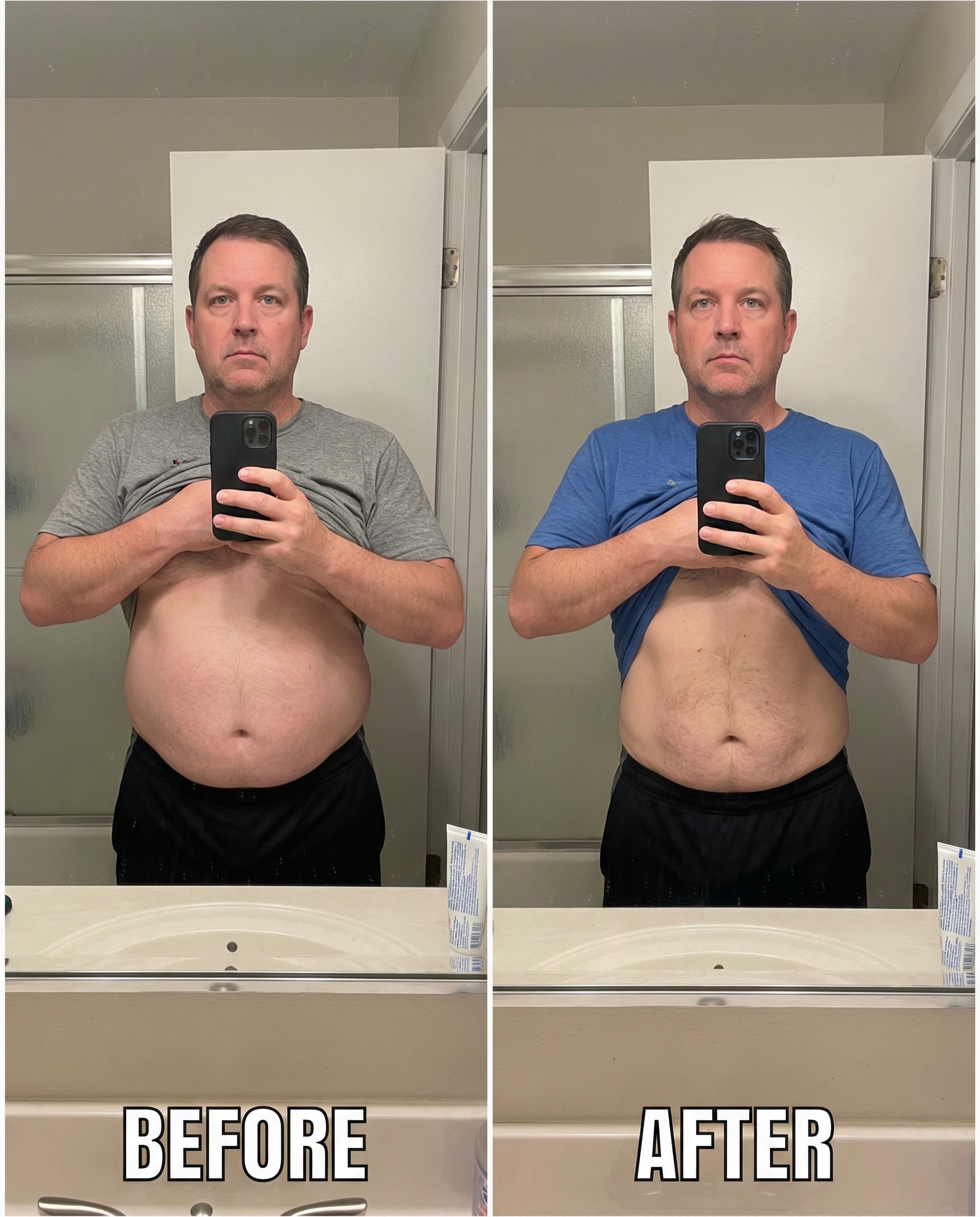
Ran for 53 days, from January 24 to March 18, 2026, the last day Crush saw it.
Run by Men's Health Review on Facebook. Crush is not the advertiser and does not verify its claims. See this ad in Meta's Ad Library(opens in a new tab)
Want an ad like this for your product?
Crush makes new ad images for your product from this ad: your logo, your product photo, your offer.
Trials from $19.95 USD, then $79.95 USD a month. Cancel anytime.
About this ad
- Meta Ad Library ID
- 4114594702095310
- Platforms
- Facebook, Instagram, Audience Network, Messenger and Threads
- Relaunches
- 0
Ad text
347 ng/dL. That's where my testosterone came back when I finally got tested at 52. I'd been feeling off for years. Tired all the time. Zero energy after 3pm. This gut that kept growing no matter what I ate or how often I made it to the gym. I hadn't felt like myself since my early 40s. So I asked my doctor to run a full hormone panel. Figured something had to explain why I felt like I was running on empty. When the results came back, my doctor barely glanced at them. "347 is within normal range for a man your age," he said. He actually shrugged. "Nothing to worry about." Nothing to worry about? Normal range for my age. Like I should just accept feeling like garbage because I'd passed some birthday threshold. Like the slow decline into exhaustion and belly fat was just... expected. He handed me a pamphlet about diet and exercise. Same pamphlet he'd given me three years in a row. I took it home. Threw it away. And then I started researching. I spent hours reading medical journals, studies, anything I could find. That's when I discovered what "normal for your age" really means - and why it's such a trap. Here's what my doctor never explained: Your testosterone levels naturally decline after 30. But for a lot of men, the problem isn't just declining production. The problem is conversion. There's an enzyme called aromatase. Your body fat produces it - especially belly fat. And aromatase converts testosterone into estrogen. Read that again. Your own belly fat is taking your testosterone and turning it into estrogen. The more belly fat you have, the more aromatase you produce. The more aromatase you produce, the more testosterone gets converted. The more estrogen you have, the more your body stores fat around your middle. It's a vicious cycle that feeds itself. Year after year, getting worse. This is why so many men try testosterone boosters and get nowhere. You can flood your body with more testosterone, but if your body's just converting it all to estrogen, you're filling a bathtub with the drain wide open. The water goes straight through. My 347 wasn't just "normal decline." My body was actively sabotaging itself. I found something called Dryft in my research. It's not a testosterone booster - those just add more testosterone for your body to convert. Dryft actually blocks the aromatase conversion. Protects the testosterone you're making instead of just making more for your body to waste. I figured I'd try it. What did I have to lose? My doctor had already written me off. Week 2: Better sleep. Actually woke up feeling rested for the first time in years. Week 4: Pants were looser. Wife asked if I'd lost weight. Week 6: Down 12 pounds. Energy came back. Afternoon crashes disappeared. Week 10: Got retested. 589 ng/dL. When I showed my doctor the new results, he looked confused. "What are you doing?" he asked. "Different science," I said. His exact words: "Well, keep doing whatever that is." Funny. Three months earlier, he told me there was nothing to worry about. Turns out "normal for your age" doesn't mean you have to accept it. It just means most doctors don't know what's actually causing the problem.
Where the ad sends people
menhealthreview.com
My Doctor Said My Levels Were "Normal For Your Age." He Was Wrong.
Learn more: menhealthreview.com(opens in a new tab)