Dry Eye Reset
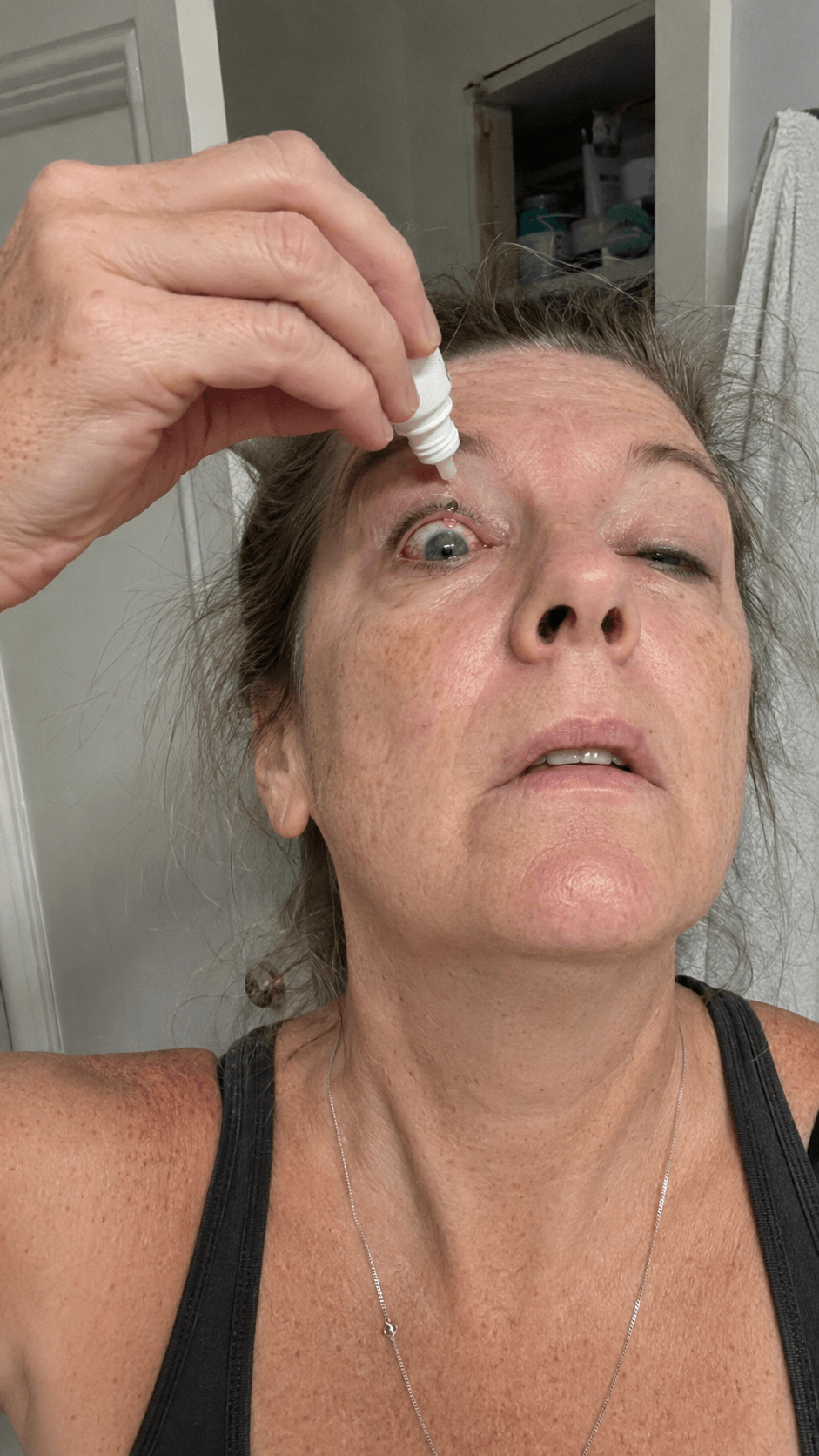
Dry Eye Reset Facebook ad: “Read this if you have dry eyes that won't go away”
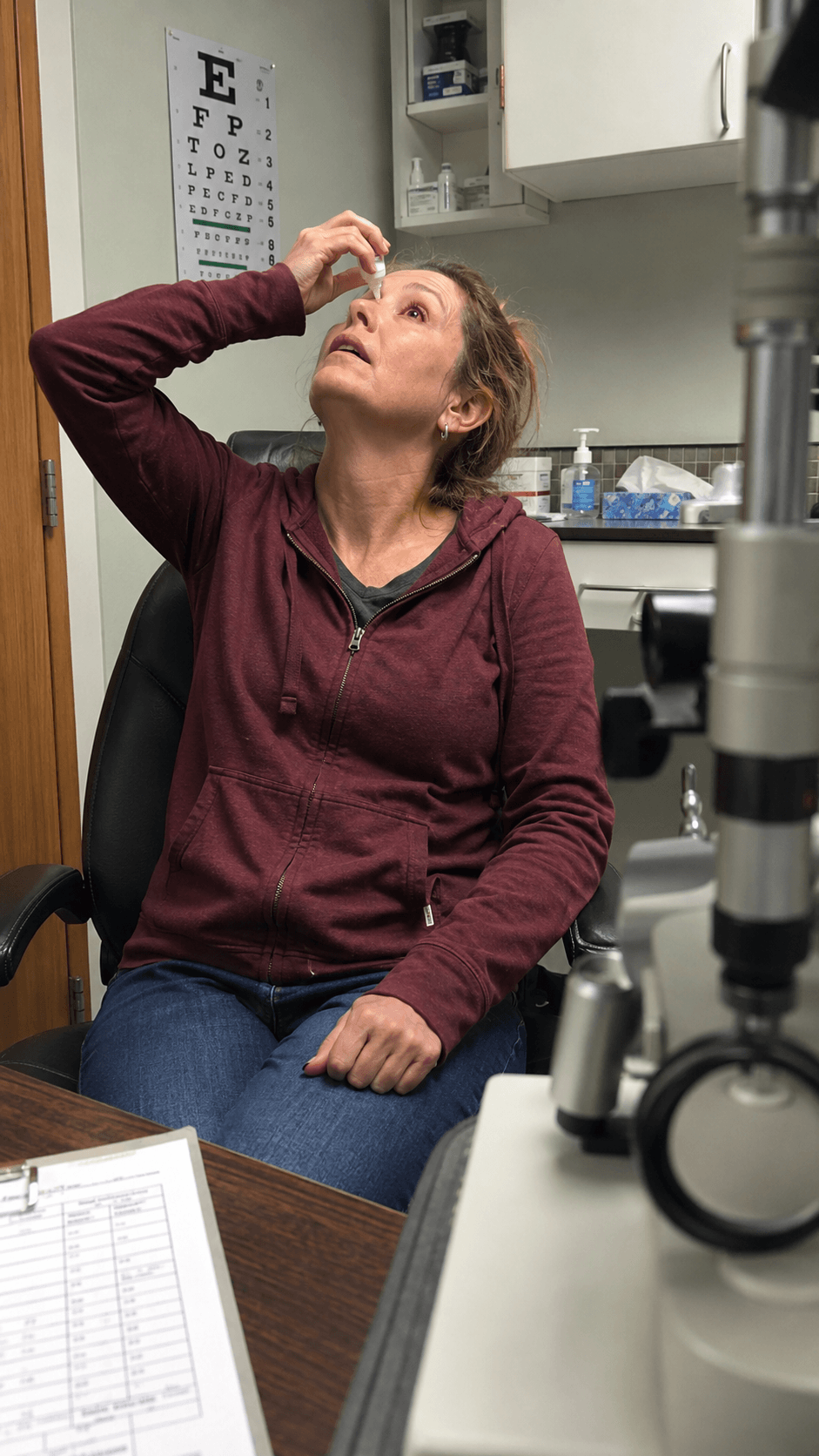
Ran for 42 days, from August 16 to September 27, 2026, the last day Crush saw it.
Run by Dry Eye Reset on Facebook. Crush is not the advertiser and does not verify its claims. See this ad in Meta's Ad Library(opens in a new tab)
Want an ad like this for your product?
Crush makes new ad images for your product from this ad: your logo, your product photo, your offer.
Trials from $19.95 USD, then $79.95 USD a month. Cancel anytime.
About this ad
- Meta Ad Library ID
- 4282576721959757
- Platforms
- Facebook and Instagram
- Relaunches
- 0
Ad text
In Germany, we rarely jump straight to lifelong prescription eye drops for chronic dry eye patients. It's LITERALLY the last resort. And it's because we address the ACTUAL root cause first. I moved to America two years ago and I've never been more confused in my professional life. I've been an ophthalmologist for 20 years. The first 18, I practiced in Munich. I moved to the United States two years ago when my husband's company transferred him to Boston. I joined an eye practice here. Good practice. Good doctors. And in my first three months, I saw something that kept me up at night. People in their 40s, 50s, and 60s coming in with the same eyes. Burning by noon. Lashes glued shut in the morning. A bag full of drops that stopped working after 20 minutes. Every one of them said the same thing. "My eye doctor has been managing it for years." Managing it. In Germany, we don't manage chronic dry eye by handing people one more drop that can't reach the source. For 18 years, when a patient's drops stopped working, I didn't reach for a stronger drop. I put them on a specific combination of nutrients that rebuild the tear film from the inside. The exact fatty acid the oil glands need. The protein that runs low in dry eyes. Compounds that calm the inflammation quietly destroying the glands. That's it. That was the whole "German secret." Not a machine. Not a surgery. Not some drug you can't get here. Just treating the source instead of endlessly wetting the surface. And it worked, over and over, for 18 years, on the same women who walk into American clinics today and get handed another bottle of drops. Let me tell you why that difference exists. Because once you understand it, you will never look at that drop bottle the same way again. Here in America, a dry eye appointment goes one way. You come in. Your eyes burn. Your drops don't last. They run a tear film test. They look at the surface. They tell you it's "a little low," and they send you home with a different bottle. Three months later you're back. A little better, no big change. So they switch the drops. Add a compress. Try Restasis. Maybe omega-3. And around and around you go. For years. I watched patient after patient trapped in that loop, and I kept thinking the same thing. Nobody in this room has looked at the thing that is actually broken. Here is what your tear film really is. It isn't just water. It has 3 layers. The top layer is oil, made by tiny glands in your eyelids called meibomian glands. That oil is the only thing stopping your tears from evaporating every few seconds. When those glands are healthy, they make thin, clear oil that holds your tears in place. When they're clogged or inflamed, they make thick, useless oil. Or not enough. Or, eventually, none. Without that oil, your tears evaporate almost as fast as they form. That is why your drops don't last. You're pouring water onto a surface that can't hold it. Mopping the floor while the faucet is still running. You can mop 8 times a day. The faucet is still running. And here is the question that started separating my patients into two groups back in Munich. Why do some people improve on the standard treatment, and others just get worse and worse on the exact same drops? For years, everyone assumed the ones who got worse were doing something wrong. Not using the drops enough. Not being consistent. "Difficult cases." They were not doing anything wrong. The ones who kept getting worse had a deeper problem the drops never touched. Their glands were already failing. Their bodies had stopped making the things that keep tears stable. It was never treatment failure. It was source failure. And no amount of the same treatment reaches the source. Because it goes deeper than the oil. There's a protein in your tears called lactoferrin. It protects the surface of your eye and it calms inflammation. In healthy tears it's high. In chronic dry eye it's measurably low. And it drops with age. Almost nobody tests for it. In two years here, I have not met one American eye doctor who checks it as part of a standard workup. And underneath all of it, there's an inflammation cycle that runs on a loop. Inflammation damages the glands. The damaged glands make worse oil. The worse oil makes your tears unstable. The unstable tears trigger more inflammation. Round and round. Month after month. Year after year. Until the glands scar shut and there is nothing left to save. Your drops don't break that cycle. They wet the surface after the damage is already done. Your compresses squeeze out the little oil that's left, but they can't fix its quality, and they can't replace a protein your body is making less of every year. And the omega-3 fish oil half of them are told to take? This is the part that made me angry the first time I saw it on an American patient's chart. In 2018, the National Eye Institute here in the US funded the largest clinical trial ever run on omega-3 for dry eye. The DREAM study. 535 patients. 27 medical centers. Published in the New England Journal of Medicine. Fish oil performed no better than an olive oil placebo. Not slightly worse. Not "mixed results." No different than swallowing olive oil. That study came out of this country. It has been public for 7 years. And eye doctors here are still recommending fish oil for dry eye every single day. So let me ask you what I started asking every American colleague who would listen. If the problem is failing oil glands, a declining tear protein, and a self-feeding inflammation cycle, why in God's name is everyone still treating it with drops, compresses, and a supplement the largest trial in history proved does nothing? None of it restores the oil. None of it replaces the protein. None of it breaks the cycle. The entire standard approach here treats the surface. The disease is inside the glands. Now, I need to answer the question you're already asking. If it's better where I trained, why don't I just do the same thing here? That's the part people get wrong, so listen closely. There was never a German drug. There was never a German machine. There was never anything I could do in a Munich clinic that I can't do in Boston. The ingredients I used for 18 years are the same molecules available on this side of the ocean right now. Sea buckthorn. Lactoferrin. These aren't European secrets. They've been studied in journals around the world. The only difference was that we used them. Years before the American research caught up. Because it's not a conspiracy. It's simpler and sadder than that. American eye training is built around the exam room and the prescription. Check the tear film, read the surface, write a script, next patient. Treating the tear film from the inside, with nutrients, isn't part of that training. It isn't reimbursed. It isn't what the 10-minute appointment is built for. Same disease. Same available ingredients. Completely different habit. So when I got here and watched women lose their glands one appointment at a time, I didn't know what to actually do about it. Not really. I could explain the mechanism to someone in an exam room in about 5 minutes. I couldn't hand anyone a bottle that matched it. Then one of my own patients showed me. She'd been on the usual rotation for years. Drops, a compress routine, the same "give it more time" I'd already heard a hundred times by then. I hadn't seen her in about 4 months. She came in for a follow-up and her eyes looked different before she even sat down. Less red. Less of that pinched, guarded look people get when they're bracing for the light. I asked what changed. She said her sister had sent her something. Some supplement. Told me she almost didn't take it seriously, she'd tried "eye vitamins" before and gotten nothing from them. She pulled the bottle out of her bag and handed it to me. I read the label standing right there in the exam room. Sea buckthorn palmitoleic acid. Oral lactoferrin, 270mg. The same anti-inflammatory compounds from the 2024 trial I'd been reading. It was the Munich protocol. The one I'd been prescribing piece by piece for 18 years, in a country where none of this needed explaining, sitting in a bottle in an exam room in Boston. I didn't say much. I think I just stood there holding it for a second. It's called Cellevia Tear Gland Complex. I want to say something plainly before I go any further, because you'll wonder about it either way. I'm not affiliated with this company. Nobody is paying me to write this. I don't make anything if you buy a bottle of it. I'm just a doctor who spent two years watching women get failed by the exact same system, over and over, and then had one of my own patients hand me the answer I already knew, sitting in a bottle nobody here had bothered to explain to her. After that, I felt like I had to say something. So this is me saying something. It's the same combination I described at the very start of this. The one I used on patients in Munich when their drops stopped working. Nothing added for marketing, nothing exotic. Just the three things that actually rebuild the tear film, already sitting on a shelf, waiting for someone to explain what it actually was. Let me walk you through it the way I'd walk a patient through it in my office, because every ingredient has a job, and the job is the whole point. Level one. Restore the oil. The formula uses sea buckthorn palmitoleic acid, because the meibomian glands need that exact fatty acid to make quality oil. Not fish oil. Not generic omega-3. The specific building block the glands actually use. In a double-blind, placebo-controlled trial, dry eye patients who took it had significantly less of the tear instability that makes your eyes burn and your drops fail. It works on the oil layer itself. The one thing drops can never reach. GLA from black currant seed oil sits alongside it, because separate trials showed it eases dry eye symptoms and protects the corneal surface. Also not something you'll find in a fish oil capsule. Level two. Restore the protein. This is the one no American doctor was addressing, and it's the one that used to change everything for my patients in Munich. 270mg of oral lactoferrin. The exact tear protein that runs low in chronic dry eye and keeps dropping as you age. In studies of dry eye patients, oral lactoferrin at this dose improved tear film stability and the health of the ocular surface, and patients reached for their artificial tears less. When the treatment stopped, the benefit faded. Which tells you something simple and important: it was doing real work. This is the layer the drops, the compresses, and the fish oil physically cannot touch. You cannot restore a protein your body has stopped making by wetting the outside of your eye. Level three. Calm the inflammation. Because as long as that inflammation loop keeps running, it keeps degrading the glands you're trying to save. Lutein, zeaxanthin, bioavailable curcumin, and vitamin D3. Tested together in a 2024 randomized, double-blind, placebo-controlled trial of 155 dry eye patients. Significant improvement in tear production, in symptom severity, and in the inflammatory markers driving the whole cycle. Some of it by day 14. That is the entire protocol. Restore the oil. Restore the protein. Calm the inflammation. 7 ingredients. Every single one chosen for a specific job inside the tear gland. Zero fish oil. Nothing the DREAM study proved worthless. 2 softgels a day. The same three-level approach I used for 18 years in Germany, in a form you can take at your kitchen table tomorrow morning. And before you wonder why your own eye doctor hasn't handed you this: The American research only fully caught up in 2024, when a randomized trial confirmed the anti-inflammatory half of this exact approach. The rest of it, the sea buckthorn, the lactoferrin, has been in the journals for over a decade. But there's no patent on any of these, so no drug rep is walking into American clinics pushing them. And medicine here is slow. It takes 10, 15 years for what's proven in a study to reach the average exam room. I'd already stopped waiting for it 18 years ago, treating it the way I was trained to. You don't have 15 years either. And your glands don't. I started giving it to the American patients I'd watched cycle through drops for years. The ones who used to come back every 3 months and say "about the same." One woman told me at week 6 that she'd slept through the whole night without waking up to put drops in. She'd been waking up 3 and 4 times a night for years. Another told me she got through a full workday at her computer and forgot to reach for the bottle. Forgot. After 5 years of counting the minutes to her next drop. A woman who'd stopped driving at night told me she drove two hours to her granddaughter's recital. In the dark. One patient mentioned something I never asked about. She used to buy a new box of preservative-free vials every 2 weeks, close to $30 each time. She hadn't bought one in over a month. None of them told me they were cured. I never use that word. That is not how this works. They told me the burning had stopped running their day. They told me their mornings didn't start with dread. They told me they'd stopped thinking about their eyes. If you've had this long enough, you know exactly what that last one means. Not thinking about your eyes is the thing you stopped believing was possible. Here is what I need you to hear, as someone who spent 18 years treating this a completely different way. You are not doing anything wrong. You are not a difficult case. You were handed a treatment built for the surface of your eye, in a system that was never taught to look underneath. The problem was never on the surface. And right now, your glands are probably still alive. Clogged, inflamed, making bad oil, but alive. Which means there is still something to protect. For now. Try Cellevia for 60 days. Right now it's buy 1 get 1 50% off, which gives you the full 60-day window. Enough to get through the 4 to 8 weeks where the real pattern shows up. This won't work overnight. Your glands didn't fail overnight. That's why the guarantee is 60 days, not 30. Dry eye doesn't run on a schedule. You have good days and bad days. You need enough of both to see the bad ones getting fewer and the mornings getting easier. Track it simply. If you're reaching for the bottle less than you were a few weeks ago, or your mornings are opening easier without the crust, that's the oil starting to stabilize. If you don't feel a difference in your daily comfort, you get every dollar back. I can't promise this makes your dry eye disappear. No honest doctor can. What I can tell you is that I watched this approach work for 18 years in another country, while women here were told to keep buying drops and wait. You've spent years managing what's spreading. It's time someone treated the source. → cellevia.store/products/dry-eye P.S. Go to a mirror right now and look at your lash line. See any white crust, flakes, or a foamy film at the edge of your lids? That is not "just dryness." That's failed, thickened oil backing up out of the glands. It's the surface sign of the exact thing dying underneath, the thing no drop was ever built to reach. P.P.S. If you've been taking fish oil for your eyes, look up the DREAM study. 535 patients. 27 medical centers. New England Journal of Medicine. Omega-3 performed no better than olive oil placebo for dry eye disease. It came out of the American research system, has been public since 2018, and your eye doctor still hasn't mentioned it. Ask yourself why.
Where the ad sends people
cellevia.store
Read this if you have dry eyes that won't go away ☝️
The exact formula your body needs.
See details: cellevia.store(opens in a new tab)