Sharon H.
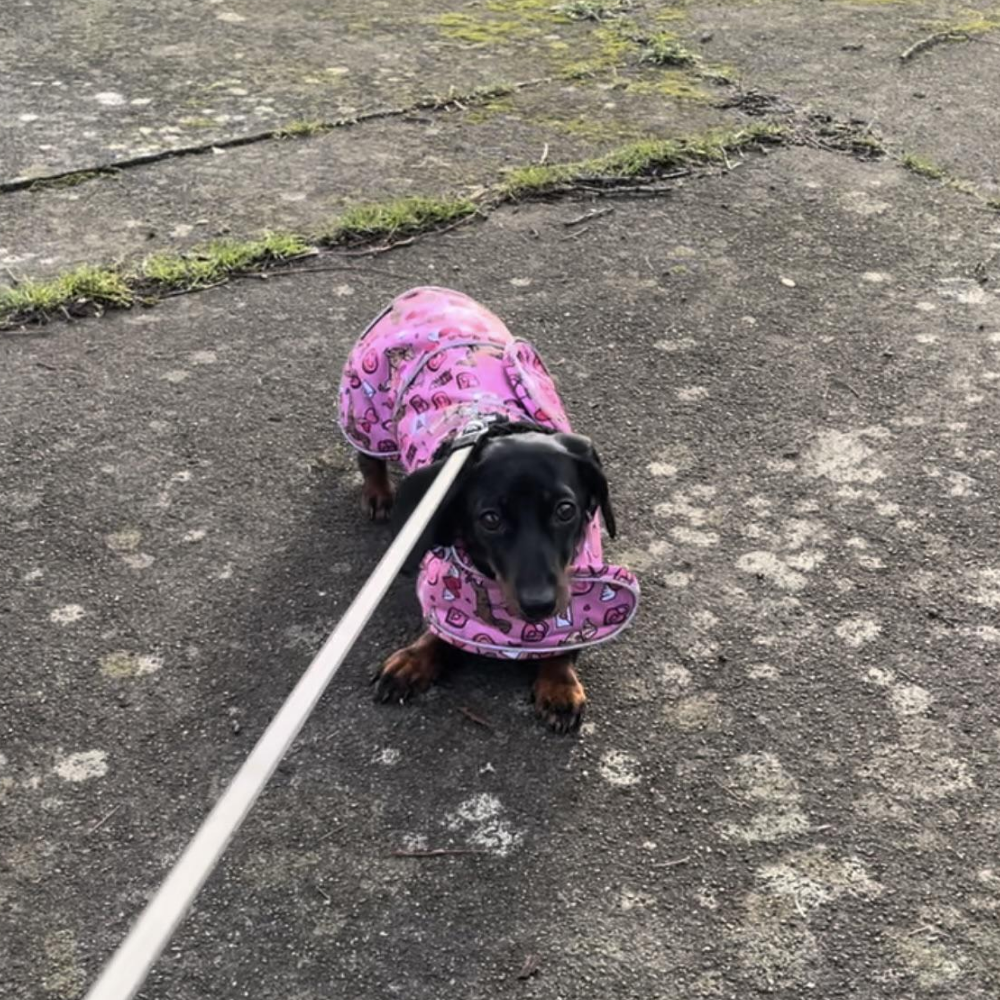
Sharon H. Facebook ad: “Read this if you think stubborn is a breed trait.”
Ran for 1 day, from March 17 to March 18, 2026, the last day Crush saw it.
Run by Sharon H. on Facebook. Crush is not the advertiser and does not verify its claims. See this ad in Meta's Ad Library(opens in a new tab)
Want an ad like this for your product?
Crush makes new ad images for your product from this ad: your logo, your product photo, your offer.
Trials from $19.95 USD, then $79.95 USD a month. Cancel anytime.
About this ad
- Meta Ad Library ID
- 4316932925256538
- Platforms
- Facebook, Instagram, Audience Network, Messenger and Threads
- Relaunches
- 0
- Niche
- Pets
Ad text
If your Dachshund is stubborn on some days for no obvious reason — it isn't a phase and it isn't just his personality. It's a hunting dog whose brain was built to work all day getting absolutely none of that. And there's a specific thing that fixes it. Oscar has a corner. About halfway through our morning walk, just before the postbox on Birchfield Road, there is a specific patch of pavement where he stops, plants himself, and refuses to move. Not every day. Just on the days when he wakes up and decides the world is not going to work the way I want it to. I used to find it hilarious. I'd stand there negotiating with a five-kilogram sausage dog while other people walked past trying not to laugh, and I'd think — this is just Oscar. This is just what he is. I called it his stubborn phase. Except it was less of a phase and more of a lifestyle. He was always stubborn, but some days it dialed up to something else entirely. Walks that should take fifteen minutes stretching to thirty. Him staring at me with that flat, unimpressed expression while I tried every combination of treats and encouragement and mild pleading. Turning the opposite direction and stopping again the moment I conceded. Selective hearing so precise it almost felt deliberate. I posted about it in a forum once. Everyone laughed. Someone said "not a phase, more of a lifestyle" and got forty likes. Someone else said Dachshunds refuse to do things they like just out of spite, and that if I found it funny I was an excellent Doxie owner. I felt seen. I felt understood. I thought — yes, this is exactly it, this is just the breed, this is what I signed up for and I love him for it. I was wrong. Not about loving him. About what was actually happening. Oscar isn't stubborn because he's a Dachshund and stubbornness is baked into the DNA the way it's baked into the jokes. Oscar is stubborn because he is a hunting dog whose brain was specifically designed to track prey through underground burrows for hours at a time, making independent decisions, solving problems, working a scent trail without any human direction — and he gets a fifteen-minute walk and a nap on the sofa. That's not personality. That's a brain in a state of permanent, low-grade frustration. And I had been laughing at it for months. I want to be clear that I am not saying this to make anyone feel bad. I am saying it because I genuinely didn't know. Nobody told me. The forums didn't tell me. The Dachshund memes certainly didn't tell me. The entire owner community had agreed, collectively, that the stubbornness was a quirk — cute, funny, a little infuriating, completely normal. It wasn't until a dog behaviour specialist said something quietly devastating that I understood what had actually been going on. She said: the stubbornness you're describing isn't attitude. It's the symptom of a working brain with nothing to work on. And I just sat there. Dachshunds were bred in Germany specifically to hunt badgers. Not to retrieve. Not to herd. To hunt — independently, underground, in tight spaces where a human couldn't follow, making their own decisions about what to do next. That independent problem-solving drive is not a personality type. It is the entire point of the breed. It is what they were developed for over centuries. And when that drive has nowhere to go — when the most challenging thing in their day is deciding which end of the sofa to sleep on — it doesn't disappear. It backs up. It comes out sideways. It looks like stubbornness, selective hearing, refusal to cooperate, going in the opposite direction for no reason, planting themselves on a corner and staring at you like you've personally offended them. It's not spite. It's a hunting brain on a fifteen-minute walk, looking for something — anything — to actually do. And here's the part that genuinely got me. She said the stubbornness peaks on days when the brain has been least occupied. The days when Oscar barely moved, barely played, barely had anything to engage with — those were the days the corner happened. The days when there had been some actual stimulation, some real engagement — those were the easier walks. I had noticed this pattern without understanding what it meant. I had been writing it off as mood. Random bad days. Just one of those things. It wasn't random. It was a direct signal from a brain that needed something I hadn't been giving it. I asked her what that something was. She said what she tells most small hunting breed owners in this situation — and she said she tells a lot of them, because this is one of the most consistently misread things about Dachshunds specifically — is that the brain needs a problem to solve on its own. Not a walk. Not a training session that runs through you. Not a treat puzzle he finishes in four minutes. A self-contained loop he can run independently. Something that engages the exact drive that was bred into him — the tracking, the problem-solving, the independent decision-making — and gives it somewhere useful to go. An interactive ball. Not a standard ball that rolls straight and stops. Something that moves unpredictably when he engages with it — that bounces at odd angles, rolls one way and then another, behaves more like something alive than something inert. To a dog bred to track prey through underground tunnels, she said, an object that moves erratically and unpredictably is not just interesting. It activates something. The tracking part of the brain locks on. The hunting loop starts running. And a brain running a hunting loop it chose for itself has nothing left over for planting on the corner of Birchfield Road and staring at you. I had tried balls before. I said that. She said this is different — the unpredictability is the whole point. A ball that rolls straight is solved in thirty seconds and abandoned. A ball that bounces back at an angle he didn't expect, that moves differently every time he touches it, that he genuinely cannot predict — that keeps the loop running. That's what holds a hunting brain. Not the object. The problem the object keeps generating. And then she said the thing that I keep coming back to. She said: when you give him this before a walk, you're not tiring him out. You're giving that hunting drive somewhere to run first so it isn't looking for an outlet the whole way around the block. The stubbornness on walks isn't him being difficult. It's him trying to find stimulation the walk isn't providing. Give the brain something before you go out and the walk becomes a walk instead of a negotiation. I ordered it that afternoon with the same mild skepticism I bring to most things. I had a collection of toys Oscar had used twice and abandoned. I was not expecting this to be different. The first session I just put it down and watched. Oscar sniffed it, nosed it, and it bounced back at an angle he clearly hadn't expected. He froze for a second. Nosed it again. Different direction. He followed it. Nosed it into the skirting board. It came back at an odd angle. He repositioned, went again. I watched him for about twenty minutes in this focused, quiet, completely self-directed state that I had honestly never seen from him before. Not frantic. Not chaotic. Focused. Like something had switched on that I hadn't known was waiting to be switched on. We went for the walk afterward. We passed the corner on Birchfield Road. He walked straight through it without stopping. I actually looked back at the pavement to check it was the right corner. It was the right corner. It has been six weeks. The stubborn days still happen sometimes — he is still Oscar, he still has opinions, he will never be a dog who just does what he's told without commentary. But the extreme phases, the ones where the fifteen-minute walk becomes thirty and every direction is the wrong one — those have almost entirely stopped. The corner still exists. He just doesn't need it anymore. The ball looks exactly the same as when I bought it. Six weeks of daily use — nosed into walls, batted under furniture, carried around the house between sessions. It has not fallen apart the way everything else did. I noticed it around week three. I kept waiting. It hasn't. The thing I keep thinking about is the forum post. All those people laughing and agreeing and saying it's just the breed, it's just his personality, get used to it. And I was one of them. I was completely one of them. I found it funny because I didn't know there was anything else to find. It isn't just the breed. It's a brain that was built to work and isn't getting to. And once you give it something to work on — something that actually runs the loop it was designed to run — the dog you always knew was in there shows up a lot more consistently. Oscar still has opinions. He is still a Dachshund and that is never fully going away and I wouldn't want it to. But the corner is just a corner now. The walks take fifteen minutes. He comes back in and goes straight for the ball and I go make a coffee and that's the morning. If your Dachshund has days where the stubbornness dials up to something that stops making sense — if you've been calling it a phase for longer than you can remember, or laughing about it in forums because everyone else is too — it might just be worth asking what that brain is actually getting to do each day. Not more walks. Not more training. Just something that gives the hunting drive somewhere to go before it goes looking on its own. That's all it was. That's the whole thing.
Where the ad sends people
getpawdash.co
Read this if you think stubborn is a breed trait.☝️
PawDash
Shop now: getpawdash.co(opens in a new tab)