
Active· since Jun 19, 2026
- 88
- days running
- 0
- relaunches
Ad copy
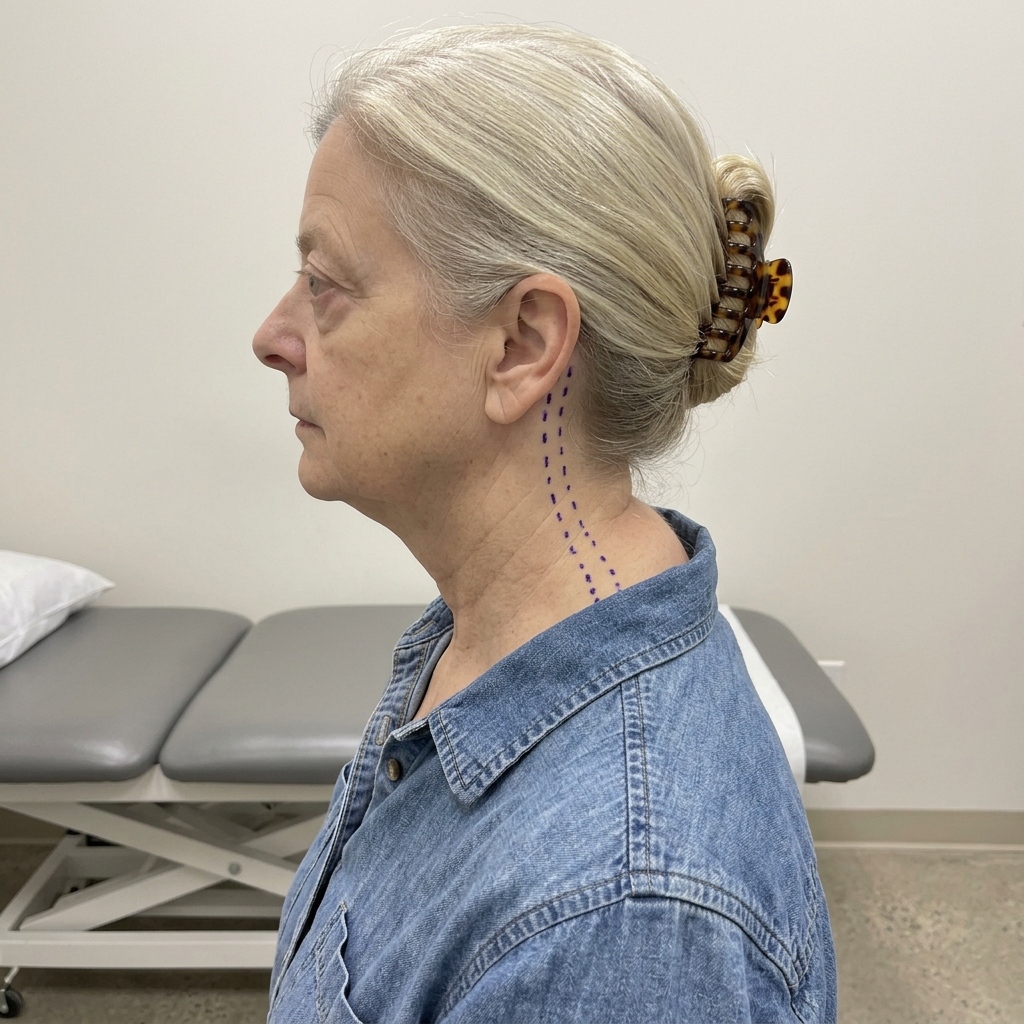
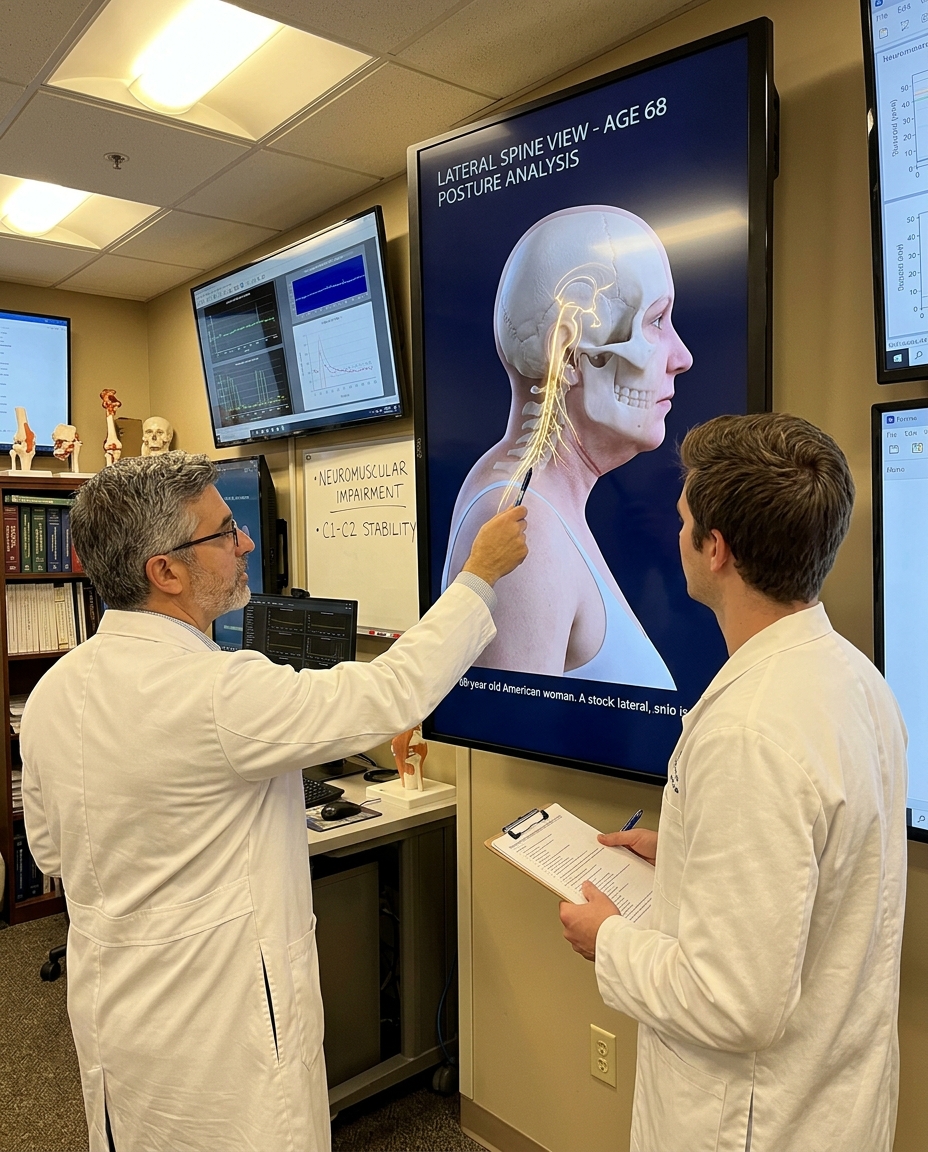
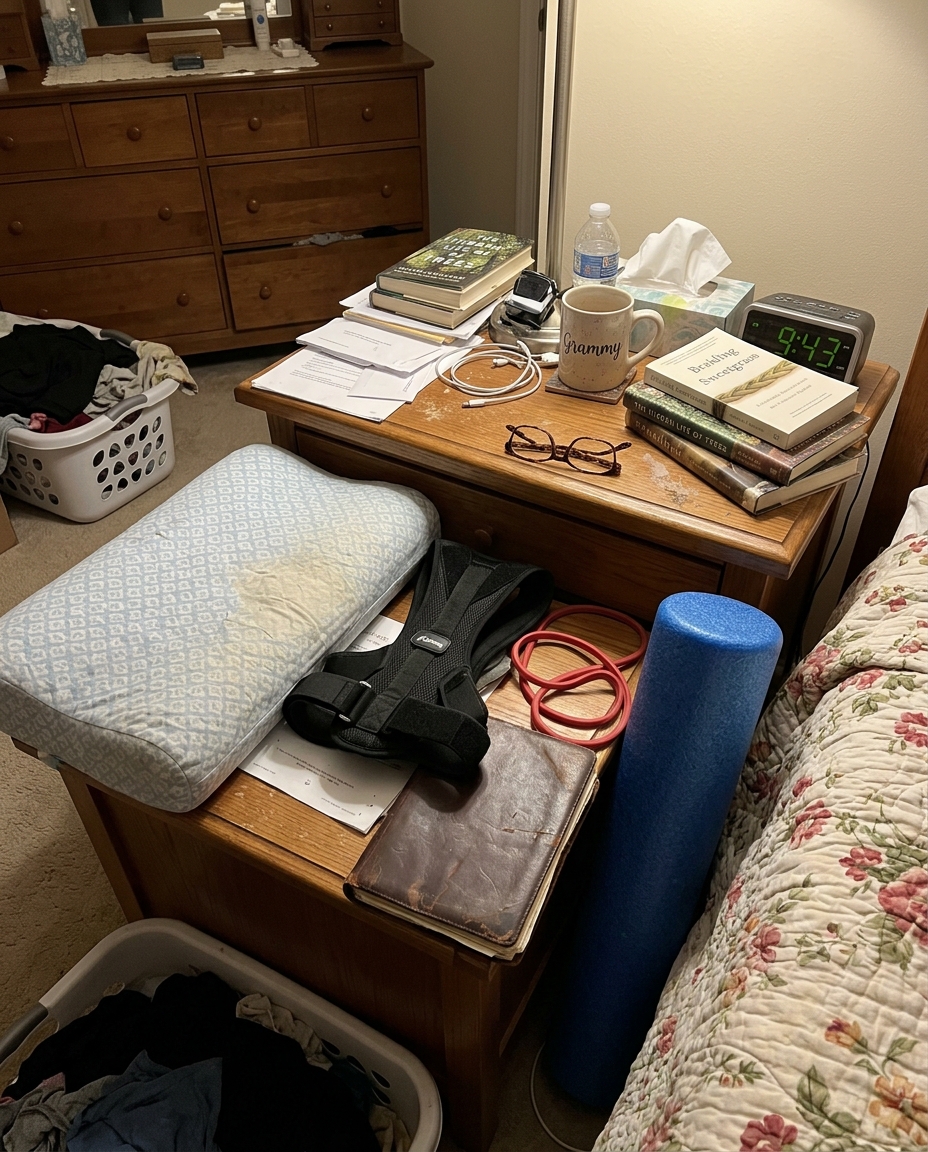
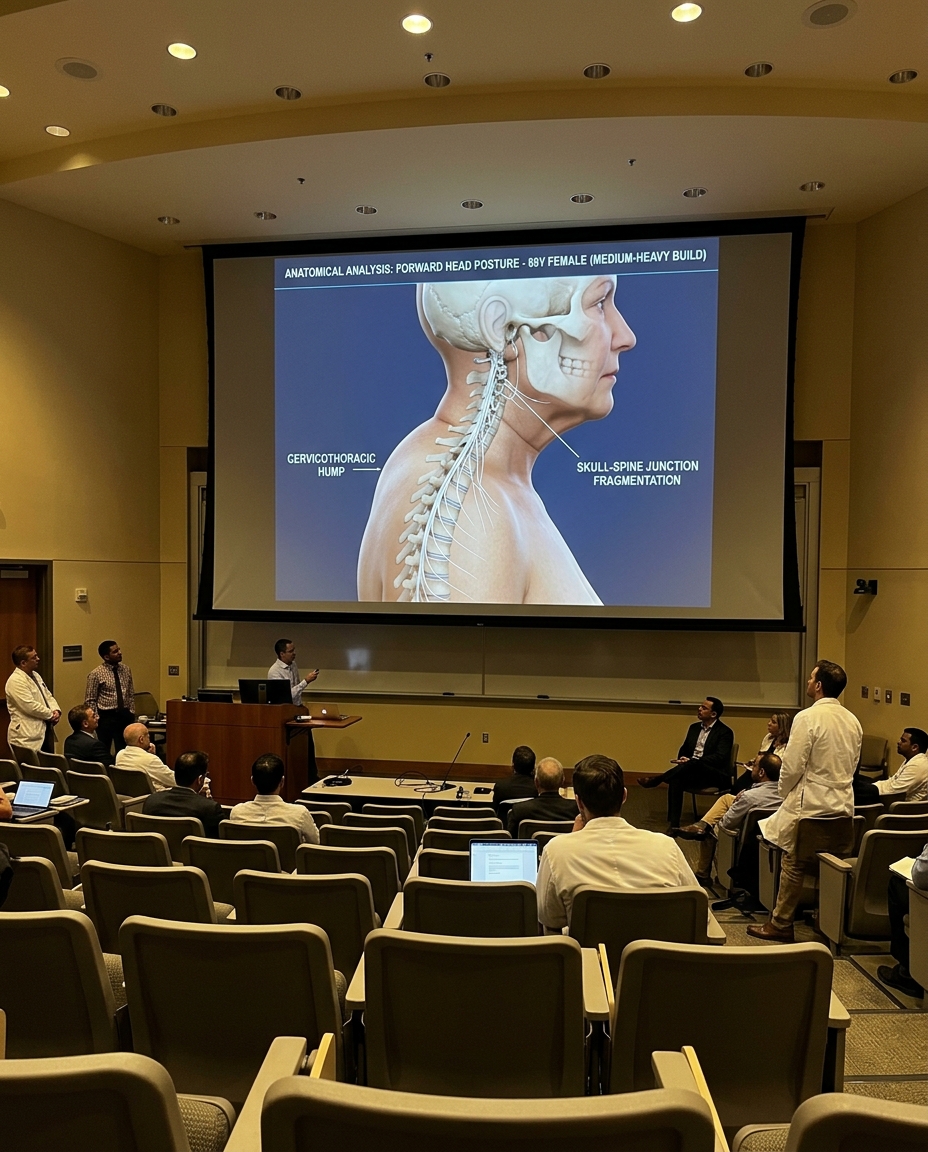
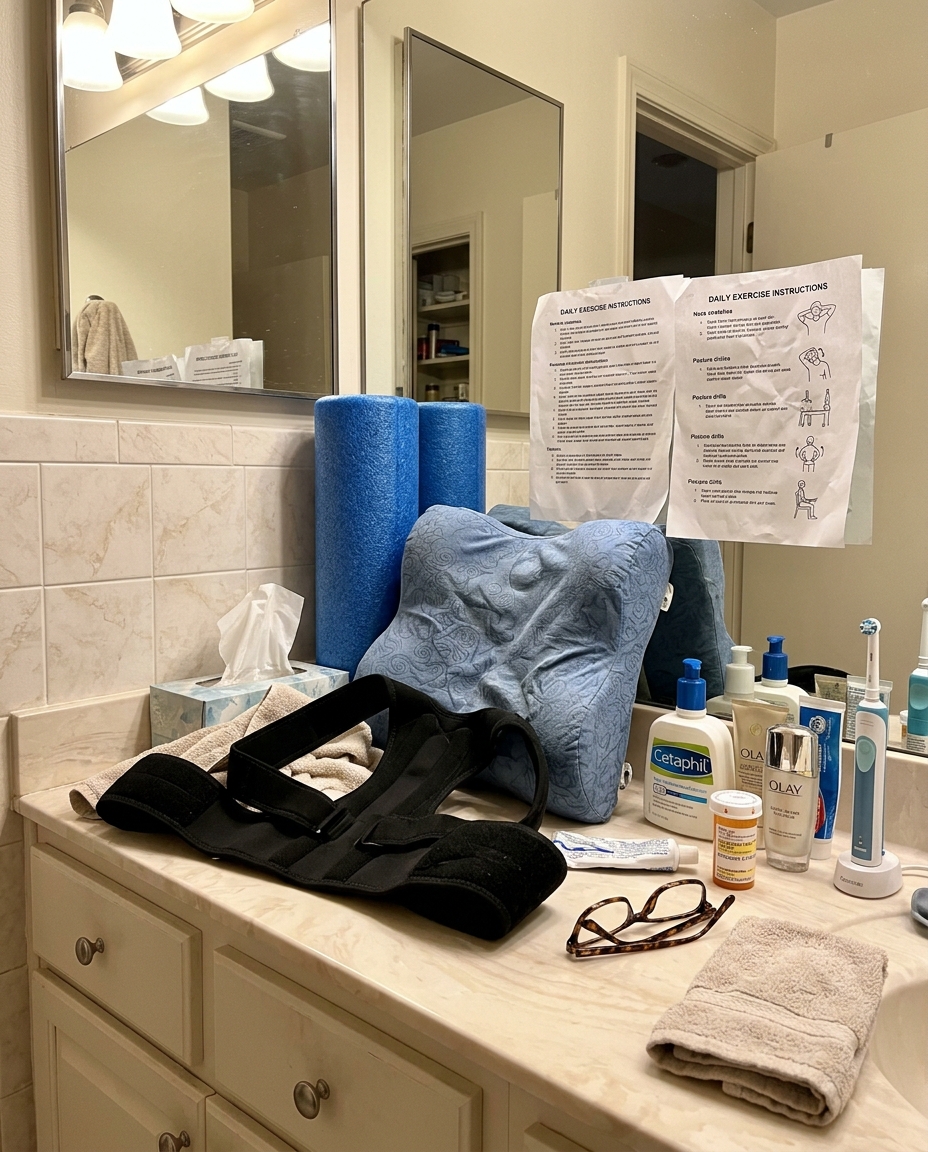
My sister started doing her exercises in January of last year. Bought the cervical pillow. Wore the posture corrector every day. Did her chin tucks every morning without fail. Started seeing a chiropractor twice a month. She did everything the online forums told her. She still disappeared from her own life one year at a time. She was 64. Her name is Patricia. She lives forty minutes from me, in the house she and her husband have been in for thirty years. I need to tell you what happened to Patricia. Because I'm seeing the same posts on Facebook that I was making just months before I finally understood — "my posture exercises aren't working, any tips?" — and it makes me want to reach through the screen. If you're over 55 and you've been watching your neck change, or someone you love has, please read this entire thing. I know it's long. I know you're scrolling. I know you have things to do. A year ago I would have given anything for someone to tell me what I'm about to tell you. ======== Patricia first noticed the hump at the base of her neck in her late fifties. She felt fine. Better than fine. She still gardened every weekend. She still drove herself everywhere. She thought it was just posture and honestly so did I. Her physical therapist confirmed it at her annual check-in. Forward head posture. Cervical muscle tightness. Tissue accumulation at the cervicothoracic junction. "We need to work on this, Patricia. Do your exercises. Get a cervical pillow. Consider a posture corrector." Patricia went home and did exactly that. For three years, she did not miss a morning. Chin tucks. Shoulder rolls. The full routine, printed out and taped to the bathroom mirror. The posture corrector she wore until it left marks on her shoulders. The cervical pillow she used every single night. The chiropractor she saw twice a month because she felt looser afterward. She did everything right. The follow-up assessment came back. Same findings. Same tissue accumulation. Slightly more forward displacement than the year before. The PT said "give it more time. These things resolve slowly. Keep doing what you're doing." Patricia came to my house that evening and sat at my kitchen table. She didn't say anything for a long time. Then she said: "Diane, I've done everything they told me. Everything. And it's getting worse." I told her to give it time. I told her the PT said six months. I told her to trust the process. She nodded. She kept doing her exercises. She kept wearing the corrector. She kept going to the chiropractor. Five months later, she stopped coming to Sunday dinners. Not all at once. First it was "I'm tired this week." Then it was "I don't feel like being in photos." Then it was "you know how I feel about how I look lately." I watched my sister — the woman who had hosted every Christmas for twenty years, who had never once declined a Sunday dinner invitation, who used to pull everyone together for photos before anyone else even thought of it — quietly stop showing up for her own life. Not because she was sick. Not because anything was wrong. Because she had done everything right for three years and her neck had gotten worse anyway, and somewhere along the way she had stopped believing it was going to change. I sat at my own kitchen table one Sunday evening with an empty chair where Patricia usually sat. I cried. Not because anything was medically wrong with my sister. Because I had spent the last year watching her do everything right and disappear anyway. And then I looked at my own reflection in the kitchen window. And I saw it. The same soft rounding at the base of my skull that I had watched quietly take over my sister's profile for three years. I was 61 years old. And I was doing the same exercises Patricia was doing. ======== Here's what living with an unaddressed neck hump actually looks like — the part the PT assessment doesn't capture: You start positioning yourself in family photos so you're always slightly behind someone. They never see your full profile. You stop wearing the necklines you used to love. You tell yourself it's just a style change. You stop suggesting restaurants with bright overhead lighting. You become the woman in the family who is "always adjusting something." Your daughter asks if your neck hurts. You say it's nothing. Your grandchildren ask why you always sit the same way at the table. Your life — the one you built and tended and showed up for — starts being defined by an angle you try to avoid. And the only plan is "keep doing your exercises and give it time." ======== After Patricia's chair was empty for the third Sunday in a row, I started researching. Not because I wanted to. Because I had to. Because if Patricia had done everything right for three years and it hadn't worked, and I was doing the same things, then something was fundamentally wrong with what we understood about this — and I needed to know what it was. I read for weeks. Clinical papers I barely understood. Physical therapy forums. Studies on cervical muscle inhibition. And one thing kept coming up, over and over, that no practitioner had ever told us: The reason Patricia's exercises hadn't worked was that stretching only stops the surface behavior. It doesn't restore what's already gone quiet. Specifically: the release signal. The release signal is the pathway between the brain stem and the deep cervical muscles at the base of the skull. The muscles at the skull-spine junction — the exact junction where the tissue builds up — are the last muscles in the body to fall under conscious control. And after years of forward head position, they stop receiving the instruction to release. Quitting bad posture habits removes the trigger. It doesn't restore the signal. And here's what no one told us. After years of established forward head position, those muscles stop responding to surface input entirely. The one thing the body is designed to use to restore that signal — sustained, gravity-assisted pressure at the exact skull-spine junction — becomes nearly impossible to deliver through standard exercises or adjustments, because nothing in a standard protocol actually reaches that address. Your body rejects the surface input. It's delivered to the surrounding tissue. Taken in the form of general exercises or adjustments without exact junction placement, almost none of the input reaches the inhibited muscles — and the signal stays quiet. By the time most women notice the hump, they have years of accumulated signal failure at the skull-spine junction — without ever getting meaningful input to the address that needs it. And here's the part that made me sit up straight: When the signal at the skull-spine junction is gone quiet, the tissue doesn't stop building just because you started exercising. Patricia's neck wasn't still changing because she wasn't trying hard enough. It was still changing because the signal collapse at the skull-spine junction was still running — and nothing she was doing was reaching the junction to address it. Read that again. Her neck wasn't getting worse because she stopped doing her exercises. It was getting worse because the signal pathway that exercises were supposed to restore was never being reached. Her exercises were working on the muscles around the junction. They were never delivering input at the junction itself. That's why her numbers wouldn't move. She gave up three years of mornings doing exercises that worked around a problem that was sitting one layer deeper than anything she was doing could reach. ======== I sat with that for three days. And then I started looking at what I'd been doing. I'd bought the same cervical pillow Patricia had. I'd been doing the same chin tuck routine. I was scared. I called a manual therapist — a different one to Patricia's, who I found through a physical therapy forum — and asked her directly. She was blunt when I told her what we'd both been doing. "Diane, chin tucks and posture correctors work on the surrounding tissue. But they don't address what's driving the signal failure. They're working around a junction that's still quiet." Then she said something I'll never forget: "If Patricia had been getting sustained, gravity-assisted input at the exact skull-spine junction every night, the picture might have been very different." I stopped breathing for a second. "Why didn't her PT recommend that?" She was quiet for a long time. "Because it requires a tool that delivers exact placement. And most clinical protocols don't include one." I drove to three different wellness stores the next day. Posture correctors. Cervical pillows. Foam rollers. Resistance bands. Neck stretching devices. Generic traction tools — various prices, various promises. I picked up every one of them. Not one of them delivered input at the skull-spine junction specifically. Not one of them combined exact anatomical placement with gravity-assisted pressure and minimum hold duration. Most did one thing. The expensive ones did two. None of them paired exact junction placement with your own head weight and a minimum 10-minute hold. That's when I found Cevera. It was the only tool I could find that did all three. Exact skull-spine junction placement. Gravity-assisted pressure via your own head weight. Minimum 10-minute hold before bed. Made with the same delivery logic that manual therapists have known about for decades — but designed for home use, every night, without a practitioner. I almost didn't order it. After the wellness store aisle. After the three years of watching Patricia. After the Sunday dinners without her. After everything. But I had a sister who was still doing her exercises and still disappearing. And I had myself. I ordered it. Patricia. I drove over on a Tuesday evening with the tool and sat at her kitchen table. I told her everything I'd read. She listened without interrupting. At the end she said: "So everything I've been doing has been working around the wrong address." I said: "Yes." She started the tool that night. 10 minutes before bed. She texted me on day five: "Something feels different at the base of my skull. I don't trust it yet but it's different." She texted me on week two: "My daughter said I look different. I haven't told her I started anything new." She texted me on week four: "I wore the open neckline to book club. First time in two years. Nobody said anything. I said everything." She came to Sunday dinner on week six. Sat in her chair. Let me take a photo. I went into the kitchen afterward and cried for ten minutes. My neighbor Sandra. Her sister had been doing the same exercises for four years — same progression, same results. Started using the tool three weeks ago. She texted me yesterday: "She made it through a full family Sunday without repositioning once. She hasn't done that since 2021." I told my book club. I told the women in my walking group. I told anyone I saw making the posts I used to make. I'm not a doctor. I'm not a therapist. I'm not selling anything and I don't get a penny from this. I'm a 61-year-old woman sitting at my kitchen table at 2 in the morning because I can't stop thinking about Patricia and the three years she spent working around the wrong address. Here's what I know because I lived it: Exercises stop the surface behavior. They don't restore the signal at the junction that's already gone quiet. Posture correctors hold you in alignment. They don't address the signal failure those muscles are still experiencing. Generic traction tools without exact junction placement don't reach the skull-spine junction. You're using something that sounds right and does nothing. Patricia gave up three years of mornings doing exercises that worked around a problem that was sitting one layer deeper — because nobody told her the junction needed to be reached directly. I wish someone had told us before she stopped coming to Sunday dinners. Before the posture corrector that left marks. Before the three years of correct effort that landed in the wrong place. I can't go back. Those three years can't come back. Patricia's chair at my Sunday table is full again. But yours can be too. The page that explains all of this — the signal collapse mechanism, why exercises don't work when the junction is quiet, what your PT doesn't know about exact placement delivery, and what Cevera actually does — it's the page I found at 3 AM. Not working around it. Reaching it. That's the line that finally made it click for me. I want you to read it. Not for me. For whoever you'd leave behind at that table. 👇 https://trycevera.com/pages/adv-womens-wellness-report Patricia used to say: "You can't undo the years, but you can stop adding to them." You can stop adding to them. — Diane Holloway, age 61 P.S. Patricia's cervical pillow is still on her bed. She still uses it. But now it sits next to the Cevera tool on her nightstand. Every morning she walks past both of them. One she used for three years while the signal stayed quiet. One she's used for three months while it came back. Three years of correct effort landing in the wrong place. And a tool that costs less than one month of her chiropractic sessions — a tool her own manual therapist told me contained exactly what her junction needed. Please. Don't spend three years working around the wrong address. Don't let someone you love do it either. 👇 https://trycevera.com/pages/adv-womens-wellness-report P.P.S. I don't work for Cevera. I don't get a penny from this. I'm writing this at 2 in the morning because Patricia's chair is full again and I want every woman reading this to have that back too. Share this with anyone you love who has been watching their neck change and doing everything right and seeing nothing move. Please.
Like this ad? Make it yours.
Crush rebuilds this exact creative around your product — your brand, your colors, your offer — in about a minute.