The Ageless Edit
The Ageless Edit Facebook ad: “Postpartum hair loss isn't 'just hormones'-it's follicle…”

Ran for 6 days, from February 6 to February 12, 2026, the last day Crush saw it.
Run by The Ageless Edit on Facebook. Crush is not the advertiser and does not verify its claims. See this ad in Meta's Ad Library(opens in a new tab)
Want an ad like this for your product?
Crush makes new ad images for your product from this ad: your logo, your product photo, your offer.
Trials from $19.95 USD, then $79.95 USD a month. Cancel anytime.
About this ad
- Meta Ad Library ID
- 4448008798762273
- Platforms
- Facebook, Instagram, Audience Network, Messenger and Threads
- Relaunches
- 0
- Niche
- Hair Care
Ad text
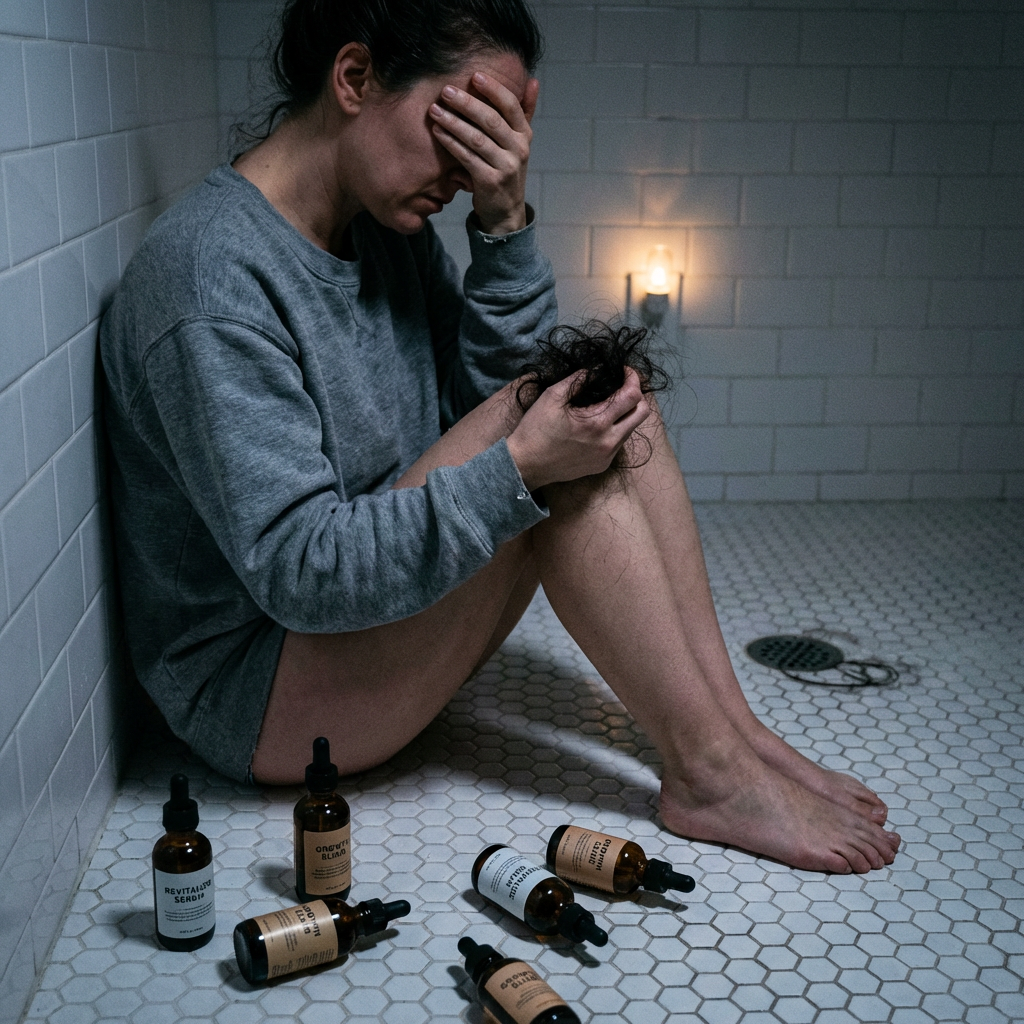
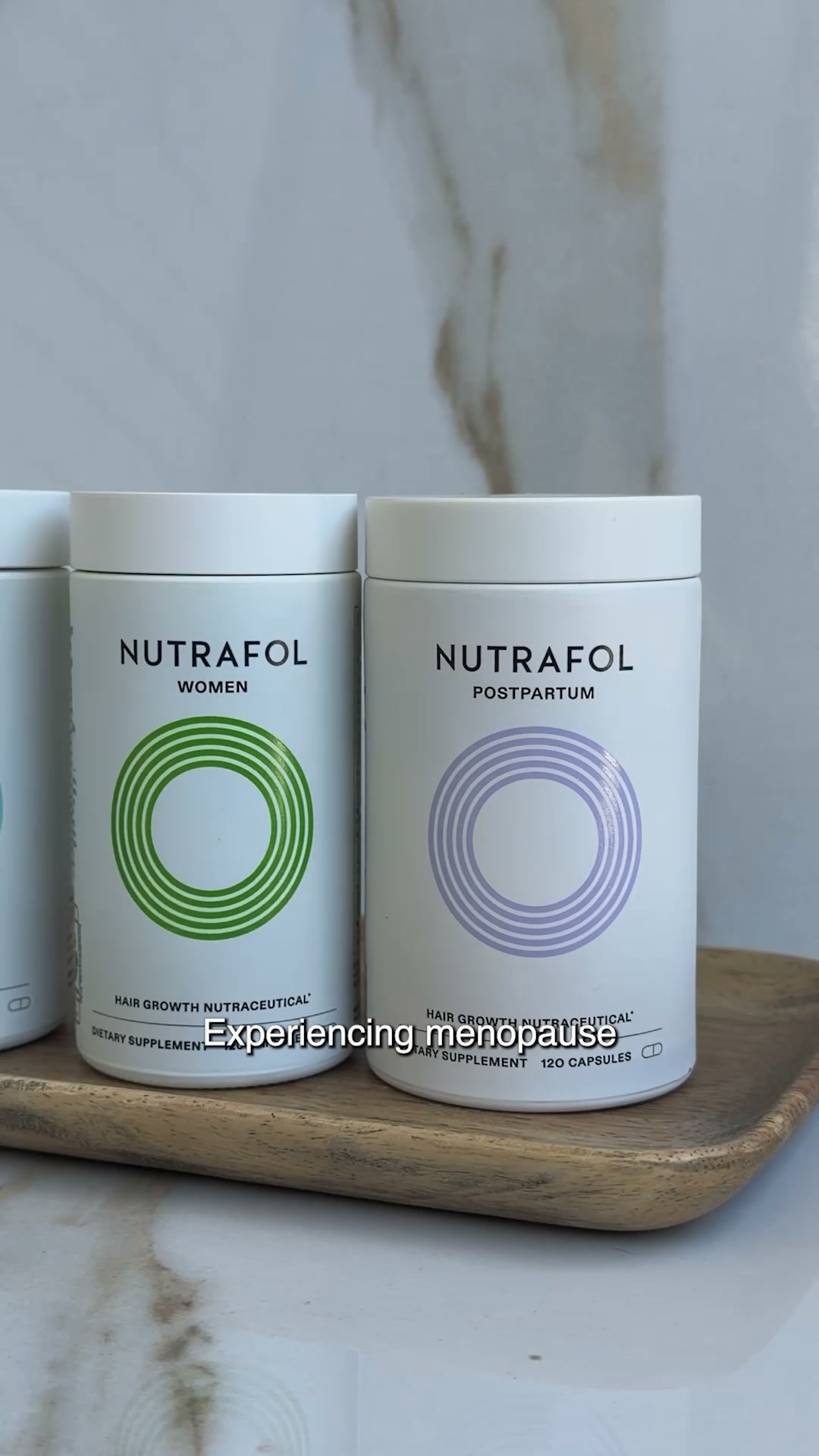
My two-year-old handed me a clump of my own hair she found on the living room floor and asked, "Mommy broken?" I stared at the hair in her tiny palm—a tangled mess of dark strands she'd picked up like a curious discovery—and I couldn't answer her. Because I didn't know. Was I broken? It felt like it. My hair wasn't just falling out anymore. It was everywhere. On every surface. In every corner. Following me like evidence of something I couldn't control. I'd find strands on the kitchen counter while making breakfast. Stuck to the baby's onesie after I dressed him. Tangled in the vacuum roller every single time I cleaned. My husband would pull one out of his coffee and say nothing. Because what was there to say? We both knew it was mine. We were both exhausted by it. I lint-rolled my black work blazer three times before a video call and still saw strands clinging to my shoulders on camera. I woke up every morning to find hair on my pillow, twisted around the bedpost, somehow wrapped around the doorknob. It was relentless. And the worst part wasn't even the shedding itself—it was the constant reminder that something was wrong with me. Every strand I picked up off the floor was proof. Every clump in the shower drain was evidence. Every time I swept the bathroom and filled the dustpan with my own hair, I felt like I was losing more than just volume. I was losing myself in pieces, scattered across my home. I tried everything to make it stop. Biotin gummies that tasted like candy and did nothing. Rosemary oil that made my scalp smell like a restaurant kitchen and still left the drain clogged. A $68 "thickening" shampoo that promised results in 30 days and delivered exactly zero change. I switched my diet. I took vitamins. I drank more water. I slept more. I stressed less—or tried to, which just made me stress more. Nothing worked. The hair kept falling. Kept spreading. Kept reminding me that I had no control over what was happening to my body. My daughter's question—"Mommy broken?"—sat in my chest like a weight. Because she was two. She didn't understand that Mommy was postpartum, that hormones were "rebalancing," that this was "temporary." She just saw hair on the floor and her mother who looked sad all the time. And I realized: if my toddler could see that something was wrong, how long had I been fooling myself into thinking I was hiding it? That night, after everyone was asleep, I sat on the couch with my phone at 1:47 AM. I didn't even know what I was searching for anymore. I'd read every postpartum forum, every "hair loss after baby" article, every dermatologist blog that said the same useless thing: "It's normal. It'll stop eventually." But when? And why was mine still going at seven months postpartum when everyone said it should slow down by six? I scrolled through another search result and stumbled onto a medical article about something called "telogen effluvium"—the fancy term for postpartum shedding. I'd read about it before. Skimmed past it. Assumed I already knew. But this article had a diagram. It showed the hair growth cycle: anagen, catagen, telogen. Growth, transition, rest. And underneath, it explained what happens when you're pregnant: your hair gets "locked" in the growth phase by estrogen. It doesn't fall out. It just keeps growing, getting thicker and fuller. Then, after birth, estrogen crashes. And all that hair that was supposed to fall out over nine months? It falls out all at once in a massive telogen phase. I knew all of this already. But then I kept reading. And I saw something I'd never noticed before. The article said that in normal telogen effluvium, the shedding stops after three to six months because the follicles cycle back into growth phase. But in some women—especially those under high stress or with nutritional deficiencies—the follicles don't just shed and restart. They weaken. The article used the term "follicle anchorage failure." It explained that when follicles are stressed or unsupported, they lose their structural grip on the hair shaft. So even new hair that's trying to grow doesn't stay anchored properly. It just slides out. That's why the hair doesn't stop falling. That's why it's everywhere, constantly, no matter how much time passes. Because the follicles aren't holding on. I sat there in the dark, staring at my phone screen, feeling something click into place. This wasn't about waiting for my hormones to balance. This wasn't about taking more biotin or using better shampoo. This was about my follicles literally losing their ability to grip. And none of the things I'd been trying addressed that. Biotin supports hair production—but if the follicle can't hold onto it, production doesn't matter. Oils coat the hair shaft—but they don't do anything for the root. Shampoos clean the scalp—but they don't rebuild the anchorage structure. No wonder I was still finding hair everywhere. My follicles were letting go faster than they could hold on. I started searching for anything that addressed follicle anchorage. Most of what I found was clinical. Dense. Full of ingredient names I couldn't pronounce. But I kept seeing two things come up in the research: saffron stem cells and caffeine. Not the saffron you cook with. Not the caffeine you drink. But specific biotech extracts that had been studied for their effects on the dermal papilla—the part of the follicle that anchors hair to the scalp. The studies showed that saffron stem cells could help support the structural integrity of the follicle. They worked at the root level, reinforcing the attachment point. And caffeine? It wasn't about "stimulation." It was about creating an environment where the follicle could function properly—reducing inflammation, supporting microcirculation, helping the anchorage structure stay intact. I felt a flicker of something I hadn't felt in months: hope. Not the desperate, grasping hope of "maybe this will work." But the quiet, grounded hope of "this actually makes sense." I found a serum called Skinobi that combined both ingredients in a water-based formula. Water-based mattered to me because I was done with oils. Done with greasy scalps and flat roots and choosing between treatment and looking presentable. I read the reviews. Women talking about seeing less hair in their drains. Less on their floors. Less everywhere. I ordered it that night. When it arrived three days later, I didn't expect miracles. I just wanted less. Less hair in the vacuum. Less on the baby's clothes. Less evidence that I was falling apart. I applied six pipettes to my scalp that first night, massaging it into the areas where I'd noticed the most shedding. It absorbed in seconds. No residue. No grease. Just a faint, clean scent and then nothing. I could still style my hair the next morning. Still go about my day. For the first two weeks, I didn't notice anything. I kept applying it every night, six pipettes, massaging it in, trying not to obsess over results. But around week three, I realized something while I was vacuuming. The roller wasn't clogged. I stopped. Turned off the vacuum. Checked the roller to make sure it was actually working. It was. It was just... cleaner than usual. I vacuumed the bedroom. The bathroom. The hallway. Less hair. Not zero. But noticeably, measurably less. I thought maybe I was imagining it. Seeing what I wanted to see. But then I washed my hair two days later and the drain had maybe a quarter of what it usually collected. I stood there in the shower, staring down at the small amount of hair, feeling something unfamiliar: relief. By week five, my husband said, "I haven't found your hair on my shirt in a while." By week seven, I swept the bathroom floor and the dustpan wasn't full for the first time in months. By week eight, my daughter played on the living room rug and didn't hand me a single clump of hair. Because there weren't any to find. I wasn't leaving a trail anymore. I wasn't marking every room I entered with evidence of my body failing me. I could run my fingers through my hair without pulling out handfuls. I could brush it without filling the bristles. I could get dressed without lint-rolling myself three times. The follicles were holding on again. I don't know if it's the saffron stem cells reinforcing the structure or the caffeine supporting the environment or both working together. I just know that my hair isn't everywhere anymore. And that means I get to stop spending mental energy on it. Stop wincing every time I see a strand on the counter. Stop feeling broken every time my daughter notices. Last week, she pointed at my head and said, "Mommy's hair pretty." Not "Mommy broken." Just... pretty. I almost cried. If you're still finding your hair on every surface of your home, still sweeping up pieces of yourself every single day, still feeling like the shedding will never stop— I want you to know it's not about waiting longer or taking more vitamins or using better shampoo. It's about follicle anchorage. And once I understood that, everything changed. I found Skinobi because I was desperate and searching at 2 AM and stumbled onto the right explanation at the right time. You're finding it right now, reading this. The question is: are you going to keep sweeping up your hair and hoping it stops on its own? Or are you going to help your follicles hold on? I chose the second option. And I haven't regretted it once.
Where the ad sends people
skinobi.com
Postpartum hair loss isn't 'just hormones'—it's follicle anchorage failure (and nobody tells you)
Clinically inspired Skinobi Hair Serum helps reduce hair fall, boost hair growth, and improve scalp health for thicker, stronger hair.
Learn more: skinobi.com(opens in a new tab)