Elisabeth Johnson
Elisabeth Johnson Facebook ad: “Read This Before You Buy More Melatonin”

Ran for 11 days, from August 20 to August 31, 2026, the last day Crush saw it.
Run by Elisabeth Johnson on Facebook. Crush is not the advertiser and does not verify its claims. See this ad in Meta's Ad Library(opens in a new tab)
Want an ad like this for your product?
Crush makes new ad images for your product from this ad: your logo, your product photo, your offer.
Trials from $19.95 USD, then $79.95 USD a month. Cancel anytime.
About this ad
- Meta Ad Library ID
- 4455580401365579
- Platforms
- Facebook, Instagram, Audience Network, Messenger and Threads
- Relaunches
- 0
- Niche
- AI & Software
Ad text
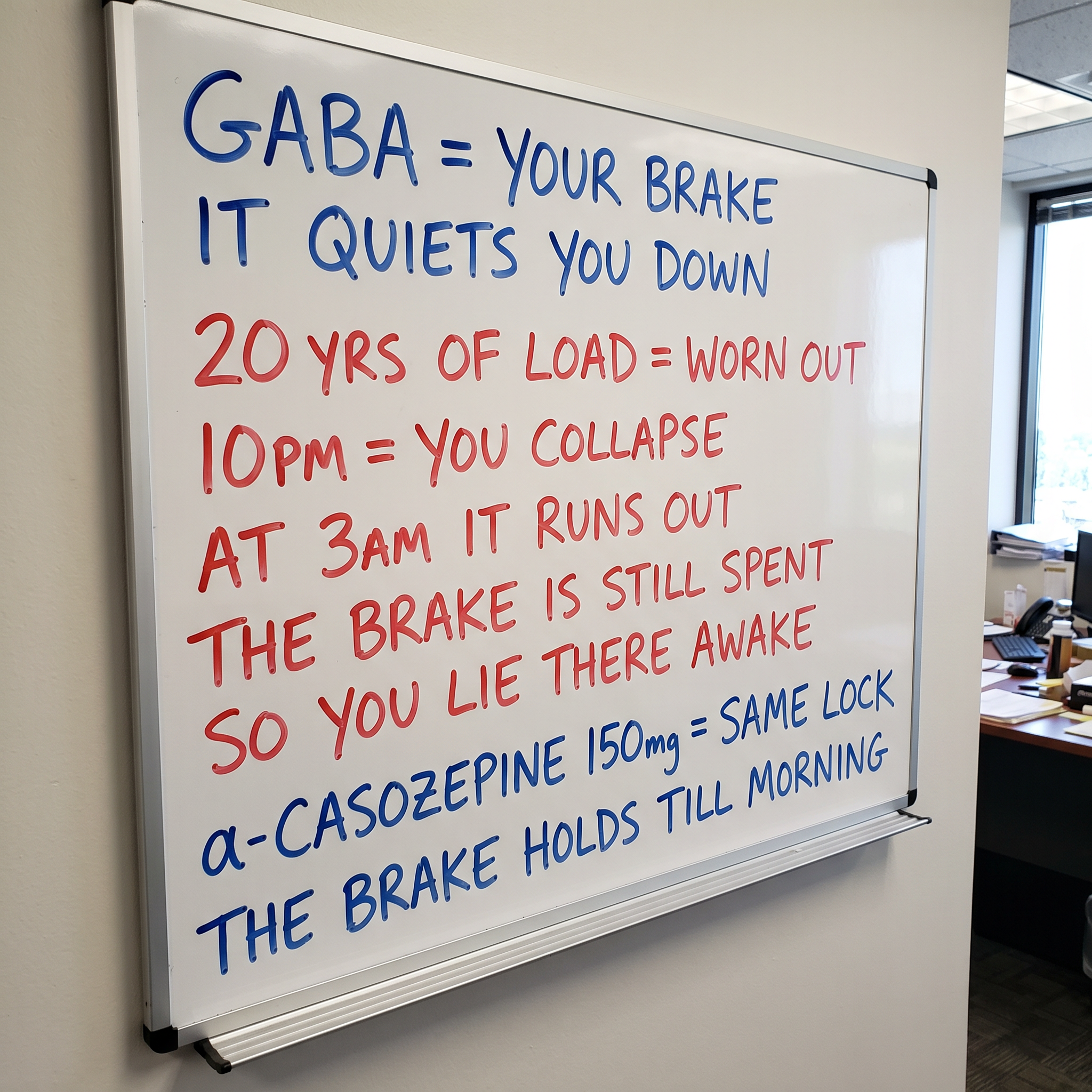
I work at a $2,800-a-night private longevity clinic in Scottsdale. Every night before I leave my shift, I knock on each guest room door and hand them a small wooden dish with a capsule and a card that says part of your evening protocol. What happens by the second week is always the same. I've been wanting to write this down for a while. Not because I'm trying to sell anything. Because I've watched the same thing happen over and over for almost two years, and I don't think most people have any idea. I'm not a doctor. I'm not a nurse. I'm not a sleep coach. I'm the person who checks guests in, coordinates their schedule, and handles whatever they need while they're here. I'm the one they see the most. The one they talk to when the clinical team is in sessions and they have a question they don't want to sound stupid asking. So I hear everything. And I see everything. The guests who come here are a very specific kind of person. Men and women both, mostly in their 40s and 50s, mostly very successful by every measure that's supposed to matter. They're paying $2,800 a night because something isn't working and they've run out of ideas. You can see it the moment they walk in. These are people who hold entire companies together during the day and then lie in the dark at three in the morning doing sleep math. They're on their second coffee before the intake paperwork is finished. They move like their bodies weigh more than they should. They're not tired the way you're tired after a long day. They've been tired so long they've started to think it's just who they are now. Almost all of them tell me the same thing at intake. They fall asleep fine. That's always how they say it. I'm out by ten, I'm just up again at three. And then they're lying there with the list for tomorrow, or a conversation from Tuesday they're still running, or the email they meant to send on Friday. Then they tell me what they've tried. Melatonin. Magnesium. Prescriptions. Blackout curtains and a colder room. Sleep hygiene. The apps. A few of them have seen three specialists and been told everything looks normal. They're here because they've accepted that the normal channels aren't going to fix this. I've read that list on the same intake form hundreds of times. Different handwriting, same eleven things. The program runs two weeks. On night one they go through the whole thing. Infrared in the morning, IV therapy at midday, guided breathwork in the afternoon, an early dinner with nothing processed. And night one, nothing happens. They come down to breakfast and tell me they were up at three the same as at home, and that they know these things take time. I always agree with them. For the first few days that's exactly how it stays. Somewhere around the end of the first week is when it changes. I see it at breakfast. Their faces aren't as tight. One woman told me she went to bed at ten and the next thing she knew it was light out, and she said it like she was asking me to confirm it had actually happened. She couldn't explain it. She said it felt like someone had turned the volume down. I've had guests ask if we swapped their mattress. Others think it's the altitude. A few have credited the water. It's always a different guess. It's always wrong. By the second week it's obvious. There's no other word for it. They look like they got some essential piece of themselves back. The shoulders drop. The jaw unclenches. They laugh more easily. Some of them sit quietly at breakfast in that second week like they're trying to work out who they were before they got this tired. They'll catch me before the morning session and say I don't know what you're doing here but it's working, and they say it in disbelief, because they've spent years and a lot of money trying to get to exactly this. And they thank the clinic. They thank the doctors. They go home and write reviews about the IV protocols and the breathwork and the regenerative medicine and how it's unlike anything they've tried. They think it's the environment. The expertise. A $2,800-a-night program built by doctors with decades behind them. But after watching this happen hundreds of times, I know that's not what's doing most of it. It's the capsule on the wooden dish. Dr. Renner is the medical director here. She trained in Germany, and she designed the entire guest protocol. She's the one who told me to put the capsule in the evening handoff when I started. She said it was non-negotiable. Every guest, night one, no exceptions, and it doesn't matter what they say they already take at home. I thought that was a strange thing to be firm about. I'd read the card. It says alpha-casozepine, a natural milk compound. I'd never heard of it, and neither had anyone I asked. I figured it was one of those clinic things that sounds impressive on a card. I asked her about it once on a slow afternoon. She asked me what our guests take at home before they come here. I said melatonin, mostly. Magnesium. She said that was the whole problem in one sentence. Then she explained it, and it took about five minutes. Your body has a brake. It's called GABA. It's your own calming system, and its only job is to quiet you down so you can settle. But the brake has a limit. Twenty years of a job that never stops, kids who never stop, and a mind that replays a conversation from last Tuesday like it happened an hour ago. Press on anything long enough and eventually there's nothing left to press with. And when the brake gives out, you stay switched on. That's the whole thing. That's three in the morning. That's the low buzz in your chest in a dark house where nothing is happening. I told her that doesn't match what our guests describe. They don't have trouble getting to sleep. They're out by ten. She said they're not getting to sleep. They're collapsing. There's a difference, and the body knows it even if the person doesn't. Exhaustion is doing the brake's job for a few hours because there's nothing else left to do it. That isn't rest. That's a body running on empty until it can't stay upright. And it doesn't last. Around three the exhaustion is spent and the brake still isn't there. The mind starts running and nothing slows it down. That's not random. That's the hour they run out of the only thing that was holding them down. Then she went through what they'd all been buying. Melatonin is a hormone. All it does is tell your body it's night-time. It never goes anywhere near the brake. That's why it knocks you out and you still wake at three. Magnesium doesn't reach the brake either. It relaxes muscles, and their muscles were never the problem. Years of buying things that were aimed somewhere else entirely. So the answer isn't another thing that knocks you out. It's giving the brake something to press with again. She said that's what's on the wooden dish. Alpha-casozepine is a natural compound from milk protein, and it fits the very same receptors your own GABA uses. Same lock, same key. It isn't a hormone and it isn't a sedative. It's not overriding anything or knocking anyone out. It works through the controls the body already has, and the person's own calming system does the rest, the way it always did before it ran out. And she said that's the part that matters here. The brake is still there at three. It doesn't clock out when the exhaustion does. Nothing wakes them up because nothing has to. She said it isn't only a night thing either. Guests tell me they feel calmer here and they put it down to being away from their lives. A brake that can press again presses during the day too. She said it's also why nobody comes down to breakfast groggy, and why she has no concerns about anyone building a dependence on it. Nothing foreign is being added. It supports a system that was already theirs. Then she said the line I've thought about ever since. "Every one of those things was aimed at getting them to sleep. Not one of them was ever aimed at keeping them asleep." I went home that night and pulled everything out of my own cabinet. Melatonin I'd bought for a flight. A magnesium my mom gave me. A tea. Every one of them said sleep on the front. I turned them over and read the backs properly for the first time. Every claim on every bottle was about the first ten minutes of the night. Helps you fall asleep faster. Supports relaxation before bedtime. Helps you drift off naturally. Not one of them said a word about three in the morning. And it isn't hidden. It's printed right there on the back. I'd just been reading past it for years, because it never occurred to me those were two separate problems. I started taking the same thing the guests take. 150mg, the dose the clinic uses. The first week I didn't notice much and I figured that was that. Then somewhere in the second week I went down at eleven and woke up to my alarm, and then it happened again the next night. I'd been waking at three most nights for years and calling it a light sleeper thing. It took me until about week four to stop expecting it back. It never came back. And it wasn't only the nights. I stopped bracing for bedtime, which I didn't know I'd been doing until it stopped. A guest named Meredith came through about six months into my time here. She did the full two weeks, slept better than she had in years, and left feeling like herself again. She credited the clinic completely. I watched her check out with tears in her eyes telling Dr. Renner she felt like she'd gotten a decade back. She had paid a little over $39,000 for it. She came back four months later. The sleep had fallen apart at home. She was crushed. She'd decided her body only worked in this specific building with this specific level of care around it, and she was trying to work out how often she could afford to come. I asked her what she'd been taking since she left. She pulled a bottle out of her bag. She'd gone to Whole Foods the week she got home and bought a sleep formula. Melatonin, magnesium, and a couple of botanicals. She thought that was the same thing. I read her the back of it. Every ingredient on there was aimed at getting her to sleep. She'd been taking it for four months and couldn't understand why the clinic wouldn't follow her home. It couldn't. She'd never once taken the thing that was actually doing it. She was angry. Not at me. At the shelf. At herself for not knowing there was anything to check. She ordered the right thing from her phone in the lobby before she went up to her room. She told me she only did it that fast because they give you 90 days to send it back. She said if this turned out to be one more thing that didn't work, at least she wasn't out anything this time. She messaged me through the clinic app about three weeks later. Sleeping through the night. At home. In her own bed, in her regular life, with none of the $2,800-a-night protocol around her. Same woman I watched check out in tears. No clinic required. That's the thing nobody tells you when you leave a place like this. The environment helps. The doctors here are exceptional. The programming is real and it matters, and all of it contributes. But the reason guests feel it by the second week isn't the setting. Dr. Renner told me she thinks the capsule is doing most of the work. After watching hundreds of people go through the same two weeks, I have no reason to disagree with her. Most people reading this have already tried melatonin. Most people reading this have already tried magnesium. Neither of those is the same as having tried something aimed at the reason you're awake at three. There's an article I keep bookmarked that breaks the whole thing down. What the brake actually is, why melatonin puts you out and still leaves you staring at the ceiling at three in the morning, and why falling asleep and staying asleep are two different problems that almost nobody separates. It's in plain language, not medical language. And the brand Dr. Renner uses here is in there too. It's what I wish I could hand every guest when they arrive, instead of quietly knocking on their door with a wooden dish and hoping they don't ask too many questions. The link is below. Five minutes and you'll understand more about this than most people who have been buying sleep supplements for years. https://kincadence.com/us/pages/biopeptide
Where the ad sends people
kincadence.com
Read This Before You Buy More Melatonin
The melatonin-free bio-peptide that helps your nervous system finally switch off
Learn more: kincadence.com(opens in a new tab)