Senior Times USA
Senior Times USA Facebook ad: “Why Tarahumara runners never get knee replacements”
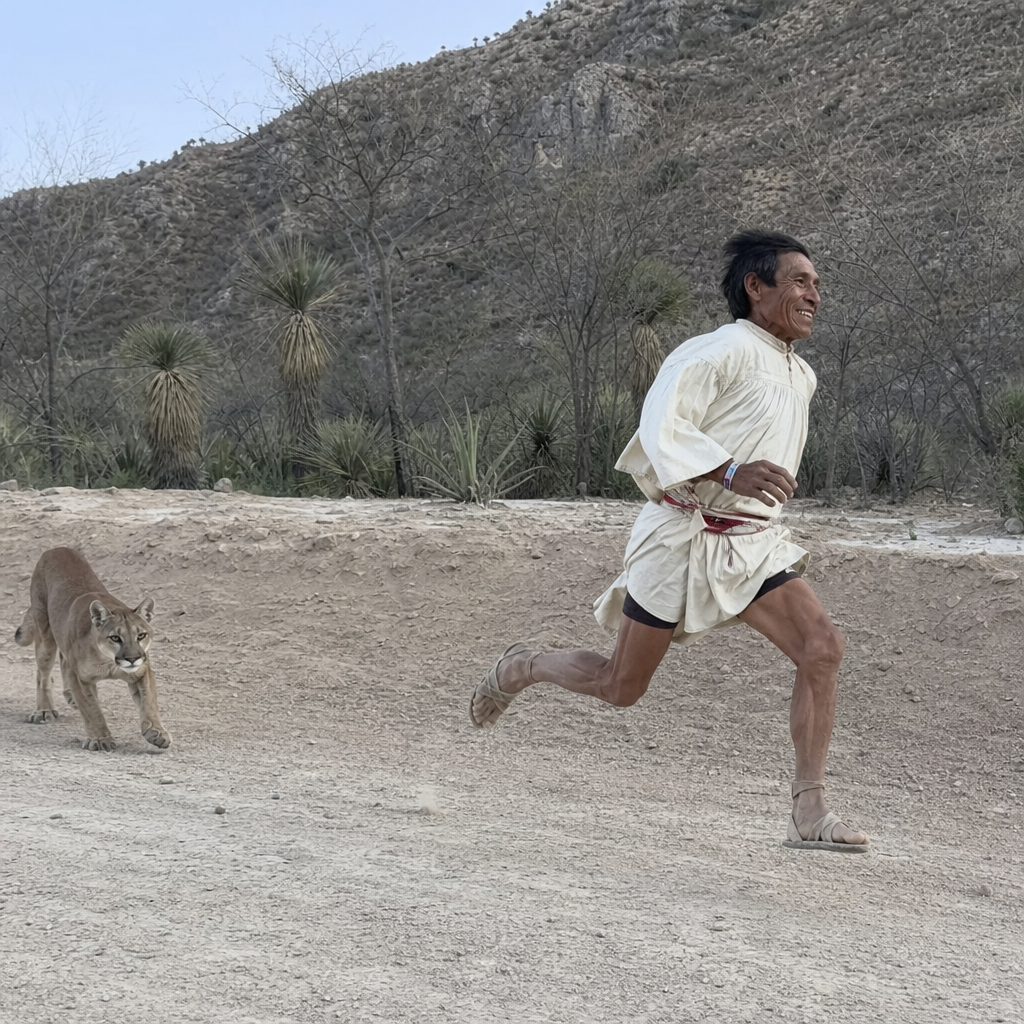
Ran for 23 days, from June 24 to July 17, 2026, the last day Crush saw it.
Run by Senior Times USA on Facebook. Crush is not the advertiser and does not verify its claims. See this ad in Meta's Ad Library(opens in a new tab)
Want an ad like this for your product?
Crush makes new ad images for your product from this ad: your logo, your product photo, your offer.
Trials from $19.95 USD, then $79.95 USD a month. Cancel anytime.
About this ad
- Meta Ad Library ID
- 4460180350929914
- Platforms
- Facebook, Instagram, Messenger and Threads
- Relaunches
- 0
- Niche
- Fashion & Apparel
Ad text
Tarahumara runners in Mexico's Copper Canyon cover 200 miles in a single session. That's more than seven full marathons back-to-back. No rest days. No recovery weeks. No sports massages or ice baths. Just brutal, relentless distance that would destroy a professional athlete's joints in a matter of weeks. When sports scientists first heard about the Tarahumara's legendary endurance, they assumed it was exaggerated folklore. So in 2009, a team from Harvard flew to Chihuahua, Mexico to document the damage. They expected to find knees ground down to bone. Hips riddled with arthritis. Ankles held together by scar tissue. Instead, they found something impossible. 60-Year-Old Runners With Healthier Joints Than The Average 40-year Old American The researchers ran every test. X-rays. MRIs. Blood panels for inflammation markers. The Tarahumara who'd been running these insane distances for decades had joints that looked...perfect. No cartilage degradation. No bone spurs. No chronic inflammation. Their C-reactive protein levels -- the blood marker for inflammation -- were lower than people who never exercised at all. Dr. Daniel Lieberman, the lead researcher, was baffled. "This makes no sense," he told his team. "These people should be crippled. Their knees should be completely destroyed." But they weren't. Some of these runners were in their 60s, still covering ultramarathon distances regularly, with zero joint pain. Meanwhile, 45-year-old recreational joggers back in America were getting knee replacements after a few years of casual running. Something wasn't adding up. Their Health Routines Weren't Special At All The team spent eight months studying everything about the Tarahumara lifestyle. They analyzed their diet -- basic corn, beans, squash. Nothing exotic. They studied their sleep patterns -- normal circadian rhythms, nothing remarkable. They tested their genetics -- typical indigenous Mexican population markers. They examined their running form, their training methodology, their recovery protocols. Nothing explained it. Dr. Lieberman was ready to chalk it up to "genetic anomaly" and go home. That's when one of the junior researchers noticed something the medical team had dismissed as irrelevant. The "Primitive" Footwear Nobody Took Seriously Elena Voss was a biomechanics researcher, not a sports medicine doctor. While the others focused on diet and genetics, she paid attention to what the Tarahumara wore on their feet. And she noticed something odd. Every single day, the runners wore the same simple huarache sandals -- thin rubber cut from discarded tires, with wide straps that let their toes spread completely flat. No arch support. No cushioning. No "motion control." Just a flat surface that forced their feet to work naturally. "What if it's not their genetics?" she asked during a team meeting. "What if it's their footwear?" The doctors laughed. "You think tire sandals prevent arthritis?" one scoffed. But Elena wasn't talking about the sandals themselves. She was talking about what happens to your feet when shoes don't trap them. The Experiment That Changed Sports Medicine Forever Elena convinced them to run one final test. She brought in gait analysis equipment to measure how the Tarahumara's feet moved during their 200-mile runs. Foot strike patterns. Ankle rotation. Knee alignment. Then she compared the Tarahumara mechanics to measurements from marathon runners back in the U.S. The difference was staggering. American runners -- wearing expensive stability shoes with arch support and cushioned heels -- showed severe internal tibial rotation. Their ankles rolled inward with every step. Their knees twisted violently to compensate. The Tarahumara? Their feet moved in perfect alignment. Toes splayed wide. Arches stable. Ankles neutral. Zero rotational stress on the knees. "Their joints aren't twisting at all," Dr. Lieberman muttered, staring at the readings. Then Elena asked them to test something else. Western athletes who tried to replicate the Tarahumara training in modern running shoes. When Elite Athletes Tried the Tarahumara Training, Their Bodies Broke Down It had happened before. In the early 2000s, a group of ultra-endurance athletes heard about the Tarahumara and decided to attempt similar training distances. They followed a comparable routine. Long distances. Minimal rest. Similar terrain. Within three weeks, injuries started piling up. Knee tendonitis. Hip inflammation. Stress fractures. Achilles problems. By week 6, half the group had dropped out. By week 8, everyone had quit. Their bodies couldn't handle it. The conclusion at the time? "The Tarahumara must have superior genetics." But Elena's research revealed the real difference: The athletes were wearing modern running shoes. Their toes were cramped into narrow toe boxes. Their arches collapsed inward with every step. Their ankles rolled, their tibias twisted, and their knees ground themselves raw. The alignment was missing. The Two Hidden Mechanisms Destroying Your Knees Here's what those Harvard researchers finally understood: Knee pain isn't just about weak cartilage. It's about two specific things your shoes are doing to you with every single step. Problem #1: The Rotational Trap When you walk or run, your foot is supposed to create a stable, three-point base. Big toe, little toe, heel. A rigid tripod. That's normal. That's how your body protects your knees. But when your toes are crammed into a narrow shoe, that tripod collapses. Your arch rolls inward. Your ankle follows. Your shinbone rotates inward with it. And your knee? Your knee is a simple hinge joint. It's designed to move forward and backward. It is NOT designed to twist. But every step you take in a narrow shoe forces it to twist anyway. That twisting creates aggressive friction inside the joint. The cartilage beneath your kneecap gets rubbed raw. Inflammation floods in. That's Patellofemoral Pain Syndrome -- "Runner's Knee." Problem #2: The Impact Spike But there's a second problem most people never notice. Modern shoes have thick, cushioned heels that sit about half an inch higher than the front of the shoe. This tilts your body forward slightly -- which forces you to reach out with your foot and slam your heel into the ground first. When your heel strikes the ground on all that cushioning, it acts like hitting the brakes in a car. That impact sends a shockwave straight up your leg. And because your foot is locked in place by the shoe, your knee absorbs 100% of that force. Step after step. Day after day. Year after year. The cartilage breaks down. The joint inflames. Arthritis sets in. That's why your knee aches after a long walk. That's why climbing stairs sends shooting pain through your kneecap. That's why the damage just keeps getting worse. Your foot can't stabilize, and every step pounds your knee like a hammer. And after years of this, the damage becomes permanent. Those Tarahumara Runners Never Had Either Problem Every day, they ran in huaraches with wide, flat platforms. Their toes spread naturally. Their arches stayed stable. Their ankles stayed neutral. Zero tibial rotation. Zero knee twist. And because the sandals were completely flat -- no elevated heel -- they naturally landed on the middle of their foot instead of slamming their heel down. Their foot and calf absorbed the impact before it ever reached the knee. Zero cartilage destruction. By the next day, their knees recovered fully. The cycle repeated perfectly, run after run, for decades. Their bodies never accumulated the chronic joint damage that destroys Western runners. One Researcher Brought This Secret to Physical Therapy Clinics Dr. Lieberman returned to Harvard obsessed with one question: Could you prevent knee arthritis just by changing footwear to allow natural foot mechanics? He started working with physical therapists treating chronic knee pain patients. They had patients stop wearing their "supportive" shoes and switch to wide-toe-box footwear with completely flat soles that let their feet function naturally. The results were undeniable. Knee pain dropped by 60% within six weeks. Patients who'd been told they needed surgery were walking pain-free. One runner with patellofemoral syndrome that wouldn't resolve for 18 months was completely healed in two months. The therapists were stunned. But the research never went mainstream. Because you can't patent natural foot mechanics. Big Ortho Makes $18 Billion Annually on Knee Replacements Custom orthotics. Cortisone shots that cost $300 a pop. Expensive "stability" shoes that actually make the problem worse. And the big one: knee replacement surgery. $50,000 per knee. The entire medical-industrial complex is built on the idea that knee pain and joint degeneration are inevitable. That your body breaks down with age and there's nothing you can do about it except manage symptoms with drugs and surgery. But the Tarahumara prove that's a lie. Knee arthritis isn't inevitable. It's what happens when your foot can't stabilize and every step pounds your joint with brutal force. For decades, the solution has been sitting in your shoe closet. And orthopedic companies buried it to protect their profits. The Problem Is You Can't Walk Around Barefoot Every Day Dr. Lieberman knew this. You can't exactly go to work, run errands, or walk the dog in tire sandals. But traditional sneaker companies refused to change their designs -- because narrow, cushioned shoes were more profitable. So, a specialized team of biomechanical engineers stepped in. Their mission was simple: take the exact structural secrets of the Tarahumara footwear and build them into a sleek, everyday shoe designed for modern life. The Breakthrough: Wide Toe Box and Barefoot Sole The problem with most shoes is simple: They trap your toes in a narrow prison AND tilt your body forward with a thick heel. Companies use tight, tapered designs and elevated heels because they look sleek and modern. But they destroy your foot's ability to stabilize and force you to pound your knees with every step. The breakthrough came from biomechanics research. If you could create a shoe with a wide toe box that let toes splay naturally AND pair it with a "barefoot sole" -- completely flat from heel to toe with no elevation... You'd eliminate both mechanisms destroying your knees. The wide toe box lets your toes spread out naturally -- creating that stable tripod base your foot needs. Your arch stays strong. Your ankle stops rolling. Your shinbone stays aligned. Zero rotational stress on your knee. The barefoot sole is completely flat from heel to toe. This forces you to land on the middle of your foot instead of slamming your heel down. Your foot and calf act like a natural shock absorber -- catching the impact before it ever reaches your knee joint. Zero pounding force. Zero cartilage breakdown. Just natural foot mechanics that your body converts directly into pain-free movement. Toes spread wide. Heel stays level. Knee stays aligned and protected. After Two Years of Testing, They Finally Perfected It Medical-grade design using biomechanics principles to prevent rotational knee stress and impact damage. Wide toe box with barefoot sole for natural alignment and shock absorption. Lightweight -- under 6 ounces so your legs don't fatigue. Slip-on design -- no bending down to tie laces. Breathable mesh -- so your feet stay cool all day. Made with flexible, lightweight materials and podiatrist-approved construction. Just slip them on. Walk naturally. Your feet stabilize properly for 6-8 hours of activity. Joint alignment restores throughout your body. Pain fades naturally. That's how HF Stride was born. It's a barefoot-style shoe engineered specifically to protect your knees by letting your feet work the way nature intended. Since then, thousands of people have experienced what those Tarahumara runners knew all along: Your knees want to heal. You just need to stop forcing them to twist and absorb brutal impact. Here's What Happens When You Let Your Feet Work Naturally Every Day Tom, 62, had been dealing with knee pain for 15 years. Two orthopedic surgeons told him he'd need knee replacement within the year. He was taking 800mg of ibuprofen daily just to walk without limping. His daughter bought him HF Stride Barefoot Shoes as a last resort. The first week, he could actually put them on without bending down. By week three, the constant aching in his knees had dropped by half. Two months in, he was hiking again. Six months later, he cancelled his knee replacement surgery. His doctor was confused: "Your alignment is better than it was five years ago." Tom just smiled. He knew why. Sarah, 58, couldn't stand for more than 30 minutes without her feet and knees aching. Her feet were so unstable it made her knees throb by midday. She'd tried custom orthotics. They worked for a few weeks, then the pain came roaring back. She started wearing HF Stride Barefoot Shoes daily. Within 10 days, the sharp stabbing pain in her knees was gone. Within a month, she had her balance back. Three months later, she was gardening for hours without thinking about her knees or feet. Michael, 55, had arthritis in both knees and ankles. His joints were so stiff and swollen every morning, he couldn't walk the dog without pain. His rheumatologist said it would only get worse with age. He tried HF Stride Barefoot Shoes. The first thing he noticed was he didn't need to grab the railing anymore. Then, after about two weeks, he woke up and realized his knees didn't hurt. The stiffness was gone. His gait felt natural. He's been wearing them for a year now. His arthritis hasn't progressed at all. If anything, it's better. The Science Is Clear Now A 2022 study measured joint stress in patients before and after switching to wide-toe-box, barefoot-sole footwear. Participants showed: • 54% reduction in knee pain after six weeks • 62% improvement in ankle stability • 47% decrease in chronic hip discomfort • Measurably reduced tibial rotation and improved alignment This isn't placebo. This is your body finally getting the mechanics it's been starving for. But Here's What You Need to Know Now that this research is starting to leak out, mainstream sneaker brands are scrambling to protect their market share. They're slapping "orthopedic comfort" and "knee support" labels on the same old designs with even MORE arch support and cushioning. Here's the problem: those thick insoles and extra cushioning actually make the tibial rotation worse. They elevate your heel, collapse your arch further, and force your knee to twist even more aggressively with every step. It's the footwear industry protecting profits by selling you "solutions" that accelerate joint destruction. That's What Makes HF Stride Different Wide toe box - gives your toes room to spread naturally, so your foot creates a stable base and your knee stops rotating inward. Barefoot sole - completely flat from heel to toe, so your body stays level and your knees stop absorbing the impact of every step. Lightweight construction that doesn't fatigue your legs. This isn't a watered-down imitation. This is the real thing. That's why thousands of people swear by it. That's why I wear them every day. That's why I recommend them to everyone I care about who's dealing with knee pain. Here's the Deal Right now, Hike Footwear, the company that makes the HF Stride, is running a limited time Spring sale: 49% off plus free shipping. They're so confident you'll feel less pain, better balance, and easier movement, they're backing it with a 30-day money-back guarantee. Wear them for 30 days. If you don't feel the difference... Send them back for a full refund. No questions. No hassle. But fair warning: Hike Footwear is a small company. They use quality materials and precision craftsmanship, which means they can't mass-produce like the cheap knockoff brands. Their last restock sold out in 72 hours. If you click and they're already gone, I'm sorry. I wish I could hold a pair aside for you, but I can't. Tarahumara Runners Cover 200 Miles With Zero Joint Damage Sports scientists tried to bury the research because it threatens an $18 billion knee replacement industry. But now you know the truth. Your knees aren't broken. They're just forced to twist and absorb brutal impact with every step. And you can fix it today. 👟 Try HF Stride Barefoot Shoes risk-free before they sell out again.
Where the ad sends people
offers.hike-footwear.com
Why Tarahumara runners never get knee replacements
Let me save you the time and money I wasted. Over the past 3 years, I've tried $180 Brooks running shoes, $220 custom orthotics, $95 memory foam sneakers, those ugly Sketchers my mom recommended, two different "orthopedic" brands, some $40 Amazon shoes with 5-star reviews, and finally, these barefoo...
Shop now: offers.hike-footwear.com(opens in a new tab)