
Inactive· since Jun 21, 2026
- 50
- days it ran
- 1
- relaunches
- 87
- EU reach
Ad copy
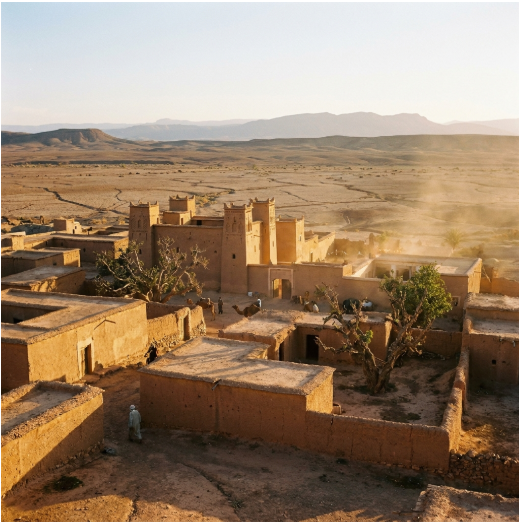
After my marriage quietly ended, I finally took the Morocco trip we'd planned for fifteen years and never went on. The 76-year-old Berber woman who ran the riad took one look at my stomach and told me something no doctor ever had. Let me back up. For fifteen years my husband and I had a folder — actual printouts, hotels circled, a route through the desert. Morocco was the trip we were always going to take "next year." We never did. And then one ordinary Tuesday he told me he was done, and a few months later I was 51, divorced, and sitting in a half-empty house holding a folder for a trip I'd been saving for a marriage that no longer existed. So I went alone. Out of spite, partly. Mostly because I didn't know what else to do with myself. I should tell you the shape I was in, because it ended up mattering more than the heartbreak. For about two years my body had been turning on me. The bloating came first — distended after every meal, by evening I looked months pregnant, and I'd quietly retired every fitted thing I owned. Then the gut — constipated for days, then suddenly loose, cramping, unpredictable, never once normal. Then the exhaustion, the bottomless kind that sleep didn't touch. Then the 3 a.m. wake-ups, every night, staring at the ceiling, wide awake for no reason. And the fog — losing words mid-sentence, forgetting why I'd opened a drawer, reading the same paragraph five times. My doctor said stress. Divorce stress. Then "perimenopause, then menopause, this is just your fifties now." She gave me a sleep aid and told me to try probiotics. I built a shelf of them — magnesium, ashwagandha, a greens powder, two bloating supplements I found online. Nothing changed. The bloating got worse. I told myself it was the stress of everything falling apart. So did everyone else. — The riad sat at the edge of the desert, past where the towns thin out — a old earthen house with a courtyard, fig trees, and, along the walls, tall castor plants I walked past a dozen times without knowing what they were. The woman who ran it was named Lalla Yamna. Seventy-six. I didn't believe it. She crossed that courtyard like a woman of fifty, straight-backed, quick, flat-stomached under her layered robes, her eyes sharp and steady when they landed on you. She'd raised six children, buried a husband, and outlasted nearly everyone she'd grown up with in that village, and she still ran the whole house — the bread, the fires, the guests — without slowing. The first afternoon she watched me climb a single flight of stairs to my room and stop halfway, winded, hand on the wall. She didn't say anything then. That evening she brought mint tea and sat across from me in the courtyard. She didn't ask about my divorce. She didn't ask about my sleep or my mood or my stress — the things everyone back home led with. She looked at me for a long moment in the lamplight. Then she leaned over and pressed two fingers, firmly, into my abdomen, just below the navel. "This," she said, in careful French, then in English. "This is not fat." I almost laughed. I'd been calling it bloat for two years. My doctor called it stress and hormones. Lalla Yamna shook her head. "This is the small creatures. They get into everyone — far more than your doctors in the West will ever say. They make their home in the wall of the gut, here, and they don't leave." She pressed again, slowly. "They are dug in. The flesh is thick and hard where it should give. This is why your belly will not go down. This is why your gut does not work. This is why you cannot sleep. This is why your mind is fog and your body is tired even when you rest." She held my eyes. "Your doctor said it was stress." I nodded. "Your doctor is wrong. Stress did not do this. These have been feeding on you for years. And everything you swallowed to fix it never once reached them." — That word — feeding — landed somewhere I wasn't ready for, because it was exactly the word I'd have used. Drained. Hollowed out. Like something had settled in and was taking from me no matter what I did. She explained it over the tea in a way no doctor, no specialist, no wellness app ever had. The creatures don't float loose in the gut where a test would find them, she said. They burrow into the wall of the intestine and build a slick shield over themselves — a film — and they live behind it. While that wall holds, the body cannot reach them, and they feed. The film hides them from the body's defenses, so it never fights them off. It hides them from the test the doctor runs, which only catches what floats loose — so the result reads "normal" while the colony behind the wall sits untouched. And it turns away anything swallowed: the stomach destroys most of it, and what survives is diluted across twenty feet of gut and slides off the wall. The waste they leave stays in you. It coats the lining and swells the belly from the inside — that is the bloating, not food, not gas. What they release circulates and reaches the head — that is the fog. And they are busiest in the dark hours, when they come up to feed and breed and empty into you. "That is why you wake at three," she said. "It is not your nerves. It is them, awake, while you lie there asking what is wrong with you." I thought about every doctor, every clean test, every bottle on my shelf. None of them had ever reached the wall. — "In the West," she said, "you swallow many bottles and call yourselves healthy. But you cannot reach what lives in the wall by sending things through the stomach. You take a pill in the morning for what comes in the night. This is backwards. This is why you are sick." The desert women, she said, had always cleaned themselves out — not by swallowing. From the outside. "Through the skin. Warm oil, a cloth, wrapped on the belly all night while you sleep — when they are out and feeding and most exposed. The oil goes deep, into the wall where they hide. It breaks down the film they live behind and reaches what's been hiding there, and the warmth and the pressure help carry it out instead of leaving it sitting inside you." The oil was castor — the tall plants along her courtyard walls, pressed the way her mother had pressed it. "My mother wore this every night until she died at ninety-four," she said. "Her mother to ninety-nine. I have done it every night since I was a girl." She laid a hand flat on her own stomach, seventy-six years old and flat as a girl's. "This is why no doctor in your country would ever find what I can feel under my hand right now." — She wrapped me that night — warm castor oil, a worn cloth, a snug band, a warm weight over it. I slept straight through. I woke at dawn to the call to prayer instead of staring at the ceiling at 3 a.m., and my stomach was already visibly down. After one night. By the fifth day the swelling was smaller, the puffiness gone from my face, and I felt physically lighter, like something heavy had finally started to move. By the end of the week the fog lifted — I climbed that flight of stairs without stopping. Another guest asked if I'd changed something; she said my face looked "different, somehow younger." I had only been sleeping, and wearing a cloth of castor oil to bed. — Home in the States, I tried to recreate it. Castor oil, an old shirt, plastic wrap. A disaster — oil through the sheets by 1 a.m., the wrap undone, the cloth bunched under my ribs, me scrubbing stains at dawn. Twice more, same mess. Lalla Yamna's cloths had been seasoned over decades until they held the oil perfectly. I had a t-shirt and a roll of plastic, and so does everyone here. I told the friend who'd encouraged the trip, and she laughed and said everyone ruins their sheets first — then sent me a small company she'd found. Tavio. Organic cotton and bamboo made to hold castor oil at full strength without leaking. Adjustable compression that stays even and snug all night, however you sleep — side, back, restless. No plastic. No mess. No ruined sheets. Reusable for months. I put it on the first night and understood instantly: it held the oil, the pressure stayed steady, it felt like what Lalla Yamna had wrapped on me in the desert — but built so I could do it myself, at home, every night. Week one: quiet, steady movement, something leaving; the puffiness kept going down. My gut started working on its own for the first time in as long as I could remember. Week two: flat after dinner for the first time in over a year. I stood at my mirror and cried — not over my ex-husband, but because I'd forgotten what my own body looked like without the swelling. Week three: the 3 a.m. wake-ups stopped. Seven hours straight. Week four: my sister came by, stopped in the doorway, stared, and said, "What happened to you? You look ten years younger." She thought I'd had something done. I'd worn a cloth of castor oil to bed. That was all. The fog cleared. The energy came back. The cravings faded. The weight I'd carried in my middle for years started coming off without any change to how I ate. — I think about Lalla Yamna all the time. Seventy-six, flat-bellied, sharp, running an entire house at the edge of the desert — because every night of her life she did the one thing that actually reaches what's living in there and clears it out, through the skin, while she sleeps. Her mother to ninety-four. Her grandmother to ninety-nine. I went to Morocco to finally take a trip I'd been saving for a marriage that no longer existed. I came home with a flat stomach, a clear head, the first real sleep I'd had in a year — and the strange peace of knowing the trip he never took me on was the one that finally gave me my body back. If your stomach bloats after every meal. If your gut hasn't worked right in longer than you can remember. If you're exhausted after a full night's sleep. If you wake at 3 a.m. for no reason you can name. If the fog is so thick you lose your words. If the cravings feel like they aren't even yours — those aren't separate problems. That's a colony living in the wall of your gut, behind a film your immune system can't see, your tests can't catch, and your supplements can't reach. Your doctor will say stress, hormones, your age. Your test will come back normal, because it only catches what's loose, never what's dug into the wall. And you'll keep buying bottles that pass through your stomach and never touch where it lives. The desert women figured this out generations ago. Through the skin. With warm castor oil and pressure. Overnight, while they're awake and feeding and your body can't reach them. The one way in that actually works. Every night you go to bed without it is another night whatever's behind that film stays exactly where it is. Another night it sits. Another night nothing reaches it. Tavio. One purchase. Reusable for months. No recurring shipments of bottles that never worked anyway. 30-day money-back guarantee. If you don't feel a meaningful difference, every penny back. They're a small company and they sell out constantly. If you click and they're out of stock, sign up for the restock notification. It's worth the wait. Stop feeding what's been living in you for years. Almost forgot the link. Here it is: https://buytavio.com/pages/parasite-infestation-discovery
Like this ad? Make it yours.
Crush rebuilds this exact creative around your product — your brand, your colors, your offer — in about a minute.