The Eye Health Guide
The Eye Health Guide Facebook ad: “The one thing no eye doctor told me”
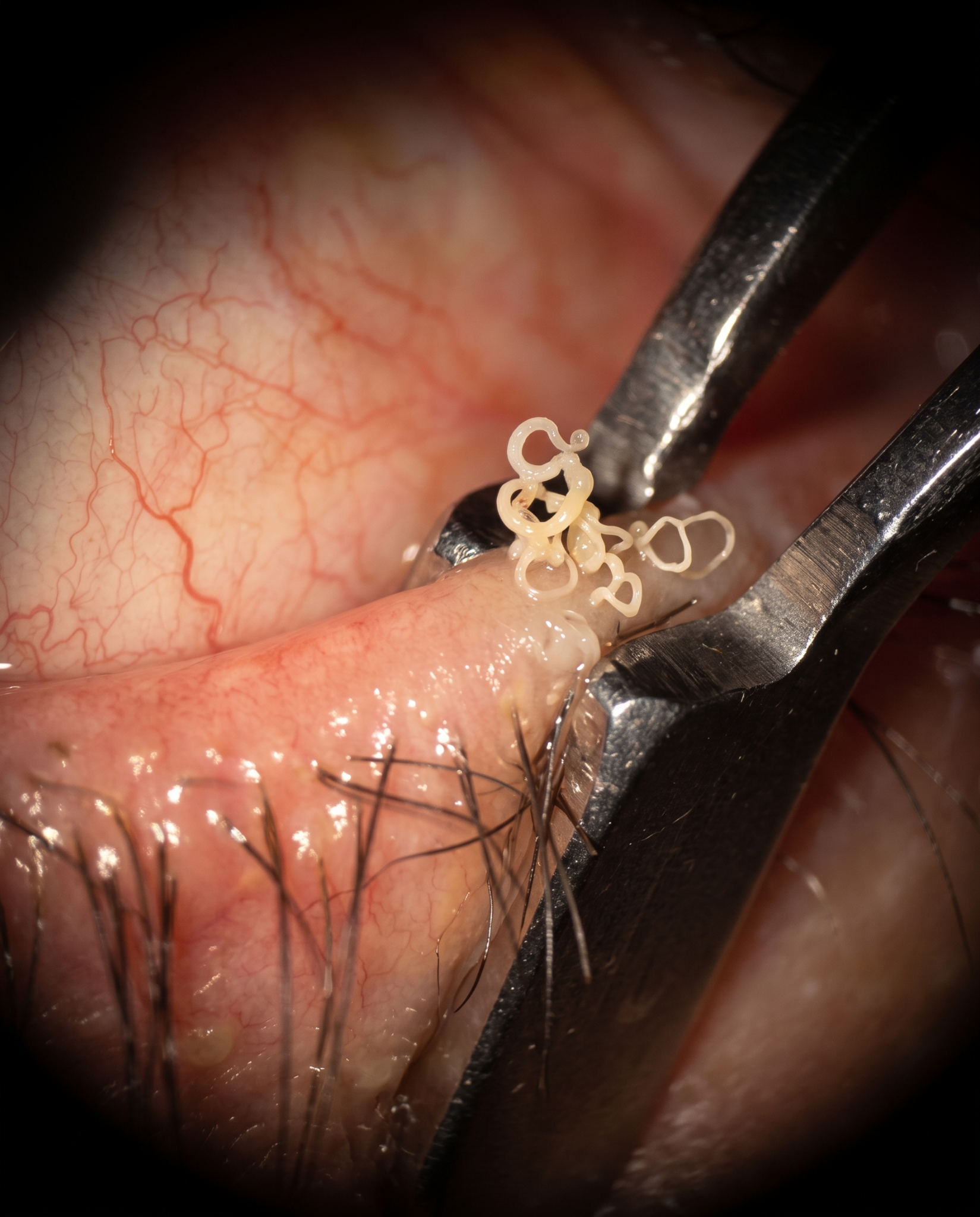
Ran for 7 days, from July 29 to August 5, 2026, the last day Crush saw it.
Run by The Eye Health Guide on Facebook. Crush is not the advertiser and does not verify its claims. See this ad in Meta's Ad Library(opens in a new tab)
Want an ad like this for your product?
Crush makes new ad images for your product from this ad: your logo, your product photo, your offer.
Trials from $19.95 USD, then $79.95 USD a month. Cancel anytime.
About this ad
- Meta Ad Library ID
- 4508966629383565
- Platforms
- Facebook, Instagram, Messenger and Threads
- Relaunches
- 0
Ad text
I found out six months ago that the glands producing my natural tears were dying. Not temporarily blocked. Not malfunctioning. Dying. Permanently. And that once they were gone, no treatment, no surgery, no drug on earth could bring them back. In twelve years of eye drops and warm compresses and prescriptions, not one doctor had ever mentioned this was happening. My name is Linda. I'm 59. I was an office manager at a school district in Cincinnati for twenty-two years. I say "was" because of my eyes. For twelve years I have been a model patient. I did everything right. I did more than right. I did everything they told me to do and then I went looking for more things to do on top of it. Systane in the morning. Refresh by mid-morning. Preservative-free vials by afternoon because the burning was too severe for the regular drops. A Bruder mask microwaved twice a day. Lid wipes. Omega-3 capsules. Flaxseed oil. A humidifier in my office and two at home. Then the prescriptions. Restasis at $540 a month. Stinging so bad I dreaded the morning dose. Four months. No real change. Xiidra at $580 a month. A metallic taste at the back of my throat that never went away. My doctor called it "promising." My eyes called it irrelevant. $1,400 for a single LipiFlow session that gave me three months of mild improvement before everything came right back. $400 a session for IPL. Twice. Then punctal plugs. Last year I sat down with a calculator and added it up. Nine thousand dollars. In twelve years. That figure doesn't include the overtime I lost. The reading I gave up. The night driving I stopped doing because the headlights smeared into halos I couldn't see through. The eye makeup I put away in year seven and never took back out. It doesn't include what it costs to sit across from someone who has never had a single day of eye pain in their life and hear them say, "Have you tried blinking more?" Here's the thing that makes me angry when I think about it, which is most days. In twelve years, four doctors, and nine thousand dollars, not one of them ever said the word meibomian to me. Not one. I had to find it myself. At 1am. On a medical forum. Because nobody who billed my insurance for over a decade thought to mention that the glands producing my tears were slowly dying while I applied drops to a surface that couldn't hold them. Here's what nobody connected for me until I connected it myself. Your ophthalmologist manages your surface symptoms. Drops. Prescriptions. Maybe a referral when the drops stop working. Your optometrist manages your vision. Glasses. Contacts. The chart on the wall. Nobody is managing the thirty tiny oil glands in each of your eyelids that are the actual reason your eyes are dry. The problem sits right between them. And nobody is trained to look there. Nobody is paid to look there. There is no billing code for "check whether the patient's meibomian glands are dying while we keep prescribing drops that can't reach them." That's why most of us go years without hearing the word that explains everything. That's why my mother went twenty-three years. My mother started getting dry eyes in her late forties. She was a paralegal. Screens all day, fluorescent lights, air conditioning that ran from April to October. Her doctor told her what every doctor tells every woman with dry eyes. Use drops. Try a warm compress. It's probably just the screens. She was diligent. More than diligent. Drops in every room of the house. A warm washcloth on her eyes every morning before work. She never missed a single day. She never questioned the protocol. She trusted them completely. And every year, quietly, things got a little worse. By her early sixties, she was using drops every twenty minutes. She kept bottles in her purse, in the glove box, in the nightstand drawer, in the kitchen, on the bathroom counter. She joked about it in that dark way you joke about a thing that's slowly swallowing your life. By sixty-five, she'd stopped driving at night because the headlights smeared into halos she couldn't see through. By sixty-eight, she'd stopped reading. The words blurred after ten minutes no matter how recently she'd put drops in. The one thing she loved more than anything. Gone. By seventy, she stayed home. Her world had contracted down to a dim living room with the curtains drawn and a television she listened to more than watched. She wore sunglasses inside because the overhead light hurt. She stopped accepting invitations because she couldn't explain why she was always squinting, always watering, always reaching for a tissue. So she just stopped going. And the things nobody connected to her eyes. The headaches that came every afternoon and never fully left. The fatigue that settled over her by noon like someone had dimmed a switch. The way she'd stand in the middle of a sentence and lose the thread, searching for words she'd never had to search for before. She went to every appointment. She did everything they asked. She never missed a compress. She never skipped a drop. And she was never once told that the glands producing the oil her tears needed were slowly, silently dying while she applied water to a surface that could not hold it. At seventy-one, a specialist finally did a meibography scan. She sat in that chair and looked at an image of her own eyelids on a screen. I was with her. The specialist was quiet for a moment. Most of the glands were gone. Decades of blockage had starved them of function until they atrophied. Shriveled down to almost nothing. White spaces where gland tissue used to be. There was nothing to unblock. Nothing to restore. Nothing to reopen. Twenty-three years of drops. Four doctors. Not one of them had ever looked at her glands. My father drove her home from that appointment. He told me later what she said in the car. "They had me putting water on the outside of my eyes for twenty-three years. And the whole time, the problem was on the inside of my eyelids. And nobody looked." My father is not a man who gets angry. But when he repeated that to me, his voice was shaking. Fast forward to fourteen months ago. I'm 59. I've been on drops since I was forty-seven. My mornings take forty-five minutes before my eyes feel functional enough to read my phone. The burning hits by mid-afternoon every single day without exception. I know exactly what road I'm on because I watched my mother walk it for twenty-three years. My doctor pulls up my chart at my annual exam. "Linda, I want to start you on a new prescription. The drops clearly aren't doing enough on their own." My chest tightened. "My mother was on drops for twenty-three years," I said. "They never addressed the actual problem. Her glands atrophied while every doctor she ever saw treated the surface. I'm not adding more of the same." She gave me that look. "Give me three months," I said. "If things keep going the wrong direction we'll talk." She wasn't happy. I didn't care. For three months I did everything right. Cut my screen time. Added more omega-3s. Drank more water. Switched to preservative-free drops exclusively. Doubled the compress routine to twice a day for fifteen minutes each. Three months later: still dependent on drops every thirty minutes. Still burning by 2pm. The morning crustiness was worse, not better. The doctor pulled up my chart again. "Linda, the prescription..." "Give me three more months." "Linda..." "Three more months." She sighed. I didn't care what she wrote in my chart. I had watched the prescription approach fail my mother for twenty-three years. I was not going to sit in that same chair and accept the same answer and end up in the same dim room with the curtains drawn. That night I couldn't sleep. I kept thinking about my mother. Same drops. Same doctors. Same glands quietly dying underneath all of it while she did everything they asked. At 1am I went downstairs. Made tea. Opened my laptop. I didn't search "how to treat dry eyes." I had treated dry eyes for twelve years. Every way there was to treat them. I searched for why. Why a condition that every doctor calls manageable keeps getting worse despite everything. Why drops that worked at thirty-seven needed to be applied every twenty minutes by forty-nine. Why warm compresses that felt soothing never produced a single lasting change. Every site gave me the same recycled answers. More drops. More omega-3s. Blink exercises. Reduce screen time. I'd done all of it. So I kept digging. Looking for women who had actually gotten better. Not managed. Better. Women who'd gotten off the drops entirely and whose eyes worked on their own again. That's when I found the forum thread. A woman had posted her meibography scans. Before and after. The before image showed glands thinning, gaps forming, tissue starting to disappear. It looked like my mother's scan. My stomach dropped. The after image, taken eleven months later, showed glands that had partially filled back in. Not fully restored. But structurally present in a way they hadn't been before. Four hundred comments. Women asking the same question: What did you do? Her answer mentioned a name I recognized. The same specialist who had done my mother's scan. Dr. Ames. My mother's records were in a box in my father's garage. I drove over that weekend and found the referral letter. Dr. Ames had retired three years ago. But her phone number was on the letter. I called her on a Monday morning. She picked up on the second ring. I told her who I was. Whose daughter I was. What I'd been dealing with for twelve years. There was a long pause. "You should come see me," she said. "I'm not in practice anymore. But you should come." I drove two hours the next Saturday. She lived in a small house outside Dayton with a garden and a screened-in porch. She answered the door in reading glasses and a cardigan. Seventy-five years old. Clear, bright, steady eyes. That was the first thing I noticed. She was seventy-five and her eyes were clearer than mine had been at forty. She made coffee without asking. Pulled out a chair at her kitchen table. "I remember your mother," she said. "I remember the scan. I remember what I told her. And I remember that it was too late for most of what I told her to matter." She folded her hands. "It does not have to be too late for you. But I need you to understand something that every doctor you have ever seen either didn't know or didn't think to tell you." "Your eyes are not dry because they lack moisture," she said. "They are dry because the glands that produce the oil layer protecting your tears have been blocked for years. And without that oil, every tear you produce and every drop you apply evaporates within minutes." She drew it for me on a napkin. Tiny vertical glands running along the inside rim of each eyelid. About thirty in the upper lid. About twenty-five in the lower. "These are your meibomian glands. Their only job is to release a thin layer of oil every time you blink. That oil coats your tear film and holds it stable. It is the seal between your tears and the air. Without it, your tears are exposed. They evaporate. Your eyes burn." She tapped the drawing. "When these glands get blocked, the oil inside hardens. Starts as olive oil. Thickens to something closer to butter. Eventually solidifies to the consistency of toothpaste. It cannot flow. The gland opening is sealed shut." "86% of chronic dry eye traces back to exactly this. Blocked oil glands. Not insufficient tears. Not a moisture deficit. A gland problem." That number hit me the way the specialist's silence had hit my mother. 86%. That meant almost every woman I'd ever sat next to in a waiting room, almost every patient getting the same drops-and-compresses protocol, was being treated for the wrong condition. "Every drop you have ever used," she said, "added water to a surface that has no oil to hold it. That is why they wear off in fifteen minutes. That is why they have always worn off in fifteen minutes. They were never designed to reach your glands. They cannot. They sit on top of your eye and evaporate because there is nothing sealing them in." I thought about the sixteen bottles of drops sitting in drawers and purses and cup holders across my house. The same way my mother had kept them everywhere. "And here is the part that should have been explained to your mother twenty years before I ever saw her." She looked at me and her voice changed. "Glands that stay blocked long enough don't just stay stuck. They atrophy. The tissue thins. The gland walls collapse. And once that tissue is gone, it does not regenerate. Not with any treatment that exists. Not with surgery. Not with medication. Not ever." I could see my mother's scan in my mind. The white spaces where glands used to be. "Your mother's glands didn't fail because of her age," she said. "They died because they spent twenty-three years blocked while every doctor she saw put drops on the surface and left the glands completely untouched underneath." I had to set my coffee down because my hands weren't steady. She gave me a moment. Then she continued. "That is what is happening to you right now. Twelve years. Your glands are still there. Most of them. I can tell by looking at your lid margins. But the window does not stay open forever. Every year you spend on drops that cannot reach the blockages is another year of gland tissue you will never get back." "Now," she said. "The compresses." She leaned forward. "The warm compresses are the right idea. Heat is exactly what blocked meibomian oil needs to melt and flow again. Your doctors were correct about the principle. But here is what none of them told you, because most of them genuinely do not know." "The blocked oil in your glands has a specific temperature it needs to reach before it will liquefy. Think of it as a melting point. Below that temperature, the blockage stays solid. It does not matter how long you hold the compress there. If the heat doesn't reach and stay above roughly 104 degrees, the oil stays hard. And it has to stay above that temperature for a full ten minutes." "Go home tonight," she said. "Heat your compress the way you always do. Set it on your eyes. Then take it off after two minutes and put a kitchen thermometer on it. Tell me what number you see." She already knew what I would find. I could see it in her face. "A warm washcloth starts around 108 degrees. Within two minutes it drops below 96. Within three it's barely above body temperature. You have been holding a cooling cloth to your eyes for twelve years while the glands underneath stayed completely sealed." I thought about my mother. Twenty-three years of the same cooling cloth. Twice a day. Every single morning. Diligent. Trusting. And the glands dying underneath it the entire time. "And the cloth delivers dry heat," she said. "No moisture. The research is very clear on this. Moist heat penetrates the eyelid tissue and reaches the glands far more effectively than dry heat. Moisture carries warmth into the tissue the way dry air cannot. A warm washcloth sits on the surface of your skin. The glands are inside." She used a comparison I haven't forgotten. "Imagine trying to melt butter frozen inside a thick steak by pressing a warm towel against the outside. The surface gets warm. The middle stays solid. You need the heat to travel through the tissue to where the blockage actually lives. Moisture is what carries it there." She sat back. "When moist heat at the correct temperature is sustained long enough, the hardened oil reaches its melting point. It liquefies. The gland opens. The oil coats your tears. The tears stop evaporating. Your eyes stop burning. Not because you added moisture from the outside. Because you restored the seal that was supposed to be there all along." "This is what specialist clinics have done for over a decade. In-office steam therapy. The clinical devices cost hundreds of dollars per session. They were never marketed to patients for home use. They never needed to be. The revenue model worked fine with patients coming back every few months at $1,500 a visit." She looked at me steadily. "Your mother and you and every woman I treated for thirty years were never offered the one thing that could actually reach the glands. Not because it didn't exist. Because it existed behind a clinic door at $1,500 a session and nobody thought to put it in a woman's hands at her own kitchen table." I drove home. Walked straight to the kitchen. Heated a washcloth the way I'd done twice a day for twelve years. Pressed it to my closed eyes. Held it there. After two minutes I pulled it off and touched the meat thermometer from the drawer to it. 97 degrees. Below the therapeutic threshold before I'd even settled into my chair. Twelve years. Two compresses a day. 8,760 compresses. Every single one of them below the temperature my glands needed before the second minute was over. I sat at my kitchen table for a long time with that thermometer in my hand. Then I went back to my laptop and searched for what Dr. Ames had described. A device that delivered sustained moist steam at therapeutic temperature. At home. For the full ten-minute duration the glands actually needed. Not dry heat from a microwave that faded in two minutes. Moist steam that held. I found it within the hour. I ordered it that night. The device arrived three days later. I filled it, pressed one button, and put it on. The warmth was different from anything I'd felt in twelve years. Not the brief bloom of heat that fades before you've taken three breaths. A steady, sustained, moist warmth that held. Ten full minutes. Consistent. I sat in my kitchen and let it work. When I took it off, my eyes felt quieter. That's the only word for it. The gritty, burning edge that usually peaked by mid-afternoon was softer. Not gone. Not miraculously fixed. But quieter. Like something underneath the surface had finally been reached. Week one. Thursday afternoon. I was sitting at my kitchen table paying bills and I looked up at the clock. 2:15pm. Normally by noon I'd have used drops three times. I hadn't reached for them once. I sat there for a moment, not trusting it. Checked the clock again. Went back to the bills. Made it to 4pm without a single drop. That hadn't happened in three years. Week two. I was getting dressed on a Saturday morning and I realized I had both eyes open. All the way open. No squint. No crust. No sealed-shut, gritty, peel-them-apart feeling that had been part of my mornings for a decade. My eyes had just... opened. Like normal eyes. I stood in front of the mirror and stared at myself because I genuinely could not remember the last time that had happened. Week three. A Wednesday morning. I woke up and my eyes were comfortable. Not manageable. Not "not as bad as yesterday." Comfortable. I lay there for a full minute before I moved because I was afraid if I reached for the drops on the nightstand I'd break whatever was happening. I didn't reach for them. I got up. I made coffee. I read the news on my phone standing at the counter. And I didn't do a single thing to my eyes first. That was the morning I knew. Week six. I sat down after dinner to read a book. An actual book. Something I had quietly given up three years ago because my eyes couldn't hold focus for more than ten minutes without burning. I read for ninety minutes. I didn't reach for drops once. I didn't rub my eyes. I didn't stop to blink deliberately or look away or rest. I just read. The way I used to read before all of this started. I put the book down and I cried. Alone in my living room. Not because I was sad. Because I understood, sitting there, that the thing that had been taking pieces of my life for twelve years was not getting worse anymore. It was actually, finally, getting better. By month three, I was standing in my kitchen one morning and I realized I'd been drinking my coffee and reading the news for twenty minutes and I hadn't done a single thing to my eyes. No drops. No compress. No lid wipes. No forty-five-minute ordeal before I could function. Just coffee. Just morning. Like a woman whose eyes work. I had reclaimed forty-two minutes of every morning and most of my life. And the things I didn't expect. The afternoon headaches that I'd blamed on screen fatigue for years went quiet. They weren't screen fatigue. They were my eyes straining against a tear film that couldn't hold itself together. When the glands opened and the oil came back, the strain stopped. And the headaches stopped with it. The night driving came back. I drove my daughter home from the airport at 9pm last month. I could see the lane markings clearly the entire way. I could read the exit signs without squinting. I hadn't driven after dark in over two years. My daughter said, "Mom, you're driving at night?" I said, "I'm driving at night." My face looks different. I didn't expect this one at all. But the chronic redness, the puffiness, the watery, irritated look I'd accepted as permanent. It eased. My daughter told me I looked more awake and more present than she'd seen me in years. I thought she was being kind. Then I looked at a photo from last Christmas next to one from last week and I could see it myself. All of it from the same glands finally being reached. The same glands that had been blocked and slowly dying for twelve years while I applied drops to a surface that could not hold them. My follow-up appointment was at the end of month two. My doctor walked in. Pulled up my chart. Looked at me. "Linda. How are the eyes? Are you ready to discuss the prescription?" "I haven't used drops in three weeks," I said. Silence. "On your own?" "On your own." She typed slowly. I told her everything. The blocked glands. The temperature gap. The twelve years of compresses that cooled below therapeutic temperature in two minutes. The moist steam that held for ten. The glands finally receiving the sustained heat they needed to open. The oil flowing again. The tears stabilizing on their own for the first time in over a decade. She looked at the screen for a long moment. "The connection between meibomian gland dysfunction and evaporative dry eye is well-established in the literature," she said. "I don't typically investigate gland function specifically in cases of chronic dry eye because the standard protocol addresses the symptoms directly." Long pause. "But whatever you changed, keep doing it. I don't want to see you on another prescription. And right now, I don't think that's where you're heading." She closed my chart. She didn't write the prescription. That was five months ago. I go through entire days now without thinking about my eyes. That sentence doesn't sound like much unless you've spent twelve years where your eyes were the first thing you thought about every morning and the last thing you managed every night. Where every room you entered, you scanned for the air vent. Where every invitation came with a quiet calculation about how dry the restaurant would be and whether you'd packed enough drops. Last month I took a weekend trip with my friend Jan to a cabin in the Smokies. Three-hour drive each way. Windows cracked. Air conditioning running at the cabin. Two things that would have wrecked me for days a year ago. I didn't pack a single bottle of drops. I had friends over for dinner last Saturday. Sat through the whole evening without disappearing to the bathroom. Without watching the clock. Without wondering if the lighting was bothering my eyes. I was just there. Present. The whole time. Like a normal person at a normal dinner. I called my father that night. Long silence. "She would have given anything for this, Linda. Your mother would have given anything." If you're reading this, you probably already know what your mornings look like. You wake up and before your feet hit the floor, your eyes are already the first thing on your mind. How bad will they be today. Whether you have enough drops. Whether this will be one of those mornings where they're sealed shut and gritty and you have to peel them open with your fingers and wait twenty minutes before you can see clearly enough to read your phone. You go through your routine. The drops. The compress. The lid wipes. The waiting. Forty-five minutes before you can function like a normal human being. By mid-afternoon your eyes burn so badly you can barely look at a screen. You reach for drops that give you fifteen minutes and then quit. You reach for more. And more. And more. You've given up the small things. Night driving. Reading before bed. Eye makeup. Long afternoons outside. Movies without stopping three times to put in drops. And every doctor you've seen has told you the same thing. Use more drops. Try a different brand. It's your age. It's the screens. Here's a prescription. Your eyes were never the problem. Your glands were. And right now, today, while you're reading this, the glands in your eyelids that are still blocked are losing tissue. Not in a theoretical sense. In a biological, irreversible, permanent sense. The gland walls are thinning. The tissue is atrophying. And a meibomian gland that dies does not come back. There is no surgery that replaces it. There is no drug that regrows it. The glands you have right now are the ones you are fighting to keep. Every year you wait is another year closer to where my mother ended up. In a dim room with the curtains drawn. Listening to a television she could no longer watch. With eyes that no amount of drops could help. Because the glands that were supposed to make the whole system work were gone. My mother didn't have this information. You do. The device that finally reached my glands after twelve years of treatments that couldn't is the Beminda Steam Therapy Pro. Sustained moist steam at therapeutic temperature. Held for the full ten minutes the glands need. Not a warm cloth that cools in two. Not a microwaved mask that delivers dry heat to the surface. Moist steam that carries warmth into the tissue where the blockages actually live. The same mechanism specialist clinics have used for over a decade. Built for your kitchen table. 60-day money-back guarantee. Use it every day for two full months. If you don't feel the difference in your eyes, if you're not reaching for drops less, if the mornings don't change, send it back. Full refund. You'll have lost nothing but a little time. And if it works the way it worked for me, you will not be sending it back. Your ophthalmologist isn't scanning your glands. There's no protocol for it. There's no prescription that can reach them. There's no billing code for checking whether the glands that produce your tears are dying while you keep applying drops to a surface that can't hold them. The drops manage the surface. The glands are underneath. You have to reach them yourself. The full mechanism, the research, and exactly how the device works is at the link below. beminda.com/pages/adv10pro P.S. I felt the difference after my very first session. That sustained warmth holding for the full ten minutes instead of fading in two. By week one, the drops I usually reached for by noon stayed in my pocket until dinnertime. By week three, I woke up on a Wednesday and my eyes just opened. No grit. No crust. No reaching for the nightstand. By week six, I read for ninety minutes without stopping. Your timeline will be different. But you won't know until you try. And your glands aren't getting younger while you decide. P.P.S. My older sister Ruth started using it eight weeks after I did. She's 63. Same drops-every-thirty-minutes routine since her late forties. Four weeks in she called me on a Tuesday morning. "Linda, I didn't use drops yesterday. The whole day. Not once." Last Sunday she drove to my house after dark for the first time in three years. She walked in and sat down at my kitchen table and said, "I'm not going to end up the way Mom did, Linda." Neither am I. Neither should you. beminda.com/pages/adv10pro - Linda
Where the ad sends people
beminda.com
The one thing no eye doctor told me
86% of dry eye is caused by blocked oil glands that drops can't fix. Beminda's steam therapy delivers sustained warmth to target the root cause. Free shipping worldwide.
Learn more: beminda.com(opens in a new tab)