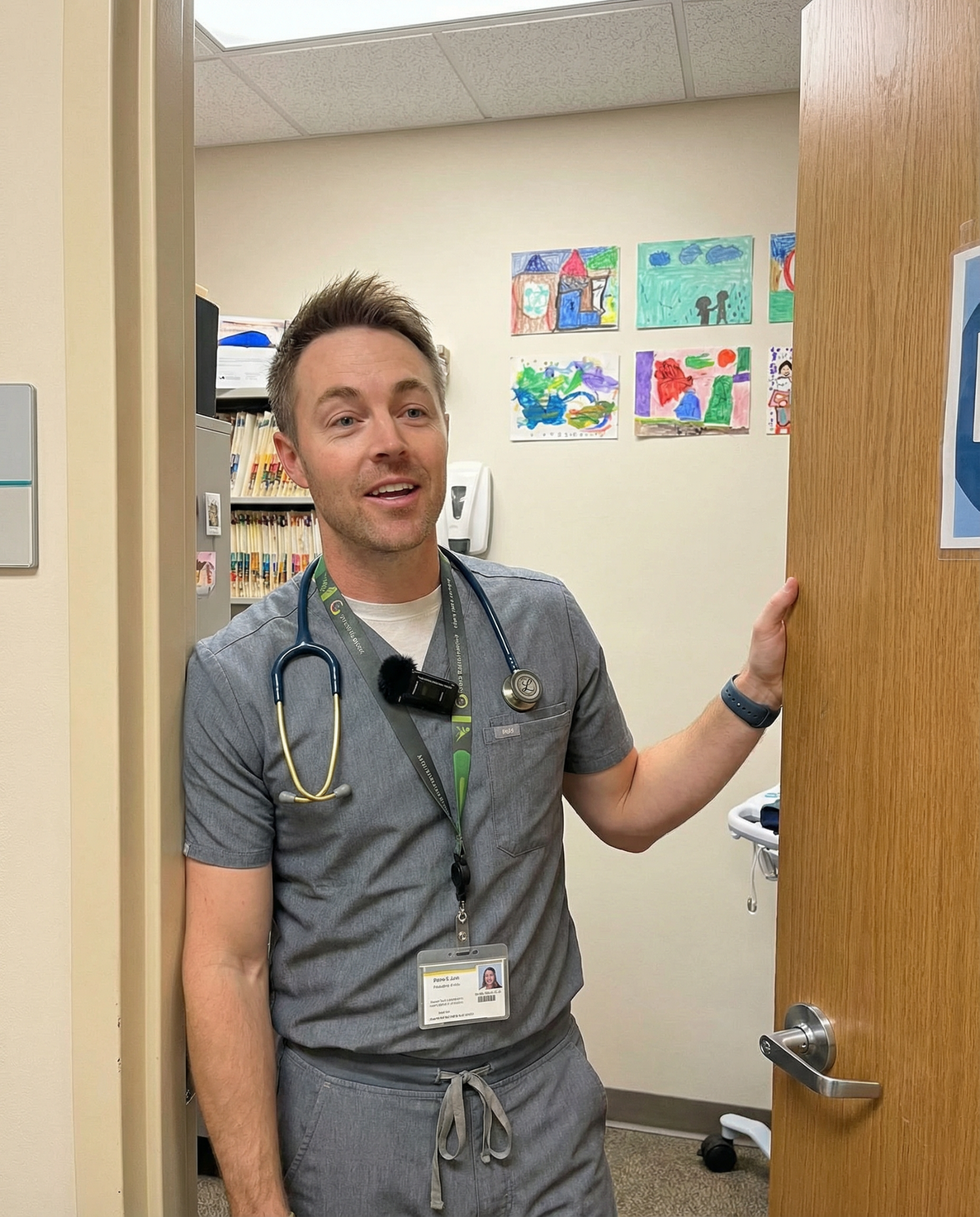
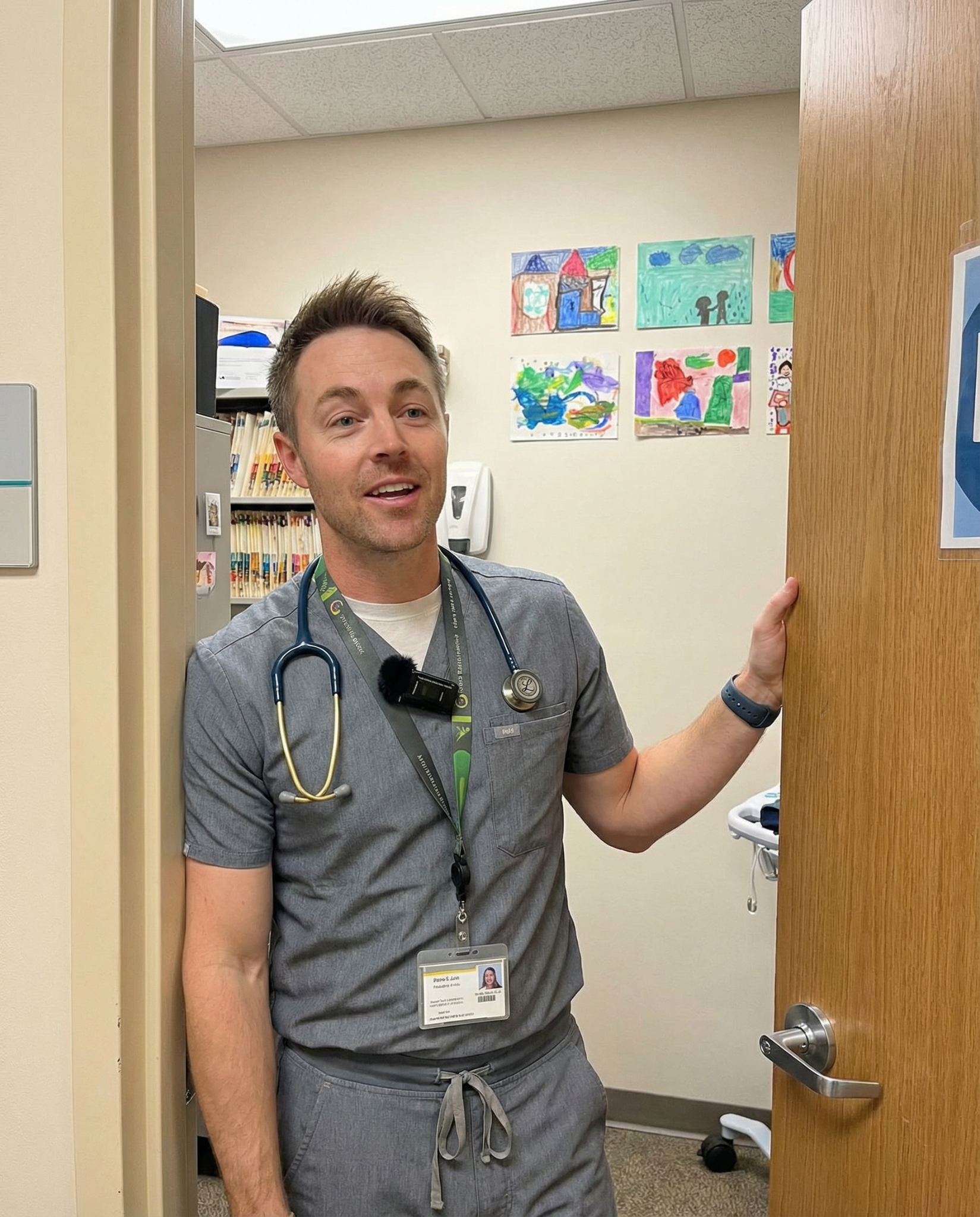
Jackson Campbell, PHD
Jackson Campbell, PHD Facebook ad: “Most parents who I see have tried everything.”

Ran for 24 days, from April 16 to May 10, 2026, the last day Crush saw it.
Run by Jackson Campbell, PHD on Facebook. Crush is not the advertiser and does not verify its claims. See this ad in Meta's Ad Library(opens in a new tab)
Want an ad like this for your product?
Crush makes new ad images for your product from this ad: your logo, your product photo, your offer.
Trials from $19.95 USD, then $79.95 USD a month. Cancel anytime.
About this ad
- Meta Ad Library ID
- 4513365758950345
- Platforms
- Facebook, Instagram, Audience Network, Messenger and Threads
- Relaunches
- 1
- EU reach
- 12,721
Ad text
I'm a pediatric neuropsychologist. I've worked with children for 16 years. And I need to explain something to you that your pediatrician hasn't. Your kids' meltdowns over homework. The screaming when you say "time's up" on the iPad. The constant struggle with focus in school. The morning meltdown. This is not your fault. Most parents who I see have tried everything. Reward charts. Taking the iPad away. Omega-3s. Those Olly vitamins from Target. Therapy. Some have even given their kids medication. A lot of parents believe that something is seriously wrong with their child, or that something is wrong with their parenting. I hear both every day. And I'm going to tell you what I tell every parent who sits in my office. Nothing is wrong with your child. Nothing is wrong with your parenting. You've been given the wrong tools for what's actually happening. — Most kids these days have similar struggles. Can't focus. Can't regulate emotions. Defiant. Melts down over small things. Constant stress and anxiety. Always wanting to play Roblox and Minecraft. They're checked out, unreachable unless there's an iPad in front of them. Or just flat out don't listen to you. All parents I see do everything they're told is right. Take screens away, stricter parenting, and try natural support. And are still met with endless emotional outbursts, meltdowns, defiance, and trouble focusing. Nothing changed. Then these parents end up just giving their kids ADHD medication, because todays society has convinced you that every kid just has ADHD and that medication is the solution. And I don't blame them. Because raising kids today is harder than ever. These kids sit at school desks for 7 hours a day. 7 hours of sustained boring focus, impulse control, emotional regulation, following instructions, sitting still, and they get twenty minutes of recess. Twenty minutes to move their body, burn off energy, and reset. Then right back to the desk. Then we have the screens that are everywhere. Not because parents are lazy but because the world made it that way. iPads in classrooms. Phones in every pocket. YouTube on every TV. To top it off, most kids' diets consist of school lunch, chicken nuggets, chips, and fast food. I'm not blaming parents for that; I ate the same way growing up. But today's food is different from what it was a generation ago. The soil is depleted — measurably less magnesium, less B vitamins in produce than thirty years ago. And our food is more processed, stripped of the specific nutrients the brain needs to function. Kids are eating enough calories. They're not getting anywhere near enough of the nutrients that their brain actually requires. And every comment section, every parenting article, every mother-in-law has an opinion. "Just take the iPad away." "Kids need more discipline." "We didn't have ADHD when I was growing up." So when nothing works — when the charts fail, the therapy falls apart, the supplements do nothing — of course, parents turn to medication. Not because they want to. Because they're out of options and their kid is drowning, and no one has given them anything else that actually helps. But here's what I need you to understand. Your child's brain is struggling with something that has nothing to do with discipline, screens, or how you parent. It's brain chemistry. And the reason everything you've tried has failed isn't that you chose the wrong things. It's that every solution you were given targeted one symptom at a time — focus OR calm OR mood — instead of addressing the root of what's actually causing all of them. Once you understand that, everything changes. And it's simpler than you think. — Here's what nobody told you. Your child's brain runs on three key chemicals. Dopamine, serotonin, and norepinephrine. They're called monoamines. And they control almost everything we ask kids to do every single day. Dopamine controls focus. It's what lets a kid sit with a worksheet and not check out after two minutes. When dopamine is low, homework is impossible — not because they won't focus, because their brain can't sustain it. But hand them an iPad and they'll play Minecraft for three hours. Because the game floods their brain with the dopamine it's been starving for. The screen isn't the problem. It's the only thing filling that dopamine gap. Serotonin controls mood and emotional regulation. It's the buffer between a small frustration and a full meltdown. When serotonin is low, "time's up on the iPad" becomes screaming. "You need to clean your room" becomes twenty minutes of arguing. Your kid isn't being dramatic. Their brain doesn't have the chemical capacity to process small frustrations as small. Everything hits at full force. Norepinephrine controls alertness and motivation. When it's low, kids are flat. No drive. No excitement. Don't want to try in school. Don't want to talk to you. Don't put effort into the smallest things. It's not laziness. It's their brain missing the support it needs. These three chemicals work as one connected system. When the system is regulated, a kid can focus, regulate emotions, feel motivated, and handle frustration and anxiety. When it's struggling — everything struggles at the same time. This affects all kids. Every child's brain runs on this system. But for kids with ADHD — or kids showing signs of ADHD, even without a formal diagnosis — the problem is significantly worse. Their brains naturally produce less of these chemicals to begin with. They start every day with a smaller supply. And then the demands of the day drain it even faster. The hours at a school desk. Sustained focus, impulse control, emotional regulation, sitting still, following instructions — all of it burns through dopamine, serotonin, and norepinephrine. Twenty minutes of recess doesn't come close to replacing what seven hours of demand takes out. By 3 PM, most kids are running low. Kids with ADHD? They're running on empty. That's why the after-school meltdowns happen. That's why homework time feels impossible. Your kid held it together all day and the second they walk through that door, there's nothing left. They run to the iPad as soon as they get home effortlessly, because it instantly delivers dopamine. And the food most kids eat doesn't help. The brain builds these chemicals from specific nutrients — B6, B12, magnesium, amino acids. And we already know how much worse todays food is, none of the specific nutrients their brain needs to rebuild what the day just drained. Leaving kids without any of the natural support it needs. So every day the cycle repeats. The brain starts low. School drains what's there. Food doesn't replace it. By afternoon, the tank is empty. That's why the meltdowns are always worse after school. That's why the screen is the first thing they reach for. That's why "I don't know" is the answer to everything by dinner time. Now — the magnesium gummies everyone recommends. The omega-3s. The Olly vitamins from Target. The calm drops from Amazon. I've had hundreds of parents tell me they tried natural and it didn't work. It's not that natural doesn't work. Those products were never designed for what's actually going on. Every one of those targets one pathway. Maybe. But the monoamine system runs on three chemicals built by one process. You can't fix a whole system with a single ingredient. That's why they didn't work. Not because your kid is beyond help. Because those products were built to address a single struggle and not the entire system. — That's where I started introducing saffron into a lot of my patients' diets Not the cooking spice — a clinical-strength extract containing two specific compounds called crocin and safranal. What caught my attention is what saffron actually does in the brain. It doesn't work the way medication works. ADHD drugs like Ritalin force dopamine into the brain. One chemical. Artificially. That's why it helps focus — and that's why it causes side effects. Appetite loss. Sleep disruption. Personality changes. You're overriding one pathway, and the brain pays a price for it. Saffron does something different. Crocin and safranal support the brain's own natural production across the full system — dopamine, serotonin, and norepinephrine. Not one. All three. And they help the brain hold onto what it produces instead of breaking it down too fast. This isnt just theory In 2019, a study compared saffron extract head-to-head with Ritalin in kids. Focus, attention, behavior, and anxiety— rated by both parents and teachers. The results were comparable. Without the appetite loss. Without the sleep disruption. Without turning your kid into a zombie. Because it's not overriding the brain. It's feeding it. When your child's brain can naturally regulate dopamine, serotonin, and norepinephrine, the struggles start to shift. Focus comes back. Not just for Minecraft — for homework, for school, for conversations. The brain doesn't need the screen to function anymore. The emotional explosions shrink. "Time's up" doesn't trigger a war. Small frustrations stay small. Your kid can hear "no" without the whole house shutting down. The motivation returns. They want to go outside. They want to talk to you. They put effort into things without being dragged through every step. The flat, checked-out version of your kid starts to fade; they have control over their anxiety and emotions. — But here's what most people get wrong. First — most saffron supplements use generic extract. Maybe 20% active compounds. The clinical study used an extract standardized to over 95% pure crocin and safranal. Below that concentration, brain chemistry doesn't change. Most products on the shelf aren't anywhere close. It's a sprinkle on the label. Second — saffron supports production and retention. But the brain still needs the raw materials to build these chemicals. B6. B12. Magnesium. The same nutrients most kids aren't getting from food. Saffron can drive the system all it wants — if the building blocks aren't there, there's only so much it can help do. You need both. The saffron at clinical strength. And the building blocks to fuel it. — After two years of research and monitoring outcomes in my practice, there is one product I recommend to families. Mood Balance. Clinical-dose saffron extract — 95%+ pure crocin and safranal. The actual concentration from the study. Magnesium glycinate — the form that crosses the blood-brain barrier, not the oxide that barely absorbs. B6 and B12 to fuel the production chain. Lion's mane for cognitive clarity. L-theanine for calm focus. The saffron to drive the system. The nutrients to fuel it. Everything together in one gummy. Sixteen years working with children, and getting a kid to take a supplement consistently is one of the hardest things parents deal with. This is why Mood Balance is my go-to recommendation, its a tasty gummy that kids actually enjoy taking. — Every kid is different, and these are still kids; they have their rough days, the days that are just harder than others. But what I consistently see from my patients speaks volumes. The after-school meltdowns are usually the first thing to ease up. Not gone overnight, but smaller. Parents tell me the house just feels different things are easier and their kids are working with them instead of it being a constant war. Then the teacher emails start coming. "I don't know what changed but they're finishing their work. They're participating. Transitions aren't a battle anymore." Homework goes from a two-hour war to twenty minutes. And then parents sit across from me and say the same thing almost word for word: "I got my kid back." Not a zombie. Not a different kid. Not sedated. Their kid. Just calmer, more focused, more present. Less anxious. the version of their child they always knew was in there. The screen is still in the house. The kid still plays. But the desperation is gone. It goes from being the only thing that works to just another thing they enjoy. Because their brain isn't relying on it anymore — If you've tried everything and nothing's worked, it's not because you failed. It's because nobody explained what was actually going on, and everything you were given only targeted one piece of it. You don't need stricter rules. You don't need to take the iPad away. You don't need another failed supplement from Target. You need to support the whole system. Not one pathway. All three. For parents looking for a natural option, that's where I tell every parent in my office to start. Your kid is still in there. Their brain just needs what it's been missing. EDIT: The one I recommend is Mood Balance. Clinical-dose saffron extract with 95%+ active compounds, magnesium glycinate, lion's mane, L-theanine, B6, B12. I've left a link below. If you've tried everything and nothing's worked, just read the reviews. [uselumexa.com/pages/saffron-2]
Where the ad sends people
uselumexa.com
Most parents who I see have tried everything.
Lumexa
Learn more: uselumexa.com(opens in a new tab)