
Stopped· since Jun 6, 2026
- 43
- days it ran
- 0
- relaunches
Ad copy
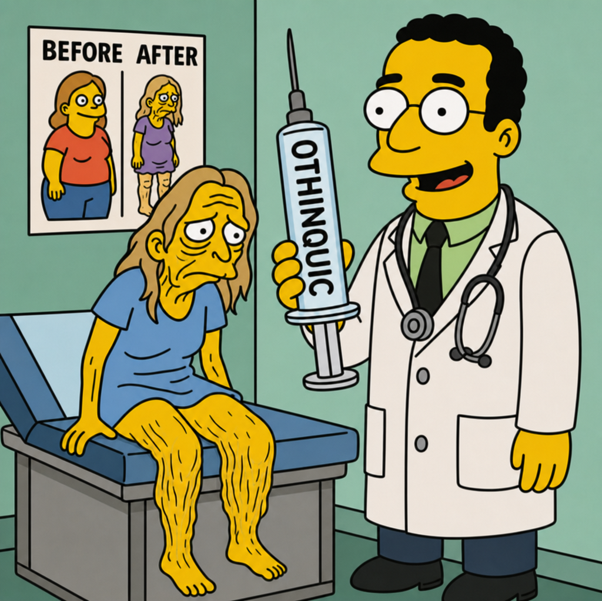
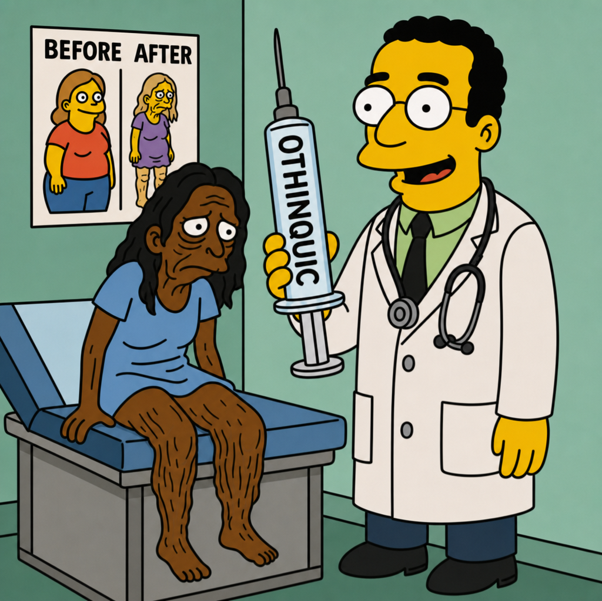
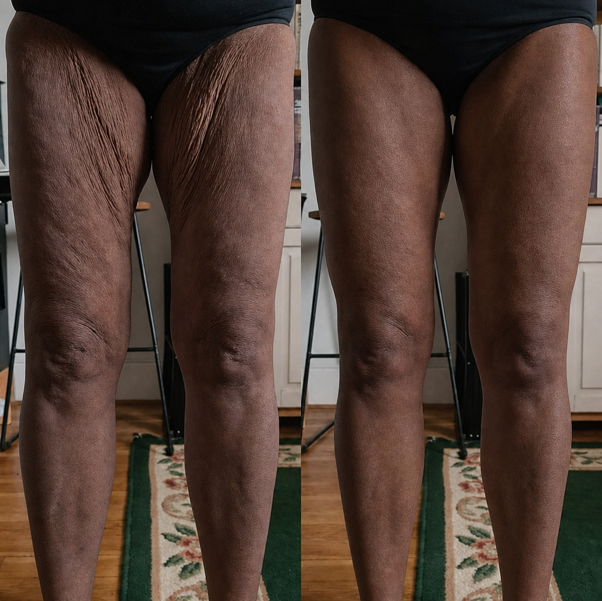
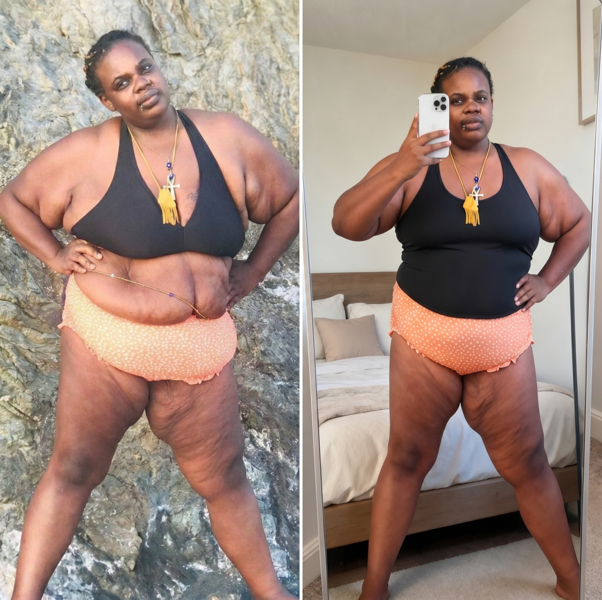
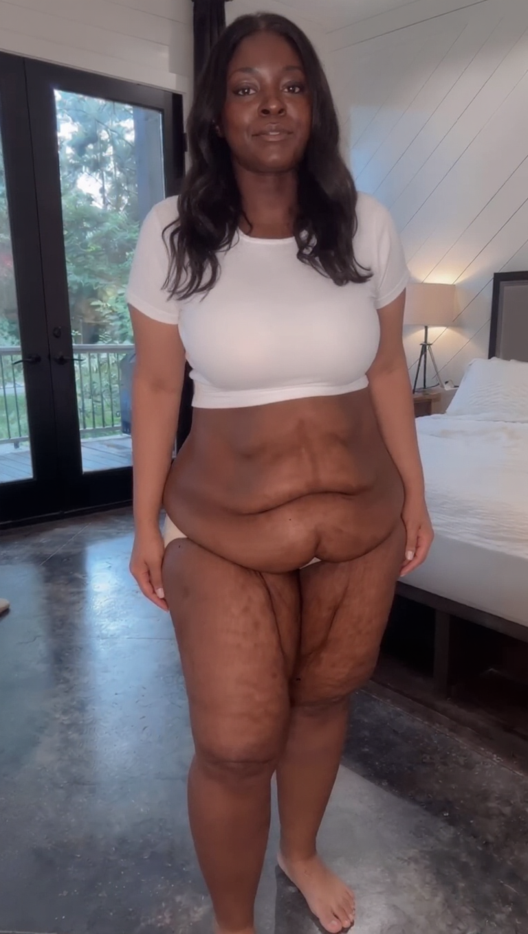
There is a 14-to-18-month window after major weight loss when the tissue under your skin can still remodel. Almost no GLP-1 prescriber mentions it before the window closes. After it closes, your only remaining option is surgery. I quit last March. Not because of anything Ozempic did to anyone's stomach. Not because of the muscle loss. Not because of the rebound weight. I quit because of what I was watching happen to the bodies of women who came back for their month 9, month 12, month 14 follow-ups. And what I was watching the clinic do to them next. There is a side effect of rapid GLP-1 weight loss that almost no prescriber mentions before the first shot. I have personally administered injections to over 1,400 women. I would estimate at least 60% of the women I cared for, somewhere between month 6 and month 14, came back into my exam room with a version of the same question in their eyes before they said it out loud. "Why am I more covered up now than I was before I started?" Different bodies. Different starting weights. Different husbands and jobs and reasons for finally getting on Wegovy or Zepbound or Mounjaro. Same question. Smaller now. Sadder now. Wearing long sleeves in July. Cancelling the trip they'd planned for the celebration. Refusing the maternity photos with their grown daughter. Crying quietly in the parking lot after the appointment where the nurse just said "great, down another four pounds" and printed them a sticker. My name is Janelle Reeves. I am a registered nurse. Twenty-two years in. ER first, then I moved into bariatrics in 2019 because I lost my own mother to the kind of weight-related complications that I'd been watching destroy patients for decades and I thought maybe I could do some good upstream. For the first three years it felt like that. GLP-1s changed everything. Women who had tried every diet for thirty years were finally losing weight that stayed off. I watched a woman go from a wheelchair back to walking her dog around the block. I watched a sixty-year-old come off four medications. I'm not anti-GLP-1. I want to say that clearly. I think they are one of the most important medical developments of my lifetime. But the conversation we have with women before they start is not the conversation we should be having. We tell them about nausea. We tell them about food noise getting quieter. We tell them about the costs and the doses and the muscle protection and the protein targets. We do not tell them about The Window. I'm going to explain what The Window is, and what almost every clinic I know of is doing to women who fall through it, and what I started doing instead — for my own sister, and then for the women who'd been coming through my exam room for years. Because the surgical industry is making a fortune off this silence, and I am tired of being part of the pipeline. Let me tell you about my sister Tara. Tara is 44. She is my younger sister by three years. She had two kids in her twenties and stopped recognizing her body somewhere around the second one and never really got it back. In January of 2024 she started Wegovy. She lost 64 pounds over fourteen months. She did it the right way — slowly, with protein, with walking, with bloodwork every quarter. By March of 2025 she was wearing a size 8 for the first time since high school. In May, her son graduated from the University of Arizona. She came home from that weekend and called me from her car in the driveway. She did not want to go inside. She'd been crying for the forty-minute drive home. She told me she had hidden inside a beige cardigan and slacks for three days in 90-degree Tucson heat. She did not get into any of the family photos. The one photo her husband forced her into, she'd held a clutch in front of her thighs. "Janelle," she said, "I did everything right. I'm a size 8. Why do I look worse to myself than I did at 218 pounds?" I did not have a good answer for her in that moment. But I had been seeing it in the clinic for two years. I knew the pattern. I knew the language women used when they tried to describe it. Empty. Draped. Like a tent that lost its poles. Deflated, mostly. That was the word. Deflated. It was always the thighs first. Then the upper arms. Then the lower belly. Then, for women who'd carried weight there, the inner knees. The cellulite that they thought would disappear with the fat had not disappeared. It looked, if anything, worse — more visible, more pronounced, more dimpled along the back of the thigh than it had been when the leg was twice the size. Tara's plastic surgeon quoted her $14,200 for a circumferential thigh lift. Six-week recovery. Permanent scars from hip to knee. He told her, sitting in his consultation chair, that it was "very common for our GLP-1 patients to need the contouring package as a second-stage procedure" and that 70% of his thigh-lift patients now came referred from weight-loss clinics. She came over to my house that night with the consultation paperwork. I sat at my kitchen table with my sister, and I started reading. The thing nobody had told either of us, in twenty-two years of nursing on my end and four decades of trying to fix her body on hers, is what happens mechanically to the structure underneath your skin when fat shrinks faster than tissue can keep up. When you carry weight for years, your subcutaneous fat is held in place by a web of fibrous bands called septae. Picture a quilted comforter. The fat is the filling. The septae are the threads that hold the quilting in a pattern. When you lose weight slowly — the way bodies lost weight for the entire history of the human species before 2017 — the fat between those bands shrinks gradually. The skin and the connective tissue have time to remodel. The fibroblasts in your dermis lay down new collagen. The bands soften. Everything reorganizes together. GLP-1 weight loss does not happen at that speed. A woman on Wegovy can lose 18% of her body weight in nine months. A woman on Zepbound can lose 22%. The fat goes in months. The fibrous bands — the threads in the quilting — were anchored when she was heavier. The fat that used to fill the spaces between them is now gone. The bands are still there. Still attached. Still pulling the skin down at the same anchor points. That is what the deflation is. That is what the dimpling is. That is why the cellulite looks worse than it did when she was fifty pounds heavier — because before, the fat between the bands was filling the dips. Now the dips are exposed. It is a structural problem. Not a fat problem. Not a skin problem. A structural problem in the layer between them. This is in the medical literature. It's called post-bariatric tissue remodeling and there is a robust amount of research on it from the bariatric surgery community, where they've been dealing with rapid weight loss for thirty years before Ozempic existed. Nobody is hiding it. It just is not being communicated to GLP-1 patients before they start. Here is the part that made me leave my job. The same research community that has documented this remodeling problem has also documented something else. There is a window. For a period of roughly 12 to 18 months after major weight loss, the dermis and the connective tissue layer underneath it remain in a state of active remodeling. Fibroblasts are upregulated. Lymphatic flow is elevated. The fibrous bands are softer than they will ever be again. Mechanical stimulation, sustained circulation, and consistent compression during this window can substantially influence how the tissue resettles. After the window closes — and the data suggests it closes somewhere between month 14 and month 20, depending on age and how rapid the loss was — whatever shape the tissue has settled into becomes structural. Hard to move. Set. This is why bariatric surgeons have been telling their post-op patients to wear compression garments daily for the first year, every day, for decades. It is standard post-operative care after major weight loss surgery. It has been for a very long time. It is not standard care after rapid GLP-1 weight loss. Most prescribers do not mention it. Most clinics do not stock the garments. Most women hear nothing about The Window — not from their endocrinologist, not from their bariatric provider, not from their primary care doctor — until they walk into a plastic surgeon's office at month 16, looking for a fix, and the plastic surgeon doesn't mention it either because the window has already closed and the surgeon is now selling surgery. That is the pipeline. Wegovy at month 1. Plastic surgery consult at month 16. Bill is somewhere between $9,000 for an arm lift and $22,000 for a full lower-body lift. And here is the part Tara's surgeon did not tell her, that I learned reading the post-op outcome data from the same surgical community: Plastic surgery does not fully address the dimpling. Surgeons remove skin envelope. They tighten what's there. They can give a leg a smoother drape. They cannot release the fibrous bands that are creating the dimples from underneath. A significant percentage of post-bariatric thigh lift patients still have visible cellulite after the procedure because the cellulite was never about loose skin. It was about the pull of the septae. $14,200 for a procedure that doesn't fix the thing the patient came in to fix. I sat at my kitchen table with my sister and I felt something I had not felt in twenty-two years of nursing. I started looking for what would. What the research kept pointing to, consistently, was a combination of three things during The Window: sustained graduated compression on the affected tissue, mechanical micro-stimulation across the surface, and elevated lymphatic flow to clear the inflammatory byproducts that adipocytes continue to release for over a year after major weight loss. In plain language: the tissue needs to be gently squeezed, gently massaged, and have its drainage stimulated, for hours per day, for months. There are clinical-setting versions of this. Lymphatic drainage massage at $120 a session, three times a week. Mechanical roller treatments at $200 a session. Radiofrequency at $400 a pass. The cost ranges from $4,000 to $10,000 for a full course, depending on the city. It works to varying degrees. There are also at-home versions. Compression sleeves. Dry brushing. Cupping kits. I tried most of them with Tara. The compression sleeves were medical, ugly, and gave her contact dermatitis. The dry brushing did approximately nothing measurable. The cupping left marks. What none of them did was deliver all three of the variables — compression, mechanical micro-stimulation, and circulation — at once, continuously, in a form a woman would actually wear all day every day for ten or twelve months. I found that combination, eventually, in a piece of textile engineering that a small Italian company had quietly been developing for post-loss tissue remodeling. They are called Ionix. The garment is the Sculpt 3D legging. I want to be clear about what they are and what they are not. They are not a medical device. They are not surgery. They are not a 30-day miracle. What they are is the only daily-wearable garment I have found that delivers graduated compression on the thigh tissue, 47 micro-massage contact points across the surface of the leg from the 3D-ribbed knit, and a documented increase in surface circulation of around 30% when worn against the skin. All three variables. Continuously. For however many hours a day she keeps them on. They were tested in Italy in a clinical setting on women with mild to moderate cellulite and showed measurable smoothing of the surface tissue at the 30-day mark and more substantial changes at the 60 to 90-day mark. They are designed to be worn the way other women wear their regular leggings. Around the house. To the gym. Under jeans. Under a dress. That is what The Window needs. A garment a woman will keep on for hours, every day, for the months her tissue is still soft enough to listen. I bought Tara her first pair the week after she came to my house with the surgical paperwork. She started at month 16. We were already inside the back edge of her window. She wore them daily for four months before either of us was willing to look critically at any change. At month 4 she came over and pulled up her dress in my living room and said "look at the back of my thigh." She had a photo on her phone from when she'd come home from Tucson — that same back-of-thigh, in the same light, in the same mirror. The dimpling at the back of the thigh, the part that had been the loudest visual signal of the deflation, had visibly reduced. Not gone. Reduced. The skin looked plumper. The drape was tighter. The cellulite that had been so pronounced at her son's graduation was substantially smoother. She started crying. I started crying. I am not a crier. She had spent $0 on the leggings instead of $14,200 on the surgery. She had spent four months wearing what looked like a normal pair of black athletic leggings under her work pants. She had not had six weeks of recovery. She had not been cut open from hip to knee. She had not lost her summer to compression dressings and drains. She had used The Window. That was all. I started buying them for the women in my clinic. The reason I left my job is that I started recommending them to patients during their month 4 and month 6 follow-ups — well inside their window — and my clinical director called me into her office and told me I was "interfering with the patient pathway." She did not mean the pathway to health. She meant the pathway to the in-house plastic surgery referral relationship the clinic had with two surgical groups in the city. There is a referral fee. There is a long-standing arrangement. There is a quarterly meeting where they discuss "conversion." That is what they call it. Conversion. Wegovy patient to surgical patient. I am not going to use anyone's name. I left quietly. I am writing this without naming the clinic or the surgical groups. But I am writing it because I have stayed in touch with about thirty of the women I cared for over those four years, and I have personally watched the leggings do for them what I watched them do for Tara, and I cannot sit on this information while women who took the hardest medical step of their lives walk into plastic surgery consults and get told their only option is a $14,000 procedure. If you are reading this — if you are at month 5, month 8, month 11, month 13 on Wegovy or Zepbound or Mounjaro or any of the others — your window is open right now. If you are at month 16 or 18 or 20, your window is closing. There is still time. There is less than there was. If you are past month 24 and the tissue has set, I will be honest with you: a garment will not undo what is now structural. That is the truth that the surgery industry profits from. The leggings are not magic. The window is real, and it does close, and after it closes the bands have anchored where they anchored. What the Sculpt 3D legging does, for women whose window is still open or just starting to close, is provide the daily compression, mechanical stimulation, and circulation support that the tissue needs to remodel during the time when it can still remodel. A woman wears them as her daily legging. Not on top of something. Against the skin. As many hours a day as she will keep them on. Most of the women I work with average eight to twelve hours a day. She wears them for at least 90 days before evaluating change. Cellulite is connective tissue. Connective tissue does not respond to anything in 14 days. The clinical data on the smoothing effect is at 30, 60, and 90 days, with the most pronounced visible change at 90. The most common thing the women I've sent to Ionix have said back to me, at around their week 8 check-in, is some version of: "I caught myself in the mirror getting out of the shower this morning and I didn't look away." That is the metric I care about. That is the metric the women I work with care about. Not a number on a scale. Not a body part. Not before-and-afters from someone else's body. The moment in her own bathroom when she stops avoiding the mirror because she actually wants to look. Ionix is a small Italian company. They are not on shelves in the US. They are not in the bariatric clinics for reasons I have now explained. Their leggings retail at around $50 and they're currently running them at $34.90 with a 90-day money-back guarantee — which means a woman who is skeptical can wear them for the full 90 days, evaluate her tissue, and if she sees no difference she returns them for a full refund. That is the same length of time the clinical testing ran. It is enough time to know. The link to their page is at the bottom of this. I do not get a commission. I am not affiliated with the company. I am a nurse who is tired of watching women get pipelined into surgery they don't need during the only months of their body's life when the cheaper, easier, less invasive path is still available to them. If your prescriber has not mentioned The Window, that does not mean your window is closed. It means your prescriber works inside a system that does not currently include this information in the GLP-1 patient pathway. That is a system problem. Not a you problem. The garment that uses the window is here, today, and it costs less than one massage at the lymphatic drainage clinic in my old building. The window does not stay open forever. The plastic surgeons know that. The bariatric clinics know that. Now you do. 👉 https://getionix.com/products/3d-sculpting-anti-cellulite-leggings-instant-lift-smooth — Janelle Reeves, RN P.S. Three things to know before you decide. The 90-day money-back guarantee means you risk no money — if your thigh tissue has not visibly smoothed by day 90, every dollar comes back. The clinical testing was conducted in Italy on women between 35 and 58 with mild to moderate cellulite. The garment is graduated compression, not shapewear — it is meant to be worn for hours, not pulled on for a photo. A woman who treats it like Spanx and wears it for two hours at a time will get nothing out of it. P.P.S. Tara wears hers four years in now. Not because she still needs to remodel — that work is done. Because she likes the way her legs feel in them. She wears them under work pants three days a week. The pair she started with in February of 2025 is still in her drawer. She showed me last weekend. They look the same as the day I gave them to her. That is the other thing nobody tells you about Italian textile manufacturing. 👉 https://getionix.com/products/3d-sculpting-anti-cellulite-leggings-instant-lift-smooth
I Lost The Weight. My Skin Didn't Get The Memo. Here's What Finally Wo
I know what it's like to look at your "before and after" photos and still not recognize the person in the "after". You did the hardest part. You meal-prepped on Sundays. You woke up early for the gym. You said no to the dessert, the drinks, the easy way out.
SEE DETAILSLike this ad? Make it yours.
Crush rebuilds this exact creative around your product — your brand, your colors, your offer — in about a minute.