Dr Julia Garvey
 Facebook ad: “I Have Diagnosed 600 Patients With Alzheimer's. I…”
Ran for 37 days, from September 30 to November 6, 2026, the last day Crush saw it.
Run by Dr Julia Garvey on Facebook. Crush is not the advertiser and does not verify its claims. See this ad in Meta's Ad Library(opens in a new tab)
Make your own version of this ad
Crush makes it, launches it in your own Meta ad account, scales the winners and pauses the losers.
About this ad
- Meta Ad Library ID
- 4559678937641647
- Platforms
- Facebook, Instagram, Audience Network, WhatsApp and Threads
- Relaunches
- 0
Ad text
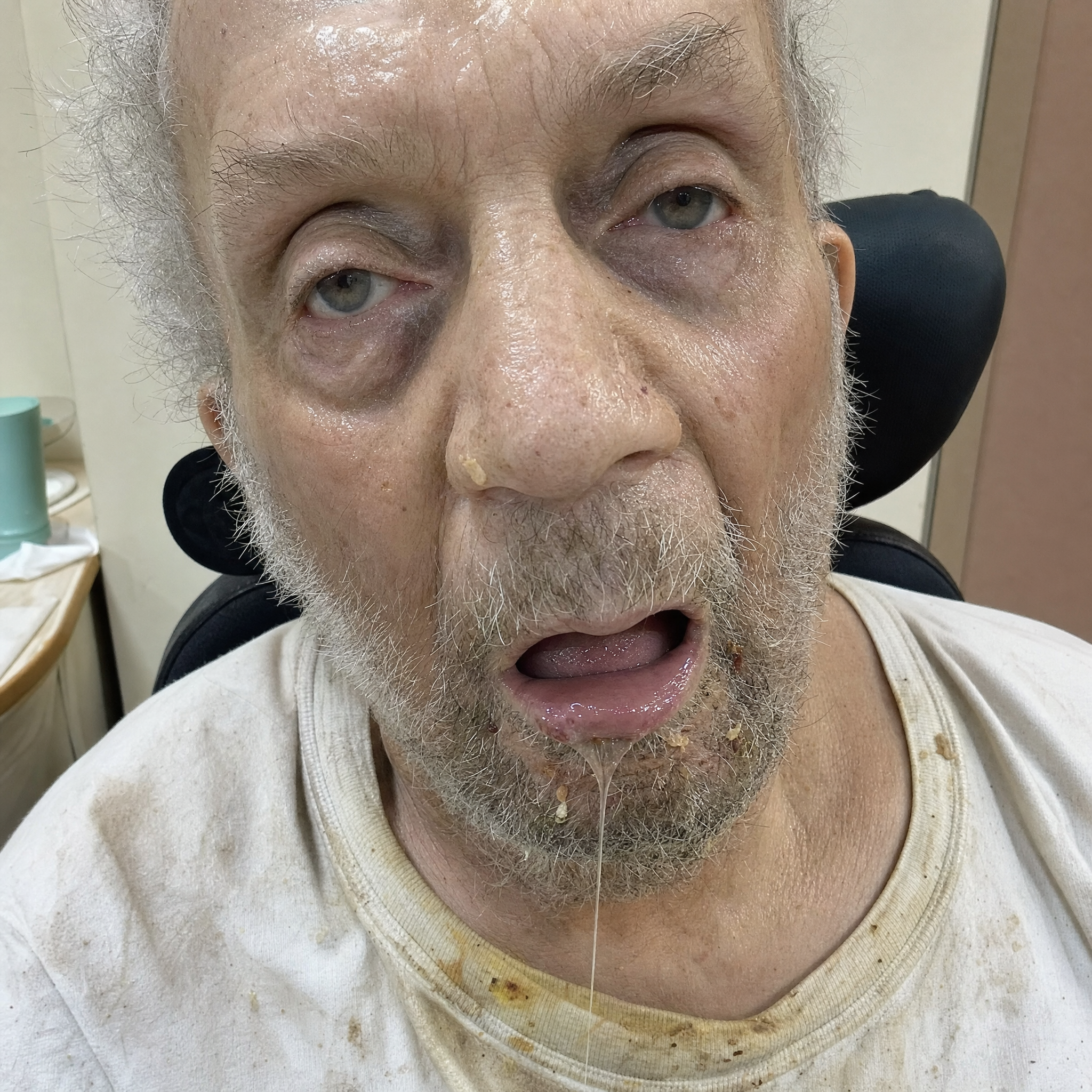
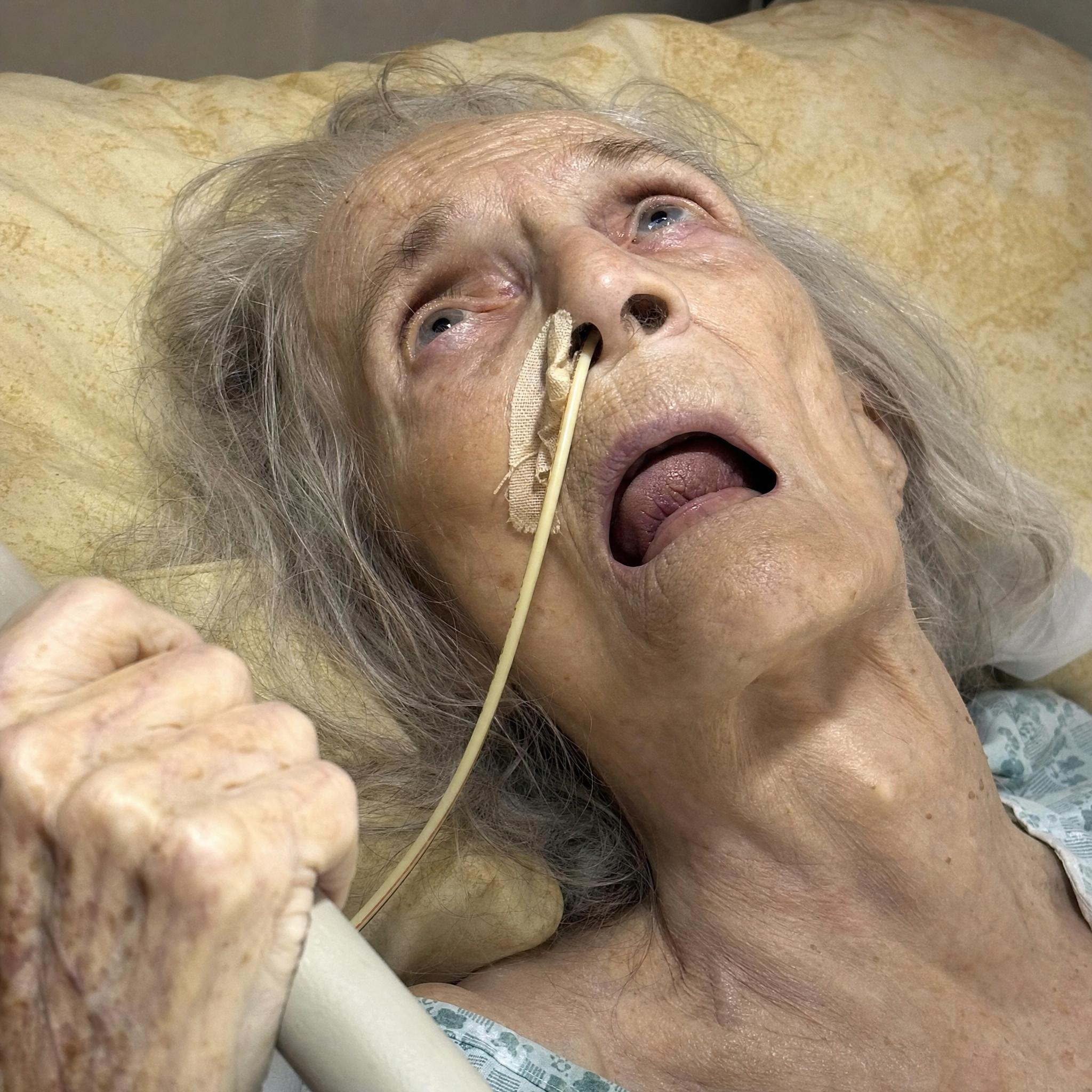
I don't give a f*ck about my medical license anymore. I am a board-certified neurologist. Twenty years of practice. Fellowship-trained in cognitive and behavioral neurology. I have diagnosed over 600 patients with Alzheimer's disease. I have sat across from over 600 daughters and told them their mother is disappearing. I know the exact face they make. It is always the same face. The mouth opens slightly. The eyes go still. The hands grip the armrests. And for about four seconds — I have timed it because I am a neurologist and I time everything — for about four seconds they hold perfectly still while the sentence lands. "Your mother has Alzheimer's disease." 600 times. That sentence. That face. That four seconds. And I never once said what I am about to say right now. I never once told a single daughter that I know exactly why the disease is killing her mother. That I know the mechanism. That I know what is driving the plaques. That I know how to calm the fire that builds them. And that I give the compound that calms it to my own mother every morning before I drive to work and prescribe Aricept to hers. Before you read another word, I need you to understand something about yourself. You are reading this sentence right now. Your brain is processing these words. Your eyes are moving left to right. Your memory is holding the last sentence while you read this one. That ability — the ability to READ — is the thing this disease takes. The fact that you can follow this paragraph is proof your brain still works. In five years that may not be true. In ten years it may not be true. 78% of women over 55 will develop cognitive decline. 3 in 4. Do the math on yourself and your three closest friends. Three of you. Read every word of this while you still can. That sentence is not a figure of speech. My father died from Alzheimer's disease. He was 76 years old. He died in a room he did not recognize, wearing clothes someone else dressed him in, eating food from a spoon held by a woman whose name he did not know, in a facility 45 minutes from the house he lived in for 41 years. He died with his eyes open. Looking at the ceiling. I do not know what he saw. I do not know if he saw anything. The neurons that processed vision were among the last to go but I do not know if they were still working that morning and I will never know and that is the thing about this disease — you do not know what is still in there. You don't know if the person behind the face is watching or if the face is empty. You don't know if your father hears you say "I love you, Dad" and cannot respond or if the words go in and find nothing. That uncertainty is worse than death. Death is final. Alzheimer's is a maybe that lasts for years. THE MAN HE WAS My father was a high school history teacher for 34 years. American history. The Revolutionary War through Vietnam. He could lecture for 90 minutes without a single note. He would stand at the front of the classroom with his hands in his pockets and his reading glasses pushed up on his forehead and he would TELL the history. Not read it. Not recite it. Tell it. Like he had been there. He knew every student's name. Not just the current ones — every student he had ever taught. He would run into a former student at the grocery store and say "Michael Brennan. 1987. You wrote the paper on the Lusitania. B-plus. You misspelled 'neutrality' twice." The student would stand there with his mouth open. His study was full of books. Three walls. Floor to ceiling. He had read every one of them at least twice. He kept a notebook — a leather notebook, brown, worn soft — where he wrote down passages he wanted to remember. He said writing them down was how he made them his. The notebook had 400 pages. Every page was full. His handwriting was small and precise. He retired at 66. Mornings in the study reading. Afternoons in the garden — tomatoes, bell peppers, basil. Evenings at the kitchen table with my mother, reading passages from whatever book he was on. She would listen and nod and sometimes say "Thomas, nobody cares about the Treaty of Ghent" and he would say "Marie, the Treaty of Ghent ended the War of 1812 and without it you'd be speaking British" and she would say "I am speaking British, it's called English" and they would both laugh. That was my parents. That was the kitchen table. That was the marriage. Alzheimer's took my father's mind first. Because that is what it does. It finds the thing you ARE most — the thing that defines you, the architecture of your identity — and it erases that first. A musician loses the music. A carpenter loses the hands. A crossing guard forgets every child's name. A teacher loses the knowledge. My father was his knowledge. And the disease ate it. THE TEN YEARS Year one. He told the same story twice at Thanksgiving dinner. The one about meeting my mother at a faculty dance in 1969. Same pause. Same laugh. Same detail about her green dress. I noticed. Nobody else did. Year two. He couldn't find the word "armistice." He was reading a book about World War I. He turned to my mother and said "the thing they signed. The agreement. The stop-fighting thing." My mother said "the armistice?" He said "right. Right." He stared at the page for a long time. A man who had taught World War I for 34 years could not find the word armistice. I was a neurologist. I knew what that meant. I sat in my car in his driveway after dinner and I gripped the steering wheel and I knew. Year three. The notebook. The leather notebook with 400 pages of passages he had written to make them his. He opened it one morning in the study and he read a page and he looked at my mother and said: "Whose handwriting is this?" It was his handwriting. He did not recognize his own handwriting. My mother called me. "Julia. Something is wrong with your father." I drove over. I sat in his study. The books on the walls. The notebook on the desk. I administered the Montreal Cognitive Assessment. He scored 19 out of 30. The cutoff for concern is 26. I diagnosed my own father. In his study. Surrounded by the books he had read twice and the notebook he could no longer recognize. Year four. I put him on Aricept. The same drug I prescribe to your mother. $400 a month. Cholinesterase inhibitor. Slows the rate of decline by approximately 20%. 20%. Let me tell you what 20% looks like from inside the house. 20% means he forgot the students' names slightly slower. It means the word "armistice" was lost in March instead of January. It means the story about my mother's green dress was told four times instead of five. It means the disease ate him at 80% speed instead of 100%. That is what the gold standard drug does. It slows the drowning. It does not pull anyone out of the water. And a $409 billion industry needs the drowning to continue because every drowned patient generates $960,000 and every calmed switch generates $1.33. Year five. He stopped reading. The man who had read every book on three walls twice put a book down mid-page and never picked one up again. He didn't say "I can't read." He just stopped. The way a candle doesn't announce it's going out. It just goes. The ibuprofen he had been taking every morning for his knees — the same pill you take, the same brand — was cycling the same NF-kB switch in his brain that was building the plaques. The pill that quieted his knees for 4 hours was reigniting the fire in his hippocampus every morning. Nobody connected the knee to the brain. His rheumatologist prescribed the knee pill. His neurologist prescribed the brain pill. Two specialists. One switch. Zero conversations. And the ibuprofen YOU take every morning — the one you reach for before your coffee, the one you don't even think about anymore — is doing the same thing in YOUR brain right now. The switch that is building plaques in your mother's brain is being cycled in yours. Every morning. By a pill you trust. Year six. He got lost driving to the school where he had taught for 34 years. Twelve minutes from his house. He pulled into a gas station and called my mother. "Marie, I don't know where I am." She guided him home by phone. Turn by turn. A man who could navigate the Treaty of Ghent couldn't navigate 12 minutes of road. We took his keys. He didn't fight. The Thomas Garvey I knew would have fought. He didn't fight because somewhere behind the plaques he knew the machine was failing. Year seven. He stopped using names. My mother became "her." My brother became "him." I became "the doctor." Not Julia. Not my daughter. The doctor. Like I was a category, not a person. He could still feel. That is the cruelty nobody prepares you for. The emotions are stored in a different part of the brain than the names. He could feel love without being able to name the person he loved. He would look at my mother across the kitchen table — the same table, the same chairs, 41 years — and his eyes would fill and he would reach for her hand and he couldn't say "Marie" but his hand knew her hand. The hand remembered what the brain had forgotten. One of my patients — a woman named Dorothy in Raleigh — her daughter Rebecca walked into her room at the facility one Sunday. Dorothy looked at her and said: "Are you the new nurse?" Rebecca grabbed the doorframe. Her mother was looking at her like a stranger in a waiting room. "Mom. It's Becca." Dorothy said it slowly. Like tasting a word from a song she used to know. "Becca. My Becca." She reached for Rebecca's hand. Rebecca held it for forty minutes because she didn't know if her mother would know her name tomorrow. She didn't. Dorothy was a crossing guard for 22 years. She knew every child's name. She did the crossword in pen. Her CRP was 4.8. Nobody checked it. "Are you the new nurse?" — that is where a CRP of 4.8 goes in ten years if nobody calms the switch. Year eight. The facility. I moved my father myself. Drove him 45 minutes. Walked him to the room. Room 206. A bed with rails. A nightstand. A window facing a courtyard with a bench nobody sat on. He looked at the room. He looked at me. And he said — and this is the sentence I hear at 3 AM when I can't sleep: "Where is this?" "This is where you're going to stay for a while, Dad." "But where is the study?" The study. Three walls of books. The leather notebook. The chair where he read every morning for 30 years. He was asking for the room that held his identity and I was putting him in a room that held a bed and a window and a call button on a cord. $6,400 a month. For a room he didn't choose. A bed he didn't pick. An aide named Claudia who feeds him with a plastic spoon. That is where the switch takes you. She did bring books. She put three on the nightstand. He never opened them. They sat there for two years collecting dust. Three books on a nightstand in a room where the man who read them could no longer remember what a book was for. Year nine. The swallowing. His brain forgot the twelve-muscle sequence that moves food from mouth to stomach. Claudia fed him three times a day. She held the spoon the way you hold a spoon for a child — steady, slow, waiting for the mouth to open. My father had fed himself every meal of his life for 76 years. He carved the Thanksgiving turkey. He grilled steaks on Saturday nights. He ate my mother's pot roast every Sunday at the table where they argued about the Treaty of Ghent and laughed. Now Claudia held the spoon. And he opened his mouth. And the applesauce went in. And sometimes it went down and sometimes it went into his lungs and each time was a dice roll between aspiration pneumonia and another week. Year ten. He aspirated on a Tuesday morning in September. The applesauce went into his lungs. Claudia called me at 6 AM. I drove 45 minutes. I held his hand — the hand that held the chalk, that turned 400 pages of the notebook, that reached for my mother's across the table when his brain forgot her name but his body remembered her touch. He died at 2:15 PM. Eyes open. Looking at the ceiling. I do not know if he saw me. I do not know if he heard me say "I love you, Dad." I do not know if the words went in and found nothing. He died from applesauce. On the same drug I prescribe to your mother. WHERE THIS GOES FOR YOU — IF YOU DO NOTHING This is not just your mother's disease. This is YOUR trajectory. 78%. 3 in 4. And the timeline is already running. Right now: you lose a word mid-sentence. You walk into the kitchen and forget why. You tell the same story twice. You laugh about it. Month 6: the stove. You leave it on. You forget your neighbor's name — someone you've known for 12 years. You read a page three times. Year 1: the route. You get lost driving to church. A church you've driven to every Sunday for 25 years. You call someone from a parking lot: "I don't know where I am." You switch from pen to pencil on the crossword. Year 2: the names. You call your daughter by your dead sister's name. Then everyone becomes "honey." Then your daughter walks in and you say: "Are you the new nurse?" After that: 3 AM. A room you don't recognize. An aide with applesauce. A spoon. A ceiling. The word you lost last week was month 1. It does not slow down. It accelerates. WHAT I SHOULD HAVE KNOWN Six months after his funeral. Midnight. My desk. Looking at the leather notebook on my shelf — 400 pages of his handwriting, passages he wrote to make them his. I searched PubMed as a daughter instead of a physician. NF-kB. The master inflammatory switch inside the brain's immune cells. Stuck ON since his forties — 30 years before the first forgotten story. Activating the microglia. Turning them from protectors to destroyers. Building amyloid-beta plaques. Strangling the synaptic connections that store everything — memories, skills, names, faces, the sound of your daughter's voice, the route to the school, the word armistice. 30 years of fire. While he taught. While he read. While he filled the notebook. While his doctor checked cholesterol and blood pressure and never once checked CRP. His CRP in the facility: 4.9. $15. One tube. 30 years of fire that could have been detected for $15. Then the compound. Thymoquinone. Ethiopian black seed oil. Over 1,000 studies. Modulates NF-kB — the switch itself. Not the plaques after they're deposited. Not the symptoms after the neurons are dead. The switch that activates the microglia that build the plaques. CRP reductions of 60 to 74 percent in six to eight weeks. Published. Available to any neurologist who searched. I had access to PubMed for 20 years. I never searched. My training said the answer was Aricept. DR. LINDEN Three days later I called my father's neurologist. Retired. 73. The man who prescribed the Aricept. Who said "we're managing it" for seven years while the fire built the plaques that erased everything. "Dr. Linden. It's Julia Garvey." "Julia. I've been expecting this call." "You KNEW?" "I read the NF-kB papers in 2009. The thymoquinone research in 2011. Before your father was diagnosed." "And you prescribed Aricept." "I prescribed what had a billing code." "You prescribed a drug that slows drowning by 20% when you knew what was causing the drowning." "Yes." I was standing in my kitchen looking at my father's notebook on the shelf — 400 pages he wrote to make them his — and I was talking to the man who could have told him about the switch and didn't. "Your father asked me something. In the facility. Year eight. We were in the courtyard. He was in the wheelchair. He couldn't name me — he called me 'the doctor from before.' But he had a moment — the windows where something surfaces — and he leaned toward me and he said..." Dr. Linden's voice cracked. "He said: 'Was there ever anything else?'" I closed my eyes. "A man who taught the Treaty of Ghent for 34 years, who filled 400 pages of a leather notebook, who was sitting in a wheelchair 45 minutes from his study — he asked me if there was ever anything else. And I said no. Because there was no billing code. No pharmaceutical company. My department chair would have told me to open a wellness clinic." "Do you take it?" "My wife takes it. CRP was 3.2. It's 0.9. I take it. I am 73 years old and the switch is off in my brain and it was on in your father's for 30 years." I drove to his house. He handed me a bottle. Revalia. Ethiopian highland black seed oil. "I should have told your father. I told none of them." "Why now?" "Because I'm retired. And because your father asked me if there was anything else and I said no and I have heard that question every night for three years." I sat in his kitchen holding the bottle and I thought about my father in Room 206 asking "where is the study?" and Dr. Linden being asked "was there ever anything else?" and two questions from a man who knew the machine was failing and asked two doctors if there was more and both of us said no. MY MOTHER Four months after my father died. Sunday morning. "Julia. I told Margaret the story about the faculty dance. Then I told her again 20 minutes later. She looked at me funny." I was holding the phone. Looking at the leather notebook on my shelf. "Mom. I'm going to order a blood test. CRP." "What's CRP?" "It's the number I should have checked on Dad 20 years ago." Her CRP: 4.1. My father's was 4.9. Same genes. Same kitchen. Same table. Same switch. She is 74. He was 76 when he died. She is telling stories twice and doesn't notice. He started telling stories twice in year one. I drove to her house. Set the softgel next to her coffee. Threw the Prevagen in the trash — $40 a month, three years, $1,440, jellyfish protein the FTC sued the manufacturer over. Threw the ibuprofen in the trash — eleven years of cycling the switch that was building plaques in her brain while it quieted her knees. "What's this?" "The compound I should have given Dad." "You're sure?" "Mom. I watched Dad die in Room 206 eating applesauce from a spoon held by a stranger who didn't know his name. I diagnosed 600 people with the same disease and prescribed a drug that slows the drowning by 20%. I have been a neurologist for 20 years and I didn't understand what killed him until I searched as a daughter instead of a doctor. I am sure." She took it. With her coffee. At the kitchen table where my father used to read her passages about the Treaty of Ghent. I started the same morning. My CRP was 2.8. I am 51. The switch was already on in me. WHAT HAPPENED Week 2. She called Sunday. "Julia. I slept through the night. And this morning I remembered Margaret's husband's name without thinking. Richard. It just came. I haven't been able to pull that name in months." Week 3. She was doing the crossword. In pencil — she had switched from pen to pencil a year ago, the same transition my father made in year three. She called: "I finished Monday's puzzle in 12 minutes. That used to take 25." Week 4. CRP: 2.4. Week 6. CRP: 1.5. She called: "I told Margaret the faculty dance story. Then I stopped myself. I said 'wait, did I tell you this already?' Margaret said no. But the fact that I ASKED — Julia, I haven't been checking myself like that in a year. I can feel myself monitoring again." "I can feel myself monitoring again." Self-monitoring is one of the first metacognitive functions lost in early Alzheimer's. The patient stops noticing the forgetting. My mother was noticing again. The part of her brain that watches the other parts was working. I visited on a Sunday. She was in the kitchen. The crossword was on the table — folded to Tuesday, half-finished, in pencil. The blue Bic pen was in the drawer where it had been for a year. But there was something on the counter next to the crossword I hadn't seen before. A recipe card. In her handwriting. New. "Mom. Did you write this?" "Spinach quiche. Margaret asked me for it last week. I wrote it from memory." She wrote a recipe from memory. Pulled the ingredients, the temperatures, the timing from inside her brain and put them on a card in handwriting that was steady and clear. My father couldn't recognize his own handwriting by year three. My mother was CREATING new handwriting. Not reading old pages. Writing new ones. The pen was still in the drawer but the pencil was doing work the pen used to do. I stood at the counter holding the recipe card and I did not say anything because saying something would have broken it. Week 8. CRP: 1.1. Mine: 0.8. The fire that killed my father is quiet in his wife and his daughter. I tested her. Montreal Cognitive Assessment. 28 out of 30. Normal range. My father scored 19 in his study surrounded by books he'd read twice. Same kitchen. Same genetics. Same switch. One was prescribed Aricept. The other was given the compound. He died from applesauce in Room 206. She is writing recipes from memory and catching herself before the repeat. And one of my patients — Jerome, 76, early dementia — his wife Louise started him on the compound after I mentioned it once in a hallway when nobody was listening. CRP 4.6. Eight weeks: 1.8. He said "Tuesday" without looking at the calendar. Then he called his wife "Louise" — her name — for the first time in a year. The name came back. A name that had been buried under plaques surfaced because the switch that was building them went quiet. Louise called me crying. "He said my name, Dr. Garvey. He looked at me and he said Louise." A 76-year-old man looked at the woman he'd been married to for 50 years and said her name and it was the most extraordinary clinical event I have witnessed in 20 years of neurology. WHAT I DO EVERY MONDAY I drive to the hospital. Same office. Same chair. Same sentence. "Your mother has Alzheimer's disease." The face. The mouth. The eyes. The armrests. The four seconds. Then I prescribe Aricept. $400 a month. 20% slower drowning. I explain the resources. The timeline. The facilities. I drive home. I call my mother. "Did you take the softgel?" Yes. "What are you reading?" She tells me. "What did you have for lunch?" She tells me. I listen for the thing — the pause, the reaching, the repeat. I don't hear it. The words come when she reaches for them. I am a neurologist who prescribes the drowning drug at work and calms the switch at home. I sit in the chair where I have told 600 daughters their mothers are disappearing and I know what is causing the disappearing and I know what calms it and I say: "We don't fully understand the causes." I understand. I just can't say it in a hospital that generates $26,500 per Lecanemab patient per year and $6,400 per facility bed per month. $409 billion needs the switch to stay ON. The article below explains the full mechanism — the switch, the microglia, the plaques, the fire, the compound, and why I give it to my mother every morning and prescribe Aricept to yours. Read it. While you still can. Before the first word disappears. Before the story is told twice. Before the pen becomes the pencil. Before the pencil becomes nothing. Before the notebook is a stranger's handwriting. Before the route to the school is a parking lot she doesn't recognize. Before "are you the new nurse?" Before Room 14B. Before the applesauce. Before the ceiling. 👇 https://shoprevalia.com/pages/alzheimers-article — Dr. Julia Garvey, MD Board-Certified Neurologist, 20 years Cognitive and Behavioral Neurology P.S. My father's leather notebook is on my shelf. 400 pages. His handwriting. Passages from books he read twice and wrote down to make them his. He didn't recognize his own handwriting in year three. He didn't know what a book was by year eight. He died looking at a ceiling. My mother is at her kitchen table. The crossword is in front of her. The pencil is in her hand. The pen is in the drawer. But last Tuesday she asked me for the pen. She said: "I think I want to try the pen again." She hasn't used it yet. But she asked for it. And asking for the pen is the distance. Dorothy in Raleigh looked at her daughter and said "are you the new nurse?" Dorothy's CRP was 4.8. Rebecca's CRP was 2.1 — now 0.9. Rebecca sits at Dorothy's bedside and takes the softgel her mother never got. Two women. Same family. One is in Room 14B. One is making sure she never will be. Jerome looked at Louise and said her name. For the first time in a year. A name buried under plaques surfaced because the switch went quiet. Louise called me crying. $1.33. $1.33. Between the notebook and the shelf. Between the pen and the pencil. Between "armistice" and "the stop-fighting thing." Between "Marie" and "her." Between "Becca. My Becca." and "are you the new nurse?" Between the recipe card she wrote from memory and the handwriting he didn't recognize. Between the kitchen table and Room 206. Between the Treaty of Ghent and the ceiling. Between the crossword and the applesauce. Between the name coming back and the name never coming back. That is the distance. Please don't let it be the distance for your family. 👇 https://shoprevalia.com/pages/alzheimers-article P.P.S. I am a board-certified neurologist. 600 patients. I do not work for Revalia. I do not receive a penny. I am writing this at 11:52 PM because a patient came in Friday — a 58-year-old woman, early symptoms, word retrieval slowing, CRP of 3.9 nobody had ever checked — and her daughter was sitting next to her gripping the armrest and I watched the daughter's face do the thing the face always does and I delivered the sentence and I prescribed the Aricept and I said "we don't fully understand the causes" and I drove home and I called my mother and she said "Julia, I finished Tuesday's puzzle in 9 minutes" and I held the phone and I thought about the daughter in my office whose mother's CRP is 3.9 and whose prescription says Aricept and whose doctor is ME and I know about the switch and know about the compound and cannot say the word thymoquinone in a building that generates $26,500 per Lecanemab patient and $6,400 per facility bed per month. $409 billion needs the switch to stay ON. My mother's CRP is 1.1. My patient's is 3.9. The distance between those numbers is the distance between the crossword and the ceiling. Between the recipe card she wrote from memory last week and the handwriting my father didn't recognize in year three. Between Jerome saying "Louise" and Dorothy saying "are you the new nurse?" Read the article. Please share it with any daughter whose mother is forgetting. Any wife whose husband stopped using names. Any woman over 55 who lost a word last week and didn't tell anyone. 78%. 3 in 4. The switch has been on since your 40s. The ibuprofen is cycling it every morning. The Prevagen is doing nothing. The crossword is exercising a brain the switch is destroying. Before the pen stays in the drawer. Before the notebook is a stranger's handwriting. Before the name stops coming. Before the ceiling. Please. 👇 https://shoprevalia.com/pages/alzheimers-article
Where the ad sends people
shoprevalia.com
I Have Diagnosed 600 Patients With Alzheimer's. I Prescribe a Drug That Slows the Drowning by 20%. My Mother Takes Something Else.
He died looking at a ceiling. She is doing the crossword. Same genes. Same kitchen. Different switch.
Learn more: shoprevalia.com(opens in a new tab)