
Inactive· since Apr 28, 2026
- 15
- days it ran
- 0
- relaunches
Ad copy
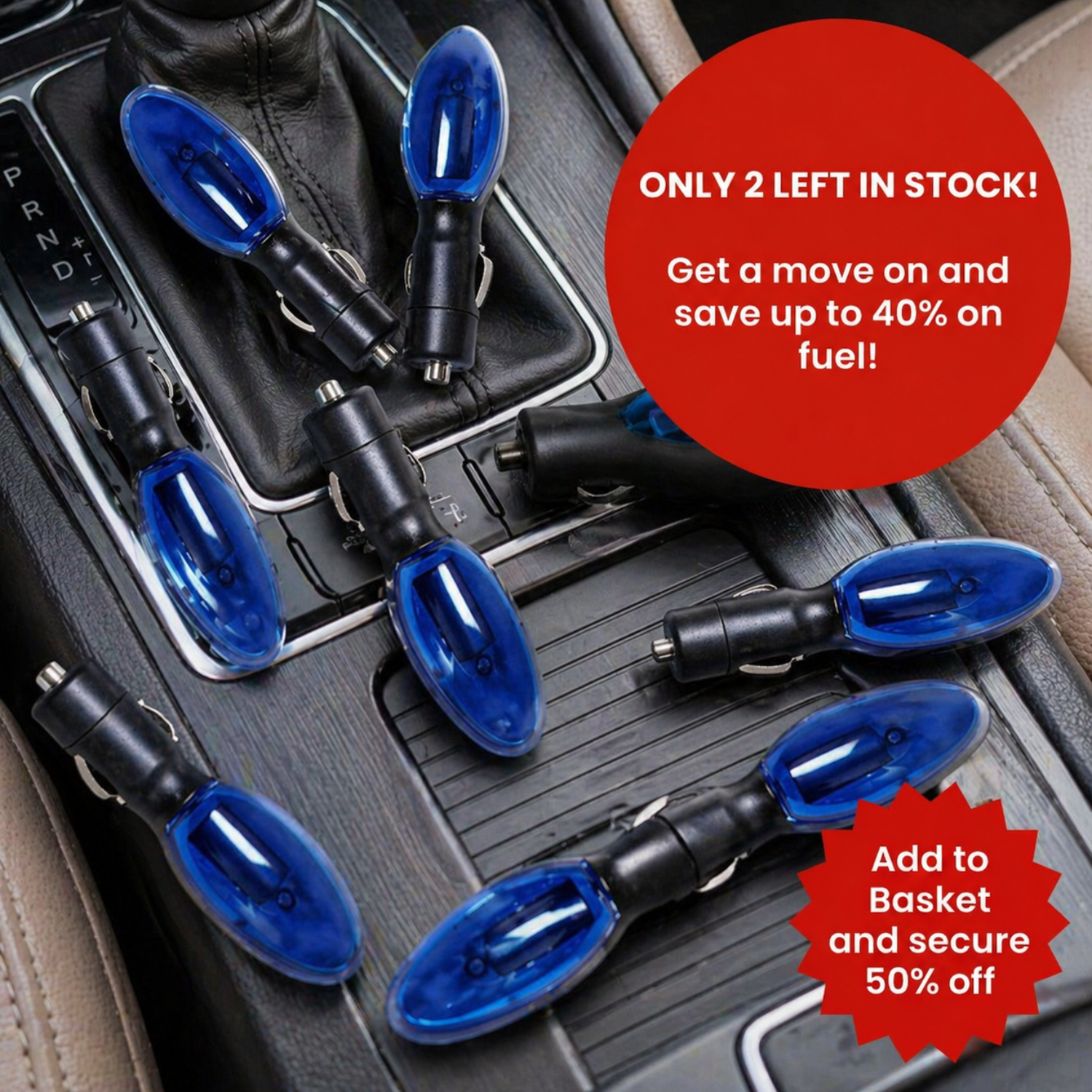
I was sitting in my driveway at 6:47 AM, staring at the fuel gauge, and I felt something break inside me. ======== It had dipped below a quarter tank again. Third time that week. I hadn't driven anywhere unusual—just work, groceries, my daughter's soccer practice. The same routes I'd been driving for years. But lately, it felt like I was living at the pump. I'm a mechanic. I've spent two decades under hoods, diagnosing misfires and chasing down engine codes. I know cars. I know fuel systems. And I knew something wasn't adding up. So I sat there in the cold, engine idling, watching my breath fog up the windshield, and I made a decision: I was going to figure out what was really going on. ======== For many of us, the gas station has become this quiet, suffocating routine. You pull in, you swipe your card, you watch the numbers climb, and you feel this dull ache in your chest because you know you were just here two days ago. You start doing the math in your head. How much is this costing per month? Per year? You think about the vacation you didn't take. The repairs you put off. The extra shifts you picked up just to keep the tank full. And the worst part? You blame yourself. You think maybe you're driving too aggressively. Maybe your car's getting old. Maybe you're imagining it. But you're not imagining it. I started comparing fuel consumption data across different makes and models, spanning back decades. I pulled service records. I talked to other mechanics. I dug into engine efficiency reports that most people never see. And what I found made my hands shake. ======== Modern vehicles—cars built after the early 2000s—were consuming significantly more fuel than older models with similar engine sizes. Not a little more. A lot more. At first, I thought it was just heavier cars, more electronics, safety features. But the numbers didn't support that. The inefficiency was too consistent. Too deliberate. It felt like I was staring at a pattern no one was supposed to notice. I started losing sleep over it. I'd wake up at 3 AM with my mind racing, trying to piece it together. My wife asked if I was okay. I told her I was fine. But I wasn't. I was angry. Because I realized that for years—maybe decades—we'd been paying for something that didn't have to happen. ======== I tried everything to improve my own fuel consumption. I changed my driving habits. I used premium fuel. I replaced air filters, cleaned injectors, checked tire pressure religiously. I even switched to synthetic oil, thinking maybe that would help. Nothing worked. The fuel gauge still dropped like a stone. The trips to the pump still came too fast. My monthly fuel bill still made me wince. And I wasn't alone. I started hearing the same frustration from customers, from friends, from people at the grocery store. Everyone felt it. No one could explain it. That's when I met Christian. ======== Christian was an automotive engineer from Detroit. We connected through a forum where people were sharing fuel economy data and trying to make sense of the same patterns I'd noticed. He reached out to me privately one night. Said he had something to show me. Something that would explain everything. I was skeptical. I'd heard plenty of theories by that point—some bordering on paranoid, others just plain wrong. But Christian wasn't like that. He was methodical. Careful. He had data. And what he shared with me changed everything. He explained that modern vehicles are designed with a specific fuel combustion process—one that's controlled by the Engine Control Unit, or ECU. The ECU manages injection timing, air-fuel ratios, all the variables that determine how efficiently your engine burns fuel. But here's the part that made my stomach turn: the ECU also runs hidden protocols that prevent complete combustion. On purpose. For many, it feels like betrayal when you learn that the car you trusted, the machine you depend on every single day, was programmed to waste your money. ======== Christian had developed a device. Something small, simple, that could override those protocols and restore full combustion. He called it EcoDrive. He wasn't trying to sell me anything. He just wanted to know if I'd test it. As a mechanic. As someone who understood engines. I said yes immediately. The device arrived three days later. It was smaller than I expected—about the size of a deck of cards, matte black, with a single port on one end. The build quality was solid. It felt engineered, not thrown together. I opened my driver's side door, crouched down, and located the OBD2 port under the dashboard. Every car made after 1996 has one. I'd plugged diagnostic tools into that port a thousand times. This time felt different. I slid EcoDrive into the port. It clicked into place. A small LED blinked green. That was it. No installation. No wiring. No complicated setup. I started the car. Everything felt normal. No warning lights. No strange sounds. Just... normal. ======== I didn't expect anything dramatic. I've tested enough so-called "miracle devices" to know better. Most of them do nothing. Some actually make things worse. But I committed to tracking my fuel consumption carefully. I reset my trip odometer. I filled the tank completely. I drove my usual routes—work, errands, soccer practice. And I waited. The first few days, I didn't notice much. Maybe a slight improvement, but nothing I could measure with confidence. I started thinking this might be another dead end. Then, on day six, I realized something: I still hadn't refueled. Normally, by day six, I'd have filled up at least once, maybe twice. But my gauge was still sitting just above half. I checked the odometer. I'd driven over 220 miles. That shouldn't have been possible. ======== I kept driving. Kept tracking. By day ten, I finally needed to refuel. I'd gone 387 miles on a single tank. For context: before EcoDrive, I was averaging around 240 miles per tank. Same car. Same routes. Same driving style. I was getting back nearly 150 extra miles per tank. I sat in the gas station parking lot after filling up, staring at the receipt, doing the math. If I was filling up twice a week before, and now I was filling up every ten days, that was... that was a lot of money. Hundreds of dollars a month. Thousands a year. And it wasn't just the money. It was the time. The mental load. The constant low-level anxiety of wondering if you'd make it to payday before the tank hit empty again. For many, it feels like finally being able to breathe. ======== I called Christian. Told him the results. He wasn't surprised. He'd seen the same thing in his own testing, and in reports from other early users. He explained the science in terms I could understand: EcoDrive works by counteracting the incomplete combustion programming in the ECU. It sends targeted electromagnetic signals that realign fuel molecules at a specific wavelength, allowing them to burn completely instead of partially. Think of it like this: imagine you're trying to burn a log, but someone keeps blowing out the flame just before it catches fully. You're wasting wood. Wasting heat. Wasting effort. EcoDrive stops that interference. It lets the flame burn the way it's supposed to. The device doesn't modify your car's computer. It doesn't mess with wiring. It just overrides the inefficiency that's been built in since the early 2000s. And the results speak for themselves. ======== I started recommending EcoDrive to customers. Not as a mechanic trying to upsell—I didn't even stock it in my shop. I just told people about it. Gave them the website. Told them to try it and see for themselves. The feedback was overwhelming. One customer, a single mom who drove a 2006 Camry, told me she cried the first time she realized she didn't have to refuel on her way to work. She'd been stretching every dollar, skipping meals some days to make sure her kids had enough. Getting back that fuel efficiency meant she could finally breathe a little easier. Another guy, a delivery driver, said EcoDrive saved him over $300 a month. He bought two more devices—one for his wife's car, one for his son's truck. For many, it feels like being let in on a secret that should never have been kept. ======== But here's the part that keeps me up at night: this device is getting harder to find. Christian told me that shortly after EcoDrive started gaining attention, production issues began. Suppliers suddenly couldn't fulfill orders. Shipping delays. Inventory shortages. Some retailers pulled it from their listings without explanation. It's not officially banned. There's no law against using it. But there's pressure. Quiet pressure. The kind that comes from organizations that have a lot to lose if people stop wasting fuel. And I get it. If millions of people suddenly started using a device that cuts fuel consumption by 30 to 40 percent, that's billions of dollars in lost revenue. For some industries, that's an existential threat. So they do what they can to make it go away. ======== I think about that morning in my driveway a lot. Staring at the fuel gauge, feeling helpless, wondering if I was just imagining the whole thing. I wasn't imagining it. And neither are you. For many, it feels like finally having proof that you weren't crazy. That the frustration you felt every time you swiped your card at the pump was justified. That you deserved better. EcoDrive gave me back something I didn't even realize I'd lost: control. Control over my fuel costs. Control over my time. Control over the feeling that I was being taken advantage of every single day. And the thing is, it's so simple. You don't need a mechanic. You don't need tools. You just plug it in, and it works. I've installed it in my wife's car. My daughter's car. My work truck. Every vehicle I own now has one. ======== Sometimes I wonder why we don't talk about this more. Why isn't this common knowledge? Why aren't people angrier? Maybe it's because we've been conditioned to accept it. To think that rising fuel costs are just part of life. That inefficiency is inevitable. That we don't have a choice. But we do have a choice. And for many, making that choice feels like taking back a piece of themselves. ======== I don't know how long EcoDrive will stay available. Christian's doing everything he can to keep production going, but the obstacles are real. Inventory runs out fast. Restocks take weeks, sometimes months. If you're reading this and something inside you is saying, "Yes, I've felt that exact same frustration," then I'd encourage you to look into it. Not because I'm selling anything. Not because I have something to gain. But because I know what it's like to feel trapped by something you can't control. And I know what it feels like to finally break free. For many, it feels like hope. ======== I still work on cars every day. I still talk to customers who are struggling with fuel costs, who are tired of feeling like they're being squeezed from every direction. And when I can, I tell them what I learned. I tell them there's a reason their fuel gauge drops faster than it should. I tell them it's not their fault. And I tell them there's something they can do about it. Because we all deserve to drive without that constant weight on our shoulders. We all deserve to feel like we're in control of our own lives. And sometimes, all it takes is one small device to change everything.
Why I Finally Stopped Trusting Gas Stations
Did you know there's a new portable device that saves fuel, optimizes your car's efficiency, and puts money back in your pocket at the pump?
SEE DETAILSLike this ad? Make it yours.
Crush rebuilds this exact creative around your product — your brand, your colors, your offer — in about a minute.