Sarah Mitchell
Sarah Mitchell Facebook ad: “My confidence wasn't gone. It was buried.”
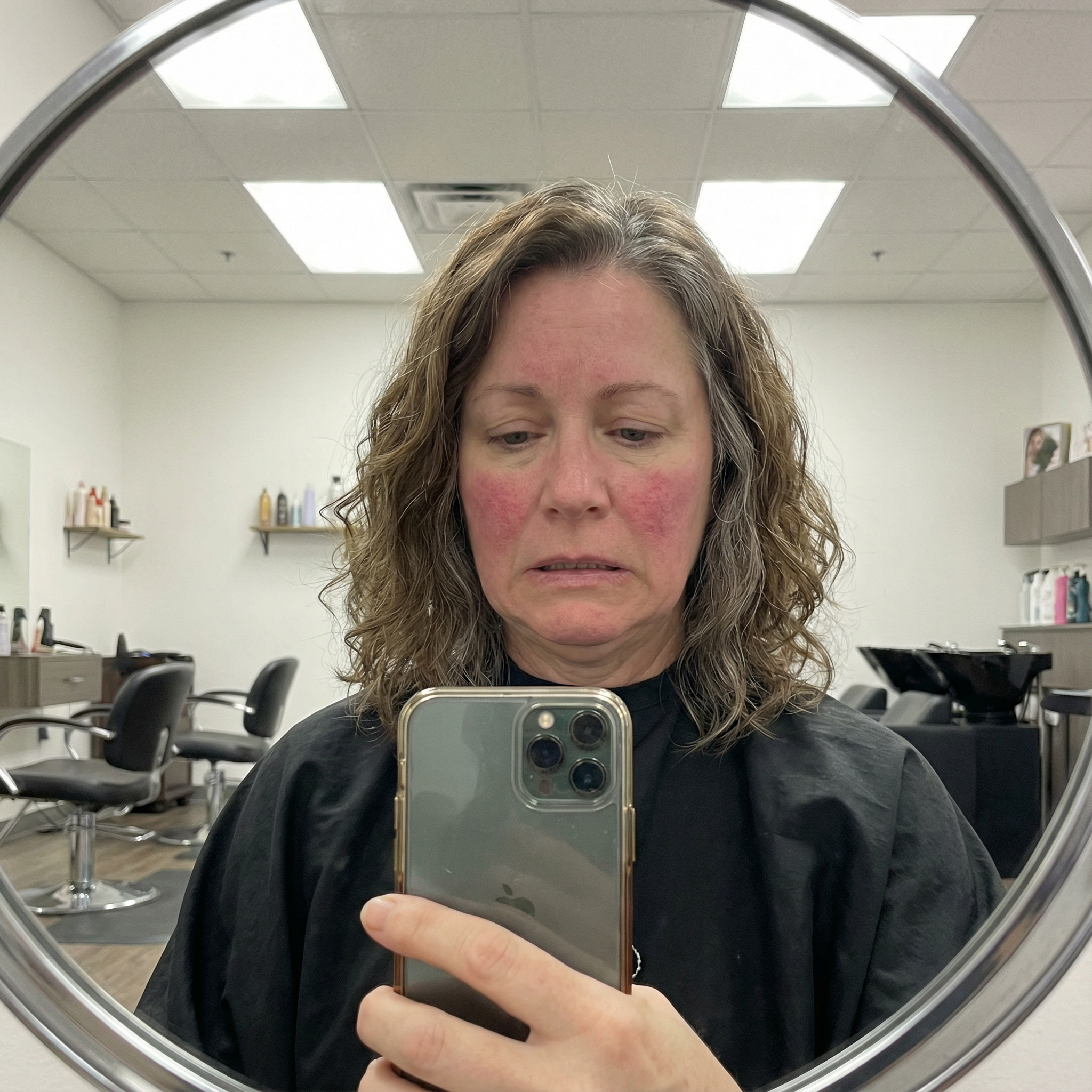
Ran for 46 days, from January 9 to February 24, 2026, the last day Crush saw it.
Run by Sarah Mitchell on Facebook. Crush is not the advertiser and does not verify its claims. See this ad in Meta's Ad Library(opens in a new tab)
Want an ad like this for your product?
Crush makes new ad images for your product from this ad: your logo, your product photo, your offer.
Trials from $19.95 USD, then $79.95 USD a month. Cancel anytime.
About this ad
- Meta Ad Library ID
- 5310276995864360
- Platforms
- Facebook, Instagram, Audience Network, Messenger and Threads
- Relaunches
- 0
Ad text
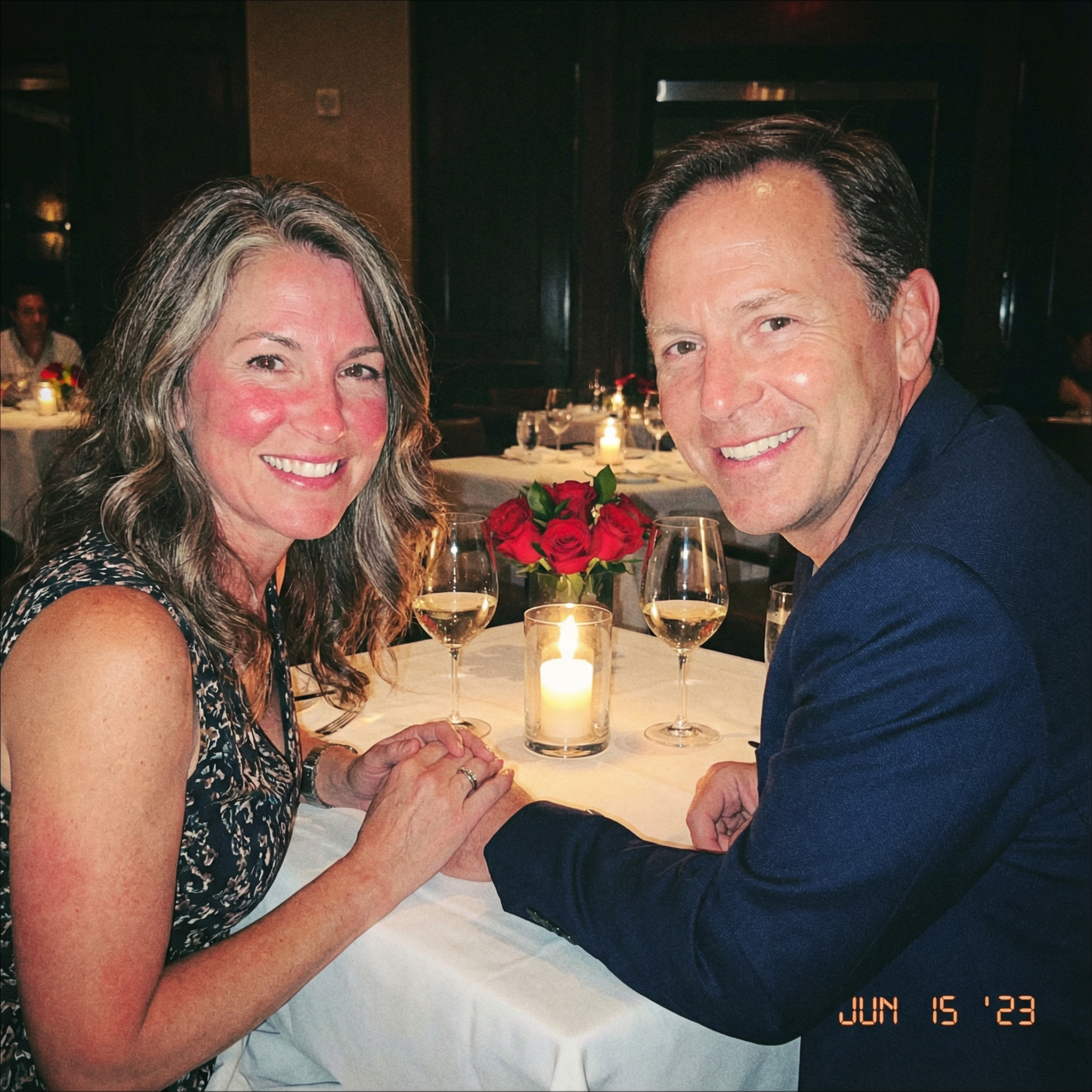
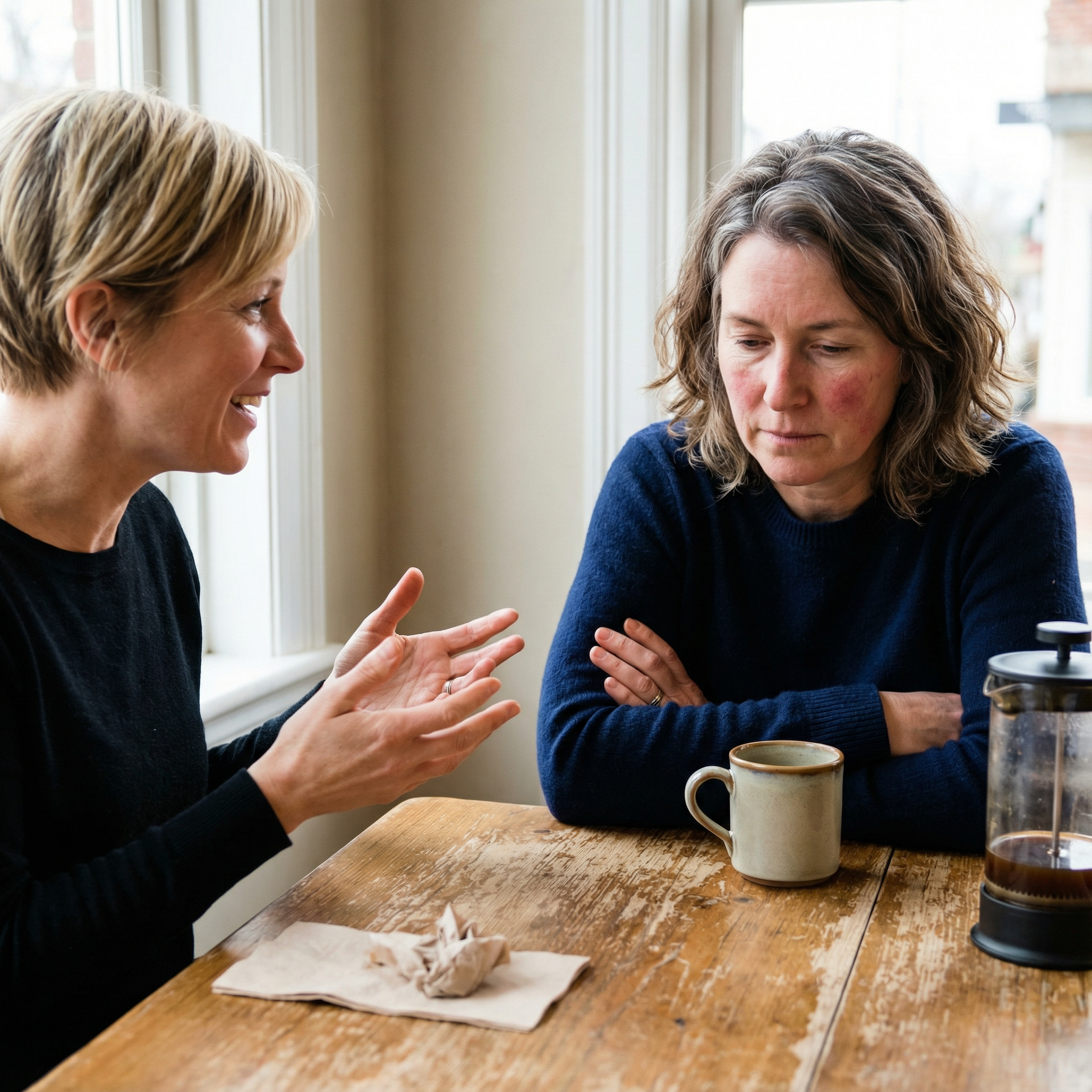
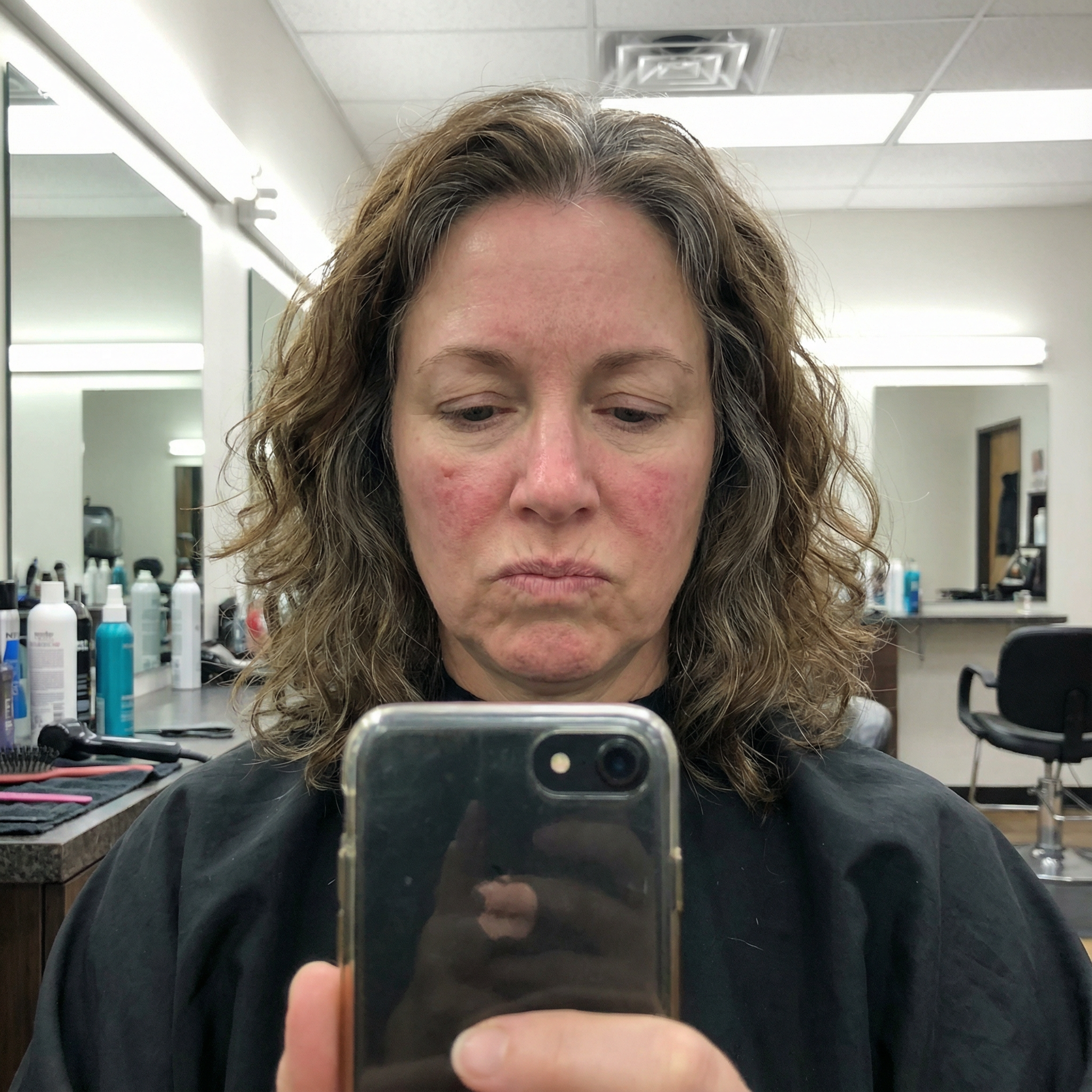
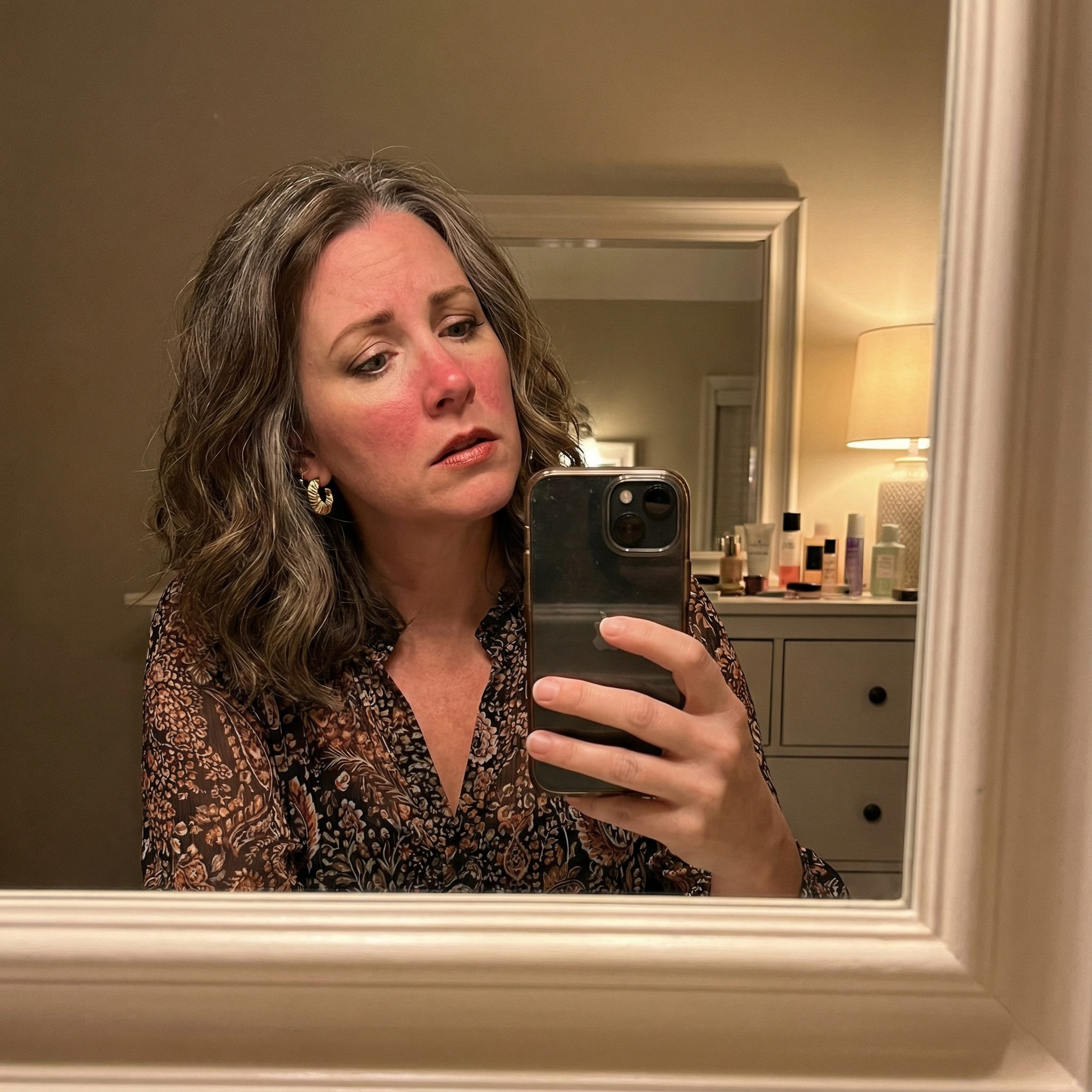
My husband said something last month that broke my heart. We were getting ready for his colleague's retirement dinner. I was standing in front of the mirror, trying different angles, calculating which side of my face looked less red, wondering if the lighting at the restaurant would be forgiving. He watched me for a moment. Then he said, quietly: "I miss when you used to just get ready and go." He wasn't being cruel. He was being honest. And that's what made it worse. Because he was right. I used to just get ready and go. I used to be able to look in a mirror without bracing myself. I used to have conversations without wondering if my face was flushing. I used to look people in the eye. I don't remember the exact moment I stopped. There wasn't a single day when I woke up and decided I couldn't do it anymore. It happened slowly, then all at once — like a tide going out so gradually you don't notice until you're standing on dry sand wondering where the water went. Now I look at foreheads. Noses. The space just past someone's left ear. Anywhere but their eyes, because their eyes might drift to my cheeks, and then I'd see them see it, and something inside me would shrink a little smaller. My name is Sarah. I'm 56 years old. And somewhere in the last seven years, rosacea took my confidence so gradually I didn't notice until it was gone. If you recognise yourself in any of this, keep reading: → You avoid eye contact because you're afraid people are looking at your redness → You dread haircuts because you have to sit under bright lights and look at yourself → You've considered leaving a people-facing job because of how self-conscious you feel → You can't enjoy events because you're obsessing over how your face looks → You delete photos of yourself before anyone else can see them → You check mirrors compulsively — not out of vanity, but out of fear → You use makeup as armour, but the redness still peeps through → You flush during conversations and it "puts you back in that place" → You look at old photos and think "if only I'd known how good I had it" → You've started believing this is just who you are now I was all of these. For seven years. I told myself my confidence was gone. That rosacea had taken it and I didn't know how to get it back. I was wrong. My confidence wasn't gone. It was buried. And when my skin finally calmed down, it came back on its own — without affirmations, without therapy, without learning to "accept myself." It just returned. Like it had been waiting the whole time. Let me tell you how it happened. The erosion started small. The first time I tilted my head down in a photo so the light wouldn't catch my cheeks. The first time I said no to a video call and made up a reason about bad WiFi. The first time I sat in a meeting thinking about my face instead of listening to what was being said. Small moments. Easy to dismiss. Everyone has bad skin days, right? But the bad days became weeks. The weeks became months. And somewhere along the way, I stopped being someone who occasionally worried about her skin and became someone whose entire life was organised around it. Getting a haircut became torture. Forty-five minutes under bright lights, staring at my own reflection while a stranger stood inches from my face. I started going less often. Then I found a salon with dimmer lighting. Then I started cutting my own hair. Work meetings became exercises in positioning. Which seat had the least direct light? Could I angle my chair so my left side — the worse side — faced away from the room? If I felt a flush starting, could I excuse myself before anyone noticed? Photos became something to dread, then avoid, then delete. I stopped being in family pictures. My daughter's graduation, my husband's retirement party, my granddaughter's christening — I'm not in any of them. Or I'm in the back, half-hidden, face turned away. I started avoiding mirrors. Then I started checking them compulsively — not because I wanted to see myself, but because I needed to know how bad it was. How much redness was showing. Whether the makeup was holding. Whether I could risk going outside. My world got smaller. My confidence got smaller with it. And the worst part? I couldn't even talk about it. When I tried to explain to my husband why I didn't want to go to that retirement dinner, I sounded vain. Shallow. Like I was making a big deal out of nothing. "It's just a bit of redness," he said once. "Nobody notices as much as you think." He was trying to help. But he didn't understand. It's not just a bit of redness. It's the flush that spreads across your cheeks mid-conversation and you can feel it happening and you know they can see it and suddenly you can't concentrate on what anyone's saying because all you can think about is your face. It's the way your skin gets hot when you move from inside to outside, or when you feel anxious — which is a lot now — and people comment on it. "Are you okay? You look flushed." And you have to explain, or lie, or just stand there feeling humiliated. It's looking at photos of yourself as a teenager and remembering that you used to hate your skin back then. But looking at it now, it looks perfect. You'd give anything to go back to the skin you thought was so bad. It's watching friends wake up, slap on moisturiser, and leave the house — while you spend forty minutes layering products and still feel like you're hiding behind a mask that everyone can see through. That's what rosacea takes from you. Not just clear skin. Your confidence. Your spontaneity. Your ability to be present in your own life instead of constantly monitoring your face. I tried to fix the confidence directly. I told myself to stop caring what people think. I repeated affirmations in the mirror — the same mirror I could barely look into. I read articles about self-acceptance and body positivity and loving yourself as you are. None of it worked. Because confidence wasn't the problem. My skin was the problem. All the affirmations in the world couldn't stop my face from flushing during conversations. All the self-acceptance couldn't make me comfortable under bright lights. All the "just stop caring" couldn't undo the fact that every time I caught my reflection, I saw someone I didn't recognise anymore. I wasn't struggling with confidence. I was struggling with skin that hurt, flared, and made normal life feel impossible. So I tried to fix my skin instead. Every vitamin C serum that promised to calm redness. Every "soothing" formula. Every product that claimed to be gentle enough for sensitive skin. SkinCeuticals. Drunk Elephant. Paula's Choice. Obagi. Timeless. La Roche-Posay. CeraVe. I spent over £2,500 across seven years. Every single one made my redness worse. Not a little worse. Dramatically worse. Face-on-fire, can't-leave-the-house, cancel-all-plans worse. Each failure buried my confidence a little deeper. Each flare taught me that trying was dangerous. Eventually, I stopped trying to fix my skin. I just tried to survive it. Dim lighting. Careful positioning. Photos from far away, if at all. A life built around avoidance. It wasn't living. It was managing. After seven years of failure, I stopped asking "which product should I try next?" I started asking a different question. Why does vitamin C keep making my rosacea worse? Not which brand was gentler. Why the reaction was happening at all. I spent a month reading clinical studies and dermatology journals. Not beauty blogs or influencer recommendations — actual peer-reviewed research on rosacea and topical treatments. And I found a pattern that made me furious. Every product that had made my redness worse — every serum that promised to help and delivered inflammation instead — contained the same ingredient. L-Ascorbic Acid. LAA. LAA is the "gold standard" vitamin C. The one dermatologists recommend. The one in all the expensive serums. The one with thousands of five-star reviews. And it has a problem nobody had ever told me about: LAA requires extremely low pH to remain stable. Most LAA products are formulated at pH 2.5-3.5. That's more acidic than vinegar. Your skin's natural pH is 4.5-5.5. When you put a pH 2.5 product on rosacea-prone skin: Acidic product contacts skin → Acid disrupts compromised barrier → Barrier breach triggers immune response → Immune system releases inflammatory markers → Inflammation dilates blood vessels → Dilated vessels = MORE REDNESS I found a dermatologist on YouTube who specialises in inflammatory skin conditions. She said something that confirmed everything I'd discovered: "LAA at low pH will trigger inflammation in rosacea-prone skin. Every time. The chemistry doesn't allow for any other outcome. If you have rosacea and vitamin C keeps making you redder, it's not your skin that's the problem. It's the form of vitamin C you're using." Every time I'd tried to calm my skin, I was triggering the exact response that makes redness worse. I hadn't been unlucky. I hadn't been cursed with unusually sensitive skin. I'd been using the wrong ingredient. For seven years. The same studies that explained the LAA problem mentioned an alternative. Aminopropyl Ascorbyl Phosphate. AAP. AAP is different from LAA in one critical way: It's stable at pH 5.5. Same as your skin's natural pH. No acid shock. No barrier disruption. No inflammatory cascade. pH-neutral product contacts skin → Barrier stays intact → No immune trigger → No inflammatory response → No vessel dilation → NO FLARE-UPS But AAP doesn't just avoid making things worse. Vitamin C is a powerful antioxidant — it neutralises free radicals that contribute to skin damage and chronic inflammation. When delivered at the right pH, these antioxidant properties can actually work to calm your skin instead of attacking it. Clinical studies on rosacea patients showed 40% reduction in baseline redness within 8 weeks. The pH level prevents the inflammation. The antioxidant effects — now able to work without triggering a flare — actively reduce existing redness. Not "didn't cause a flare." Actually reduced existing redness. By 40%. I searched for AAP products. They barely exist. AAP costs more than LAA. Mass-market brands don't use it because they're formulating for the 85% of people without rosacea. We're not profitable enough to matter. The few products I found were disappointing. One had AAP listed fifth on the ingredients — buried behind fillers. Another was £120 for a tiny 15ml bottle that would last three weeks. A third contained niacinamide, which triggers flares in 20% of rosacea patients. I'd almost given up when I found a small company I'd never heard of. They'd built a serum specifically for rosacea-prone skin — not adapted from a mass-market formula, but designed from the ground up for people who couldn't tolerate LAA. It was called Clear Glow. I was sceptical. I'd been sceptical of everything for seven years. But I checked the ingredients. AAP at pH 5.5. No L-Ascorbic Acid. No niacinamide. No fragrance. Liquorice root extract — which I'd read has evidence for calming redness. Green tea. Milk thistle. A curcumin derivative with anti-inflammatory properties. Everything that should be there. Nothing that shouldn't. I ordered it expecting nothing. Seven years of failure had taught me not to hope. Day one. I applied it after cleansing. No burning. No stinging. No warmth spreading across my cheeks. I waited for the flare. The punishment that always came when I tried to fix my skin. Nothing. Day three. Day seven. Day fourteen. Nothing. For the first time in seven years, I'd used a vitamin C product without my skin punishing me for it. But I'd been here before with "gentle" products that didn't flare me but didn't help either. I didn't let myself hope yet. Week three. I looked in the mirror and paused. Not the usual panicked assessment of damage. An actual pause. My baseline redness looked... softer. Less angry. The constant flush I'd had for years seemed quieter somehow. Week six. I was getting ready for a dinner and I realised I hadn't checked the mirror in twenty minutes. I'd just been getting ready. Like a normal person. Like I used to. Week eight. I compared photos. The angry red that had spread across my cheeks for seven years had faded to a soft pink. The blotchy patches that made me dread photos were visibly reduced. My skin looked calm. But here's what mattered more than the photos. I looked someone in the eye. It happened without thinking. A conversation with a woman at the shops. Nothing important — just small talk about the weather. But halfway through, I realised I was looking directly at her. Not at her forehead. Not at the space past her ear. At her. I hadn't done that in years. And I hadn't decided to do it. I hadn't psyched myself up or given myself a pep talk. My skin was calm, so my brain had stopped monitoring it. And when my brain stopped monitoring my skin, I was just... present. In the conversation. Like I used to be. That's when I understood something important. I hadn't lost my confidence. I'd lost my skin. My confidence had just gone into hiding until it was safe to come out. In the four months since my skin calmed, my confidence has been quietly returning. Not in dramatic ways. Not in "transformation" stories I can post on social media. In small ways that only I notice — but that have changed everything. I booked a haircut. A real one, at a proper salon, under bright lights. I sat in that chair and looked at my reflection for forty-five minutes. It wasn't torture. It was just a haircut. I stopped deleting photos. My daughter took a picture of us at lunch last month. My first instinct was to ask her to delete it. But I looked at it, and my face looked... fine. Calm. Normal. I let her keep it. I had a video call without checking my face once. I was so focused on the conversation that I forgot to monitor my skin. Afterwards, I realised I'd gone an entire hour without thinking about how I looked. I went to my nephew's wedding. I sat near the front. I was in the photos. I talked to people I'd never met. I didn't position myself away from windows or calculate which angle hid my worse side. I was just there. I stopped avoiding eye contact. Not perfectly — old habits take time to break. But more and more, I find myself looking at people when they talk to me. Because I'm not afraid of what they'll see anymore. These might sound like small things. If your skin has never been a crisis, they probably are small things. But if you've spent years avoiding mirrors, deleting photos, and looking at foreheads instead of eyes — you know they're not small at all. They're everything. I need to tell you something that took me seven years to understand. Your confidence isn't gone. It's buried. Under skin that won't stop flaring, under years of humiliation, under the exhaustion of constantly monitoring your own face. You didn't lose your confidence because you're weak or vain or can't "just get over it." You lost it because your skin made normal life painful. And when something is painful, you protect yourself from it. That's not weakness. That's survival. But you've been trying to fix the wrong thing. Affirmations can't help when your face is on fire. Self-acceptance can't make you comfortable under bright lights. "Just stop caring" isn't possible when your skin flushes every time you feel anxious and everyone can see it. Confidence isn't the problem. Your skin is the problem. When your skin calms, the confidence will follow. Not because you'll suddenly love yourself or learn to accept your flaws. Because you won't be in crisis anymore. And when you're not in crisis, you can be present. And when you're present, you can look people in the eye. The version of you who used to feel okay about herself is still in there. She's just waiting for your skin to stop being a crisis. I know what you're thinking. "Every product I've tried has made my redness worse." Because every product you've tried was L-Ascorbic Acid at pH 2.5-3.5. The low pH triggered inflammation — regardless of what the antioxidants might have done for you. LAA (pH 2.5): Acid contacts skin → Barrier damage → Immune response → Inflammation → MORE REDNESS AAP (pH 5.5): Neutral pH contacts skin → No barrier damage → No immune response → Antioxidants can work → REDNESS DECREASES The mechanism that hurt you isn't present in Clear Glow. It can't be. The chemistry doesn't allow for it. "My rosacea is too severe for anything to help." I thought the same thing. My rosacea had spread across both cheeks and my nose. I flushed at the slightest trigger. I'd tried everything and everything had failed. But everything I'd tried was LAA. The severity of your rosacea doesn't change the chemistry. LAA at pH 2.5 will trigger inflammation regardless of how mild or severe your condition is. And AAP at pH 5.5 won't trigger inflammation regardless of how severe your condition is. This isn't about how bad your rosacea is. It's about whether you're using an ingredient your skin can tolerate. "I've lost too much confidence to get it back." I understand why you think that. Seven years of erosion. Seven years of avoided photos and dreaded haircuts and conversations where you couldn't concentrate because you were too busy monitoring your face. But your confidence didn't evaporate. It retreated. There's a difference. When your skin is in constant crisis, your brain has to protect you. That means monitoring, avoiding, hiding. That's not a personality flaw. That's a survival mechanism. When the crisis ends, the survival mechanism becomes unnecessary. I didn't rebuild my confidence. I didn't work on it. I didn't do affirmations or therapy or learn to love myself. My skin calmed down. And the confidence just... came back. Like it had been in a waiting room the whole time. Yours is waiting too. "I'm too scared to try again." I know. Every failure doesn't just fail. It triggers a flare that takes days to recover from. It reinforces the lesson that trying is dangerous. It buries your confidence a little deeper. But every failure had the same cause. LAA. Low pH. The same ingredient, the same chemistry, the same predictable result. AAP is different. pH 5.5 cannot trigger the inflammatory response that pH 2.5 triggers. It's not a matter of "maybe this one will be gentler." It's a matter of chemistry. I gave Clear Glow to women from my rosacea support group. Women who'd stopped trying, stopped hoping, stopped looking people in the eye. Brenda, 59: "I hadn't looked at myself properly in years. Mirrors were for checking damage, not for seeing myself. After 8 weeks on Clear Glow, I stood in front of the bathroom mirror and just... looked. My skin looked calm. I looked calm. I didn't recognise the feeling at first. Then I realised — it was peace. I hadn't felt that about my face in a decade." Maureen, 62: "I'd considered quitting my job because I couldn't stand people looking at me. Every meeting felt like an examination. Week 6 with Clear Glow: I led a presentation without thinking about my face once. Afterwards, I realised I'd been looking at the audience the whole time. Eye contact. For forty-five minutes. That hadn't happened in years." Sheila, 55: "The haircut thing was exactly me. I'd been cutting my own hair for three years because I couldn't bear sitting under those lights. After Clear Glow, I booked an appointment. Sat in the chair. Looked at my reflection. It was just a haircut. I almost cried because it was just a haircut." Valerie, 61: "I've missed so many photos. My daughter's wedding, my grandson's christening — I'm not in any of them. Last month, my family took a picture at Sunday lunch. I didn't hide in the back. I didn't turn my face. I'm right there in the middle, looking at the camera. My daughter said, 'Mum, it's so nice to have you back in photos.' I didn't realise how much I'd disappeared until I stopped disappearing." Here's what the next 90 days could look like. Week 1: You apply Clear Glow. No burning. No stinging. No flare. You wait for the punishment. It doesn't come. Week 3: Your baseline redness looks softer. The constant angry flush seems quieter. You check the mirror and it's not as bad as you expected. Week 6: You notice you've stopped monitoring your face as much. You had a conversation and didn't think about your skin once. You're not sure when that started. Week 8: You compare photos. The difference is real. 35-40% less redness. Your skin looks calm. Week 12 and beyond: You look someone in the eye without thinking about it. You sit for a haircut without dreading it. You're in a photo and you don't immediately want to delete it. Your confidence starts coming out of hiding. I want to tell you what 40% less redness actually means. It doesn't mean "slightly less pink." It means looking in the mirror without bracing yourself. It means having a conversation and being present in it — not monitoring your face the whole time. It means booking a haircut because it's just a haircut. It means being in photos again. It means looking people in the eye. It means getting yourself back. I want you to imagine something. A year from now. Your skin is the same — or worse, because rosacea is progressive. The erosion has continued. Your daughter announces her engagement. There will be photos. Lots of photos. The engagement party, the hen do, the wedding itself. A year of events where cameras will be everywhere and you'll have to decide: hide in the back, or don't go at all. Your granddaughter's first birthday. Your best friend's retirement party. Christmas with the whole family. Each one a calculation. Each one a potential humiliation. Each one another opportunity to disappear from your own life. Five years from now. The photos from this entire chapter of your life and you're barely in any of them. Your grandchildren won't have pictures with you. Your family will have memories you weren't part of — not because you weren't invited, but because you couldn't bear to be seen. Ten years from now. You look back at this decade and realise you spent it hiding. Monitoring. Avoiding. Managing. You were there for all of it, technically. But you weren't really there. You were too busy thinking about your face. The erosion doesn't stop on its own. The confidence doesn't come back on its own. Every month you wait, the hiding becomes more automatic. The avoidance becomes more comfortable. The shrinking becomes more permanent. Until one day you realise you can't remember what it felt like to look someone in the eye without thinking about it. That's the cost of waiting. Seven years ago, I used to feel okay about myself. Not perfect. But okay. Then rosacea took that from me — slowly, then all at once. I thought my confidence was gone forever. I thought I'd have to learn to accept myself, to love my flaws, to stop caring what people thought. I was wrong. I didn't need to accept my skin. I needed to calm it. When my skin calmed, I didn't have to rebuild my confidence. It just came back. Like it had been waiting the whole time. The woman who used to look people in the eye, who didn't dread haircuts, who could be in photos without wanting to hide — she was still there. She'd been there all along. Yours is too. What's inside Clear Glow: → AAP at pH 5.5 — won't trigger inflammation or flare-ups → Liquorice root extract — clinically shown to calm visible redness → Curcumin derivative — powerful anti-inflammatory that soothes reactive skin → Green tea and milk thistle — antioxidants that protect against future damage What's NOT inside: → No L-Ascorbic Acid — the ingredient that made your face burn → No niacinamide — triggers flares in 20% of rosacea patients → No fragrance — nothing that could trigger sensitivity Clear Glow Stabilised Vitamin C Serum Here's their promise: Try Clear Glow for 90 days. If you don't think it's made a difference — if your skin doesn't look or feel calmer — email for a full refund. No questions. No hassle. You've spent years risking your money on products that made things worse. This time, the risk is theirs. They produce Clear Glow in small batches to maintain quality and freshness, therefore stock is limited You've spent years hiding from mirrors, avoiding photos, looking at foreheads instead of eyes. Your confidence isn't gone. It's buried — waiting for your skin to stop being a crisis. Clear Glow can calm your skin in 8 weeks. Your confidence will follow. It's time to let her come home. → https://dermoraco.com/pages/clear-glow-offer-page P.S. My husband said he missed when I used to just get ready and go. He didn't know what those words meant to me — how they named something I'd been too ashamed to admit. Last week, we went to dinner. I got ready in fifteen minutes. No calculating, no positioning, no dreading. I just got ready and went. He didn't say anything. He didn't have to. He just smiled. That's what's waiting for you on the other side of this. P.P.S. Your confidence isn't something you need to rebuild. It's something you need to uncover. It's been hiding because your skin made it unsafe to come out. AAP at pH 5.5 can calm your skin without triggering inflammation. When the crisis ends, the hiding becomes unnecessary. Your confidence will come out on its own. It's been waiting for you.
Where the ad sends people
dermoraco.com
My confidence wasn't gone. It was buried.
Clear Glow | The Vitamin C That Finally Works For Sensitive Skin 🎄 Holiday Special: Buy 2, Get 2 FREE — Ends Soon Clear Glow Benefits Ingredients Reviews FAQ Shop Now The Vitamin C Serum That Finally Works for Sensitive Skin Reduce redness. Brighten dull skin. Without the burning, stinging, or ...
Learn more: dermoraco.com(opens in a new tab)