
Active· since Oct 15, 2025
- 331
- days running
- 0
- relaunches
- 6,325
- EU reach
Ad copy
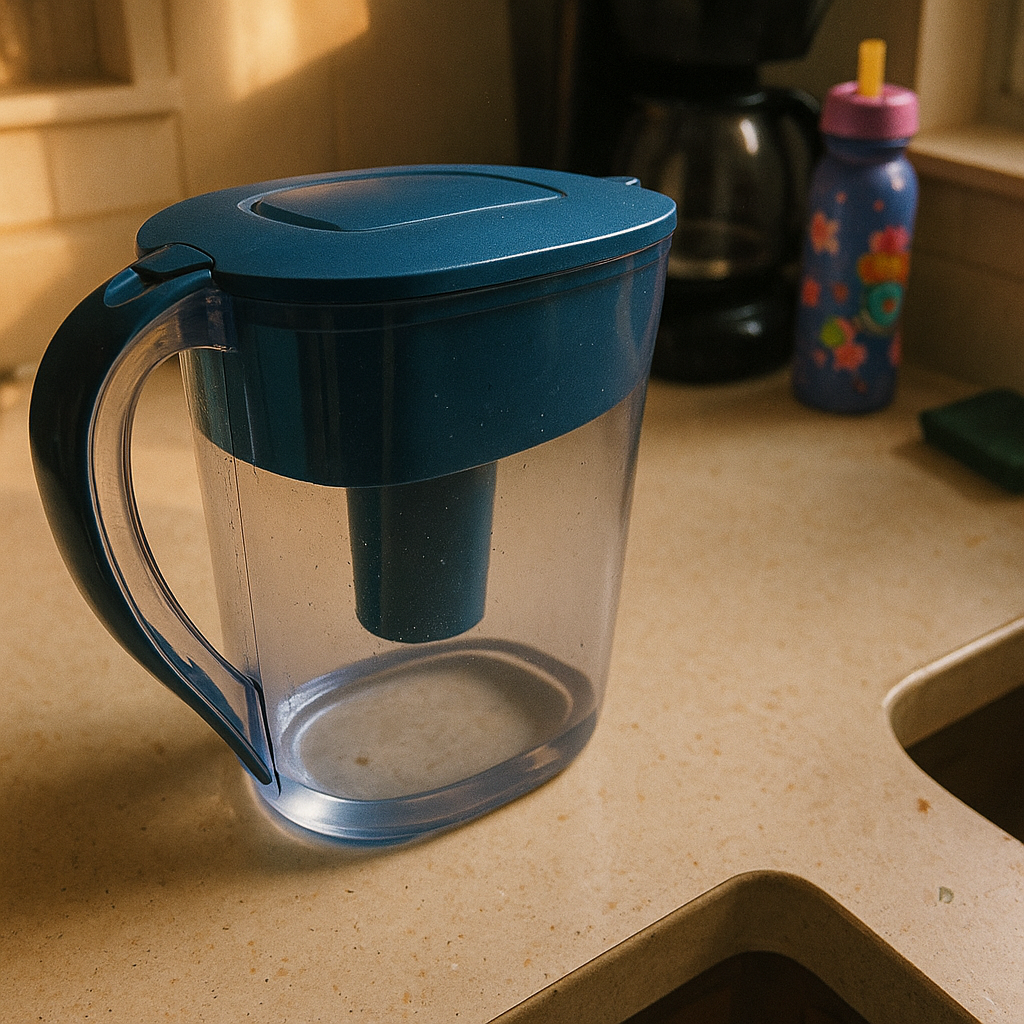
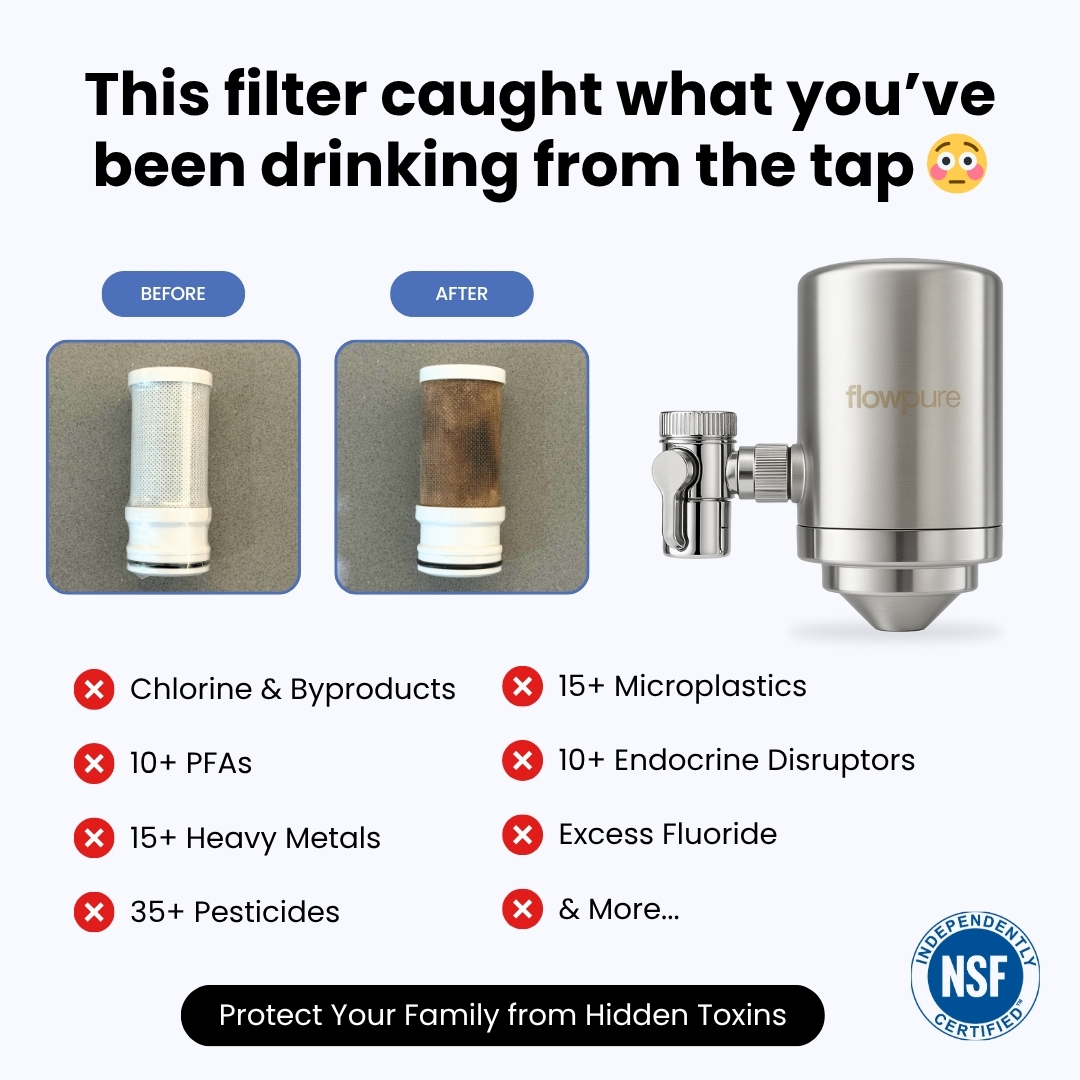
Fertility clinics are seeing something alarming. Women in their early 30s are coming in with ovarian reserve markers that should belong to women in their 40s. FSH levels are elevated. AMH is low. Egg quality is declining faster than age alone can explain. Doctors point to stress. Lifestyle. Age. But Italian researchers found something else. In 2025, scientists tested the follicular fluid of women undergoing fertility treatment. This is the fluid that surrounds your eggs as they mature. The environment where your future children develop. They found microplastics in 14 out of 18 women. Not just present. Concentrated. In the exact place where eggs are trying to mature. And women with higher microplastic levels had elevated FSH—a marker of ovarian stress and diminished reserve. But here's what nobody's asking: where are these microplastics coming from? Research from 2023 found microplastics in nearly 50% of tap water samples. The particles are small enough to pass through treatment facilities. They come from degrading pipes, environmental contamination, and plastic breakdown in the water system. Now do the math. You drink 2-3 liters of water daily. In your morning tea. Your smoothies. Every glass at the sink. These particles don't leave your body effectively. They accumulate. In your blood. Your organs. Your ovaries. Your follicular fluid. Over months and years, the levels build. Studies show PFAS and microplastics disrupt the hormones critical for egg development. They interfere with estrogen and progesterone. They affect follicle maturation. Animal studies link exposure to reduced ovarian reserve, increased follicle death, and lower implantation rates. "But I have a Brita filter." Standard pitcher filters were designed decades ago to improve taste and remove chlorine. They were never designed for microplastics. The particles pass straight through. Bottled water isn't better. A 2024 study found bottled water contains an average of 240,000 plastic particles per liter. So you're stuck. Tap water contains microplastics. Standard filters don't remove them. Bottled water is worse. Meanwhile, you're tracking ovulation. Taking supplements. Timing everything perfectly. And consuming microplastics every single day. Here's what actually works: Multi-stage filtration systems with fine enough particle size (0.5 microns or smaller) to catch microplastics. Not plastic pitcher filters. Proper systems with: - Activated carbon with enough contact time - Stainless steel housing (not plastic filtering through plastic) - Small enough filtration to remove PFAS, microplastics, and hormone-disrupting chemicals These attach to your tap. No plumber needed. Installation takes minutes. Fertility doctors are starting to notice. Women who switch to properly filtered water are seeing improvements in follow-up hormone tests. Not all of them. Not instantly. But enough that water quality is now part of preconception counseling at some clinics. But a good solution exists. See what proper filtration actually removes → click below
An alarming study on egg qualiy
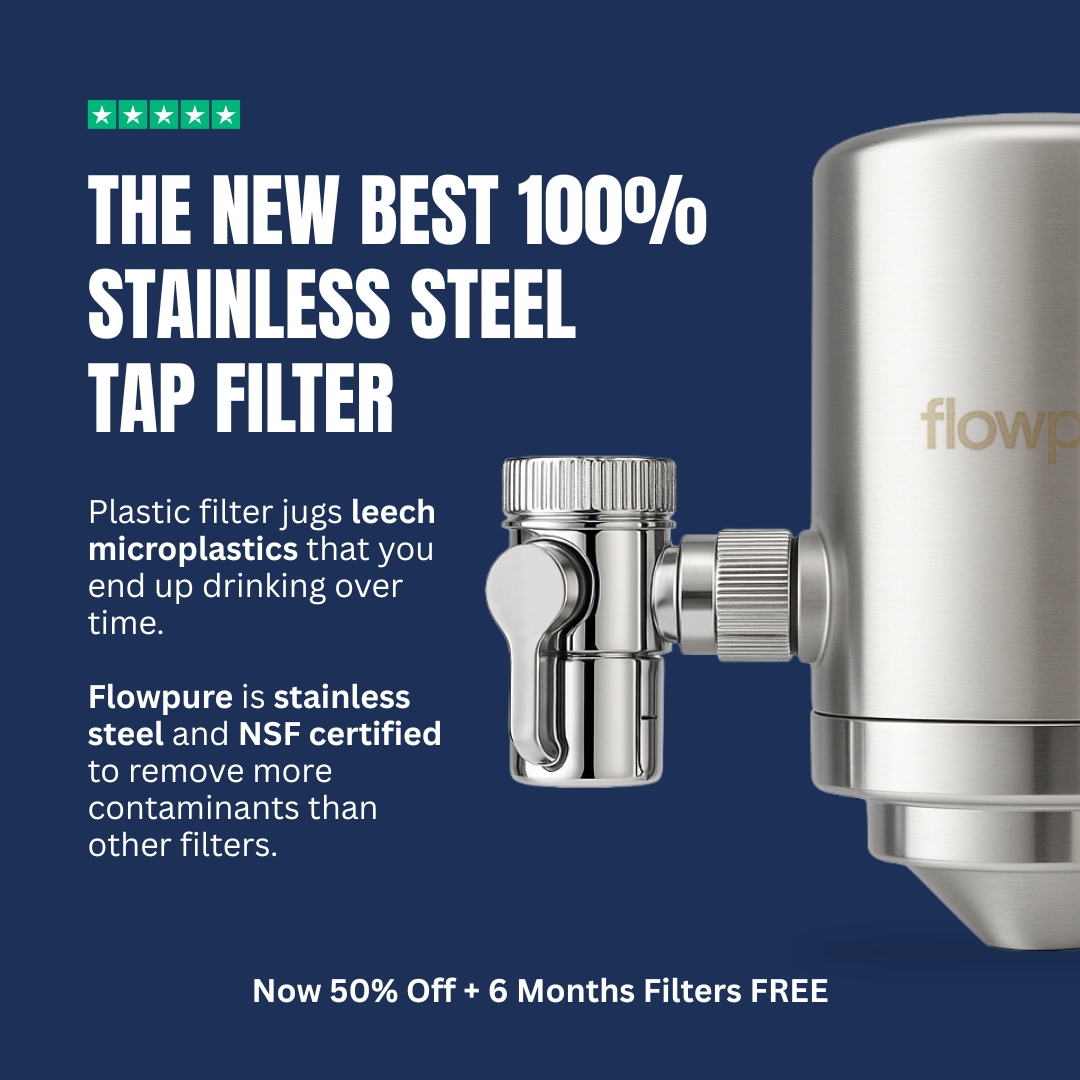
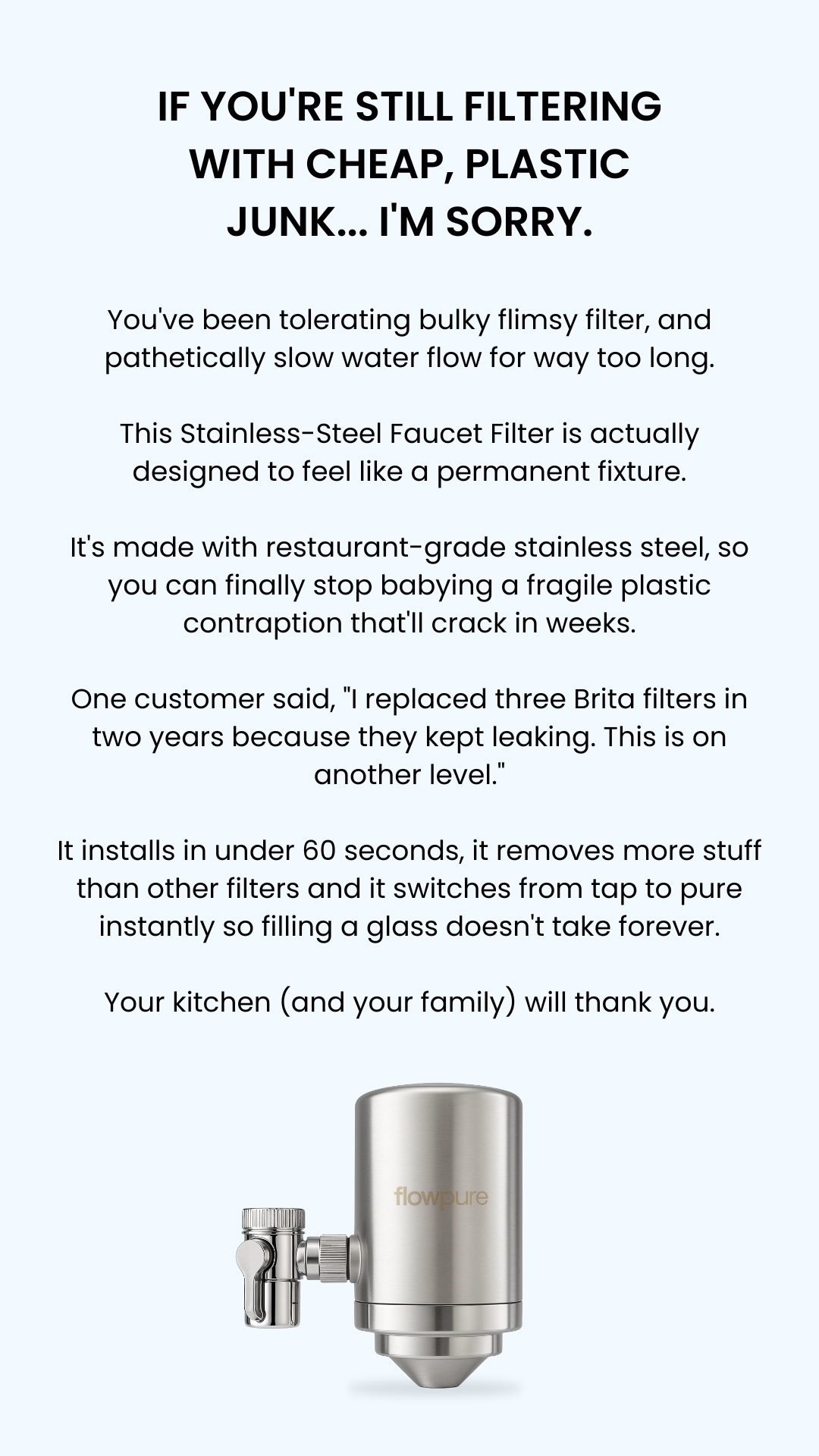
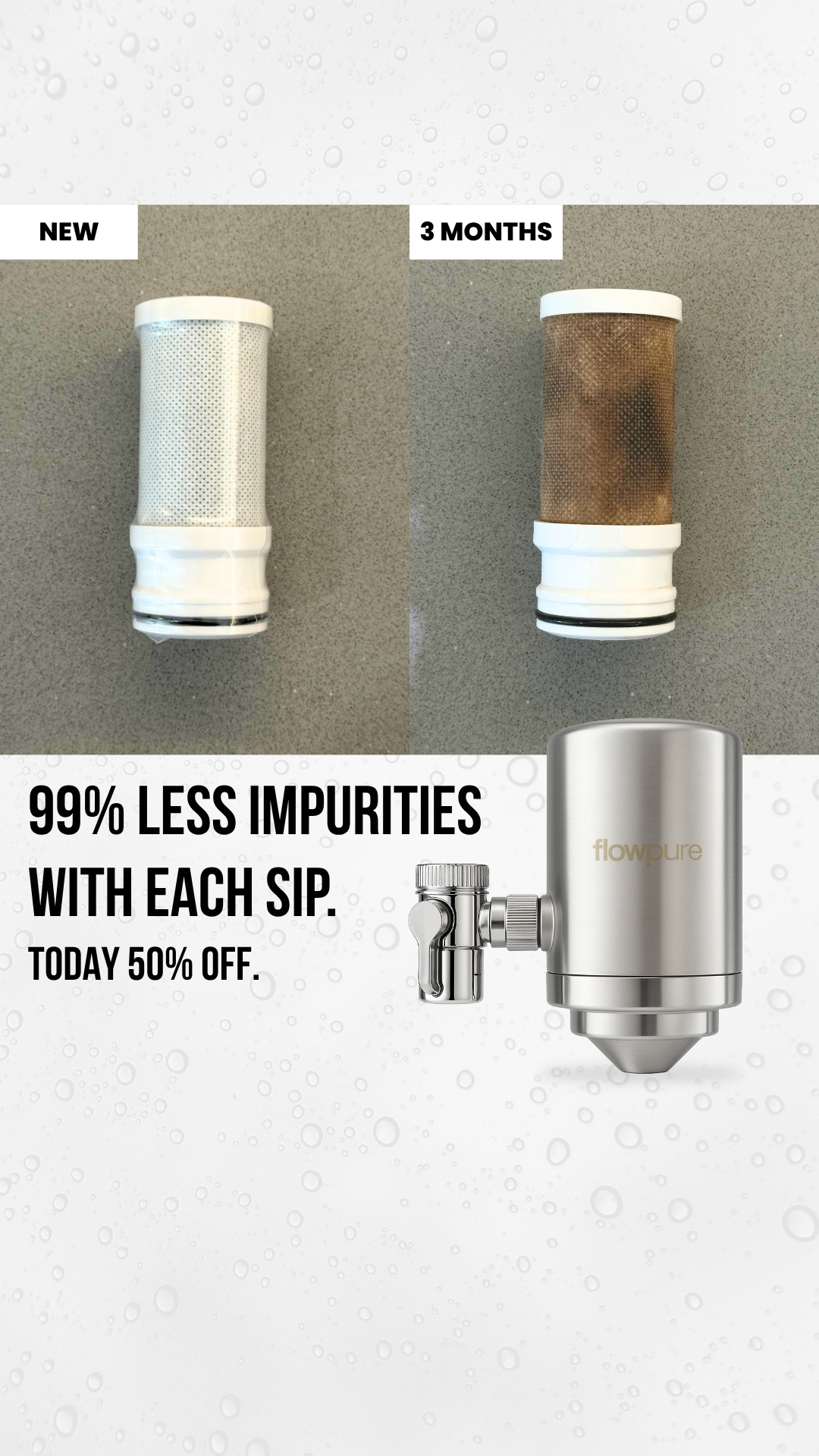
The FlowPure Stainless Steel Tap Filter is built for exceptional performance, combining Activated Carbon and Ultrafiltration technology to deliver powerful, precise filtration. Capable of filtering down to 0.1 microns—2,000x finer than a Brita Maxtra Jug—it effectively removes a wide range of co...
LEARN MORELike this ad? Make it yours.
Crush rebuilds this exact creative around your product — your brand, your colors, your offer — in about a minute.