Dr. Kim Joon-ho, MD
Dr. Kim Joon-ho, MD Facebook ad: “Limited Time Offer”
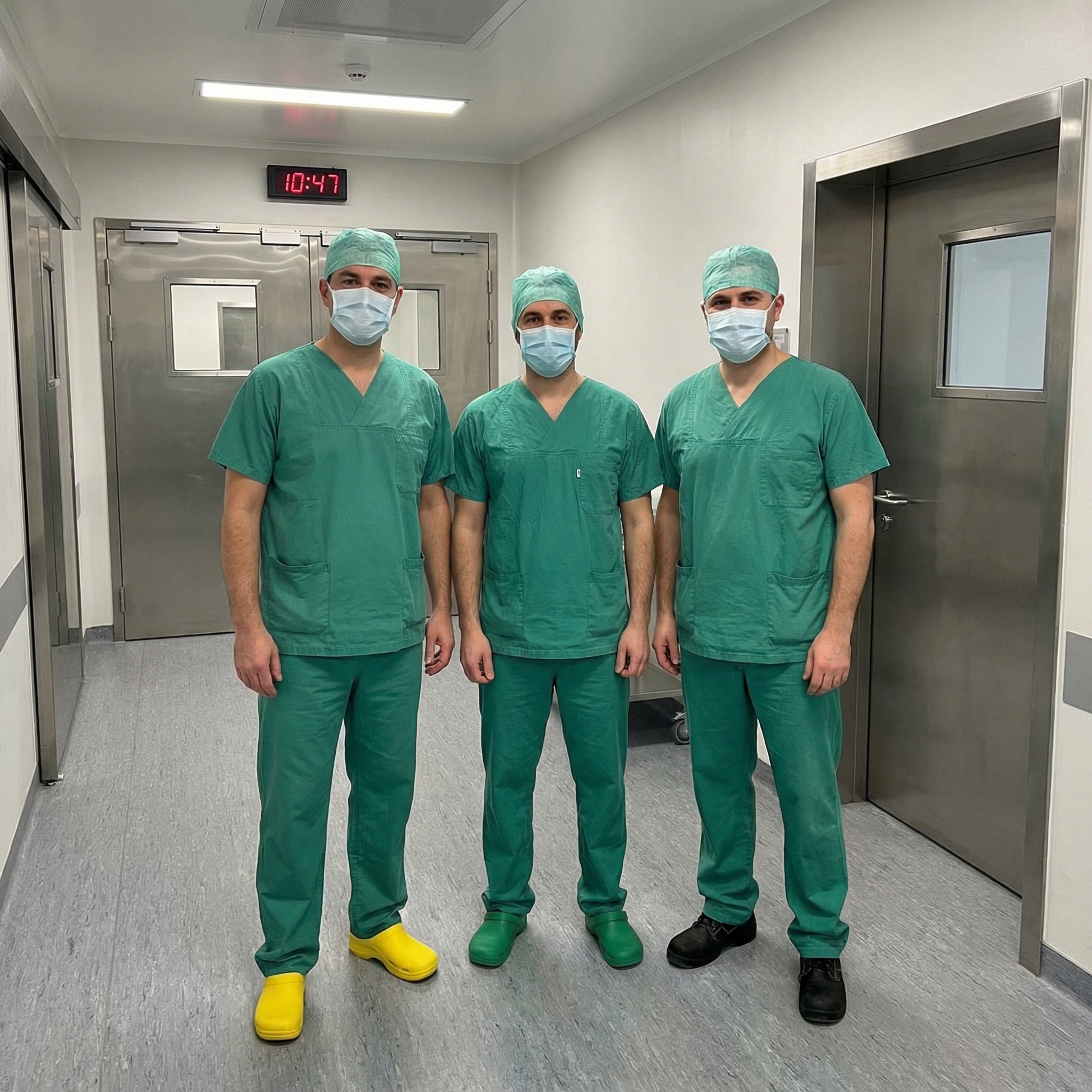
Ran for 32 days, from February 22 to March 26, 2026, the last day Crush saw it.
Run by Dr. Kim Joon-ho, MD on Facebook. Crush is not the advertiser and does not verify its claims. See this ad in Meta's Ad Library(opens in a new tab)
Want an ad like this for your product?
Crush makes new ad images for your product from this ad: your logo, your product photo, your offer.
Trials from $19.95 USD, then $79.95 USD a month. Cancel anytime.
About this ad
- Meta Ad Library ID
- 764133103432385
- Platforms
- Facebook, Instagram, Audience Network, Messenger and Threads
- Relaunches
- 1
- Niche
- Skincare & Beauty
Ad text
I've been a dermatologist for 22 years. I've prescribed retinol to thousands of women. I've referred hundreds for Botox. I've recommended creams, serums, and procedures that cost my patients a combined total I don't even want to calculate. And I knew — I KNEW — that most of it wasn't fixing anything. I'm not practicing anymore. I retired last year. And I'm done being quiet about this. Because the skincare industry has a secret that every dermatologist knows but nobody tells their patients. The products don't work. Not the way patients think they work. Not the way the marketing says they work. Not the way I told my patients they'd work when I handed them a prescription or a product recommendation. And I was part of it for 22 years. Let me explain what I mean. Every woman over 40 who walked into my office had the same complaints. Wrinkles getting deeper. Skin sagging. Cheeks deflating. Jawline softening. Neck getting crepey. Dullness. Looking tired all the time. And every time, I did the same thing. I prescribed retinol. Maybe tretinoin if they wanted prescription-strength. I recommended a vitamin C serum. A good moisturizer. SPF 50 daily. If the wrinkles were bad, I referred them to a colleague for Botox. Maybe fillers. If they were really struggling, I'd mention laser resurfacing or chemical peels. Standard protocol. By the book. What every dermatologist does. And here's what I never told them: None of those treatments can reach the thing that's actually causing the aging. I knew that. I learned it in medical school. It's in the research. It's not controversial or hidden — it's just not part of the consumer narrative. There's an enzyme in your skin called MMP-1. Matrix metalloproteinase-1. Every dermatologist knows about it. It's in our textbooks. MMP-1's function is to break down collagen. That's all it does. It's an enzyme whose sole purpose is to degrade the structural protein that keeps your skin firm, lifted, and youthful. When you're young, your skin produces collagen faster than MMP-1 can destroy it. But as you age — specifically after about 25 — a receptor in your cells called the A2A receptor starts dimming. Collagen production declines. Year after year. MMP-1 does not decline. It keeps working. Same rate. Sometimes faster, because UV exposure and inflammation actually increase MMP-1 activity. By 40, MMP-1 is winning. Destroying more collagen than your body can build. By 50, it's not a contest anymore. Every wrinkle, every sag, every bit of volume loss, every line that appeared "out of nowhere" — that's MMP-1. I knew that every time I prescribed retinol. Every time I recommended a cream. Every time I referred someone for Botox. And I prescribed them anyway. Because what was I supposed to say? "The products I'm about to recommend can't actually reach the enzyme that's causing your problem. But here's your prescription." That's not how the system works. Here's what each treatment actually does — and doesn't do: Retinol increases cell turnover at the surface. Your skin sheds faster and regenerates. Sounds good. But retinol doesn't penetrate deep enough to block MMP-1. The enzyme keeps eating collagen underneath while retinol burns the surface. That's why patients use retinol for years and still age. Because the root cause is untouched. Collagen creams — I can't even say this with a straight face anymore. Collagen molecules in topical creams are far too large to penetrate the skin barrier. They sit on the surface. They hydrate. They feel nice. They wash off. They never reach the dermis where MMP-1 is destroying your actual collagen. Every $100 collagen cream is an expensive moisturizer. That's it. Botox paralyzes muscles so you can't make facial expressions that crease the skin. It prevents new dynamic wrinkles from forming. But it does absolutely nothing to stop MMP-1 from eating the existing collagen underneath. Your face is still aging under the Botox. The enzyme is still eating. You just can't see it on the frozen surface yet. Laser treatments damage the top layer of skin with controlled burns, hoping it regenerates with more collagen. But MMP-1 breaks down the new collagen as fast as your skin makes it. The laser triggers production. The enzyme destroys it. Net result: temporary improvement, then right back to baseline. That's why laser patients need repeat treatments. Facelifts physically pull sagging skin tighter. They don't interact with MMP-1 at all. The enzyme keeps working. The collagen keeps being destroyed. The skin sags again in 5-7 years. That's why facelifts "expire." Every single standard treatment addresses the surface. None of them reach MMP-1. I prescribed surface treatments for 22 years. I watched my patients come back, year after year, looking worse despite doing everything I told them to do. And I'd adjust. Switch their retinol. Increase the strength. Add a serum. Refer for another round of Botox. And the enzyme just kept eating. Five years ago, I attended a conference in Seoul. Korean dermatology is 10-15 years ahead of the US. If you work in this field, you know that. Korean researchers develop the innovations, and we adopt them a decade later — after the American companies figure out how to package and mark them up. At this conference, a researcher presented on PDRN — polydeoxyribonucleotide. It's extracted from salmon DNA. 97% identical to human DNA. Korean doctors had been using it for over 30 years — not for cosmetics, but for wound healing, burn treatment, and tissue regeneration. Serious medical applications where damaged tissue needed to rebuild. The research showed something I'd never seen in 17 years of practicing dermatology: PDRN simultaneously blocks MMP-1 AND reactivates the A2A receptor. Let me explain why that's significant. Blocking MMP-1 means the enzyme stops eating your collagen. The destruction ends. Reactivating the A2A receptor means your skin starts producing collagen again — at rates comparable to decades younger. Studies showed more than double the normal production rate. Block the destruction. Restart the rebuilding. At the same time. Wrinkle reduction of 47% in eight weeks. Measured by ultrasound imaging, not patient surveys. I sat in that lecture hall and felt sick. Not because the research was bad. Because the research was excellent. I felt sick because I'd spent 17 years prescribing retinol and referring for Botox while this existed. I came home. I read every PDRN study I could find. Dozens of them. Peer-reviewed. Clinical trials. The evidence was overwhelming. And almost no American dermatologist was talking about it. Because PDRN doesn't fit the model. Retinol requires ongoing prescriptions. Botox requires quarterly visits. Creams require monthly purchases. Lasers require repeat sessions. If PDRN actually stops MMP-1 and restarts collagen production — if it actually fixes the root cause — patients stop needing the revolving door of treatments. That's bad for dermatology revenue. That's bad for the pharmaceutical companies selling retinol. That's bad for the aesthetic clinics charging $500 per Botox session. That's bad for the skincare brands selling $100 creams with molecules too big to work. It's good for patients. It's bad for the industry. And the industry controls the conversation. I retired last year. And now I'm going to tell you what I'd tell you if you walked into my office and I didn't have to follow the standard protocol anymore. Stop buying collagen creams. They can't penetrate your skin. Stop burning your face with retinol hoping it heals back better. It doesn't address the enzyme. If you're getting Botox, understand what it actually does — freezes muscles, not skin. The aging underneath continues. The reason your skin is aging is because MMP-1 is eating your collagen and nothing you're using can reach it. PDRN is the only compound shown in clinical research to both block MMP-1 and restart your skin's collagen production by reactivating the A2A receptor. Korean doctors have trusted it for 30 years. The research is peer-reviewed. The results are measurable on ultrasound. There's a brand called Quasi that has made this accessible. 40 grams of medical-grade PDRN in an overnight hydrogel mask. It starts pink, turns clear by morning — you can see the absorption happen. Made in a Korean GMP-approved facility. $49 a box. Not $500. Not $100 a jar. Not $3,000 per laser session. $49. If I'd known about this when I started practicing, I would have told every patient who walked through my door. Instead, I prescribed the standard protocol for 22 years. I can't change that. But I can tell you now. Block MMP-1. Rebuild collagen. Stop treating the surface while the real problem eats your face from the inside. 90-day money-back guarantee. You risk nothing. I wish I could have said this 22 years ago. I'm saying it now.
Where the ad sends people
officialquasi.com
Limited Time Offer
quasi
Shop now: officialquasi.com(opens in a new tab)