The Wellness Forum for Men
The Wellness Forum for Men Facebook ad: “Unlock Your Hair's Full Potential”
Ran for 5 days, from March 19 to March 24, 2026, the last day Crush saw it.
Run by The Wellness Forum for Men on Facebook. Crush is not the advertiser and does not verify its claims. See this ad in Meta's Ad Library(opens in a new tab)
Want an ad like this for your product?
Crush makes new ad images for your product from this ad: your logo, your product photo, your offer.
Trials from $19.95 USD, then $79.95 USD a month. Cancel anytime.
About this ad
- Meta Ad Library ID
- 775876768604090
- Platforms
- Facebook, Instagram and Messenger
- Relaunches
- 40
Ad text
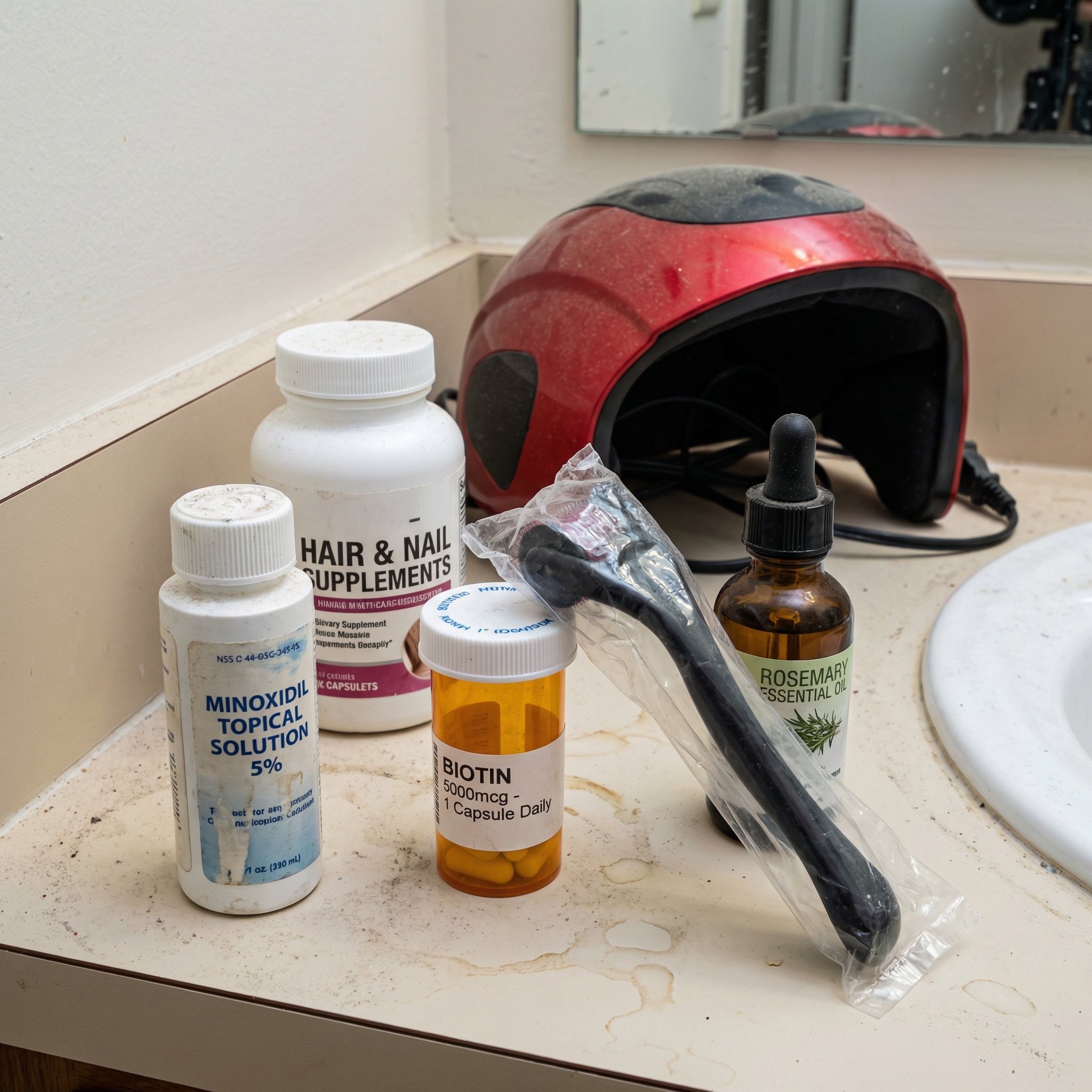
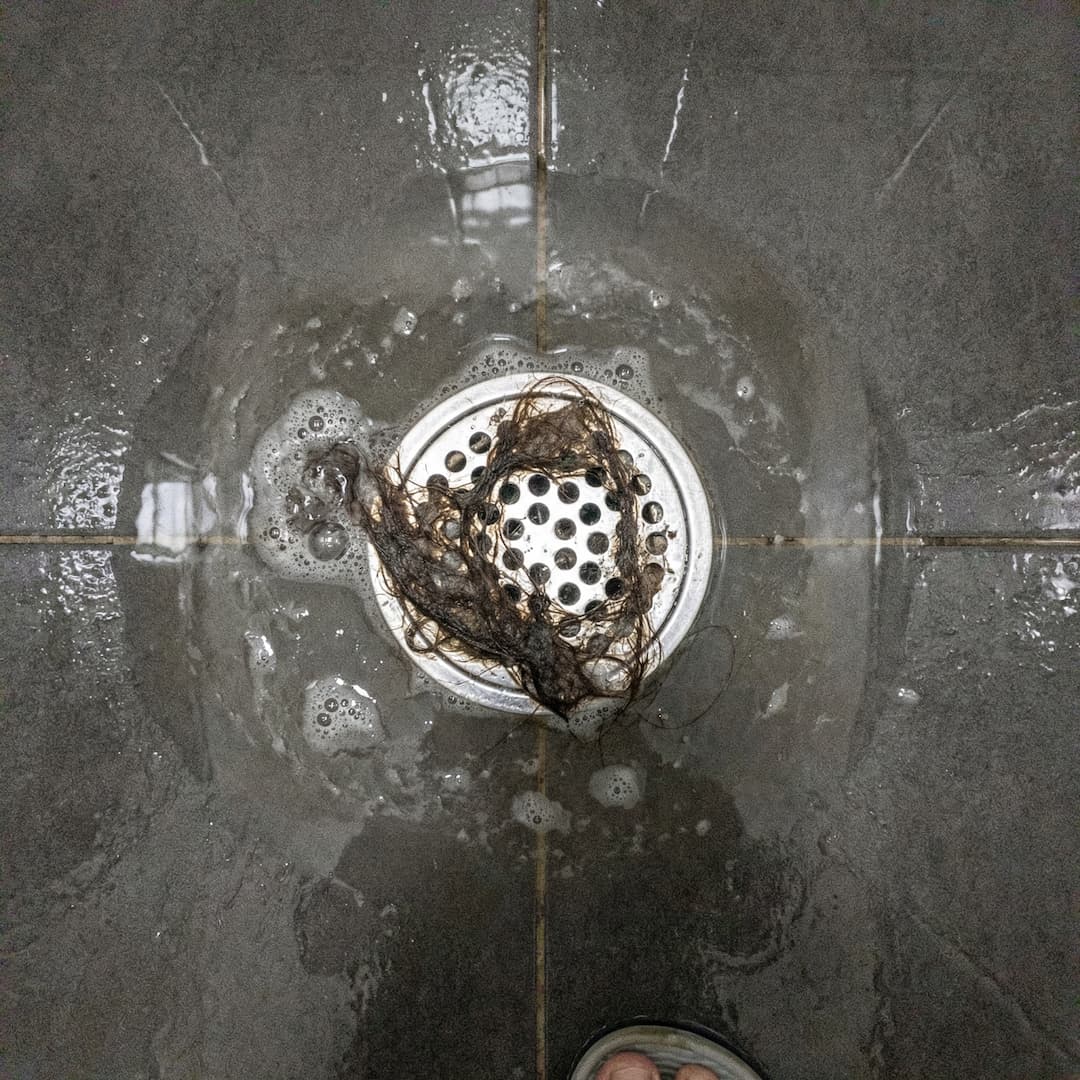
My daughter asked me to take a selfie with her last month and I said no. She's eight. She was in the bathtub. Covered in bubbles. Giggling. Holding my wife's phone up with both hands, trying to frame our faces together. "Daddy, let's take a picture!" I saw the preview on the screen. Her face, full of joy. My face, forced smile. And above my face, the top of my head. Crown. Thin. Scalp visible in the bathroom light, reflecting like a small pale moon between wisps of hair that barely qualify as hair anymore. I tilted my head. Shifted the angle. Tried to find a position where the top of my head wasn't the focal point of a bath time selfie with my eight year old. "Hold on, baby, let me just..." Her smile faded. Just slightly. The way a kid's smile fades when they realize the fun thing they wanted is turning into a complicated thing. "Daddy, it's just a picture." I took the picture. Smiled. She splashed back into her bubbles, satisfied. I went to the bathroom after she was in bed. Locked the door. Looked at the photo. My daughter's face, full of pure eight year old happiness. My face, trying to look natural while secretly managing the angle of my own skull. And the crown of my head, thin and bare and completely undeniable in the unforgiving bathroom light. That's the photo. That's my life captured in a single image. A man who can't take a selfie with his child without turning it into a hair loss management operation. My name is James. I'm 43. And when that photo was taken, I was ten days away from boarding a flight to Istanbul for a $4,200 hair transplant. I need to tell you what happened between that photo and today. Because if you're a man who has been watching your hair disappear for years and you've reached the point where you believe surgery is the only answer, I was further down that road than you. I had the flight booked. The money saved. The time off work. The cover story prepared. And I didn't go. What I found instead is the reason I'm writing this. Let me go back to the beginning. Because the transplant decision didn't happen overnight. It was the end of a very long road that started when I was 38. That's when I first noticed it. Really noticed it. Not the "is it thinning or is it the light?" stage. The undeniable stage. Standing in the bathroom after a shower, wet hair flat against my scalp, and seeing my scalp through my hair like looking through a thin curtain. My dad was bald by 40. Fully, completely, gleaming bald. His brother was bald by 38. It's in my blood. I knew this was coming my entire adult life. I just thought I'd have more time. I didn't. By 39, my crown was visibly thin. By 41, it was sparse. By 43, the crown was essentially gone and my hairline had retreated to a point where "receding" wasn't accurate anymore. "Retreating" was more like it. A full-scale withdrawal. I started fighting it at 38. Minoxidil first. The foam. Applied it every night. Sometimes twice a day when I remembered. For three years. Three years. Do you know what three years of minoxidil gave me? The same hair I started with, maybe slightly less. No regrowth. No thickening. No visible improvement whatsoever. Just an oily scalp, a stained pillowcase, and the slow realization that I was performing a nightly ritual that did nothing except make me feel like I was doing something. Then finasteride. My doctor prescribed it. 1mg daily. "Gold standard for hair loss," she said. I lasted two months. By week three, the brain fog was so thick I couldn't focus in meetings. By week five, things in the bedroom changed. Not dramatically. Subtly. Enough that I noticed. Enough that Nadia noticed, though she didn't say anything. That silence again. I quit finasteride on a Tuesday morning. Flushed the remaining pills. Told my doctor. She suggested a lower dose. I said no. Whatever finasteride was doing to my hair wasn't worth what it was doing to the rest of me. Then PRP. Platelet-rich plasma injections. My dermatologist recommended it. "We draw your blood, spin it down, inject the concentrated platelets into your scalp. Growth factors stimulate the follicles." $1,200 per session. I did two. Six months apart. After the first session, I thought I saw improvement. Slightly thicker. Slightly denser. I was excited. Finally, something that works. After the second session, I compared photos carefully. The "improvement" was gone. Whatever temporary thickening had happened after session one had faded completely. I looked exactly the same as before I started. Minus $2,400. That's twenty four hundred dollars for a biological placebo. Then the scattershot phase. Laser cap — $300, used it for four months, nothing. Biotin supplements. Saw palmetto capsules. Zinc. An Amazon serum that had 4.5 stars and 2,000 reviews and did absolutely nothing. A thickening shampoo that made my hair feel different but look the same. Total spent across all of it, over five years: somewhere around $4,000. Four thousand dollars. And my hair was worse than when I started spending. That's when I crossed the line. The psychological line that separates "trying products" from "accepting surgery." It's a specific moment. You can probably feel it if you've been on this road long enough. It's the moment you stop believing that any non-surgical approach can work for you. The moment you accept that the only way to put hair where there is no hair is to physically move it there from somewhere else. I started researching transplants in October. By December I'd watched over 50 FUE procedure videos on YouTube. By February I had consultations from three clinics. Two in the US ($8,500 and $12,000) and one in Istanbul ($4,200 all inclusive — clinic, hotel, airport transfers, 3,000 grafts). The math was obvious. Turkey. I saved the money over four months. Took a week off work. Told my boss I was visiting family overseas. Told nobody the truth except my brother Mark. Mark laughed. "You're flying to Turkey to get hair? Just shave it, man." Mark got Mom's side. Full head of hair at 46. Doesn't think about it. Never will. I got Dad's side. And I can't shave it. Not because of vanity. Because every time I look in the mirror and see my father's bald head looking back at me, I feel like I'm watching a clock run out. Like my youth is being confiscated one follicle at a time and I'm just sitting here watching it happen. So I booked Turkey. April 24th departure. Round trip. Five nights. And then, ten days before the flight, everything changed. I was researching post-transplant recovery. Timelines. What to expect. How to hide the scabs from coworkers. How long before it looks normal. Standard pre-op homework. That's when I found the forums. Not the clinic marketing forums. The real ones. Where transplant patients talk to each other. Where the recovery photos aren't curated and the experiences aren't filtered. The first post I read came from a man two years post-op. He wrote: "Got 2,500 grafts in Turkey 14 months ago. Results were great for about 8 months. Then my existing hair, the hair they didn't transplant, started falling out. Now I have thick transplanted hair surrounded by bald patches. Looks worse than before." A garden in a desert. That's the phrase he used. Thick transplanted hair growing perfectly in one zone, surrounded by progressively thinning natural hair that nobody treated because the transplant only covers specific areas. I read another post. "Surgeon told me I'd need to take finasteride for life after the transplant to maintain the non-transplanted hair. Nobody mentioned this during the consultation." Another: "18 months post-op. Transplanted area looks amazing. Crown, which they didn't touch, has thinned so much I need a second transplant. Another $5,000." Another: "Two transplants. $9,000 total. Three years of recovery. And I'm now discussing transplant number three because the remaining hair keeps falling. At what point do I admit the transplant treats the symptom, not the cause?" I read for three hours that night. Nadia was asleep. Amira was asleep. I was in the living room at 2 AM with a phone full of horror stories and a flight to Istanbul in ten days. The pattern was undeniable. Hair transplants work. The transplanted grafts grow. The results in the transplanted zone are often incredible. But the transplant doesn't stop hair loss. It doesn't block DHT. It doesn't address the biological mechanism that's killing your follicles. It takes hair from the back of your head (where DHT doesn't attack) and moves it to the top (where DHT is destroying everything). The moved hair survives. Everything around it doesn't. So you end up with a garden in a desert. And the desert keeps expanding. Unless you take finasteride for life to suppress DHT everywhere. Which I can't do. My body can't handle finasteride. Or you take minoxidil forever. Which doesn't even block DHT. It increases blood flow. And after three years of it, I can tell you: it didn't do anything meaningful for me. I called the Istanbul clinic the next morning. Asked directly. "After the transplant, will I need to take finasteride?" Pause on the other end. "We recommend it. The transplanted grafts are permanent, but your natural hair will continue its pattern of loss if untreated." "What if I can't take finasteride?" "Some patients use minoxidil instead." "I used minoxidil for three years. No results." Long pause. "We can discuss other options during your consultation." I hung up. My hands were shaking. Four thousand two hundred dollars. A flight across the world. Surgery on my scalp by a surgeon I've spoken to twice on video calls. Five days of recovery looking like I lost a fight. Then I fly home and need to take the exact drugs that either didn't work or destroyed my quality of life. And if I don't take those drugs, the hair around the transplant falls out and I'm worse off than before. This isn't a solution. This is a $4,200 band-aid on a wound that's still bleeding. I sat at the kitchen table. Nadia came in. Saw my face. "James? What's wrong?" "Nothing. Just work stuff." She sat down. She knew it wasn't work stuff. Nadia always knows. "Is this about Turkey?" I looked at her. She met my eyes. "I found the booking confirmation on your laptop three months ago. I've been waiting for you to tell me." Three months she'd known. Three months of silence. "Why didn't you say anything?" "Because you'd already made up your mind. And I didn't want to make you feel worse about it than you already did." She reached across the table and took my hand. "James, I'm not afraid of the money. I'm afraid of you being on a table in another country and me sitting here not knowing if something went wrong. Can you promise me it's safe?" I couldn't promise that. Because I'd spent the last 12 hours reading stories from men for whom it wasn't. That night, 3 AM. I was back on my phone. Searching. Not for transplant clinics this time. For something I hadn't searched for in years. "How to block DHT without finasteride." I'd given up on this question. I'd decided it didn't have an answer. That's what pushed me toward surgery. The belief that without finasteride, there was no way to stop DHT from destroying my follicles. And without stopping DHT, no topical product in the world could overcome the underlying cause. But at 3 AM with a flight in eight days and a wife who's afraid for me, I asked the question one more time. And I found the answer I'd been missing for five years. It came in pieces. First, the studies. Natural DHT inhibitors exist. Saw palmetto extract inhibits 5-alpha reductase, the enzyme that converts testosterone to DHT. Caffeine blocks DHT at the follicle receptor level. Biotin supports keratin production in follicles under DHT stress. Growth peptides signal dormant follicles to re-enter the active growth phase. I knew most of this already. I'd taken saw palmetto capsules. Taken biotin. They didn't work. But then I found the distinction I'd been missing. The one that changed everything. Oral supplements float through your bloodstream. The concentration of active compounds that actually reaches your scalp follicles is minimal. You're taking a pill and hoping some tiny fraction of it ends up at the microscopic target on top of your head. It's like trying to water a single flower by flooding the entire neighborhood. Topical application is better. At least you're putting it on the right area. But here's the problem I never understood: your scalp is a barrier. The epidermis, the outer layer of skin, exists to keep things out. That's literally its biological function. When you apply a serum or a foam to the surface of your scalp, studies show approximately 2% penetrates deep enough to reach the follicle. Two percent. Ninety eight percent sits on the surface, evaporates, gets rubbed off on your pillow, or washes away in the shower. That's why three years of minoxidil did nothing for me. Not because minoxidil is a bad drug. Because 98% of it never reached the target. I was pouring water on concrete and wondering why nothing grew. The solution is so logical it made me angry I hadn't encountered it sooner. Micro-infusion. A precision microneedling device creates thousands of temporary micro-channels in the scalp. These channels bypass the epidermal barrier completely. They open direct pathways from the surface to the follicular zone, the exact depth where a transplant graft is placed. You apply the serum immediately after microneedling. And instead of sitting on the surface, the active ingredients travel through the channels directly into the follicle. Studies on microneedling-assisted delivery show absorption increases of up to 300% compared to surface application. Three hundred percent. Versus the 2% I was getting with minoxidil for three years. Now combine that delivery mechanism with the right payload. A serum containing saw palmetto extract to inhibit 5-alpha reductase and block DHT production at the follicle. Caffeine to stimulate blood flow and block DHT at the receptor. Biotin to strengthen keratin production. Growth peptides to reactivate dormant follicles. Natural ingredients with clinical evidence behind them. But the ingredients aren't the breakthrough. You can find these ingredients in dozens of products at any pharmacy. The breakthrough is WHERE they end up. On the surface, evaporating? That's what I did for three years with minoxidil. Inside the follicle, at the depth where a transplant graft sits? That's micro-infusion. A transplant works because the graft is placed directly inside the scalp. Direct delivery. No barrier. No surface loss. Micro-infusion works on the same principle. Get the compounds past the barrier. Deliver them directly to the follicle. Let the follicle do what it's designed to do when it's not being choked by DHT and starved of growth signals. Not surgery. Not pills. Not a topical that sits on top of your head and evaporates. A delivery system that actually delivers. The product is called Alpha Infuse. I looked them up at 4 AM. Over 100,000 men using it. Not a startup. Not a Kickstarter project. A hundred thousand men who figured out the delivery problem. Dermatologists endorsing the micro-infusion protocol. Before and after photos from men my age, my Norwood, my pattern. Real timelines. Real lighting. Real results. And a 120 day money back guarantee. Four full months to test it. If nothing happens, full refund. No questions. They were running 70% off with free worldwide shipping. I did the math with my eyes burning from the screen at 4 AM. I was about to spend $4,200 on a transplant that doesn't stop DHT. Plus flights. Plus recovery time. Plus the probability of a second surgery in three to five years at $4,000 to $5,000 more. Or I could try this. At 70% off with free shipping and a 120 day guarantee. If it doesn't work within four months, I can still rebook Turkey. I lose nothing. If it works, I save $4,200. I save the flight. I save the recovery. I save the scabs and swelling and the two weeks of hiding from my daughter. And most importantly, I address the actual cause, DHT at the follicle, instead of treating the symptom with relocated hair that doesn't stop the surrounding loss. I ordered it at 4:23 AM. Then I went back to bed. Nadia stirred. "Still up?" "Not anymore. Go back to sleep." "Is everything okay?" "I think it might be." The kit arrived three days later. I opened it in the garage while Nadia was at work and Amira was at school. The microneedling device was serious. Medical-grade build. Gold-plated titanium needles, thinner than I expected. The serum was in an airless pump bottle. Clear. Light. No chemical smell. The ingredient label matched everything I'd researched: saw palmetto extract, caffeine, biotin, growth peptides, ginseng root. First session that evening. After Amira was in bed. Rolled the device over my crown, then my hairline, then the temples. Light prickling. Less sensation than I get from a splinter at work. Not painful. Not even uncomfortable. Just a tingling that told me the channels were opening. Applied the serum immediately. Pumped it directly onto the treated areas. It absorbed. Instantly. Not like minoxidil that sits on the surface and takes twenty minutes to dry. This went IN. Through the channels. Into the scalp. I could feel the difference. Not a sensation exactly. Just the absence of the surface film that every other topical has left behind. Total time: about seven minutes. I looked at myself in the mirror. Same thin crown. Same retreating hairline. But for the first time in five years, I felt like I'd done something that made mechanical sense. Not hope. Not faith. Logic. Open the pathway. Deliver the payload. Let the biology do the rest. I told myself not to expect anything for weeks. I'd been burned too many times. Week 1. Nothing visible. Fine. I wasn't expecting visible results at seven days. Did my sessions. Logged the dates. Week 2. Still nothing visible. But I noticed something in the shower. My hands came out of my hair with fewer strands. I'm a counter. I've counted shower drain hairs for years. It's a habit born from anxiety. Before Alpha Infuse, my average was 60 to 80 hairs per shower. Some mornings, clumps that made my stomach drop. Week 2 average: 30 to 40. Week 3. Average dropped again. 15 to 25 hairs per shower. My pillow was cleaner. My hands came away clean when I ran them through my hair absent-mindedly. The bleeding stopped. That's how I thought about it. My scalp had been hemorrhaging hair for five years. And in three weeks, the hemorrhaging stopped. I didn't tell Nadia. Not yet. I couldn't handle the hope conversation. Couldn't handle seeing her get excited and then having to explain, three months later, that it didn't work. I needed more data. Week 5. I ran my hand over my crown before bed. Felt something I hadn't felt in years. Resistance. Not smooth scalp. Resistance. Tiny hairs. Dozens of them. Like stubble in a zone that had been bare for so long I'd forgotten it was supposed to have hair. I went to the bathroom. Angled my head under the light. Looked. New growth. Real, visible, pigmented new growth. Not vellus peach fuzz. Dark hair, short but unmistakable, sprouting from my crown like the first blades of grass pushing through dry soil after rain. My hands were shaking. I took a photo. Compared it to the photo I took on Day 1. The crown still looked thin. But within the thin zone, there was activity. Life. Hair that wasn't there five weeks ago. I sat on the bathroom floor. Put my back against the tub. And for the first time since I was 38, I felt something I'd trained myself not to feel. Hope. Week 8. It was no longer subtle. The crown was filling in. Not full. Not where it was at 35. But filling. Areas where I could see bare scalp were now covered by short, dense, new growth. The surrounding hair looked thicker. The overall impression when I looked in the mirror was: fuller. Denser. Real. The hairline was changing too. The temples were thickening. Hair that had miniaturized to the point of near-invisibility was coming back. Darker. Thicker. Visible. I looked in the mirror and thought: I look like I did at 38. Then I thought: I have a flight to Istanbul in two days. I sat down. Opened my laptop. Pulled up the airline booking. And I cancelled it. Got a credit for a future booking. Might use it for an actual vacation. Nadia came home from work. I was at the kitchen table. She could see something was different. "What happened?" "I cancelled Turkey." Her face did three things in two seconds. Surprise. Relief. Confusion. "Why?" I told her everything. The forums. The garden in a desert. The delivery problem. Micro-infusion. The 3 AM discovery. The kit in the garage. The seven weeks of sessions I'd done while she slept. She was quiet for a long time. Then she said: "James, I knew about Turkey. I was terrified for you. Not about the money. About you being on a table in another country and me sitting here not knowing if you were okay." Her eyes were wet. "Thank God you found another way." Week 12. Barber appointment. Elena's been cutting my hair for four years. She's seen the progression. She's the one who suggested I keep it short to minimize the thinning. She never said "you're going bald" but her cuts told the story — shorter and shorter each visit, less and less to work with. Week 12, she runs her hands through my hair. Stops. "What did you do?" "What do you mean?" "You have new hair. A lot of it. This wasn't here three months ago." She tilted my head forward, examined the crown, ran her fingers through the temple area. "James, I've been cutting your hair for four years and this is the most hair I've had to work with since you started coming here." She took before and after photos for her Instagram. Asked permission. I said yes. Because for the first time in five years, I wasn't hiding from a camera. Week 16. Family cookout. My brother Mark. The one who laughed when I told him about Turkey. He hadn't seen me in three months. He walked up. Looked at me. Squinted. "Did you go to Turkey?" "No." Long pause. He tilted his head. Examining. "You did something." I told him. The micro-infusion mechanism. The natural DHT blockers delivered directly to the follicle. The 300% deeper absorption. No pills. No surgery. No scabs. No recovery. No $4,200. He didn't laugh this time. He was quiet for a while. Then: "Can you send me the link?" Mark. Full head of hair at 46. Never worried about it a day in his life. Asking me for the link. He wasn't asking for himself. He was asking for his buddy Steve, who's been dealing with the same thing I was. But the fact that Mark asked at all, after laughing at me four months ago, told me everything about what he was seeing on my head. Week 18. The moment. Sunday evening. Bath time. Amira in the tub. Bubbles. Giggles. She grabbed Nadia's phone. Held it up. "Daddy! Take a picture with me!" The same request she'd made four months ago. The one I'd fumbled. The one where I adjusted my head angle while my eight year old's smile faded. This time I leaned in. Didn't check the screen. Didn't adjust. Didn't angle. Just smiled. She snapped it. Looked at the photo. Grinned. "Daddy, you look happy!" I am happy. Not because my hair is perfect. It's not. I'm 43. I'm not going to look like I did at 25. The crown is significantly thicker but it's not a full restoration. The hairline has pushed forward but it's still higher than it was at 30. But here's what changed. I can take a photo with my daughter without thinking about my scalp. I can walk into a meeting without calculating the overhead light angle. I can take my hat off at a restaurant without a jolt of adrenaline. I can look in the mirror after a shower and not see a countdown. The clock stopped. That's what micro-infusion gave me. Not a miracle. Not a time machine. It stopped the clock. And then it started turning it back, slowly, week by week, session by session. Here's what I need you to know if you're where I was. Hair transplants work. The grafts grow. The results in the transplanted zone can be incredible. I'm not going to tell you transplants don't work because that would be a lie. But a transplant doesn't stop DHT. It doesn't address the cause. It relocates hair from a DHT-resistant zone to a DHT-active zone. The relocated hair survives. Everything around it keeps dying. Unless you suppress DHT, you'll need another transplant. And another. Finasteride suppresses DHT systemically. It works for many men. But 5 to 8 percent experience side effects that range from uncomfortable to devastating. I was in that percentage. Minoxidil doesn't suppress DHT at all. It increases blood flow. And it absorbs at approximately 2%. For most men, that's not enough. The missing piece was always delivery. Getting DHT blockers and growth stimulants directly to the follicle, not floating in your bloodstream or evaporating on the surface of your scalp. Micro-infusion solves that. Microneedling creates channels. The serum enters immediately. Absorption increases up to 300%. The ingredients reach the follicle. DHT gets blocked locally, right where it's doing damage. Dormant follicles get stimulated directly. No pills. No prescriptions. No systemic effects. No scabs. No "shock loss." No two-week recovery hiding from the world. Once a week. Seven minutes. At home. Over 100,000 men have figured this out. Dermatologists are endorsing the micro-infusion protocol. This isn't fringe. This is the delivery mechanism that makes everything else you've tried actually capable of working. Alpha Infuse is running 70% off right now with free worldwide shipping. And a 120 day money back guarantee. Four full months. If your shedding doesn't slow, if new growth doesn't appear, if your mirror doesn't change, send it back. Full refund. I'm going to tell you what I wish someone had told me before I spent $4,000 on products that couldn't penetrate my scalp and another seven months planning surgery in a foreign country. The ingredients were never the problem. The delivery was. Fix the delivery and the follicle responds. I was ten days from flying to Istanbul. I cancelled the flight. My wife cried with relief. My barber has more hair to cut than she's had in four years. My brother stopped laughing. My daughter takes selfies with me now. And I never left my bathroom. That's not marketing. That's a Tuesday night in my house. Link is below. 70% off. Free shipping. 120 day guarantee. If you've got a transplant consultation booked, a flight saved for, or a browser full of clinic tabs you keep opening and closing, try this first. Not instead of a transplant. Before one. Because if it works, you just saved yourself thousands of dollars, weeks of recovery, and the risk of a garden in a desert. And if it doesn't work, you send it back within 120 days, lose nothing, and go to Turkey knowing you tried everything. But I don't think you'll be booking that flight. I didn't. — James, 43. March 2026. https://alphainfuse.com/pages/presell-2
Where the ad sends people
alphainfuse.com
Unlock Your Hair's Full Potential 🔥
AlphaInfuse™ Hair Regrowth System has helped thousands of men regrow the hair they thought was gone forever. It’s hands down the most effective hair restoration system ever developed.
Learn more: alphainfuse.com(opens in a new tab)