
Inactive· since Jun 6, 2026
- 11
- days it ran
- 0
- relaunches
Ad copy
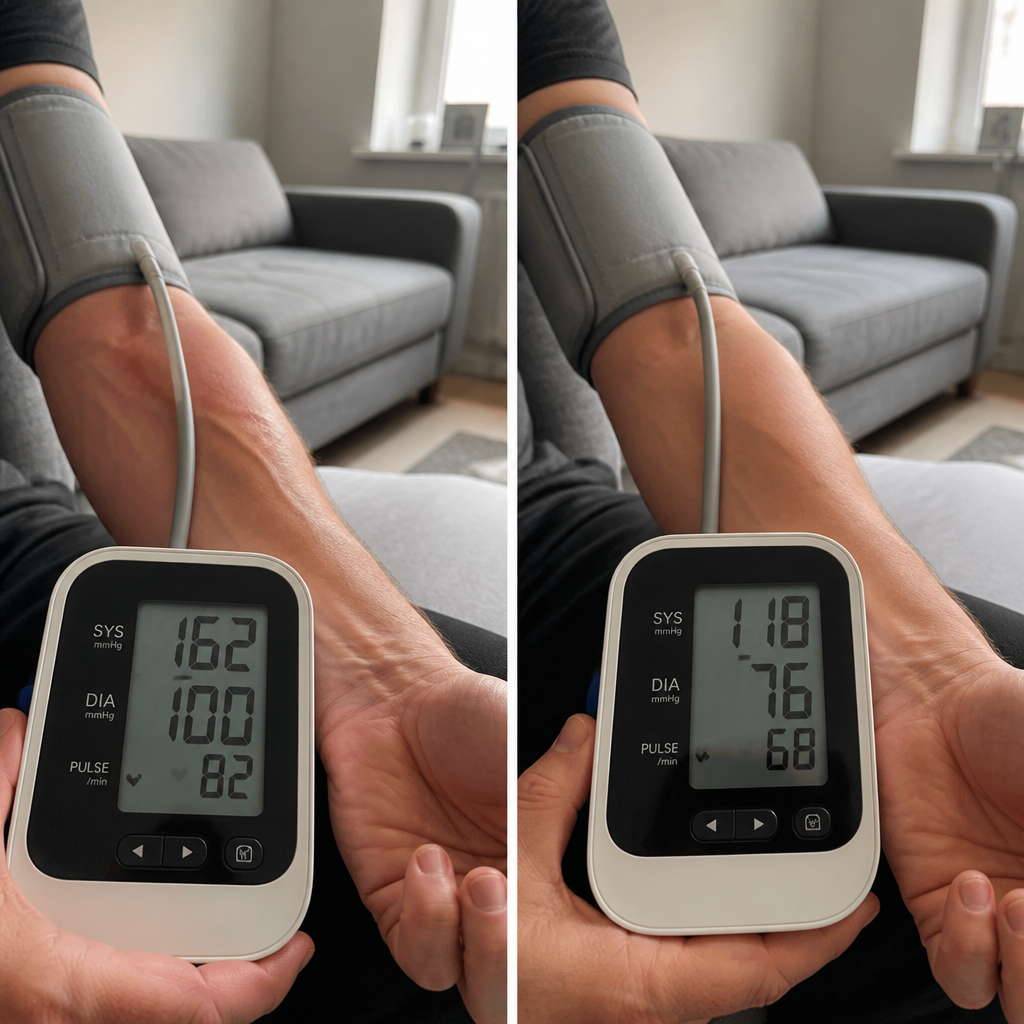
I'm 62. I have not had a blood pressure reading under 150 in four years. Four years. That's 1,460 mornings. I have a notebook in my kitchen drawer. Most of them are written down. The lowest I have seen in 1,460 mornings is 151 over 93. The highest is 184 over 111. The average sits around 162 over 97. Every single morning, for four years. Above 150. I have lost 23 pounds. I have given up salt. I have given up cured meats. I have given up alcohol. I have given up coffee for stretches at a time. I walk three miles every morning with my dog. I tried meditation. I tried fish oil. Garlic capsules. CoQ10. Magnesium. Hawthorn berry. L-arginine. Beet juice for almost a year. A green powder my wife found that tasted like wet hay. Three different "circulation support" products from the health food store. Nothing moved. Above 150. Every single morning. For four years. You start to feel like the number is just who you are. You stop expecting it to change. You sit down at the kitchen table at 6am. You wrap the cuff. You press the button. You wait. You glance at the screen. You write it down. You close the notebook. You go pour coffee. It becomes part of your morning the way brushing your teeth is part of your morning. A small, ordinary tragedy. Last fall, my brother-in-law Dennis came over for Sunday dinner. Dennis spent 35 years working in a hospital setting. The careful, quiet kind of smart that makes you want to listen. We were sitting on the back porch after dinner. I told him. Four years. The notebook. The lowest reading I had ever seen. Dennis was quiet for a long moment. And then he said, "Tom. I want to tell you what a colleague of mine taught me six years ago. Nobody is talking about this and they should." Here's what he said. Inside your blood vessels is a thin lining called the endothelium. It is one cell thick. It does one job above everything else. It produces a molecule called nitric oxide. Nitric oxide is what tells your blood vessels to relax and open up. When nitric oxide is plentiful, your vessels stay flexible. Your blood flows easily. Your readings stay where they should. When nitric oxide drops, your vessels stiffen. The same amount of blood pushing through tighter pipes raises the pressure. That is what a high reading actually is. Not too much blood. Pipes that have lost their ability to flex. After 50, nitric oxide production drops by as much as 50 percent. By 60, it can be down 60 percent or more. Three things accelerate the drop. Decades of stress, processed food, and environmental wear damage the endothelium. Chronic inflammation interferes with nitric oxide production at the cellular level. And almost nothing on the supplement aisle actually reaches the endothelium. Beet juice has a small short-term effect. Garlic has a smaller one. CoQ10 works on a different system. L-arginine helps in the short term but plateaus. None of them feed the endothelium itself. None of them restore the body's ability to produce nitric oxide. Dennis said what I had tried so far could force the number down for a moment. But none of it was rebuilding the wall underneath. None of it was restoring the body's ability to make its own nitric oxide. Which was why I had been sitting at 162 over 97 for four years. He said what I actually needed was a specific plant compound called a flavanol. The kind found in raw cacao. I said, "Dennis. Chocolate?" He said, "Tom. It's not chocolate. It's cacao. Raw. Real." Cacao flavanols have been studied in dozens of clinical trials for their effect on the endothelium. They support nitric oxide production directly. They support healthy vascular flexibility. They support healthy circulation. They support healthy blood pressure levels already within the normal range. But here is the trap. Almost every cacao product on the shelf has been destroyed before it reaches you. The raw cacao bean is one of the densest sources of flavanols on earth. Roasting destroys 40 to 60 percent of the flavanols. Dutching with alkali destroys another 30 to 50 percent. Sugar, dairy, and emulsifiers dilute what's left. By the time it reaches the grocery shelf, 60 to 90 percent of the flavanols are gone. You're getting flavor. You're not getting function. I had been eating dark chocolate squares for two years. They had done nothing. Dennis said the cacao that works has to be: Raw. Cold-processed. Never roasted. Never dutched. Made from a heirloom bean called Criollo. Dosed at clinical levels of flavanols. Third-party tested. He said in six years of looking, he had only found one small company that hit every criterion. A company called MAÏA. The only one he had found that disclosed the exact flavanol content right on the label. Cold-processed. Criollo beans. Third-party tested every batch. No sugar. No dairy. No fillers. Just cacao, the way it has been made for five thousand years. I ordered it that night. It arrived four days later. I drank a cup every morning with hot water and a splash of milk. I kept the notebook. Week one. 158 over 95. Week two. 154 over 93. Week three. 151 over 91. Week four. 149 over 89. Below 150. The first time in four years. I sat at the table that morning for a long time. I looked at the screen. Then I looked at the notebook. Page after page of numbers above 150. And then this one. I wrote it down very slowly. Underlined it. Week six. 143 over 87. Week eight. 138 over 85. Week ten. 134 over 82. Last Friday morning the number on the screen was 128 over 78. I have not written down a number above 150 in three months. The notebook is almost full. I'm going to retire it on the first of next month. I'm going to start a new one. The first entry will be a number that doesn't scare me. I want to say something to the men reading this. If you have a notebook. If you have been writing down numbers above 150 for years. If you have stopped expecting it to change. If you have started to think the number is just who you are now. You are not who that number says you are. Your vessels have lost their flexibility. Your endothelium is producing less nitric oxide. The supplements and routines you have tried cannot reach the place where the actual problem is. MAÏA offers a 30-day money-back guarantee. That is the only reason I had the nerve to order it. If it doesn't work for you, they refund every dollar. They are a small company. They sell out. Last time I reordered, they were on backorder for over a week. So if you click below and they're out, I'm sorry. Try again next week. But if they have it. Get it. Don't write down one more number above 150. You can come back. I came back. Under 150 for the first time in four years. The link is below. https://shop.trymaia.co/shocking-discovery-bp
The #1 Cacao for Heart Health
LEARN MORELike this ad? Make it yours.
Crush rebuilds this exact creative around your product — your brand, your colors, your offer — in about a minute.