Rachel Thompson
Rachel Thompson Facebook ad: “Learn How Cervical Positioning Can Help”
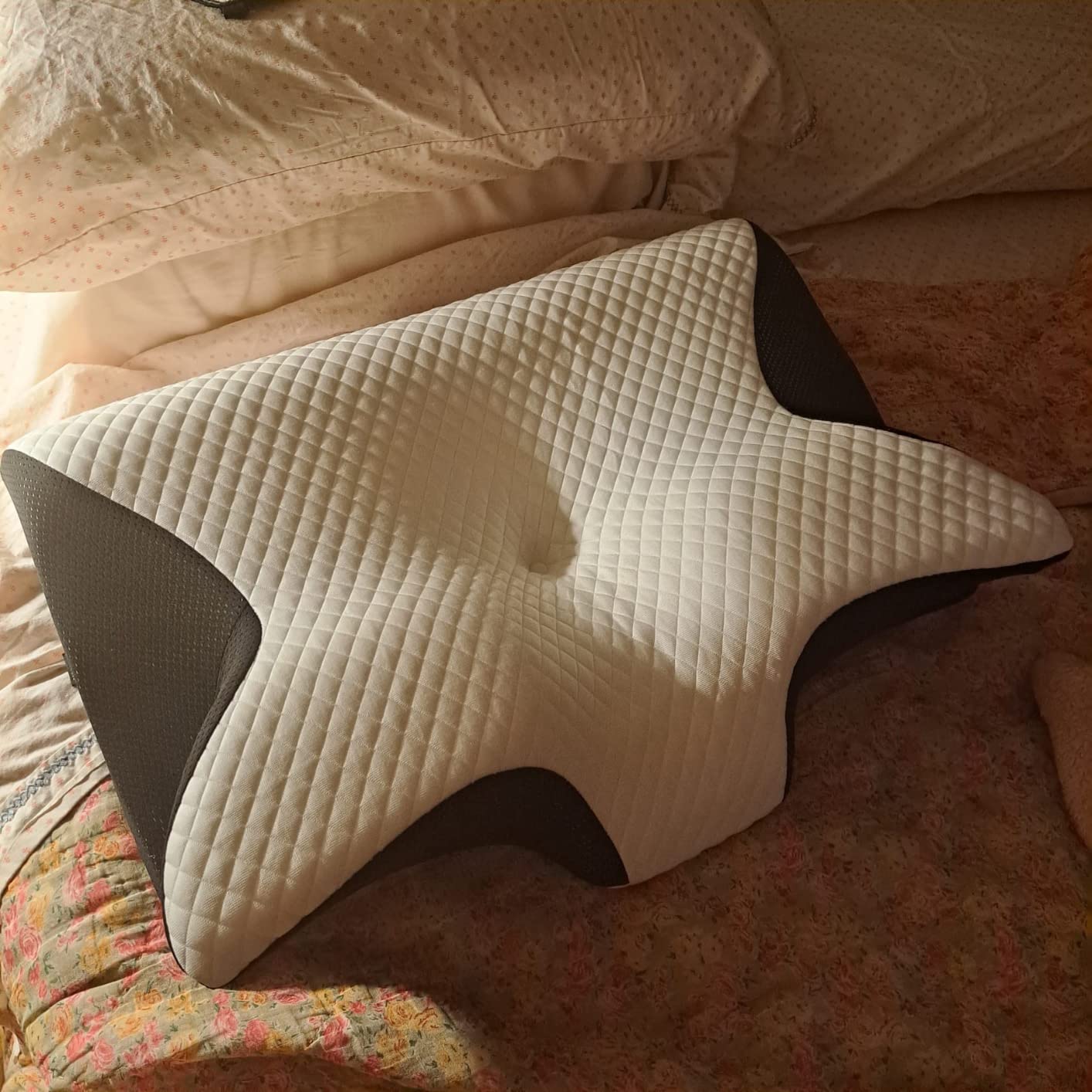
Ran for 104 days, from December 5, 2025 to March 18, 2026, the last day Crush saw it.
Run by Rachel Thompson on Facebook. Crush is not the advertiser and does not verify its claims. See this ad in Meta's Ad Library(opens in a new tab)
Want an ad like this for your product?
Crush makes new ad images for your product from this ad: your logo, your product photo, your offer.
Trials from $19.95 USD, then $79.95 USD a month. Cancel anytime.
About this ad
- Meta Ad Library ID
- 828805593399928
- Platforms
- Facebook, Instagram, Audience Network, Messenger and Threads
- Relaunches
- 0
Ad text
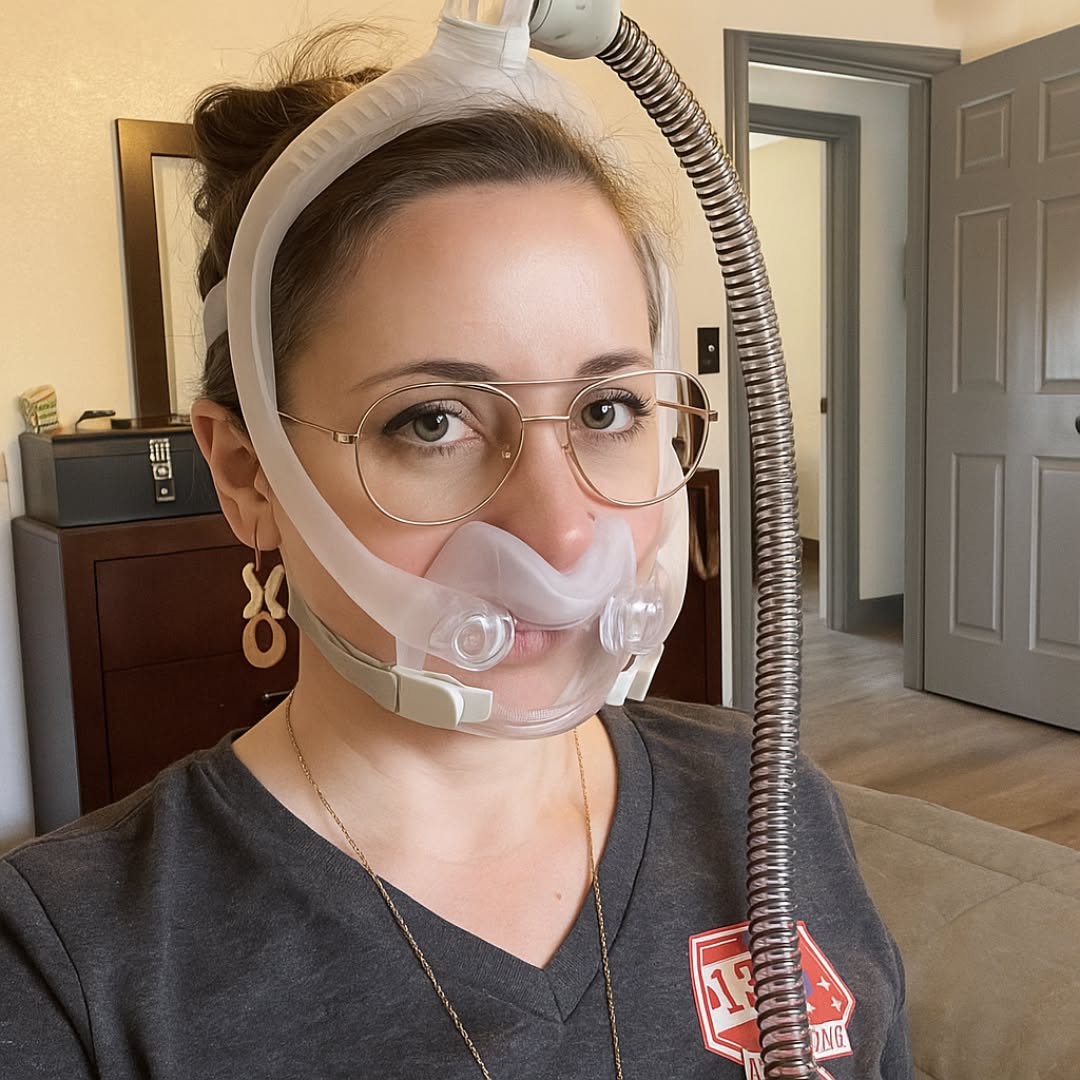
"I recorded eight hours of sleep on my back to prove I had sleep apnea. What I heard broke my heart." I was calling for my dead mother while my brain suffocated. For months, I'd been terrified I was developing early Alzheimer's. Just like Mom did at 58. Same symptoms. Forgetting names. Losing words mid-sentence. That vacant stare when I couldn't remember what I was doing. I'm 54 now. Mom was diagnosed at 58. Died at 63, not knowing who I was. The fear was eating me alive. Every forgotten appointment felt like the beginning of the end. Every misplaced key was proof I was following her path. I'd already started organizing my finances, writing letters to my kids for "later." The breaking point came when I couldn't remember my grandson's birthday party. Not just forgot to go - I had zero memory of being invited, despite my daughter showing me the text conversation where I'd promised to bring the cake. That night, I sat in my car outside the memory care facility where Mom had lived. Watching through the window at residents sitting in wheelchairs, staring at nothing. "Five years," I whispered. "That's all I have left." Started obsessively researching Alzheimer's prevention. Mediterranean diet. Crossword puzzles. Exercise. Nothing helped. The fog kept getting worse. My husband mentioned I'd been snoring lately. Gasping sometimes. "Maybe you have sleep apnea like your dad," he said. I dismissed it. Dad was overweight. I wasn't. Besides, I'm a back sleeper - isn't that just how people snore? But something nagged at me. At 2 AM, I found myself googling "sleep apnea vs early dementia symptoms." Found a Johns Hopkins study that stopped my heart. Untreated sleep apnea causes the exact same brain changes as early Alzheimer's. The hippocampus shrinks. Memory centers deteriorate. The symptoms are indistinguishable. But here's the part that made me angry: Unlike Alzheimer's, sleep apnea brain damage can be reversed if caught early. Bought a recording app for my phone. Set it up to record all night. The next morning, I listened. Snoring. Silence. Gasping. Silence. Choking sounds. Over and over. Worse than I'd imagined. But that wasn't what made me sob. At 3:47 AM, clear as day, I heard myself talking in my sleep during one of the breathing gaps: "Mom? Mom, where are you? I can't find you." I was calling for my dead mother while my brain was literally suffocating. Got a sleep study immediately. Severe apnea. 48 episodes per hour. "Back sleeping makes it worse," the doctor said. "Gravity pulls your tongue and soft tissues backward, blocking the airway." "But I can't sleep any other way," I told him. "I've tried for years. Side sleeping gives me panic attacks. Can't breathe." "Then we'll need higher CPAP pressure to overcome the gravity," he said. Started CPAP at pressure 15. The forced air felt like drowning. Mask leaked constantly from the high pressure. Woke up with my face swollen from the straps I'd tightened trying to stop leaks. Tried wedge pillows to elevate my head. Slid down them all night. Neck pain so bad I couldn't turn my head. Seven different masks. All failed. The high pressure needed for back sleeping made them unbearable. "Just learn to sleep on your side," everyone said. Like I hadn't tried. Like I could just reprogram 54 years of only being able to fall asleep on my back. Lost hope. Trapped in the worst position for apnea but physically unable to change it. My sister, a nurse in Denver, called one day. "Remember Dad's friend Walter? The back sleeper with severe apnea?" "The mechanic? He died years ago." "No, he's 89 and sharp as ever. I ran into him. He told me something about how he fixed his apnea without changing positions." She explained that Walter, also a lifelong back sleeper, had figured out the real problem wasn't sleeping on his back - it was that regular pillows let his chin drop toward his chest, which made gravity's effect worse. He'd rigged up a special pillow system to keep his cervical spine properly aligned even while on his back. "He said when your neck is properly supported, gravity can't pull everything backward the same way." That night, I experimented with rolled towels, trying to recreate what Walter described for back sleeping. Woke up feeling different. Clearer. Researched cervical positioning for back sleepers with sleep apnea. Found studies showing that proper neck alignment reduces how much gravity affects the airway. The right angle keeps tissues from collapsing backward. Found a company making medical-grade pillows specifically for this. The reviews were from back sleepers like me - couldn't change positions, couldn't tolerate high CPAP pressure, discovered proper neck support changed everything. One man wrote: "Back sleeper for 60 years. Nothing else worked. This saved my brain." Ordered one immediately. First night sleeping on my back with proper cervical support: minimal gasping. First week: started remembering conversations. First month: felt like someone had cleaned my windshield after driving through mud for years. Had another sleep study. AHI dropped from 48 to 7. Still on my back. The tech was confused. "Your neck position is completely different. The airway stays more open despite the gravity." Three months later, cognitive testing. Scores were completely normal. Better than normal for my age. "There's no sign of cognitive impairment," the neurologist said. "Whatever you were experiencing seems to have resolved." I cried in his office. Happy tears this time. Turns out Mom was a back sleeper too. Dad always complained about her snoring. She'd tried sleeping on her side but would wake up gasping, just like me. But in the 1990s, nobody understood that back sleepers needed specific neck support, not just position change. What we called Alzheimer's might have been her brain dying from improper neck alignment. Treatable with the right support. If only we'd known. I think about that all the time. The years we lost. The mother I lost while she was still alive. Last week, I was at my grandson's birthday party. Fully present. Making memories. My daughter pulled me aside. "Mom, you seem so much better. More like yourself." "I was so scared I was going to disappear like Grandma did." "Me too, Mom. Me too." I'm not going to disappear. Not from something as simple as improper neck support that nobody bothered to address. But how many back sleepers right now are being told to "just change positions" when they physically can't? How many are suffering with high-pressure CPAP because their neck angle is wrong? If you're a back sleeper terrified of dementia... if you can't tolerate the high pressure needed for your position... it might not be that you need to change how you sleep. You might just need to change how your neck is supported. Don't wait until you're planning for a future that doesn't have to happen. You can get the Airway Pro with their 120-night guarantee if you want to try it. My friend Carol, another back sleeper, said they were low on stock when she finally ordered hers. Check the link below to see if they have any.
Where the ad sends people
thesleepjournal.com
Learn How Cervical Positioning Can Help 👉
Airway Technology
Learn more: airway.technology(opens in a new tab)