
Sweet Home Australia
Inactive· since Jun 7, 2026
- 5
- days it ran
- 1
- relaunches
Ad copy
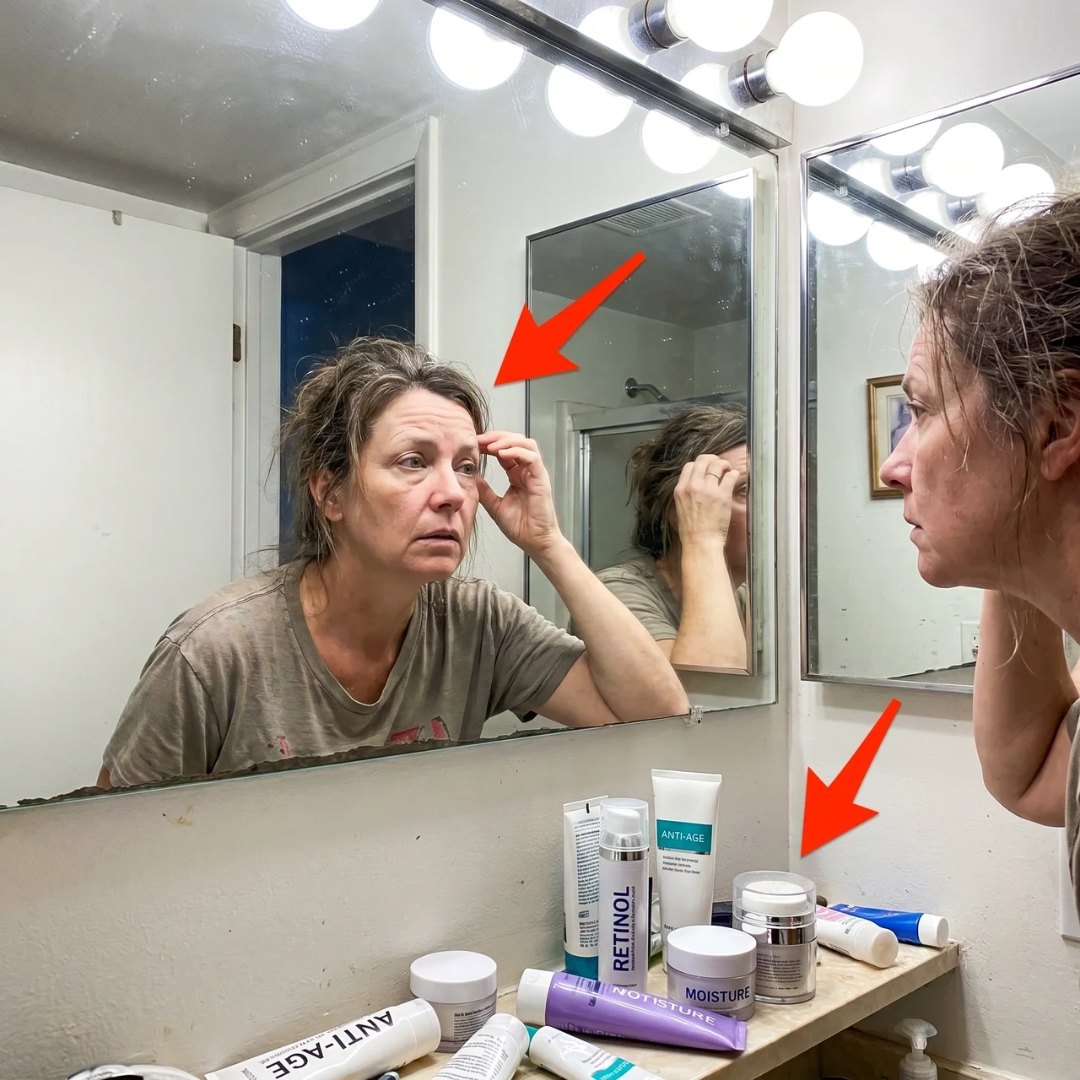
Korean women in their 60s consistently have better skin than American women in their 40s. ⠀ My name is Kim Joon-ho. I spent eight years in Seoul working in skincare formulation, and I can tell you exactly why. ⠀ I've spent the last twelve years watching American women do everything they're told to… only for their skin to keep getting worse. ⠀ I've stayed quiet for too long. ⠀ So let me ask you something. ⠀ Buying more skincare products is the secret to slowing down aging, right? ⠀ You've been told that more products — especially expensive ones — create a better routine that produces better skin. ⠀ But that's dead wrong. ⠀ The problem isn't something you can throw money at, and it certainly isn't something that a more rigorous routine can fix. ⠀ Because the problem isn't with you. Not your age, your skin, or your budget. ⠀ The problem is that the collagen molecules in every cream, serum, moisturizer, and overnight treatment you've used are literally too large to pass through your skin barrier. ⠀ There's a simple rule that Korean dermatologists use, and if your products don't follow it, they won't work. ⠀ No matter how much you paid. No matter how nice the brand is. ⠀ Dermatologists call it the 500-dalton rule. It has been published science since 2000. ⠀ Any collagen molecule larger than 500 daltons cannot penetrate the skin barrier. Instead, it accumulates on the surface, creates a temporary sensation of hydration, and evaporates while you sleep. ⠀ Standard collagen molecules in topical products run between 285,000 and 300,000 daltons. That's 600 times larger than they should be. ⠀ Even hydrolyzed collagen, a formulation developed to sound more scientific, is between 3,000 and 6,000 daltons in size. ⠀ That $300 prestige cream isn't any better than the $15 drugstore moisturizer if both have molecules too large. ⠀ You put them on at night. By morning, nothing is left on your skin. ⠀ Think about what that means. ⠀ Every cream you've layered on before bed. ⠀ Every serum you've pressed in carefully. ⠀ Every product you've repurchased because you assumed it was working. ⠀ All of it was gone by sunrise, and your skin didn't get any better. ⠀ And it's so quiet, you'd never know. ⠀ You wake up, your skin feels slightly drier than it did when you went to sleep, and you assume you need to apply more. So you do… and that evaporates too. ⠀ Most women only realize their expensive products aren't working after spending thousands and seeing no progress. ⠀ And if you're over 50, your natural collagen production has already declined by more than half. You're losing collagen faster. And nothing you're applying is getting through to replace it. ⠀ But here's what makes it genuinely infuriating. ⠀ The American skincare industry has known about the 500-dalton rule since it was published. ⠀ Everyone who researches, designs, and approves these products knows about it. ⠀ I know, because I sat in rooms in Seoul where this was discussed openly… and I watched executives make choices based on profit, not science. ⠀ Because if one product, used every night, could replace the dozen products you use daily, that's bad for profit. ⠀ Selling you something that solves the problem permanently is a bad move for companies whose revenue depends on your continued failure. ⠀ So they kept selling you creams and serums that can't help. ⠀ Your skin is not aging prematurely. It is not broken, and it isn't resistant to treatment. ⠀ It's just starving. ⠀ Your skin hasn't received collagen in years… maybe not ever. ⠀ Every product you've trusted for years has been sitting on the surface of your skin and evaporating. Your skin has been declining under a layer of expensive product that does nothing. ⠀ So how do Korean women actually solve this? ⠀ After all, the results speak for themselves. ⠀ The secret will sound shocking, but once you understand why, it makes all the sense in the world: They don't use collagen creams. ⠀ They use overnight balms with collagen molecules specifically processed to be small enough to physically cross the skin barrier. ⠀ But molecular size alone doesn't solve the full problem. Two more things have to be true. ⠀ First, the collagen has to be delivered using liposomal technology — carriers that match the skin's own chemistry so the skin accepts the molecules on contact rather than resisting them like other products. That delivery match is the difference between collagen that gets in and collagen that almost gets in. ⠀ And second, it has to stay working long enough for real absorption to happen. ⠀ The best option is a liposomal balm worn overnight. It keeps everything working against your skin for eight hours. Nothing evaporates or transfers to the pillow. Instead, your skin spends eight hours in direct contact with clinical-grade collagen with nowhere to go but in. ⠀ You glide it on before bed. By morning it has absorbed completely — not a trace on your pillow, not a film on your face. That's your confirmation that everything went into your skin instead of evaporating into the air. ⠀ Korean researchers figured this out decades ago. ⠀ American companies even sent people to Seoul to study the technology. ⠀ But when they came back and ran the numbers, they realized that an every-night product that actually works wouldn't make them rich… ⠀ So they kept making the creams. ⠀ One of my clients from Chicago came to me two years ago in tears. She realized that she'd spent close to $4,000 on skincare in the previous twelve months. ⠀ She had been more consistent than most women I've worked with. She'd done everything she was supposed to do. ⠀ And her skin looked exhausted. ⠀ She sat across from me and listed everything she'd tried. ⠀ La Mer, Drunk Elephant, SkinCeuticals. Prescription retinol that had made her skin peel. Collagen supplements every morning. $300 facials that lost their glow after 48 hours. ⠀ I handed her the Pinkish PDRN Collagen Volume Balm and told her to put it on that night and call me in the morning. ⠀ She called me before nine. ⠀ The difference she saw wasn't subtle progress, or the kind only visible in perfect light. ⠀ It was visible. A firmness she hadn't felt in years, fullness she could feel under her skin, and a glow that she thought was gone forever. ⠀ I told her to use it every night. Stop everything else and see what happens. ⠀ Three weeks in, the lines around her eyes were softer. Her jawline had more definition. The flat, dull look of her skin was lifting. ⠀ She stopped applying concealer in the mornings, because she just didn't need it. ⠀ Her daughter called her after seeing her at a family event and asked directly whether she'd had work done. ⠀ She hadn't. She had used fourteen nights of Pinkish. ⠀ Her husband, oblivious to all things beauty, looked across the dinner table one evening and asked if something had changed. ⠀ That's what happens when collagen works. ⠀ The products were always the problem, not your skin. ⠀ The only balm that I trust to fit my criteria is the Pinkish PDRN Collagen Volume Balm. ⠀ 200 Dalton collagen — small enough to actually pass through the skin barrier and reach the dermis where structure is collapsing. Liposomal PDRN, the same ingredient Korean aesthetic doctors have been using in clinics for decades, to signal your skin cells to rebuild collagen from the inside. And Volufiline, which directly targets the fat pads responsible for facial volume — restoring the fullness and structure that oestrogen loss took away. ⠀ The first night most women describe feeling like a switch flipped. ⠀ The dullness lifts, the lines around the eyes soften, and their jaw feels firmer. ⠀ That grayish, tired look that you can't seem to sleep off — gone. ⠀ Your skin feels full from the inside, not just coated from the outside. ⠀ Makeup that goes on easily because the skin underneath is actually healthy. ⠀ And all from applying one balm every night before bed. ⠀ But please listen to me: Don't buy Korean collagen products from Amazon or Sephora. ⠀ Those products are either counterfeits with filler collagen or a watered-down version of the original Korean formula. It's the same problems you've been facing for years, just repackaged. ⠀ There's a reason I only trust Pinkish. ⠀ They import the authentic Korean formula, with the same molecular weight, the same liposomal delivery system, and the same clinical-grade concentration. ⠀ Over 300,000 women are using it. ⠀ 4.9 stars across more than 16,000 reviews. ⠀ It's even sold out thirteen times in the last twelve months. ⠀ Just take a look at the reviews and you'll see why so many women have thrown away their skincare shelf for Pinkish. ⠀ Their current offer is buy one get one free. ⠀ On top of that, they've got a sixty-day money-back guarantee… though I've never seen anyone need it. ⠀ But be aware, they import directly from Korea. When the current stock is gone, the wait for the next shipment is weeks. ⠀ If they are still in stock, the link is below. ⠀ Korean and American dermatologists have known about the 500-dalton problem for decades. ⠀ You're the only one who didn't get the memo. ⠀ Now you know… and now you get to decide what to do.
Like this ad? Make it yours.
Crush rebuilds this exact creative around your product — your brand, your colors, your offer — in about a minute.