
Inactive· since Jul 27, 2026
- 5
- days it ran
- 0
- relaunches
Ad copy
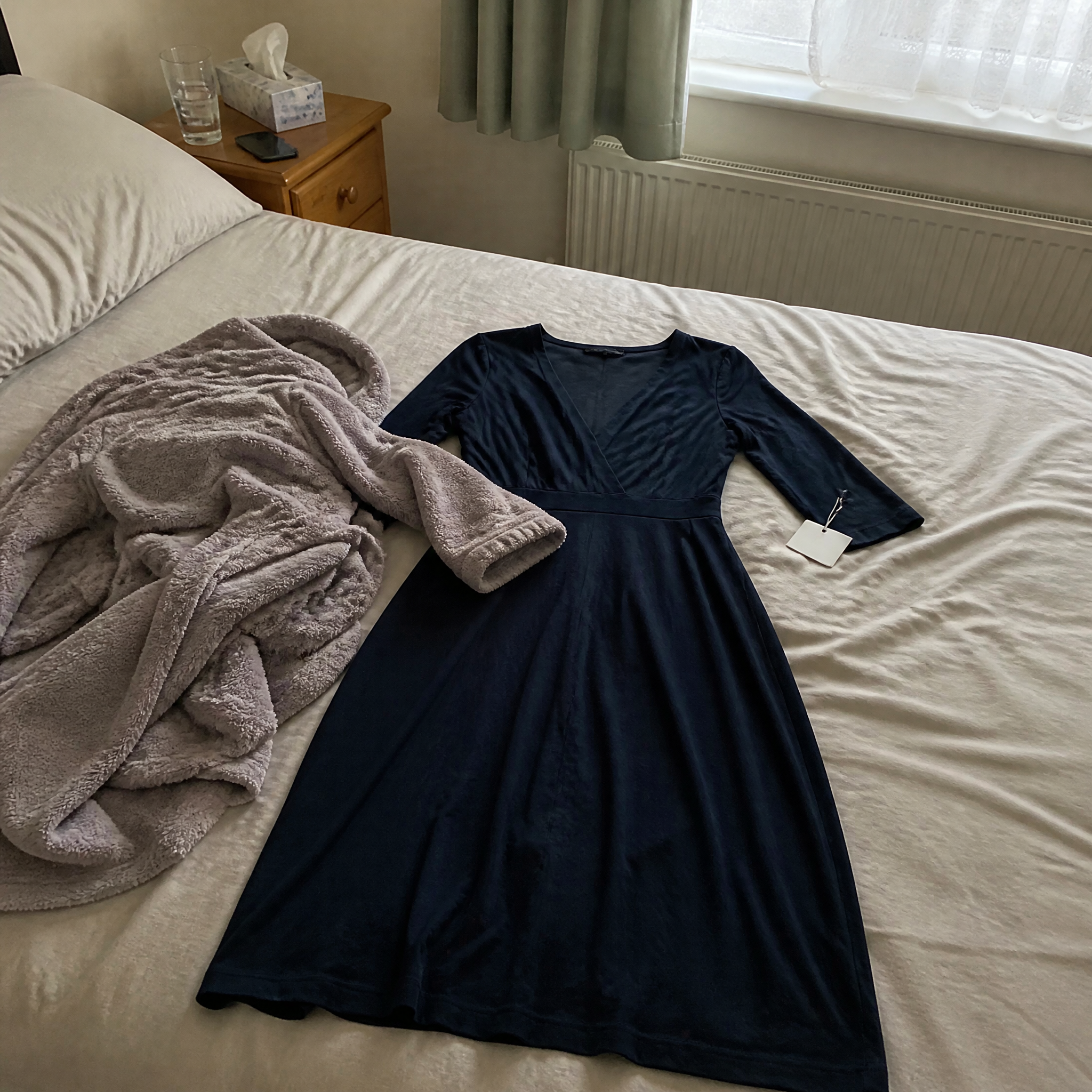
My mum sat on the edge of her bed last March and told me she didn't want to go to her own birthday dinner. She was afraid, but couldn't explain of what. There was no reason. No trigger. No logic. Just a wall of dread so heavy she couldn't get dressed. Twelve people were booked at her favourite restaurant. Her sister had driven up from Devon. My dad had bought her a new dress. And she was sitting on the bed in her dressing gown, hands shaking, saying: "I can't. Please don't make me. Something bad is going to happen." We all knew that nothing bad was going to happen, but knowing didn't change how her body felt. This is the bit I need you to hear - especially if you or someone you love has become a different person over the last few years and nobody can tell you why. Because what was happening to my mum wasn't a mental health problem. It was an organ nobody thought to check. My mum is 56. District nurse for twenty-two years. The kind of woman who handles other people's emergencies for a living and then comes home and handles her own family without missing anything. That's why what happened over the past three years was so frightening not just for her, but for all of us. Because the person we were watching wasn't someone we recognised. It started with sleep. She began waking up between 2 and 3 AM every single night. Heart pounding, chest tight, mind racing through a list of things that hadn't bothered her at bedtime but were now suddenly catastrophic at 2:40 in the morning. She'd lie there for two hours, sometimes three, too wired to sleep, too exhausted to get up. Then the alarm would go off and she'd start the day already running on empty. That went on for months before she told anyone. Then the crying started. She'd be standing at the kitchen sink doing the washing up and tears would just come, with no warning and no reason, and she'd stand there with wet hands and a wet face, thinking: what is wrong with me? Then the irritability. My dad bore the brunt of this. She'd snap at him for breathing too loudly. For leaving a cupboard open. For asking what she wanted for dinner. Small, harmless things that suddenly felt enormous and suffocating. Then the withdrawal. She stopped accepting invitations. Stopped suggesting things. Stopped wanting to leave the house on weekends. She'd sit in the living room with the curtains half-drawn and say she was "just tired" - but she wasn't tired. She was scared of a feeling she couldn't name. Then the dread. That's the only word that fits. A constant, low-frequency hum of wrongness. Like standing on a platform waiting for a train you can feel coming but can't see. No cause. No object. No threat. Just the hum, all day, every day, sitting behind everything she did. She described it to me once and I've never forgotten it: "It's like my body is screaming that something terrible is about to happen, and my brain knows nothing is, and they're arguing with each other all day long." She went to her GP. He listened for about eight minutes. Asked her a questionnaire. Scored her for anxiety and depression. Told her she was "presenting with moderate generalised anxiety" and offered her a prescription for sertraline. An antidepressant. She asked him why. Why now. Why would anxiety just appear in her fifties with no trigger, no trauma, no life event? He said: "These things can be hormonal. Perimenopause. Stress accumulates. Sometimes there's no clear reason." She left with the prescription and a referral for CBT. The waiting list was 14 weeks. She didn't fill the prescription. She told me: "I'm not depressed. Something is physically wrong and he's not looking for it." But what else do you do when the doctor says it's in your head? You start to wonder if it is. Over the next year my mum quietly came apart. She reduced her shifts. She stopped driving on motorways because the anxiety was too intense. She cancelled a holiday to Crete that she and my dad had been planning for months - told him she "just didn't feel up to it." She stopped cooking elaborate meals, which had always been her love language. Pasta and sauce from a jar became the norm. She didn't have the bandwidth for anything more. She saw the GP twice more. Once she was offered propranolol for the physical symptoms - the racing heart, the chest tightness. Once she was told to try meditation apps and reduce caffeine. She cut out coffee entirely. She downloaded Calm. She tried yoga. She tried journaling. She tried magnesium, ashwagandha, and a supplement called "Stress Relief" from Holland & Barrett that cost £18 and did absolutely nothing. She even went back and tried the sertraline for three months. It flattened her. She said: "I don't feel anxious anymore but I don't feel anything. I'm not crying at adverts but I'm also not laughing at jokes. It's like someone turned the volume down on my whole personality." She stopped the sertraline. The anxiety came back within two weeks, worse than before. I watched all of this happening and I couldn't fix it. And the guilt of watching your mum dissolve and not being able to help her is something I wouldn't wish on anyone. The thing nobody noticed - and I mean nobody, not her, not my dad, not three GPs - was what else had changed. Here's what I mean. While the anxiety was building, over that same period, her digestion had slowly fallen apart. Not dramatically. Not in a way she'd have gone to the doctor about separately. Just - deteriorating quietly. The bloating came first. Mild, then persistent. By evening her stomach was visibly distended. She wore looser tops. She stopped tucking things in. She said it was "just what happens as you get older." Then the bowels became unpredictable. Constipation for days, then sudden urgency. She started carrying spare underwear in her handbag, which she told me about in the smallest, most embarrassed voice I've ever heard from her. Then the sugar cravings. Biscuits at 10 PM. Chocolate hidden in her bedside drawer. She said: "I know I shouldn't but I physically can't stop." And here's the thing that makes me want to scream: She mentioned every single one of these symptoms to her GP. At different appointments across two years. The bloating was filed under IBS. The bowel changes were filed under "dietary, try more fibre." The sugar cravings were filed under stress-related comfort eating. And the anxiety - the main event, the thing that was destroying her life - was filed under "generalised anxiety disorder." Not one person in that surgery looked at all of them together and asked: what if this is ONE thing? The night of the birthday dinner she refused to attend, I went home and I couldn't sleep. I kept thinking about who she used to be and who she was now and how nobody could explain the gap. And I kept coming back to one thought that wouldn't leave me alone: The anxiety started AFTER the digestion changed. Not before. After. I went back through it in my head. The bloating started first. Then the bowel changes. And THEN, months later, the sleep disruption, the crying, the dread, the withdrawal. Every doctor had assumed the anxiety was causing the gut problems. (stress affects digestion, that's what they'd told her) But the timeline didn't support it. The gut changed first and then the mood followed. What if they had it backwards? What if her gut wasn't broken because she was anxious? What if she was anxious because her gut was broken? I searched for three hours that night. And what I found made me so angry I had to close my laptop and walk around the block at 1 AM in my slippers. Over 90% of the serotonin in your body is produced in your gut. For every ten units of serotonin your body manufactures, nine are made in the lining of your intestines. Serotonin is the chemical that regulates mood, sleep, appetite, emotional resilience, the ability to feel calm and stable and like yourself. When it's flowing, you feel human. When it's not, you feel exactly like my mum felt. Anxious, tearful, irritable, unable to sleep, unable to cope, unable to explain why. Your brain doesn't make it. Your brain receives it. The brain is the customer. The gut is the factory. And if the factory is in chaos - if the gut lining where serotonin is produced is inflamed, overrun with harmful bacteria, and physically damaged - the shipments don't arrive. The brain doesn't get what it needs. And you feel it as anxiety, as insomnia, as dread, as a personality change you can't trace to any event. Here's what I learned next, and this is the part that connects everything: The gut lining where serotonin is produced can be disrupted by bacterial overgrowth. Harmful bacteria that colonise your intestinal wall, build a protective shield called biofilm, and sit there - feeding on your nutrients, producing toxins, and inflaming the very tissue responsible for manufacturing your mood. These bacteria don't just cause bloating and irregular bowels. They cause inflammation in the gut wall. And that inflammation disrupts the cells that produce serotonin. Bloating, bowel chaos, sugar cravings AND anxiety, sleep disruption, crying, mood collapse - all from the same source. The GP gave them five labels because he was looking at each one in isolation. He never looked at the gut lining and asked: what's happening to the serotonin production here? Because the NHS doesn't test for that. Standard blood tests don't measure gut serotonin output. Stool samples don't screen for biofilm-protected bacterial overgrowth. There is no box to tick on the GP's system that says "check whether the patient's intestinal serotonin production has been compromised by localised bacterial disruption." So it doesn't get checked and the patient gets sent home with sertraline and a leaflet. What destroys bacterial biofilm? Not probiotics. Probiotics add good bacteria. They don't remove the bad bacteria already entrenched behind their shield. That's not what they do. It's not what they were designed to do. Not antidepressants. Antidepressants adjust how the brain handles serotonin that's already been delivered. If the delivery has stopped because the factory is damaged, SSRIs are adjusting the reception desk of a building that's not receiving any mail. Not meditation. Not yoga. Not cutting caffeine. Not journaling. Those things can genuinely help with anxiety that starts in the brain. But if the anxiety starts in the gut - if the problem is a chemical shortage caused by physical damage - no breathing exercise will restart a factory. What breaks through biofilm is a compound called carvacrol. The active substance in wild oregano oil. Used as antimicrobial medicine across the Mediterranean for over 2,000 years. Modern research shows it dissolves the biofilm barrier, exposes the bacteria hiding underneath, and destroys them on contact. But - and this is where most people who try oregano oil on their own get it wrong - when those bacteria die, they burst open and release endotoxins. Poisonous waste. If your body can't clear that toxic debris fast enough, you feel worse. Headaches, nausea, fatigue. Some people try standalone oregano oil for a week, feel terrible, and stop. They think it made them ill but it didn't. The dying bacteria made them ill because nothing was cleaning up after them. That's where black seed oil comes in. A compound in it called thymoquinone binds to the dead bacteria and their toxins, calms the inflammation in the gut wall, and escorts everything out of the body. Demolition crew knocks down the walls. Cleanup crew removes the rubble. The factory floor gets cleared. The gut lining starts to recover. Serotonin production resumes. I found all of this through a woman in an online health group who'd been through something uncannily similar to my mum. Anxiety out of nowhere in her late forties. GP said stress. Gut symptoms that nobody connected to the mood. She'd found a product that combined both compounds - high-potency oregano oil and black seed oil - in one daily softgel. A brand called Herbies. She said something very specific that stopped me: "I didn't buy it for anxiety. I bought it because I was bloated. The anxiety clearing up was something I didn't expect and didn't notice until my husband pointed out I'd stopped snapping at him." The accidental benefit. The thing that wasn't on the label. That's what caught my attention - because nobody fabricates a side effect they weren't selling. I looked at the product. 85% carvacrol - that matters because most oregano oils on the market are 15 to 50%, and the research on biofilm disruption uses high-concentration carvacrol. Below 80%, the biofilm holds. The bacteria stay protected. Nothing reaches the gut wall. Nothing changes. Cold-pressed black seed oil, nitrogen-sealed to preserve the thymoquinone. Most black seed oil on shelves has already oxidised. The active compound has degraded before you swallow it. Both in one tasteless softgel. Two a day with a meal. I ordered it for my mum. Told her it was for her bloating. Didn't mention serotonin. Didn't mention mood. Didn't mention anxiety. If I'd said "this supplement might help your anxiety," she'd have rolled her eyes and put it in the drawer with the ashwagandha. She took it for the gut. What happened to her mood was something neither of us was prepared for. Days one to four: her digestion woke up. More frequent bowel movements, some rumbling, her body clearing out. She rang me on day three slightly concerned. I told her it was normal - the cleanup process, the bacteria dying and being flushed. She stuck with it. End of week one: the bloating after dinner was noticeably less. She ate a full Sunday roast and her stomach didn't balloon. She was pleased but cautious. She'd been fooled by probiotics before. Week two: something quiet started shifting. She didn't mention it. My dad did. He rang me on a Tuesday evening and said: "Has your mum said anything to you? Because she's different. She made a joke at dinner last night. I mean a proper joke. She hasn't done that in months." I asked her about it the next day. She said: "I don't know. I just feel a bit lighter in my head." Week three: she slept through the night. Three nights in a row. No 2:40 AM bolt upright. No racing heart. She texted me at 7 AM: "I just woke up from a full night's sleep and I feel like I've been on holiday." The sugar cravings were gone. The biscuit tin sat untouched for eleven days before she mentioned it. "I just forgot they were there," she said. As though forgetting biscuits existed was the most natural thing in the world. For two years she hadn't been able to walk past them. Week four: she went to a garden centre with my dad without dreading it. Now it's been eight months. My mum takes two Herbies softgels every morning. She's sleeping through the night. The anxiety is gone. She's cooking again. Walking again. Laughing again, the real laugh, the loud one that used to embarrass me as a teenager and that I would now pay any amount of money to hear. She went to Crete. The holiday she'd cancelled. She and my dad went for two weeks in September. She swam in the sea every morning. She ate at restaurants without planning an exit. She came home tanned and calm and looking ten years younger. She went back to full shifts at work. She hosted Christmas. She's herself. And the gut symptoms - the ones she'd actually bought Herbies for? The bloating is gone. The reflux is gone. The bowels are predictable and normal for the first time in years. But she didn't come back because her stomach flattened. She came back because the factory that makes her feel like a human being started working again. Now. If you're reading this and you're nodding. If you've been anxious in a way you can't explain, in a way that doesn't match your life, in a way that arrived without warning and won't leave no matter what you try. If you've been crying and you don't know why. If you've been waking at 2 or 3 AM with your heart pounding and nothing to be afraid of. If you've been snapping at people you love and hating yourself for it. If you've been withdrawing from things you used to enjoy and telling yourself you're "just tired." If your GP has said the word "anxiety" or "stress" or "perimenopause" and offered you a pill, and you took it, and it either didn't work or turned down the volume on your entire personality. And - this is the part that matters - if you also have gut symptoms. Even mild ones. Even ones you've dismissed. Bloating. Irregular bowels. Sugar cravings. Fatigue that sleep doesn't fix. Reflux. That heavy, sluggish, wrong feeling in your body. Ask yourself one question: Which came first? The mood - or the gut? Because if the gut changed before the mood did, you might not have an anxiety problem. You might have a serotonin production problem. In the organ that makes 90% of it. That nobody checked. Herbies Oregano+ is two softgels a day: ✅ 85% carvacrol from wild Mediterranean oregano - dissolves the biofilm shield that harmful bacteria build in the gut wall, kills them on contact. This is the compound that clears the factory floor. Far above the 15–50% in most shop-bought oregano oils, which can't breach the biofilm barrier. ✅ Cold-pressed black seed oil with active thymoquinone - binds to the dead bacteria and their toxins, calms the inflammation, and flushes everything out. Prevents the "die-off" reaction that makes people quit standalone oregano oil after a week. ✅ Nitrogen-sealed softgels - the active compounds stay potent for two years instead of oxidising in the bottle. ✅ Third-party lab tested, results published on the site. ✅ No fillers. No taste. No oily burps. No refrigeration. ✅ 30-day money-back guarantee. Full refund if you don't feel the difference. I didn't buy this for my mum's anxiety. I bought it for her bloating. The anxiety clearing up was the thing that changed her life. It was also the thing no doctor, no prescription, no meditation app, no therapy waitlist, and no £18 bottle of ashwagandha ever touched. Because they were all treating the wrong organ. You can't meditate your way out of a chemical shortage. You can't breathe your way through a damaged factory. And you can't adjust the reception desk when the mail has stopped arriving. But you can clear the factory floor. And let the production line restart. Day three, my mum's gut started clearing out. Week two, my dad rang me to say she'd made a joke at dinner. Week five, she went to a garden centre on a Saturday because she wanted to. Week six, she said: "I feel like myself again." That sentence is worth more than £2,000 in GP visits, prescriptions, and supplements that treated the symptom and ignored the source. Fair warning: Herbies is a small company. They sell out regularly. If you click the link and it's in stock, don't wait. Because if your gut is what's been stealing your mood, your sleep, your patience, your ability to feel like you - a bottle of sertraline was never going to give it back. But repairing the place where it's actually made might. 👇 Click below to check if Herbies is in stock. https://herbies.co/products/herbies-oregano-plus If you've been told it's "just anxiety" and you know in your bones it's something more - trust that feeling. Your gut has been trying to tell you. Someone should have listened sooner.
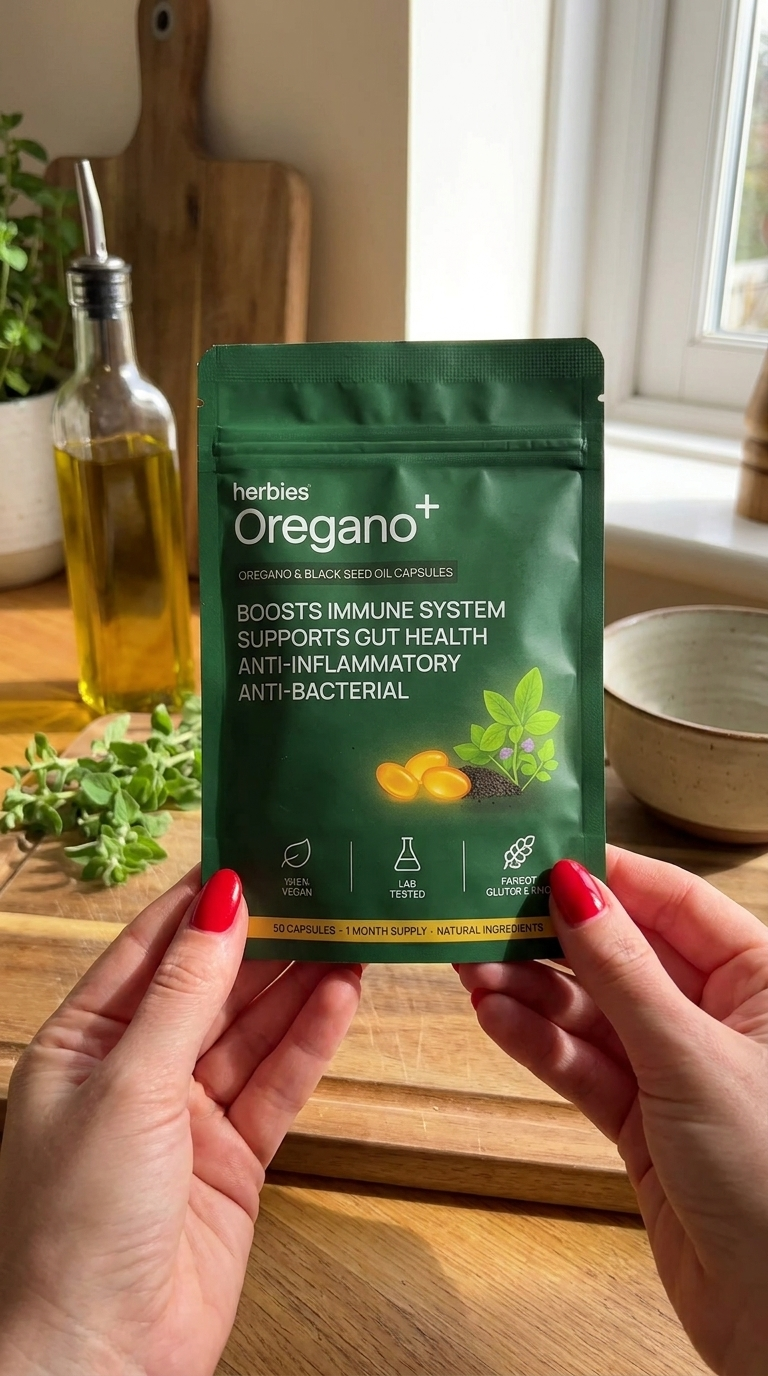
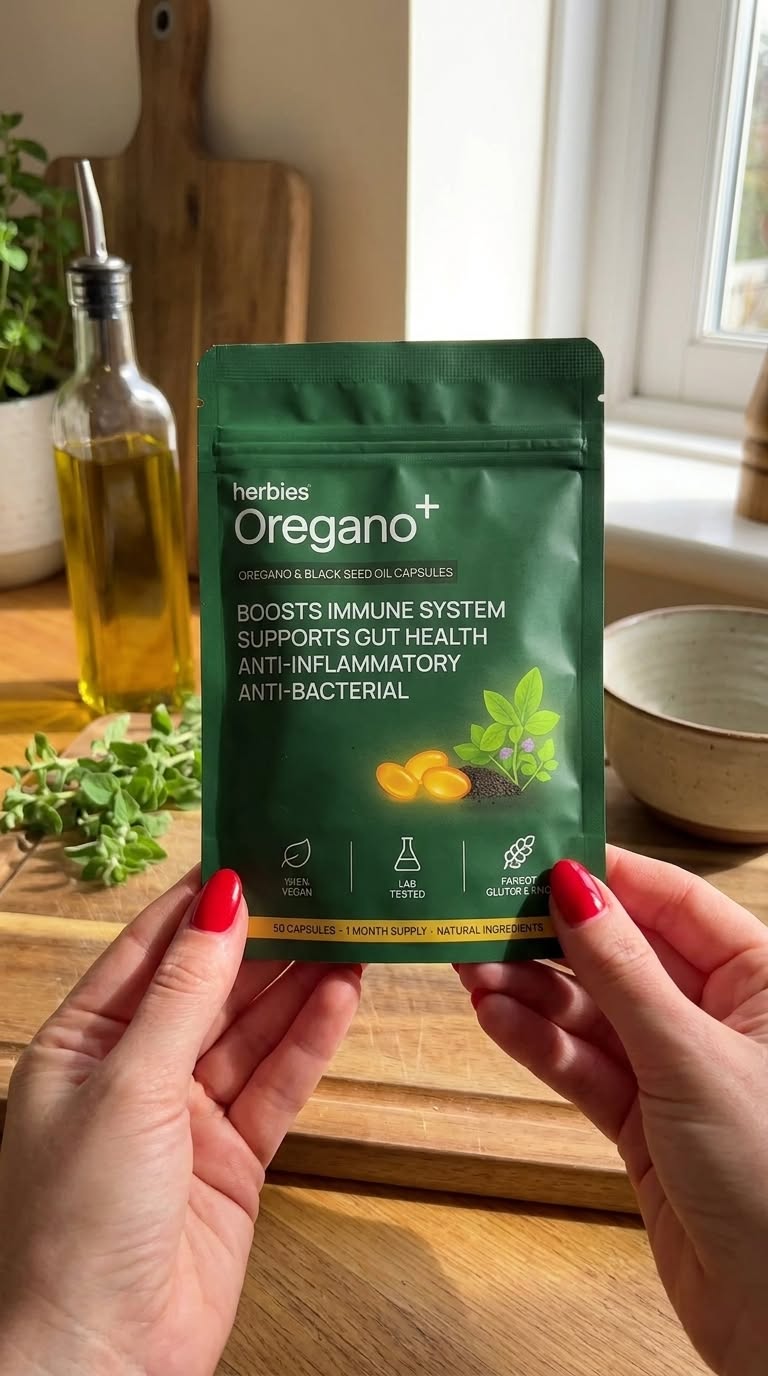
Oregano Oil + Black seed Oil
Feeling bloated, heavy, or drained after meals? Oregano+ combines the natural power of oregano oil and black seed oil in one easy-to-swallow softgel capsule. Together, they support your gut balance from the inside out, no side effects, no oregano burps. 2 capsules a day. 30 doses per satchet. Simple...
LEARN MORELike this ad? Make it yours.
Crush rebuilds this exact creative around your product — your brand, your colors, your offer — in about a minute.