Thomas Parker
Thomas Parker Facebook ad: “Million-dollar tool”
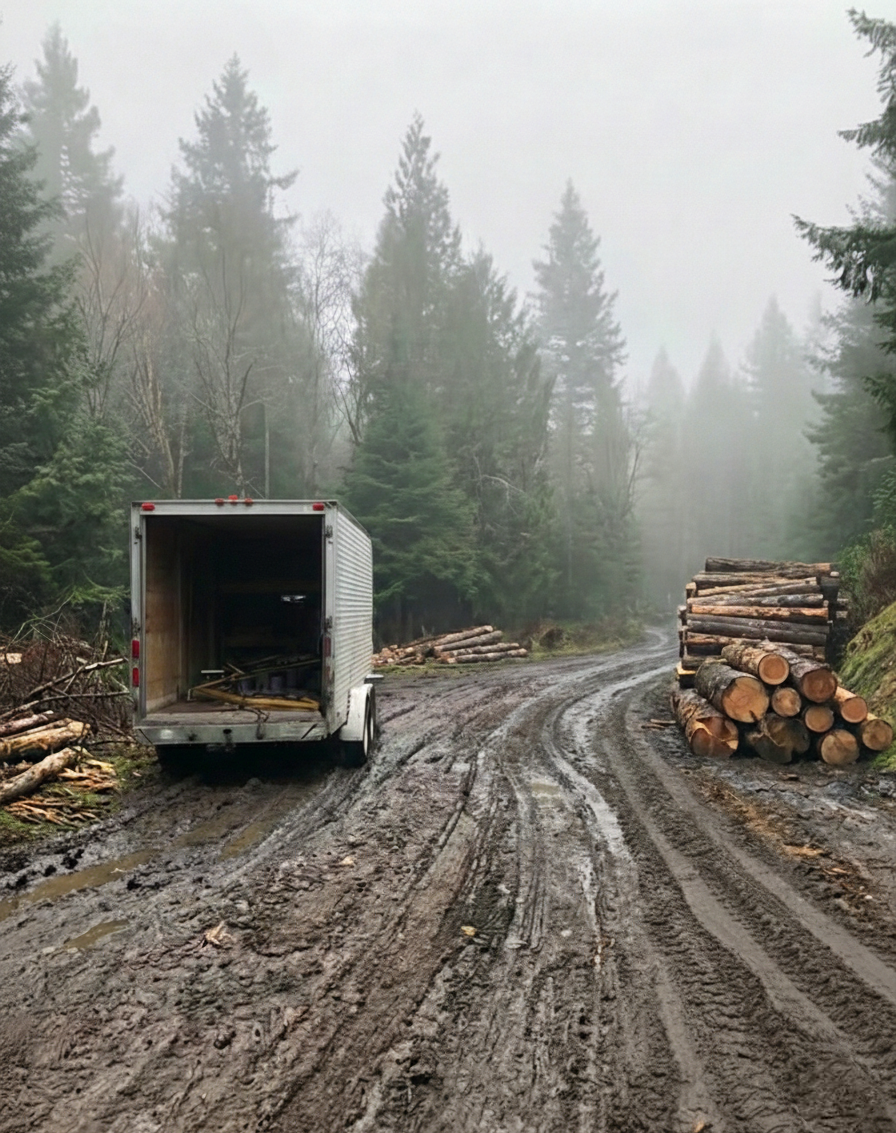
Ran for 2 days, from February 24 to February 26, 2026, the last day Crush saw it.
Run by Thomas Parker on Facebook. Crush is not the advertiser and does not verify its claims. See this ad in Meta's Ad Library(opens in a new tab)
Want an ad like this for your product?
Crush makes new ad images for your product from this ad: your logo, your product photo, your offer.
Trials from $19.95 USD, then $79.95 USD a month. Cancel anytime.
About this ad
- Meta Ad Library ID
- 844114888680123
- Platforms
- Facebook, Instagram, Audience Network, Messenger and Threads
- Relaunches
- 0
Ad text
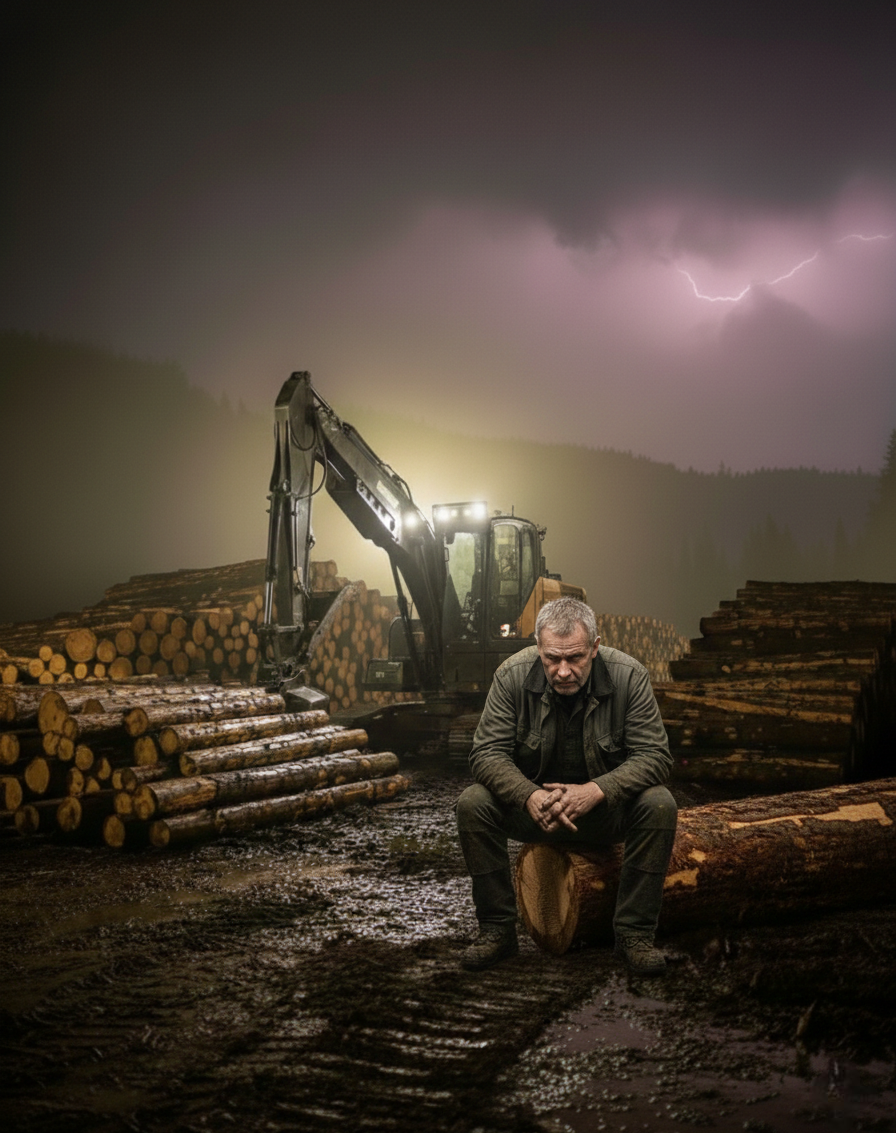
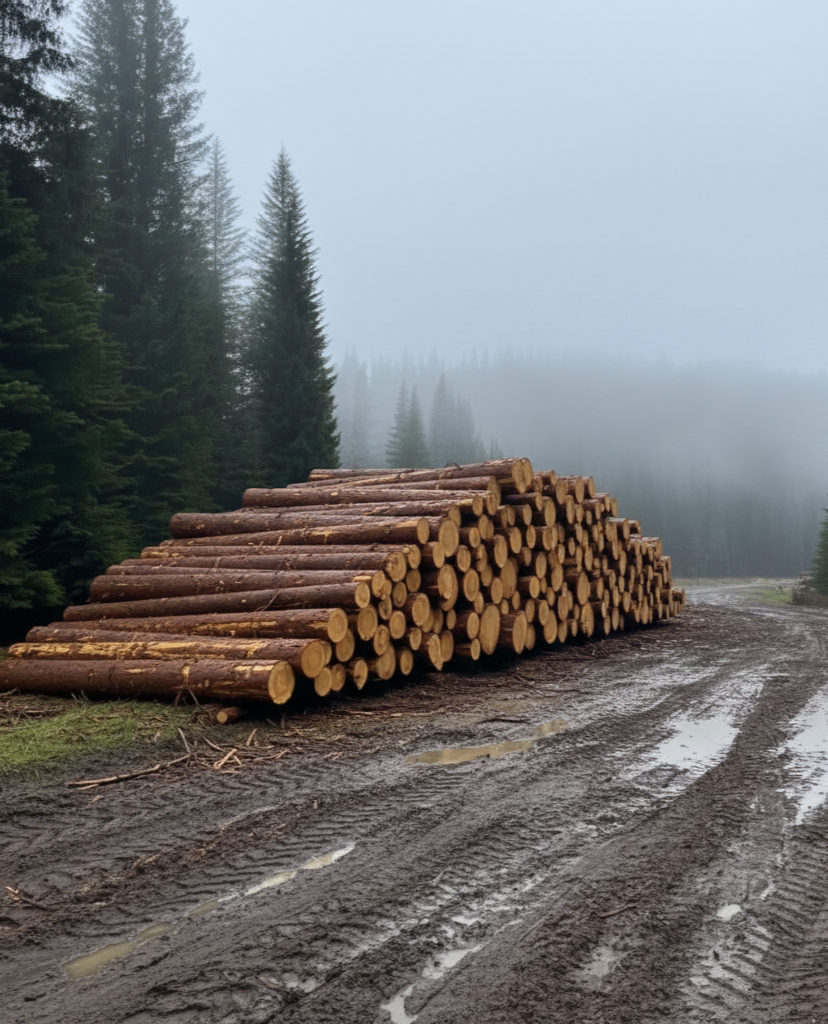
When your son walks away from a junior associate position at a top-tier law firm in Seattle to come home and work timber, and you find him standing on a hillside at 2 AM next to a dead processor with three hundred thousand board feet of cut logs on the landing and a Pacific storm forty-eight hours out from turning every logging road into a river that won't clear until May, you don't want him second-guessing the life he left behind. Here's what happened. We run about 6,300 acres of managed Douglas fir and western red cedar in the Oregon Cascades. East of Mill City, where the valley floor starts climbing into the foothills. Three generations. My grandfather broke ground here in 1947. My father held the operation together through the spotted owl years when half the timber families in Oregon went under. I stepped in at twenty-six after a widow maker landed my father in a hospital bed for four months. My son Marcus graduated from University of Washington with a degree in political science. Sharp enough to get into their law school. Passed the bar on his first attempt and landed an associate position at a large Seattle firm — corporate litigation, the kind of place where first-year associates bill two thousand hours and partners drive German cars. The salary track would have had him clearing more in his third year than this logging operation has netted in any single year of its existence. He lasted two years. Called me on a Wednesday night after a fourteen-hour day spent preparing deposition summaries for a commercial dispute between two companies neither of us had ever heard of. "Dad, I'm spending my days arguing over money for people who already have too much of it. Nothing I do out here matters to anyone who actually needs it. I want to come home." He was on the mountain by the weekend. Didn't finish the case. Drove the three hours south through the dark, pulled into the landing, and walked straight to the processor — a John Deere 2154G with a Waratah 622B head — and started working through the intermittent feed roller stall we'd been chasing for weeks. Tracked it down in two hours. Hairline fracture in a hydraulic valve spool that only failed under sustained load. He found it by running the head under pressure while watching a gauge he'd rigged to the test port. Same methodical thinking he used building arguments from deposition transcripts and technical evidence. That's Marcus. He finds the flaw under pressure, not sitting still at a desk. Last October we were deep into the fall harvest. Best timber sale in seven years. Seventy-five acre unit of fifty-year-old second growth Douglas fir. Average tree running twenty-three inches at diameter. Mill price for delivered sawlogs at $726 per thousand board feet — highest we'd seen since the post-pandemic spike. Unit worth upward of $760,000 on the stump if we could get it cut and hauled before winter closed us down. Then the weather models shifted Monday afternoon. Atmospheric river building in the Pacific. Pineapple Express lined up on the Cascades. Six to ten inches forecast Wednesday through Saturday. If you've never logged the Pacific Northwest, let me explain what that does to an operation. Logging roads out here are dirt. Not gravel. Dirt. When six inches falls inside three days, those roads don't turn muddy — they go liquid. Volcanic soil becomes slurry that can swallow a loaded truck past its axles. Entire sections peel off the hillside and disappear. Once roads fail, they stay failed until May. Sometimes June. Any logs sitting on the landing when roads close are stuck there through winter. Fresh Doug fir worth $726 in October is worth $480 by April if checking stays moderate. Worth $360 if the stain has moved in. Worth nothing once decay takes hold. We had 300,000 board feet on the landing waiting for trucks. Roughly $217,000 worth. Haulers were scheduled for Tuesday. But we also had 175,000 board feet still standing that needed to come down before the roads turned. Tuesday morning, 1 AM, Marcus was already running the processor under work lights. At 1:40 AM, the head stopped feeding. The feed roller motor mounting bolt had worked free from cyclic loading. Every tree through the head is a load event. Six hundred per day. The bolt backed out just enough that the motor shifted, the coupling lost alignment, and the rollers locked up. Processor holding a forty-foot log it couldn't feed, delimb, or buck. Not a hydraulic failure. Not a blown motor. One bolt. Seat it, torque it, motor comes back into alignment, rollers turn. Marcus had the bolt. He always had the bolt. The month he came home he went through every critical fastener on every piece of equipment and catalogued them. Same format he used organizing case files — component name, thread spec, torque value, material grade, risk of failure. The feed roller bolt ranked third highest. Replacements were already sitting in a labeled vial on the parts shelf. Lawyer's discipline. Everything indexed, everything findable at 2 AM. The bolt lived in a pocket between the motor housing and the head frame. Less than an inch of clearance. Roller guard sitting across the top. Hydraulic lines running along the bottom. Everything packed with bark, pitch, cambium slime, hydraulic oil, and sawdust paste. That particular black resin that forms when Douglas fir pitch meets diesel exhaust. Thick as roofing tar. Marcus could see the bolt hole. Could thread it a turn and a half with his fingertip. He spent five hours on it alone. In the dark. Forty-degree air at three thousand feet. Fog rolling in off the valley. That's Marcus. At the firm he once spent an entire weekend reconstructing a chain of financial transfers that opposing counsel claimed were untraceable. Found the thread, pulled it apart, won the motion. Same refusal to let an obstacle set the timeline. He walked into the equipment trailer at 6:30 AM. Hands black. Deep gash across three knuckles. Pitch worked into his hair. Voice level. Measured. "Feed roller motor mount bolt. Can thread it. Can't get a tool in behind the head frame to put any torque on it." I was up the mountain in twenty minutes. Full socket set. Every extension I owned. Standard ratchet. Handle hit the frame before the socket reached the bolt. Stubby ratchet. Got into the pocket. Still two inches short of bolt depth. Flex head. Flexed straight into the guard the moment I loaded it. Deep socket on a long extension. Extension wider than the gap. Wouldn't enter the pocket. Wobble socket. No chance of seating. Walked off the bolt head four times running. Universal joint. Torque scattered in every direction. Like trying to argue a case through three layers of bad translators. Crow foot wrench. Body hit the housing before the jaws found the bolt. Nine combined hours. One bolt. Log trucks pulling onto the landing below us. That's when I saw it in Marcus. Not on his face — lawyers learn early to keep that neutral. In his breathing. The way it slowed down and went deliberate. Eyes shut for a three count. The reset you do when a judge rules against you and you still have to stand back up and keep going. He'd walked away from the firm. Left the career track, the salary that would have cleared $180,000 in student debt inside six years, the path to partner before forty. Left his apartment in Seattle. Left the woman he'd been seeing, another associate who understood what billing season looked like from the inside. Left all of it because he believed this mountain was worth more than any billable hour in a glass tower downtown. And here he stood. Nine hours into a bolt he couldn't turn. Three hundred thousand board feet waiting. An atmospheric river aimed straight at the Cascades. Called the Deere dealer. "Every processor in the Cascades is racing this storm. Earliest we can get someone out is Monday." Rain was coming Wednesday. Called two independent mechanics. Both already committed. That's when the battered green pickup with the Oregon Logging Conference sticker ground its way up through the fog. Pete Halverson. Seventy-nine years old. Logged fifty-two years before his back put him off the equipment for good. Still drove the roads each fall, keeping tabs on the shows. Someone hauling past our landing had mentioned our processor was sitting cold. He crossed the landing the way old loggers move — eyes low first, checking for cables, then up to the decks reading the timber, then over to the equipment listening for what the show was telling him. Looked at the tools laid out like evidence after a case that hadn't gone the right way. Looked at Marcus. "You look like you've been in a fight with that machine for a while." "Since about 1 AM." Pete nodded slowly. The nod of a man who's watched people come and go from timber country for half a century. "Smart people always find what's wrong. Problem is they don't always have the right tool to reach where the fix needs to happen." Walked back to his truck. Returned carrying a flat steel tool. About fifteen inches long. Thin as a steel rule. Socket on one end, square drive on the other. Worn bare. Dark with decades of pitch and oil. A strip of old choker cable wrapped around the middle for grip. "Offset extension wrench," he said. "Chain driven. A fellow I bought rigging from handed me one of these back in 2012. Used it on every machine I ran for the next eight years. Doesn't matter how much pitch is on it. Doesn't matter how dark it is. Goes in, seats, turns. That's all you need out here." Stepped up onto the processor platform without hesitating. Angled the socket down into the pocket. Past the guard. Under the hydraulic lines. Into the recess where the bolt sat behind a quarter inch of compacted pitch. Socket found the bolt head. Seated clean through all of it. Looked over at Marcus. "Your machine. Your call." Marcus took the drive end. Applied rotation. Slow and controlled. Same measured pressure he used working through a technical argument — steady force, reading what came back through his hands. Bolt seated. Motor shifted back into alignment. Rollers engaged. Forty-five seconds. Forty-five seconds for a bolt the two of us had spent nine hours on. Marcus turned the tool over in his pitch-covered hands. Ran his thumb along the housing the way he used to read a key document looking for the line that changed everything. "Chain-driven parallel transfer. One-to-one torque ratio. No arc at the output." Pete laughed from the platform, the fog sitting around him like smoke off a slash pile. "Twelve years I've been calling it my timber saver. First time anybody's broken it down like that." Processor running by 12:30 PM. We pushed through the rest of Tuesday. Into Wednesday morning. Marcus ran the processor until midnight, then coffee at 4 AM waiting on enough daylight to finish the last section. He worked like a man who'd found the argument that mattered and wasn't going to stop until it was made. Every tree a problem worth solving. Every log a result he wasn't willing to give up. But we didn't finish. Rain came in Wednesday at noon. Four inches by Thursday. Roads turned to paste. The first truck that tried Thursday morning went sideways on a switchback. Two more inches Friday. The steep section above the creek gave way entirely. Eighty thousand board feet still standing in the upper unit. Best timber on the whole sale. Oldest trees. Highest value wood. And 115,000 board feet sat on that landing through winter. By May, end checking ran moderate to severe. Blue stain through the sapwood. Wood that should have scaled at $726 came back at $465 on checked logs, $375 on stained. Final tally: roughly $35,000 in lost value on stranded timber. Plus 80,000 board feet we never cut — approximately $41,000 in revenue gone for good. Seventy-six thousand dollars. Because of one bolt we couldn't reach for nine hours while a storm built itself out over the Pacific. That weekend Marcus ordered the same tool Pete had brought up the road. Ordered six of them. One for every machine. One for the trailer, on a stainless bracket he built himself with the part number stamped into the metal — because rain and pitch out here destroy every other kind of label inside a season. Seventy-nine dollars each. Since then we've reached for them more times than we can keep track of. Three times on the processor. That same feed roller bolt again the following show. A delimber knife bolt buried behind the housing. A saw bar bolt the service manual says you can't reach without pulling the entire saw assembly — Marcus fixed it on the hillside in twenty minutes. Twice on the feller buncher. Once on the skidder. Once on the loader. Once on my truck — starter bolt wedged into a space Ford's engineers apparently designed by accident. Two weeks back, a young guy on his first solo show called the trailer. Twenty-three years old. Skidder winch cable guide bolt had backed out. Logs on the ground. Weather in the forecast. His voice was calm but moving too fast — the sound of someone who's in over their head and trying not to show it. Marcus didn't ask him anything. Pulled the wrench off the bracket. "Drop me a pin." Was already in the truck. Bolt in under a minute. Wet hillside, rain starting to fall. The kid looked at the tool. Then at Marcus. "Why doesn't every logger in Oregon carry one of these?" Marcus sent him the link before he'd backed off the landing. No speech. No explanation. Just the link. Kid bought four of them that night. Here's what nobody tells you when your son gives up his career to come home. This equipment wasn't designed for the conditions it runs in. It was engineered in clean facilities and field-tested in controlled environments by technicians who bill $245 an hour and are fully booked during the exact window when every show in western Oregon is trying to beat the rain. Every bolt that matters is buried somewhere impossible. Every breakdown is a race between your toolbox and the weather. Every hour you can't fix it is another hour your son stands in the fog, eyes closed, carrying the weight of the career he walked away from and wondering if the one he chose will hold. But when you've got something that reaches those buried pockets. Something thin enough to clear the housing and the guard. Something with a chain drive that puts real torque on the fastener without needing room to swing. Something that works packed in pitch, works in the rain, works at 2 AM in the dark when the whole operation comes down to one bolt in one impossible corner. Those jobs that should mean two weeks in the shop become twenty-minute fixes on the side of a mountain. And when the fix holds and the processor starts running and the logs start moving, your son sees it clearly. The law firm he left, the career he turned down, the life he gave up — he sees that none of it compares to this. That coming home was right. It's called the Offset Extension Wrench. About fifteen inches. Chain drive inside. Seventy-nine dollars. Less than a single hour of dealer labor. Less than one truckload of processor fuel. Less than a tenth of a percent of what that storm took from us. I won't tell you it will save your show. But there's going to be a morning. The tightest morning of your tightest window. When your son comes through the trailer door at 2 AM with pitch on his hands and a photo of a bolt nobody can reach. When everything — the timber, the roads, the money, the person who chose to build something real instead of billing hours for someone else's problems — comes down to one bolt in one impossible space. When that morning comes, you either have the tool or you don't. We didn't. Now we do. Every machine. Every cab. Every toolbox. Mounted where you can grab it in the dark at 2 AM when the rain is two days out. Link's below. I hope you never need it the way we did. https://myhandytool.com/products/pro-offset-extension-wrench
Where the ad sends people
myhandytool.com
Million-dollar tool☝️
Reach the bolt. Skip the stress. ✅ Say Goodbye To Stuck Bolts – Now you can finally unscrew even the most hidden bolts without removing other parts. This is not just a tool, but a solution to your additional headaches. ✅ Perfect for Tight Angles – Reach impossible spots with your impact gun ...
Shop now: myhandytool.com(opens in a new tab)