
Active· since May 16, 2026
- 121
- days running
- 0
- relaunches
Ad copy
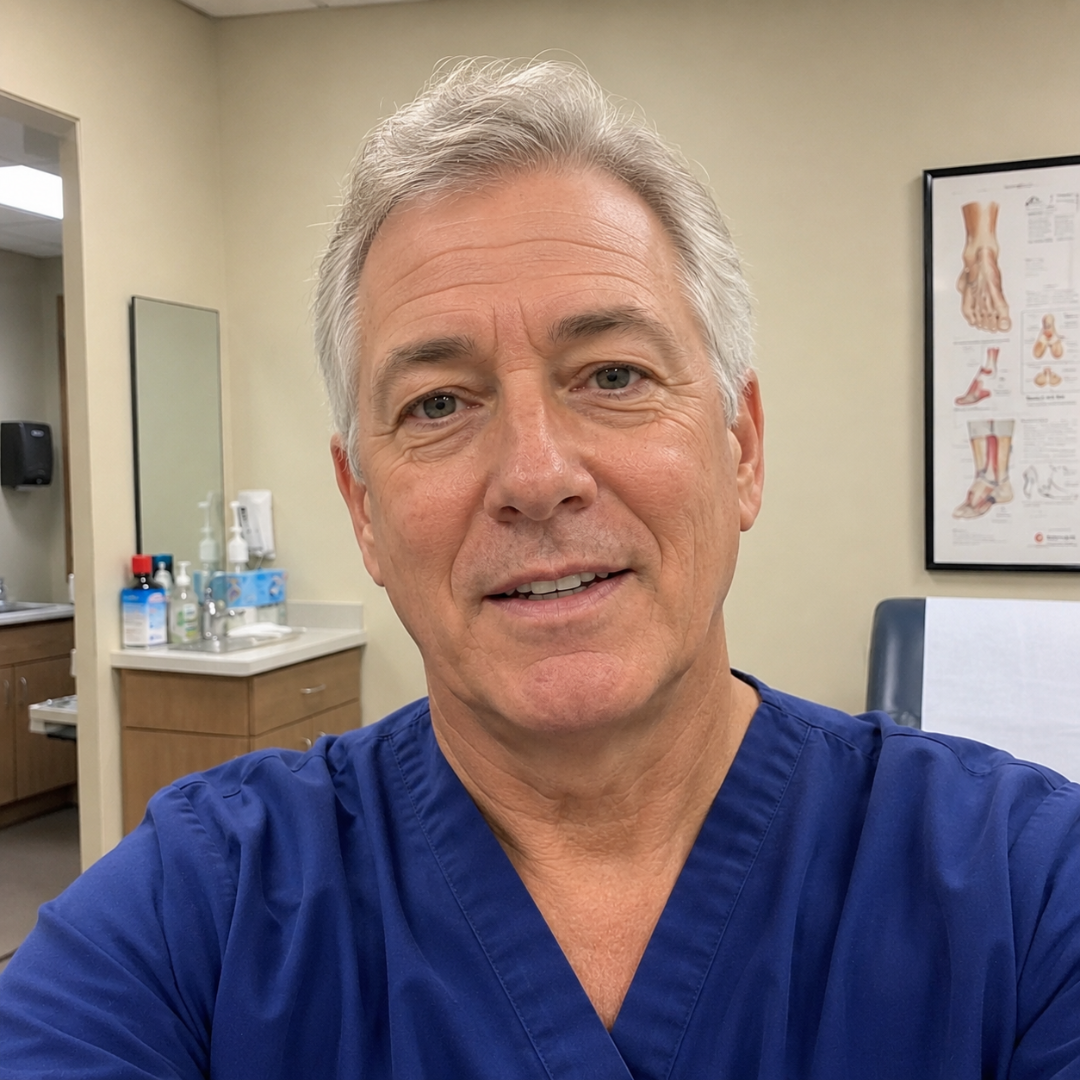
I almost lost my career as a Podiatrist to Plantar Fasciitis. Here's what saved me… I've been a podiatrist for 21 years. Last September, I almost had to close my practice… Not because of money. Not because of a lawsuit. … Because I couldn't stand up for more than 20 minutes without serious pain. There were three mornings last summer when I sat on the edge of my bed and could not put my feet on the floor. Not "didn't want to." Could not. The pain was so bad I just sat there. A 51-year-old man. A doctor. Stuck on the side of his own bed because his feet hurt too much to stand up and go to work. My wife found me on the second morning. She didn't say anything. She just got me a glass of water and sat next to me until I could make it to the bathroom. That's when I knew I was in trouble. Let me back up. I'm a podiatrist. Foot doctor. I've been doing this since I was 30 years old. I see 30 patients a day. I'm on my feet for 9 hours. Concrete floor under thin carpet. Plantar fasciitis is the most common thing I treat. I see it 15 times a day. I know every treatment. Every drug. Every procedure. I've done over 400 plantar fascia release surgeries in my career. So when my own heel started hurting two years ago, I thought I had it handled. I knew what to do. I'd been telling patients what to do for two decades. I was wrong. The pain started small. A little ache in my right heel in the morning. Gone by 10 AM. No big deal. Six months later it was both feet. The morning pain lasted until lunch. A year in, I was getting out of bed in stages. Sit up. Stretch the calf. Roll the foot on a frozen water bottle. Wait five minutes. Then stand. My wife started bringing me coffee in bed. Not because she's sweet. Because I couldn't walk to the kitchen. By month 14, I was lying to my staff. I'd tell them I had a phone call so I could sit down in my office for ten minutes. I'd skip lunch and put my feet up instead of eating. I'd schedule my surgeries on Tuesdays so I could spend Monday and Wednesday in less pain. My medical assistant noticed. She didn't say anything. But I saw her watching me. I tried everything I tell my patients to try. Cortisone injection. My partner did it. Felt better for five weeks. Then the pain came back worse. Every podiatrist knows cortisone weakens the fascia. We just don't tell patients because we have nothing better to offer. Custom orthotics. $700. Molded to my feet. Wore them every day for four months. The pain didn't move. Night splint. That big plastic boot that holds your foot at 90 degrees while you sleep. I lasted nine nights before I threw it across the bedroom. Stretching. Twenty minutes every morning. Twenty minutes every night. For seven months. The first step out of bed still felt like stepping on a knife. Ibuprofen. 800mg twice a day. My stomach started burning. My kidney labs started getting worse. My doctor told me to stop. By month 16, I was sitting in my own exam room on a Saturday morning, looking at my own X-rays, and thinking about surgery. Plantar fascia release. I've done 400 of them. I know the outcomes. About 70% of patients get real relief. The other 30% develop arch collapse, side foot pain, or chronic instability that's worse than what they started with. I wasn't going to gamble on 30%. Not on my own feet. Not when my career depended on it. So I sat in that exam room and I made a decision. I would close the practice. I'd sell it to my partner. I'd take the buyout. I'd retire at 51 years old and figure out something else to do with my life. Something I could do sitting down. I went home that Saturday and I didn't tell my wife. I couldn't say it out loud yet. I just sat in the backyard and watched the sun go down. Three days later, a patient walked into my exam room and changed everything. Her name is Diane. She's an ER nurse. 58 years old. 30 years on her feet. I'd been treating her plantar fasciitis for almost two years. We'd tried everything together. Cortisone twice. Orthotics. PT. Nothing worked for more than a few weeks. She was one of my most frustrated patients. She walked into my exam room that Tuesday morning and I noticed it before she even sat down. She wasn't limping. I asked her how her feet were doing. She said, "Dr. Patel, I think I'm done with plantar fasciitis. I worked a 12-hour shift on Saturday and didn't even think about my feet." I sat down on my rolling stool and just stared at her. This was a woman who couldn't walk from her car to the ER doors six months ago without stopping. "Diane. What did you do?" She told me about a red light therapy wrap her daughter bought her. Said she let it sit on a shelf for a month because she'd "tried every gadget on Amazon" and didn't believe another one would work. But her daughter kept asking, so she finally tried it. "First week, my heel felt less angry," she said. "Week four, the morning pain was half. Week eight, I forgot to use it one night and only noticed the next morning because I didn't have to brace for the first step." I'm going to be honest. I was skeptical. After 21 years in podiatry, I've heard every miracle story. Copper socks. Magnetic insoles. Essential oils. Patients who swear something worked when really their pain was just in a low cycle. But Diane wasn't that kind of patient. She was a charge nurse. She was as skeptical as I was. And I'd watched her struggle for two years. And she wasn't limping. Here's the thing though. I'd been seeing red light therapy everywhere lately. NFL teams using it for recovery. UFC fighters. NBA training rooms. I'd read an article a few months back about how the longevity guys — Peter Attia, Andrew Huberman, those people — were all talking about it for inflammation and tissue repair. I figured if pro athletes were spending real money on red light therapy for joint and tendon recovery, there had to be something to it. I just never thought about it for plantar fasciitis. I'd been trained that plantar fasciitis was a surgery problem. A cortisone problem. An orthotic problem. It never crossed my mind that a wavelength of light could reach the fascia. But Diane was standing there in my exam room and she wasn't limping. That night, I got up at 2 AM to use the bathroom and my right heel locked up so badly I had to sit on the toilet for four minutes before I could walk back to bed. I sat there in the dark, in pain, on my own toilet, and I thought about Diane walking into my office that morning. I started researching. Turns out, the science on red light therapy and plantar fasciitis is real. Really real. There's a study from BMJ Open — that's a peer-reviewed medical journal — with 18 randomized trials, 784 patients, 11 of those trials specifically on plantar fasciitis. Red light therapy showed clear pain reduction. No side effects. The studies using the right doses outperformed placebo by a lot. Not fringe. Not pseudoscience. Real clinical research. I'd been a podiatrist for 21 years and I'd never seriously studied this. None of us do. We're trained in surgery, drugs, and orthotics. That's it. But then I noticed something in the research that stopped me cold. The studies that failed had a pattern. Wrong wavelength. Wrong power. Wrong treatment time. The studies that worked used very specific settings: 660nm red light AND 850nm near-infrared. Both wavelengths. Together. At therapeutic power. For 15 to 20 minutes per session. That's the problem with the red light therapy market right now. Most products either claim to use both wavelengths but don't actually deliver them. Or they only use one — usually just 660nm. Or the power output is so weak it doesn't matter what wavelength they're using. There's a lot of garbage out there. Your plantar fascia sits 3 to 4 millimeters below your heel pad. To reach that tissue, you need 850nm near-infrared light. That's the only wavelength that goes deep enough. But most consumer wraps don't even list their power output. The label just says "red light therapy." That's it. No numbers. No wavelengths. Just a vague promise. So you're buying what you think is therapy, but you're really getting a flashlight pressed against your foot. I tried two anyway. First one was $49. Used it every night for five weeks. My morning pain didn't budge. Second one was $89. Six weeks. Same result. I was running out of time. I'd already told my partner we needed to talk about the practice. I had three weeks before the conversation I couldn't take back. So I went back to what Diane said. She'd been specific. She said most red light wraps didn't work — but this one did. She showed me the box in my exam room. FootRevive. I looked it up expecting to be disappointed again. But it was different. Dual wavelength. 660nm red AND 850nm near-infrared. The exact combination from the clinical studies. Therapeutic power density printed right on the spec sheet. Designed to wrap around the heel and arch. The two places where 95% of plantar fasciitis pain comes from. Not a generic foot pad. A wrap shaped for the actual anatomy of the plantar fascia. I ordered it that night. I didn't tell my wife. I didn't tell my partner. I had three weeks before I had to make a decision about my career. It arrived four days later. I used it that night on the couch after a 9-hour day. Wrapped it around my heel. Set the timer for 20 minutes. About ten minutes in, I noticed something. The deep ache I always had in my heel by the end of the day — the dull throbbing I'd lived with for so long I'd forgotten what its absence felt like — was just quieter. Not gone. Quieter. The next morning I got out of bed and took my first step. Still hurt. But it was a 5 out of 10 instead of a 7. I stood there in my bedroom and I just stared at the floor for a minute. A 5 was the best morning I'd had in 14 months. Week two: first step was a 4. I walked to the bathroom without limping for the first time in over a year. Week four: I forgot to use it one Thursday because I fell asleep on the couch. Friday morning was worse than Wednesday. That's when I knew it was actually working. The absence created a measurable change. Week six: I worked a full clinic day, came home, and went for a 20-minute walk with my wife after dinner. We hadn't taken an evening walk together in over a year. She didn't say anything during the walk. When we got home, she put her hand on my back and her hand was shaking. She'd noticed everything I thought I'd been hiding. Every wince. Every excuse. Every morning I sat on the edge of the bed too long. She'd been watching me disappear and she didn't know how to say it. Week eight: I got out of bed at 5:45 AM, walked straight to the bathroom, made coffee, and was halfway through reading the news before I realized I hadn't done my morning warmup. I hadn't needed to. I stood in my kitchen holding the coffee mug and I just laughed. Out loud. By myself. In my own kitchen at 6 AM. My wife came downstairs and asked what was so funny. I told her, "Nothing hurts." She didn't say anything. She just put her arms around me and held on. I went into the office that morning and I pulled up the meeting I'd scheduled with my partner. I cancelled it. I didn't tell him why for another month. When Diane came back for her six-month follow-up, I told her everything. How close I'd come to closing the practice. How I'd been sitting on the edge of my bed in the mornings unable to stand up. How her offhand comment about red light therapy had probably saved my career. She just smiled and said, "Dr. Patel. You've been treating my feet for two years. I'm just glad I got to do something for you." That was four months ago. My morning pain this week? A 0 or 1. Some mornings I feel nothing at all. No surgery. No cortisone weakening my fascia. No $700 orthotics. No night splint. No ibuprofen eating my stomach. No selling my practice. No retiring at 51. No watching my career disappear because my feet decided to quit before I was ready. Last weekend my daughter asked me to hike with her. A real hike. Five miles. Elevation. Two years ago I would have said no and made up a reason. I'd been quietly saying no to her for almost a year because I knew what my feet would feel like the next morning. I said yes. I did the whole hike. She kept looking at me like she was waiting for me to ask to turn back. I didn't. The next morning I got out of bed and walked to the kitchen and made coffee. No warmup. No stretching. No limping. Just walking. Like a person whose feet work. I'm sharing this because I think you might be where I was eight months ago. Maybe you're a nurse. A teacher. A line cook. A grandfather who can't keep up with the grandkids anymore. Maybe you're a podiatrist like me who knows every treatment and none of them are working. Maybe you're sitting on the edge of your bed in the morning and you've started thinking about giving something up. A job. A trip. A walk you used to take. If you've watched stretching and ice do nothing. If your doctor is talking about cortisone or surgery. If you've tried the cheap Amazon red light wraps and they did nothing — now you know why. Most of them are single-wavelength toys with no real power and no real penetration. They can't reach your fascia. They were never going to work. FootRevive is different. Dual wavelength. 660nm red AND 850nm near-infrared. Therapeutic power. Designed for the plantar fascia, not a generic foot pad. The exact specs from the clinical literature. I'm a podiatrist who almost gave up his career. A patient I'd been treating for two years gave it back to me. Here's where I got mine: https://kovaria.com/products/footrevive — Dr. James, DPM **P.S.** — A few things I wish I'd known before ordering. FootRevive has a 90-day money-back guarantee. If it doesn't work, full refund. No questions. Three months is more than enough time to know if it's working for you — I knew by week two. The company that makes it is called Kovaria. They just launched FootRevive a few weeks ago and they're running a launch promotion right now. That's how I picked up a second wrap for my wife (she's a kindergarten teacher and has been on her feet 25 years). The only issue is the first batch is going fast. Kovaria is a small brand and they printed limited launch inventory. Once this first run sells out, the next shipment is about 6 weeks away. I want to apologize in advance because when you click the link you might see they're out of stock. But I'd still suggest checking. If you're dealing with plantar fasciitis and you've started to dread your own mornings — if you've started thinking about what you might have to give up — you owe yourself a look. I almost sold my practice last September. I'm hiking five miles on weekends now. I'm not gambling on surgery. I'm not closing my practice. I'm not following the path I've watched 400 patients walk. If there's even a chance this could work for you, 90 days is nothing compared to what plantar fasciitis is taking from you right now. 👉 Check FootRevive availability here:https://kovaria.com/products/footrevive
Like this ad? Make it yours.
Crush rebuilds this exact creative around your product — your brand, your colors, your offer — in about a minute.