Grace & Her Doxie
Grace & Her Doxie Facebook ad: “2 in 4 Frenchies will get IVDD. Protect their spine before…”
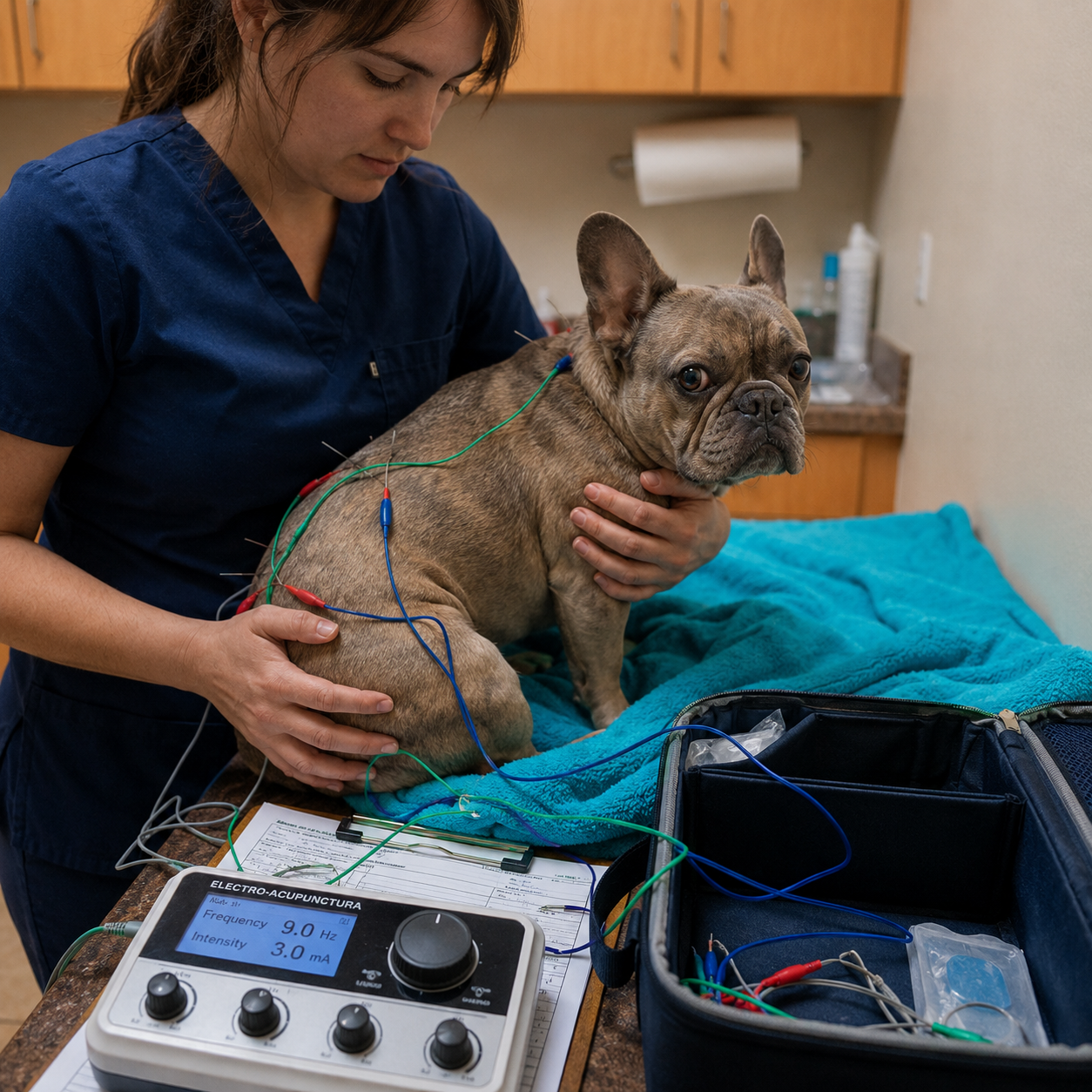
Ran for 65 days, from May 9 to July 13, 2026, the last day Crush saw it.
Run by Grace & Her Doxie on Facebook. Crush is not the advertiser and does not verify its claims. See this ad in Meta's Ad Library(opens in a new tab)
Want an ad like this for your product?
Crush makes new ad images for your product from this ad: your logo, your product photo, your offer.
Trials from $19.95 USD, then $79.95 USD a month. Cancel anytime.
About this ad
- Meta Ad Library ID
- 847854595031167
- Platforms
- Facebook, Instagram, Audience Network, Messenger and Threads
- Relaunches
- 0
Ad text
ATTENTION FRENCH BULLDOG OWNERS... Read this before it happens to your dog. My Frenchie was sprinting down the hallway one morning. Twelve hours later, his back legs had stopped working completely. His name is Biscuit. He just turned four. Yeah, I'd heard Frenchies were rough on the back end. The vet brought it up once during a puppy visit. I half-listened and moved on with my day. He seemed perfect. Energetic. No limp. No whimpers. Nothing. Then came that Tuesday. He hopped off the couch — same jump he'd done since he was a puppy — and the second his paws hit the floor, he let out this awful yelp. A sound that didn't belong to him. I figured he'd landed weird. But when he wandered toward his water bowl, his back end was swaying. Off-balance. Wrong. A few hours later he couldn't keep his hind legs underneath him. By the time the sun went down, those legs felt like dead weight to him. I was driving to the 24-hour clinic before midnight, white-knuckling the steering wheel. What the vet said in that exam room She watched him for about ten seconds and told me to bring him in for scans right away. Half an hour later, she walked back with the answer. Intervertebral disc disease. IVDD. One of the discs in his back had blown, and the material was pushing into his spinal cord. There wasn't time to wait this one out, she said. "Every hour we delay raises the chance of permanent damage. He needs surgery. Today, ideally." I asked her what we were looking at, cost-wise. Eight to twelve thousand. Procedure only. Not the imaging follow-ups. Not the physical therapy. Not the meds afterward. And without it, she warned me, Biscuit might lose use of those legs forever. I just sat in that lobby chair, eyes glued to a coffee stain on the linoleum. I did not have eight thousand dollars sitting around. I didn't have one. And the worst part — she'd been honest enough to tell me even surgery wasn't a sure thing. Was there anything else? I asked. Confined rest. Anti-inflammatory meds. Gabapentin to manage the pain. "There are dogs that pull through with the conservative route," she said. "But the disc damage I'm seeing here — I really think you should consider operating." I left at 1am with a plastic cone, a bag full of pill bottles, and orders to keep him crate-bound for two months. The next fourteen days nearly broke me Biscuit just lay there. Disoriented. Hurting. Staring out at me through the crate bars in a way that wrecked me every time I walked past. The gabapentin knocked him out cold most of the time. When he did open his eyes, he wasn't really Biscuit — just a hollow version of him, drugged and blinking slow. The anti-inflammatories chipped away at the swelling. A little. His back legs still wouldn't fire. Every few hours I'd lift him up, walk him outside, place him gently on the grass, and watch him try. He'd push, his legs would buckle, and he'd collapse against my shins. I spent every night past 1am on my phone reading IVDD forums. Some dogs walked again. Some never did. A handful made it weeks before relapsing and ending up under the knife anyway. Sleeping wasn't happening. Eating either. The vet's words wouldn't stop replaying: The window for surgery doesn't stay open forever. Wait too long and even the operation can't undo it. That's when I stumbled onto something I was scrolling through a Frenchie owners' Facebook group around 3 in the morning. I made a post. Mostly just to feel less alone. A woman named Megan messaged me back almost immediately. Her Frenchie had lived through nearly the exact same situation a couple of years before. ER vet. Disc rupture. The same crushing surgery quote. She'd turned the surgery down. And she told me she'd come across something — Green Lipped Mussel. A type of shellfish that only grows off the coast of New Zealand, packed with a specific omega-3 most dog owners have never come across. According to her, it actually targets the inflammation that's compressing the nerve, without putting the dog under the knife. No more sedatives. No more pill rotations. I almost wrote her off. Two weeks of zero sleep had me allergic to anyone offering hope on the internet. But then she added one detail that stopped me cold. Her dog had been back to running within six weeks. I read everything she sent. This is what I figured out The reason a slipped disc paralyzes a dog isn't just the disc itself. Yes, the herniated material is pressing on the cord. But what actually shuts the legs down is the inflammation that floods the area afterward. The body's own response is what causes most of the nerve damage. Surgery clears out the pressing material. What surgery doesn't do is shut off that inflammatory storm. It keeps going for weeks after the operation, which is why post-surgical recovery still drags on for months. Green Lipped Mussel works on that storm directly. At the cell level. It contains an omega-3 you don't get anywhere else — it's called ETA. Not in salmon. Not in fish oil. Not in cod liver capsules. It's been the focus of veterinary research for over three decades, specifically for inflammatory disc and joint conditions. ETA shuts down the same pathways that prescription anti-inflammatories use to do their job. The same routes gabapentin and corticosteroids target. Except this one is plant-and-shellfish-derived. No risk to the liver. No risk to the kidneys. No drowsy, foggy dog. When the inflammation drops, the cord stops being squeezed. The signals start flowing again. The legs start coming back online. It isn't a painkiller masking what's wrong. It isn't a steroid quieting the symptoms. It's giving the cells the fuel and the building blocks to actually heal what's broken. Megan dropped me into another group. Almost two thousand members. Wieners, Frenchies, Corgis. Every owner had an IVDD dog. The feed was full of people who'd skipped surgery — or paired Green Lipped Mussel with crate rest — and watched their dogs come back. Story after story: "Vet said it was either an operation or a wheelchair. Started him on Green Lipped Mussel. He's walking on his own." "By the third week we got our first steps." "Was told to accept she'd never walk again. Watching her chase a ball this afternoon." I had to set my phone down because my hands wouldn't hold still. Then I tracked down the brand Megan was using. She'd warned me that most joint products on the shelves are mostly cheap synthetic glucosamine padded out with filler. That biggest meta-review ever conducted on pet supplements — 72 separate trials — concluded glucosamine showed no measurable benefit in nearly 89% of cases. The researchers actually recommended pulling it from veterinary use. What worked, she said, was straight-up Green Lipped Mussel — not chews, not blends, not gummies. The unprocessed powder. Cold-handled so the active ETA stays alive. Pulled out of the Marlborough Sounds in New Zealand, where the mussels grow wild in the open water. She only trusted one company. They made it clean. One ingredient. Nothing else added. Strong enough to actually do something inside the disc. The brand was Beno. I placed the order before I closed the laptop. Didn't sleep that night. Just kept my hand on Biscuit's chest, feeling him breathe, hoping the timing wasn't already against us. The package showed up forty-eight hours later I went through the directions twice. Then started. A scoop sprinkled across his breakfast. He sniffed once and ate it like it wasn't there. The vet had told me his appetite would tank from the pain meds — but he cleaned the bowl. I didn't miss a single morning after that. I tried not to get my hopes up that first week He was still confined. Still medicated. Still useless from the waist back. Then on day five, something shifted. He attempted to stand. It wasn't pretty. He didn't make it. But for the first time since this whole thing started, his back legs engaged. They pushed. I cried into my coffee mug right there at the counter. Week 2: actual movement He kept trying. Kept pushing himself up. Wobbly as a newborn. But trying every single time. A vet tech came by for the recheck and did a double take. She said the inflammation along the affected vertebrae felt noticeably reduced when she palpated. She told me whatever I'd added to his routine, I should stay on it. Week 3: the first real steps Three of them, in a row. Without me holding him up. I had my phone out and rewatched that clip easily forty times that night. Week 5: he made it to his food bowl himself Slow. Deliberate. Slightly off-balance. But every step was his own. I sat on the kitchen tile and lost it. Week 8: my dog was back Biscuit broke into a zoomie around the living room. Tiny ones. Choppy ones. Restrained, like he was checking each leg before committing. But this was a dog who, eight weeks earlier, couldn't feel anything below the middle of his spine. And he was zooming. The surgery never happened. Seven months in He walks. He trots. He gets on the couch — slow and deliberate now, and I've put pet stairs there so he doesn't have to launch himself. He still gets a scoop of Beno every single morning. There's no version of the future where I stop. His vet calls it preventive care at this point. She says the ongoing inflammation control is probably the reason he hasn't had another flare-up. That night in the ER haunts me sometimes. The surgical estimate. The "no guarantees" speech. The doctor warning me he might be permanently paralyzed if I didn't move fast. And then I remember Megan, on Facebook Messenger at 3am, talking me back from the edge. If you have a Frenchie. Or a Dachshund. Or any of the breeds where this disease is in their blueprint — please read this before you find yourself in a fluorescent-lit waiting room at midnight. There are cases where surgery is the right call. I won't pretend otherwise. For Biscuit it wasn't. And I came within hours of authorizing a major spinal procedure on my dog out of sheer panic — not knowing there was a different path entirely. What still rattles me is how close I came. How easily I could have signed off on it. When the actual problem — the thing causing his legs to fail — was inflammation that needed to be quieted from the inside out. That's what brought him back. Not a scalpel. I don't know your dog. I don't know if you're skimming this from a cold ER bench right now or just digging into research because your Frenchie has been a little off lately. But I do know exactly what it feels like to look at your dog on the floor, helpless, and realize you can't fix it yourself. You're not actually helpless. There's a real option. I found it the hard way, and I'm passing it along because I would have given anything for someone to put it in front of me before that morning. The link is below. This is what brought Biscuit back: https://trybeno.store/pages/ivdd-listicle
Where the ad sends people
trybeno.store
2 in 4 Frenchies will get IVDD. Protect their spine before it's too late.
The same gene that gives Frenchies their iconic shape causes their discs to break down years too early. Beno's pure New Zealand Green Lipped Mussel powder targets the inflammation surgery can't reach — and protects the spine, hips, and joints daily. Single ingredient. No fillers. 90-day money-back...
Learn more: trybeno.store(opens in a new tab)