Zwerese
Zwerese Facebook ad: “My name is Thomas Wright, I'm 64 years…”
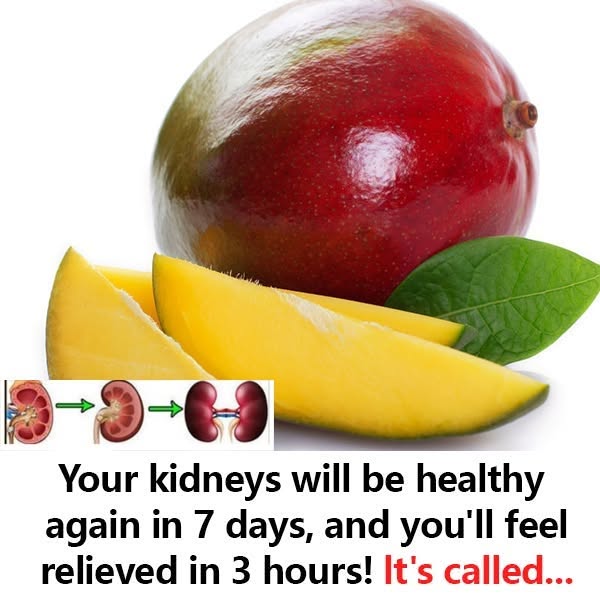
Ran for 1 day, from January 20 to January 21, 2026, the last day Crush saw it.
Run by Zwerese on Facebook. Crush is not the advertiser and does not verify its claims. See this ad in Meta's Ad Library(opens in a new tab)
Want an ad like this for your product?
Crush makes new ad images for your product from this ad: your logo, your product photo, your offer.
Trials from $19.95 USD, then $79.95 USD a month. Cancel anytime.
About this ad
- Meta Ad Library ID
- 851911070997590
- Platforms
- Facebook, Instagram, Audience Network, Messenger and Threads
- Relaunches
- 1
- EU reach
- 1
Ad text
My name is Thomas Wright, I'm 64 years old, and I live in Chicago. I'm a retired high school history teacher and a stage 5 chronic kidney disease patient. Yes, my kidneys are failing dangerously. Every day I struggle with extreme fatigue, swollen ankles, persistent nausea, and the color of my urine often terrifies me. Every Tuesday, Thursday, and Saturday morning, I must be at the dialysis center; that machine sustains my life. I believe every kidney patient can deeply understand that feeling of being bound to the medical process. I'm 64 years old, I need a kidney donor, but the waiting list is despairingly long. Things took a turn for the better with a conversation with an old friend. Michael, a nephrologist I've known for nearly twenty years through a book club, works at the Mayo Clinic. One weekend afternoon, as I once again sighed over my bleak future, he cautiously mentioned an overseas clinical study he was following. “Tom,” he said, his voice low, “mainstream medicine is irreplaceable in controlling symptoms and replacing kidney function, you know. But I recently reviewed some Phase 3 clinical data from a collaborative team in Europe and Asia, exploring a different supportive approach. The focus isn’t on directly ‘treating’ the kidneys, but on creating an optimal environment for cellular repair.” He further explained that this research is based on the concept that kidney cells, like all cells, possess an inherent repair potential, but this potential is often suppressed by persistent inflammation, oxidative stress, and metabolic waste. The study combined a specific multi-phytonutrient complex—including extracts with a long history in Mediterranean and traditional Ayurvedic medicine—with several key circadian rhythms throughout the day. This was also accompanied by a short set of soothing breathing and postural exercises designed to improve circulation in the abdomen and back. “Sounds a bit like health esoteric, doesn’t it?” I said with a wry smile. “I understand your skepticism,” Michael frankly stated. “As a doctor, my primary responsibility is to ensure you adhere to your standard treatment. But as a friend, seeing your quality of life so low outside of dialysis, and this Phase III trial with rigorously controlled data showing significant auxiliary effects in improving fatigue, sleep quality, and some laboratory indicators… I believe it might be safe to try it as a high-quality life support option while continuing standard medical care. Most importantly, it’s designed to ‘support’ rather than ‘replace’.” Desperation weighed more heavily than doubt. After carefully reviewing the published safety data he provided and receiving permission from my attending physician to “give it a try, but with strict monitoring,” I decided to give myself a chance. I came across a cellular kidney support program originating from Asia. Unlike the “blocking” or “inhibiting” logic of traditional drugs, it’s based on a simple and fundamental principle: providing fatigued, damaged kidney cells with the precisely necessary “repair materials.” One capsule brought about a dramatic change. The subsequent changes astonished me and my medical team: Week 1: The most noticeable change occurred in sleep. The frequent nighttime awakenings that had plagued me for years (3-4 times per night) decreased to 1-2 times. For the first time, I experienced the feeling of "continuous sleep." Week 3: That persistent, leaden fatigue began to ease. One Wednesday afternoon, I didn't even feel the need to lie down immediately; instead, I had the energy to go to the backyard and prune my long-neglected flowerbed. Week 6, follow-up appointment: My attending physician, Dr. Patel, looked at the newly released lab results, his eyebrows raised high. He silently compared the data with past data, then took off his glasses and rubbed his eyes. “Mr. Wright… these numbers…” He pointed to the report, “Your serum creatinine has dropped from 4.8 mg/dL to 4.1. Your estimated glomerular filtration rate (eGFR) has increased from 13 mL/min/1.73 m² to 16. While you’re still not out of danger, this trend… is unusual in such a short time without adjustments to your core medications.” He looked up, his gaze sharp but curious. “How are you feeling? Tell me the truth.” “I’m much better, Doctor. Really. More energy, better sleep, and the nausea is almost gone,” I replied. Dr. Patel nodded, making notes in the medical record. “I must emphasize that dialysis must never be stopped. But the objective data and your subjective feelings are consistent. We will continue to monitor you. Have you done anything different?” I mentioned the supportive care regimen that Michael and I were trying. Dr. Patel searched the relevant literature, pondered for a moment, and said, “Hmm… I saw this study. The data looks rigorous, and the approach supports a cellular self-healing microenvironment rather than direct pharmacological intervention. On top of strictly adhering to standard treatment, this comprehensive lifestyle and nutritional optimization may indeed have a synergistic effect we've overlooked in the past. Continue, but we need to monitor it more closely.” Stepping out of the clinic, the cool, bright Chicago winter sun shone on my face. I took a deep breath. The feeling was like finally glimpsing the tangible light of an exit after a long, dark tunnel journey. I felt a part of my life back in my own hands. I am not a doctor, nor do I claim to have found a miracle cure. I am just an ordinary patient who refuses to bow to fate. Dialysis is my lifeline, and I have the utmost respect for modern medicine. But if you are also experiencing: High creatinine levels and persistently low glomerular filtration rate (eGFR) Swelling in your hands, feet, or eyelids, accompanied by unexplained itchy skin An overwhelming, all-consuming fatigue that cannot be relieved even after rest Constantly waking up at night to interrupt your sleep, and the resulting anxiety The fear of dialysis and a deep sense of powerlessness and uncertainty about the future Then perhaps it's worthwhile to spend some time going beyond conventional treatments to understand some cutting-edge research on the self-protection and repair mechanisms of kidney cells. Explore why this integrative strategy, centered on "optimizing the internal environment and supporting cellular instincts," has not yet become part of standard therapy, and how, under the informed consent and supervision of your doctor, you can safely provide your tired kidneys with the deeper physiological support they truly crave at home. My journey continues. But today, I feel hope. And that in itself is a good medicine.
Where the ad sends people
tepryo.com
Zwerese
Learn more: tepryo.com(opens in a new tab)