Mary Davis
Mary Davis Facebook ad: “I was shocked by the findings”

Ran for 1 day, from July 12 to July 13, 2026, the last day Crush saw it.
Run by Mary Davis on Facebook. Crush is not the advertiser and does not verify its claims. See this ad in Meta's Ad Library(opens in a new tab)
Want an ad like this for your product?
Crush makes new ad images for your product from this ad: your logo, your product photo, your offer.
Trials from $19.95 USD, then $79.95 USD a month. Cancel anytime.
About this ad
- Meta Ad Library ID
- 852952077695074
- Platforms
- Facebook, Instagram, Audience Network, Messenger and Threads
- Relaunches
- 0
- Niche
- Hair Care
Ad text
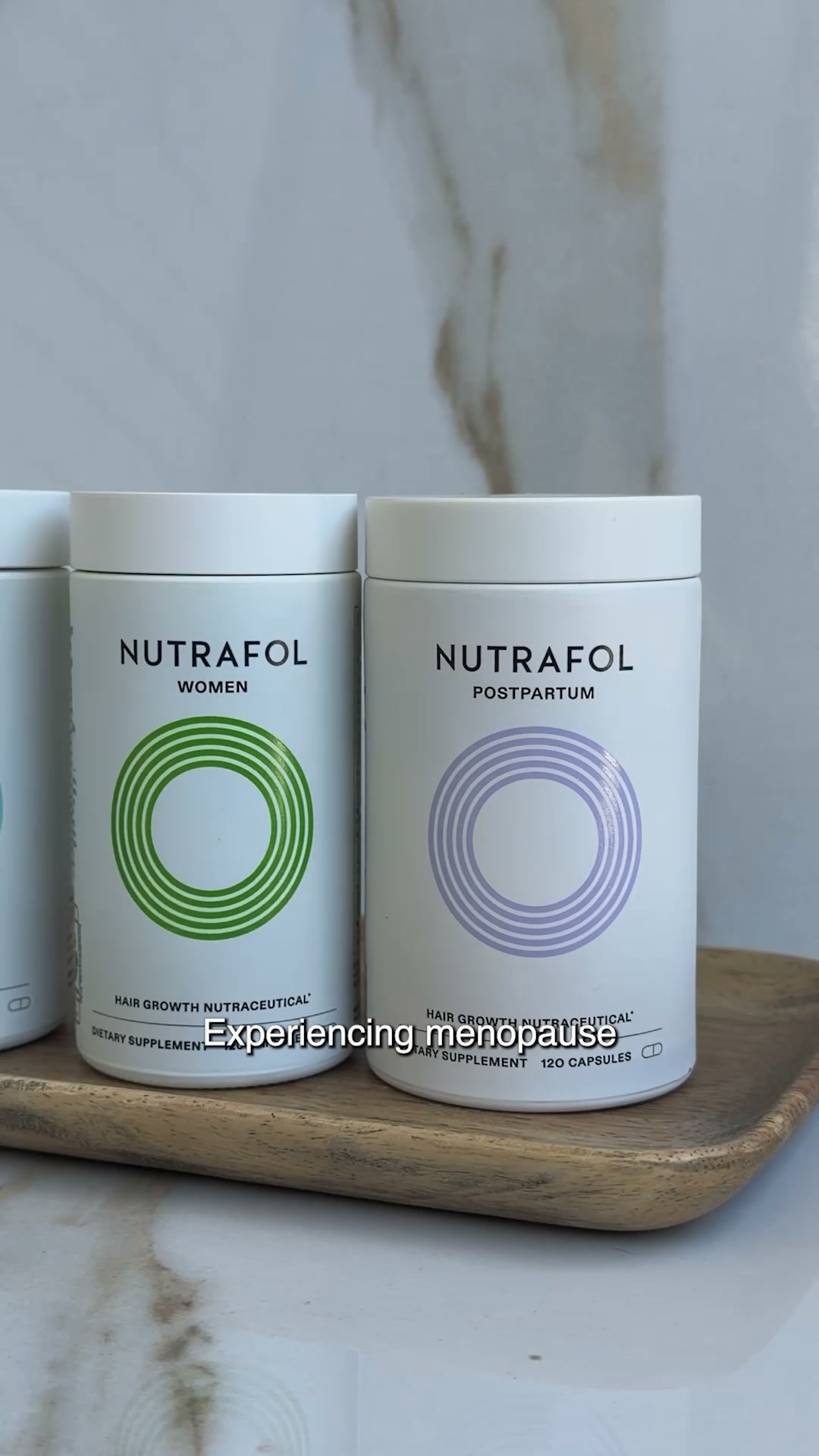
I just spent $9,200 on a hair restoration program in Venice, Italy. Three weeks. And the thing that actually fixed my hair had nothing to do with the PRP injections or the laser helmets or the scalp analysis. I need to back up because this is going to sound ridiculous. I've been dealing with hair loss for about three years. Not the kind where you wake up bald one morning. It's slower than that. More cruel. You notice a few extra strands on your pillow. Then the shower drain starts looking worse. Then one day you're standing in the bathroom and you can see your scalp through your part and you think when did this happen. Menopause happened. That's when. It came with the hot flashes first. Then the brain fog. Then the insomnia. But it was the hair that broke me. Because the hot flashes are invisible. The brain fog you can fake through. But thin hair is right there on top of your head for everyone to see. I've tried everything. Minoxidil — 2% first, then 5% when that didn't work. My scalp burned. The dread shed made me lose more hair in the first month than menopause had taken in a year. And I couldn't let my cat near my pillow because minoxidil is toxic to cats. Biotin supplements for over a year — did nothing for my hair but gave me cystic acne along my jawline. Nutrafol for eight months at $88 a bottle. Vegamour. Collagen peptides. Ketoconazole shampoo twice a week. Rosemary oil mixed with castor oil that left my pillowcase looking like a crime scene. A $340 laser cap I wore on my head like a helmet three times a week while my husband pretended not to stare. Three years of this. You stop telling people about it after a while. You just buy wider headbands and darker scarves and avoid photos and hope nobody asks why you always wear a hat now. So when my friend Karen told me she'd found a hair restoration clinic in Venice I thought she was exaggerating. She said no. A real clinic. Run by actual dermatologists. They do scalp analysis under magnification. PRP injections — where they draw your blood, spin it, and inject the plasma into your scalp. Low-level laser therapy. Customized topical protocols. Everything calibrated to restart your hair growth cycle. They run an intensive program for patients who travel for treatment. Six sessions over three weeks. She said it's where women go when nothing else has worked. The last resort for women who've tried everything. $9,200 for three weeks. Not a spa. Not a salon treatment. A medical hair restoration program with a dermatologist on site and a price tag that made my stomach hurt. But three years. I'd already spent thousands on products that didn't work. What was one more. I flew into Venice on a Tuesday evening. The clinic was tucked down a quiet street near the waterfront. Old stone walls. Tall windows. Everything felt precise and calm in that very Italian way. Part medical facility. Part something out of a painting. My room overlooked a narrow canal where the water reflected light onto the ceiling every morning. Session one they did everything. Scalp analysis under a dermatoscope — the same tool dermatologists use to examine moles, except pointed at my scalp. Blood work. Hormone panel. They photographed my part, my temples, my crown from every angle. They measured my hair density with a device I'd never seen before. They mapped my entire scalp like it was an engineering problem. Then came the PRP. They drew three vials of blood. Spun it in a centrifuge for twelve minutes. Then injected the plasma into thirty-two spots across my scalp with a tiny needle. It hurt more than I expected. Not terrible. But not the "mild discomfort" they'd described in the brochure. Before the PRP — and I almost forgot about this part — a technician sprayed something onto my scalp and massaged it in for about thirty seconds. She said it was part of the prep protocol. I didn't think about it. It was just a step in the process. I thought okay this is serious. This is science. This is going to work. After session one I didn't notice anything. My scalp was sore from the needles. That was expected. By session three — one week in — something shifted. I was standing at the bathroom mirror in my room doing what I'd been doing every morning for three years — angling my head to check how much scalp was showing through my part. It was narrower. If you've been watching your part widen since menopause you know how big this is. Every morning you check. Every morning it's the same or worse. And then one morning it's not. I stood there for a long time. I almost didn't trust it. I figured it was the PRP. The plasma. The growth factors being injected directly into the follicles. That's what the brochure said would happen. I thought my body was finally responding to real medical intervention. By session four — ten days in — the shedding had slowed dramatically. I washed my hair and barely anything came out. The drain that had been my morning horror for three years was almost clean. I stood in the shower and stared at it. I thought this is it. The science works. The PRP injections. The laser therapy. The clinical approach. This is what I needed. A real facility with real dermatologists solving menopausal hair loss like the medical problem it is. But then at the clinic before session five I was sitting in the waiting room next to a woman named Catherine. Early sixties. Retired attorney from San Francisco. She looked like someone who had been watching herself disappear in the mirror for years and had finally decided to fight back. She leaned over and said "Can I ask you something? Is it working for you? Are you actually seeing growth?" I said "My part is narrower than it's been in two years. The shedding almost stopped." She closed her eyes for a second like she was relieved she wasn't imagining things. She said "Four years. Four years since menopause took my hair. I've seen three dermatologists. I've done two rounds of PRP at a different clinic. Tried every supplement on the market. Spent over $14,000. Nothing worked. And I'm seeing new growth here for the first time." She said "I assumed it was the PRP. The plasma. The injections. But I did PRP before at another clinic and it didn't work. Same procedure. Same blood spin. Same injections. So I'm starting to wonder if it's something else because this feels different from anything I've tried. This doesn't feel like the PRP. This feels like my scalp changed. Not just the follicles being forced." I got chills because I'd been thinking the exact same thing. We started comparing notes right there in the waiting room. Both of us seeing new growth for the first time in years. Both of us with the shedding dramatically reduced. Both of us feeling this difference that didn't match what PRP alone should have done. Catherine said "Maybe it's the laser therapy combined with the PRP." I said "Maybe? But I've read the research on low-level laser for hair and it's modest at best." She said "The blood work? The hormone panel?" I said "They didn't change my HRT or medications based on it. Just monitored." We couldn't figure it out. That afternoon, before my session, I paid attention to something I hadn't really noticed before. Before every PRP injection. Before every laser treatment. Before anything else — the technician would spray something onto my scalp and massage it in for about thirty seconds. She'd been doing it at every session. It was just part of the prep. I'd barely registered it. Like the paper gown they make you put on. Just a step in the process. I asked her what it was. She said "It's a leave-in scalp spray. We apply it before every treatment as part of the protocol." I asked her what was in it. She showed me the bottle. Seven ingredients. Sophora Flavescens. Angelica Sinensis Root. Biotin. Caffeine. Rice Water. Ginger. Castor Oil. I stared at it. A scalp spray. I almost laughed. Because I've used scalp products. I used shampoos and serums and oils for three years and they never did a single thing for my hair. Not once. I went to find the clinic's director. Her name was Dr. Marchetti. She had a corner office on the second floor with tall windows overlooking the canal. I told her what was happening. The new growth. The shedding stopping. The part narrowing. And that I just realized they'd been applying a scalp spray before every treatment. She smiled like she'd had this conversation a hundred times. She said "Every patient. Every single one. They come here expecting the PRP to fix them. The injections. The laser therapy. The scalp analysis. And those things matter. But they're maybe 20% of what's happening." She said "The spray is doing 80% of the work." I said "But I've used scalp products. For three years. They did nothing." She said "What kind?" I told her. Shampoos. Serums. Oils. Supplements. She said "That's why. Think about every hair product you've used. Ask yourself one question about each of them: did it stay on your scalp? Or did it wash off, rinse out, get swallowed, or sit on top of your hair?" I went back to my room that evening and thought about everything in my bathroom cabinet at home. The shampoo. Nice label. Five stars. "Promotes thicker, fuller hair." And right below that, in smaller text: "Rinse thoroughly after 60 seconds." Sixty seconds. I'd been putting a hair growth shampoo on my scalp for sixty seconds and rinsing it down the drain. For two years. The supplements. Oral capsules. Swallowed. Stomach acid. Whole body. If anything survived to reach my scalp it was a fraction of what was on the label. The oils. Sat on top of my hair. Coated the strand. Never reached the root where the follicle lives. Just made my pillowcase greasy. Three years. I used hair loss products for three years telling myself nothing works for menopausal hair loss. And nothing I used ever actually reached my follicle. Three years of expensive liquid going down the drain. Expensive pills being dissolved by stomach acid. Expensive oil sitting on the wrong part of my head. I went back to Dr. Marchetti the next morning. She sat me down and explained. She said "I am a hair restoration specialist. I have spent my career studying why women lose hair after menopause. I have every tool available. PRP. Laser therapy. Scalp analysis. Hormone monitoring. All of it." She said "And the single most effective intervention in this entire clinic is a thirty-second scalp spray applied before every session." She said "Here's what happens after menopause. Estrogen drops. DHT — dihydrotestosterone — rises. Eighty-nine percent of menopausal women have DHT levels comparable to balding men. That DHT wraps around the follicle and strangles it into dormancy. The follicle isn't dead. It's suffocated. And the scalp environment around it collapses — circulation slows, nutrients decline, inflammation increases. The follicle is sitting in soil that can't support growth anymore." She said "Every product on the market tries to address this. Shampoos. Supplements. Oils. Minoxidil. The ingredients in some of them are fine. The problem isn't what's in them. The problem is they never reach the follicle. They wash off. They get destroyed by stomach acid. They sit on the surface. There's a gap between the product and the follicle. And that gap is why everything fails." She said "This spray is a leave-in formula. You apply it directly to the scalp. It stays where you put it. It goes to the follicle. That's it. That's the difference. Same concept. Different delivery. The follicle finally gets what it needs." She said "If I just told patients to use a scalp spray, they'd say they already use hair products and they don't work. They want the PRP needles and the laser helmets. So I give them all of that. And I apply the spray before every session. By session three the shedding stops. By session five they see new growth. They think the technology fixed them." She paused and looked out the window at the canal below. She said "I have a $9,200 clinical hair restoration program. I have PRP equipment that costs more than most cars. And the most important thing in this entire clinic is a thirty-second spray application before each session. That's either the funniest thing in dermatology or the saddest. I haven't decided." I sat there in a hair restoration clinic in Venice realizing that three years of my life just got explained in five minutes. By a dermatologist surrounded by hundreds of thousands of dollars of equipment pointing at a spray bottle. She told me the formula was developed by a dermatologist with over forty years of clinical experience. She told me each ingredient targets a different piece of what menopause dismantled — the DHT barrier, the circulation, the inflammation, the follicle environment, the strand strength, the growth cycle, the root nourishment. Seven ingredients working together. All delivered directly to the scalp instead of being destroyed by stomach acid or rinsed down the drain. When I flew home I threw away half the products in my bathroom cabinet. The shampoos that rinsed off in sixty seconds. The supplements my stomach acid destroyed. The oils that never reached my roots. I found the same spray Dr. Marchetti uses at the clinic. Ordered it the night I landed. That was seven weeks ago. My hair is different now. Every day it's a little more. The shedding that had made me dread every shower for three years is barely there. The part that had widened until I could see scalp through it is narrower than it's been since before menopause. I have baby hairs along my temples. Actual new growth. I keep touching them like they might disappear. I keep waiting for the shedding to come back and it doesn't. My husband noticed in the first week. He said "Your hair looks thicker. What happened at that clinic?" He said "You seem like you again." My stylist said "Something changed. Your hair has weight to it again." I told her about the spray and she said she's been telling clients for years that shampoos rinse off too fast to do anything but most of them keep buying them anyway. I told Catherine. She ordered the spray the day she flew back to San Francisco. She texted me a week later and said "I'm furious. I have spent over $14,000 on dermatologists and clinics and PRP in four years. Fourteen thousand dollars. And this is what I needed? A spray that I apply in thirty seconds?" Yeah. Same. I've linked the product below — it's the same spray Dr. Marchetti uses at the clinic. The one developed by a dermatologist with over forty years of experience. The one that does in thirty seconds what I spent $9,200 and three weeks in Venice to discover. I've sent it to basically every woman I know going through menopause because I'm still angry nobody told me this years ago. 👇 Here it is. It's what I wish someone had sent me before I spent $9,200 and flew to Italy to find out the answer was a thirty-second spray I could have been using at home the whole time. 👉 https://revotin.com/pages/healthinsightmenopause P.S. — I think about every woman going through menopause who's sitting in her bathroom right now staring at the drain thinking her hair is gone for good. It's not. You were using the right ingredients in the wrong delivery method. That's all. P.P.S. — Give it 4-8 weeks. That's when the shedding slows. By week 6-8 you'll see the part narrowing and new growth starting. Two to three sprays. Thirty seconds. Morning. That's the whole thing. P.P.P.S. — They have a 90-day money-back guarantee. I wish the Venice clinic had offered me that. P.P.P.P.S. — It's safe around pets. No minoxidil. No toxicity warnings. My cat sleeps on my pillow again and I don't have to worry.
Where the ad sends people
HEALTH.INSIGHT.ORG
I was shocked by the findings
Read this article
Learn more: revotin.com(opens in a new tab)