
Active· since Jun 9, 2026
- 94
- days running
- 0
- relaunches
Ad copy
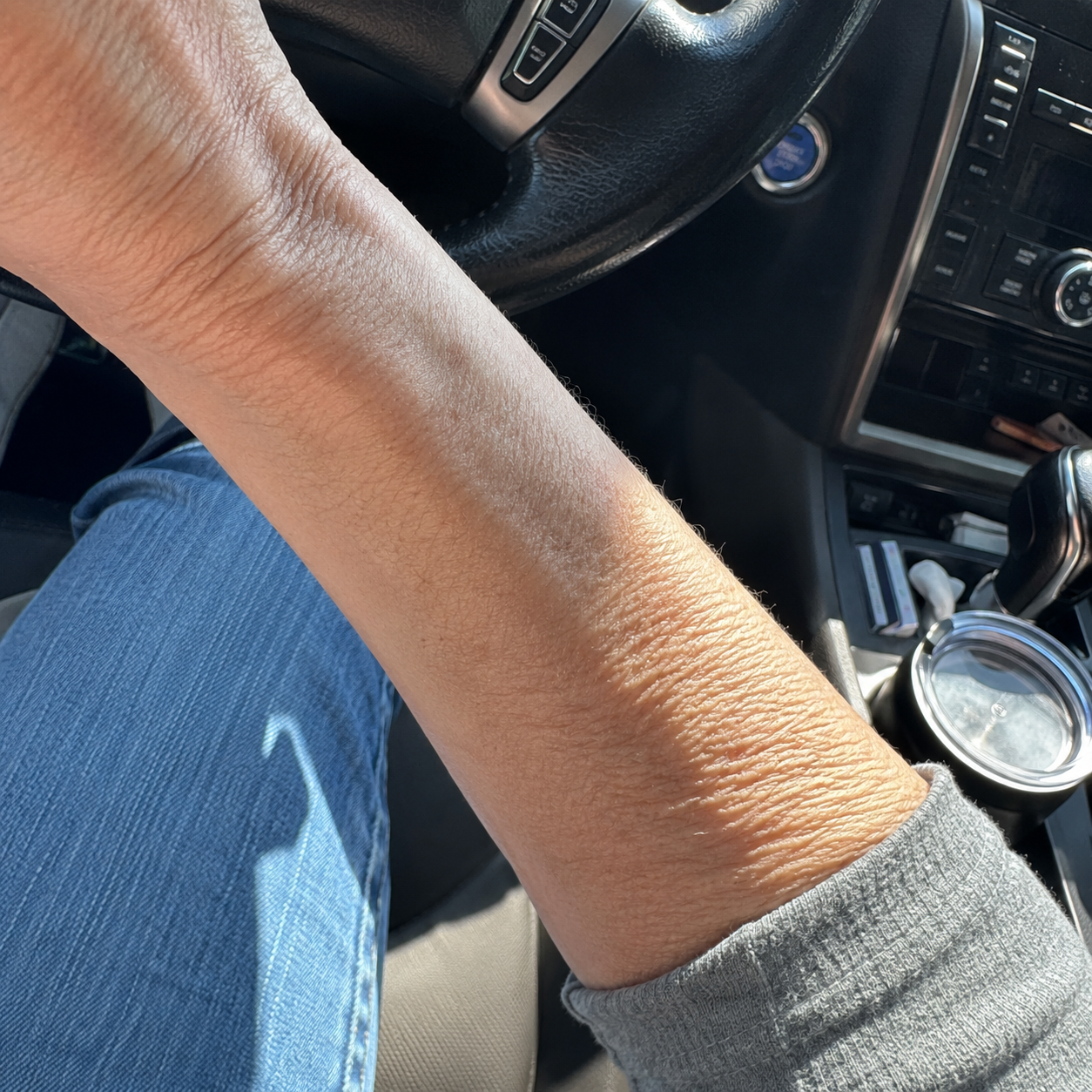
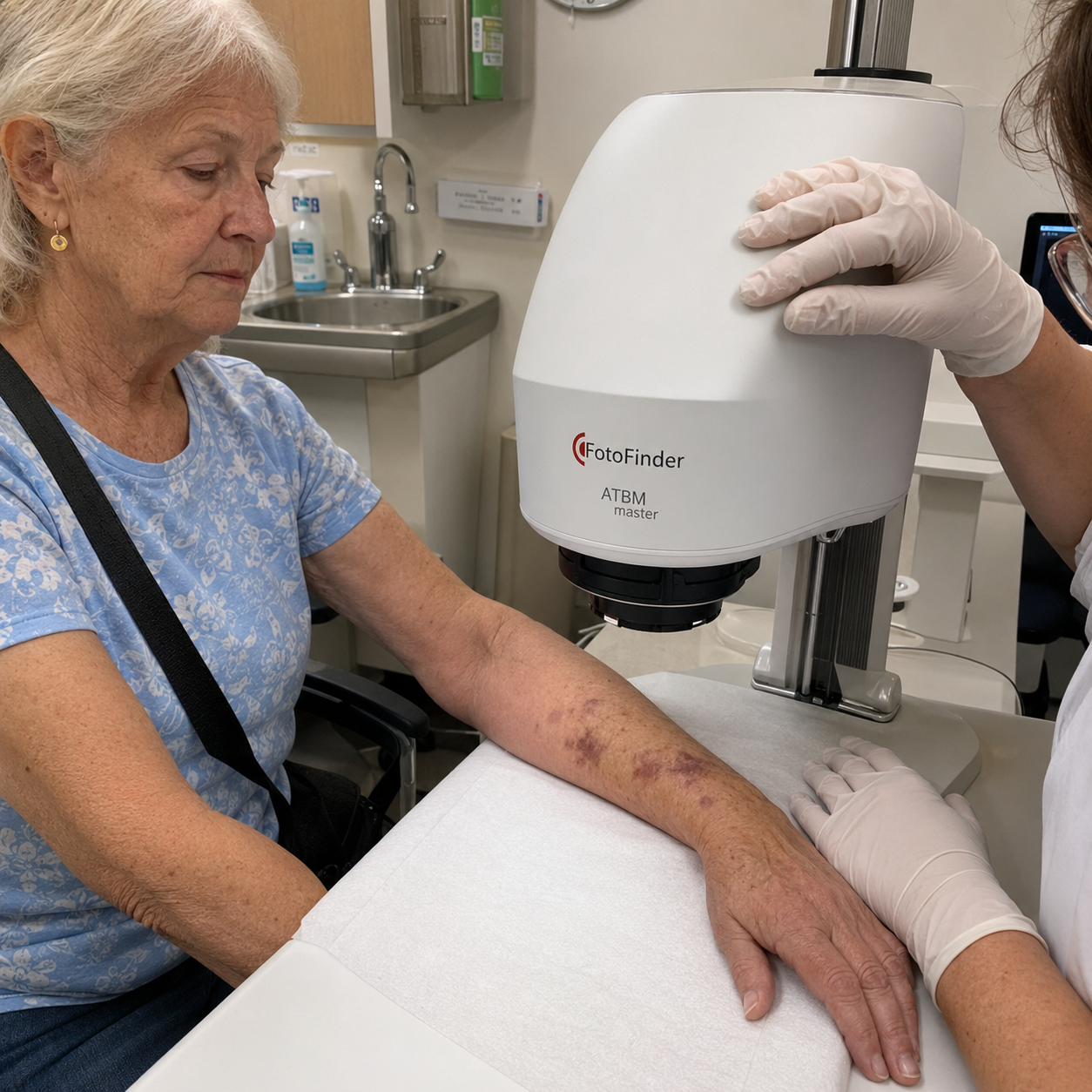
I have been a skin bruising specialist for 22 years. In those 22 years, treating women whose skin bruised and tore from nothing, I never once handed a patient a tube of Arnica gel and sent her home. When I moved to the US and saw that this was the standard, I just couldn't believe it. I started asking questions that made my colleagues very uncomfortable. I practiced in Geneva for 19 of those 22 years. I moved to the United States three years ago when my husband's company transferred him to New York. I joined a practice in New Jersey. Good practice. Good doctors. And in my first month, I started seeing patients who made me want to close my office door and call every doctor in the building into a room. Women in their 50s, 60s, and 70s coming in with forearms covered in deep purple marks. Dark. Spreading. Some of them with skin so thin it was tearing from pulling a fitted sheet over a mattress. From a grandchild grabbing their arm. From carrying a bag of groceries. From nothing at all. And every single one of them told me the same thing. "My doctor told me it is just aging." Just aging. In Switzerland, those two words would end a medical career if they were written in a patient's chart as a treatment plan. Here is what I started asking my colleagues in that first month. I asked them: when a 62 year old woman shows you forearms covered in bruises from basic daily contact, what are you treating? They said: the bruising. I said: where is the bruising happening? They said: on the skin. I said: no. It is not. That is where the conversation got uncomfortable. Because the bruising is not happening on the skin. It is not a surface event. And everything being prescribed to these women was sitting on the surface. Let me explain this the way I explain it to my patients, because it is the single most important thing about your bruising that nobody in your doctor's office has told you. Your skin has two layers that matter here. The top layer is the epidermis. That is the layer you can see, touch, moisturize. That is the layer you apply Arnica to. That is the layer compression sleeves sit on. Underneath it, about a millimeter and a half deeper, is the dermis. The dermis is where a dense web of structural protein has spent your entire life cushioning your tiny capillaries. Holding them in place. Protecting them from contact. Think of it like a mattress pad. Your capillaries are the mattress. The structural protein in the dermis is the pad. For decades that pad was thick and dense and you could bump into anything without a mark because the pad absorbed the contact before it reached the capillaries underneath. When that pad thins, the capillaries have nothing protecting them. A doorframe. A box spring. A rose bush in your own garden. Contact that would not have registered at 40 now ruptures those tiny vessels because there is no cushion left between the surface and the blood underneath. That is what the bruise actually is. Blood pooling under the skin because the protective pad is too thin to absorb the contact. And here is the part that made my colleagues very uncomfortable when I said it out loud. Every tube of Arnica. Every compression sleeve. Every instruction to be careful around sharp edges. All of it is being applied to the epidermis. The problem is in the dermis. Those are not the same layer. They are not even close. There is a millimeter and a half of tissue between where the Arnica sits and where the bruising happens. And nothing you rub on the surface will ever cross that distance. It is not designed to. It was never designed to. So I asked my colleagues the question that made the room go quiet. If we know the structural layer is what is failing, why are we only treating the surface above it? Nobody had a good answer. Not because they are bad doctors. They are not. But because American medical training treats easy bruising as a cosmetic consequence of aging. Something to manage. Not something to address structurally. The research on rebuilding the dermal layer exists. It has existed for years. It is simply not part of standard training in this country. That is not a character failure. It is a curriculum gap. But the women sitting in those waiting rooms are paying the price for it. And that is why I am writing this. So the question becomes: can that protective pad be rebuilt from the inside. In Geneva, we already knew the answer. Think about baking a cake. You need flour. You need eggs. You need butter. Take out any single one and you do not get a slightly worse cake. You get something that was never a cake. Rebuilding the dermis works the same way. The flour is hydrolyzed marine collagen peptides. The specific protein your body uses to rebuild that structural pad around your capillaries. Small enough after processing to pass through the gut wall intact, reach the bloodstream, travel to the dermis, and arrive exactly where the loss is happening. But collagen alone is not the cake. Flour alone is not the cake. Vitamin C is the egg. It is the binding agent that cross-links the collagen fibers into a web that actually holds. Without it the collagen arrives at the dermis and sits there loosely. The fibers do not bind. The capillaries stay exposed. Hyaluronic acid is the butter. Collagen cannot form in dry tissue. Hyaluronic acid holds moisture at the dermal level so the rebuild can actually take place. Three ingredients. All three present at the right dose. That is the cake. And I will say this once: most products that claim to help with bruising contain a fraction of the dose the clinical research was conducted at. Enough to put the word collagen on the label. Not enough to reach the dermis and do anything when it gets there. Let me tell you about one patient. Because her results are what I see when someone finally addresses the right layer. She was 63 years old. She had been applying Arnica every day for three years. She wore long sleeves from April through October. She had stopped going to her nail salon because of the looks she got. She had padded the corners of her kitchen countertops with foam because she could not walk through her own kitchen without leaving marks on her arms. Her doctor told her to keep doing what she was doing. Come back in six months. Try to be more careful. She came to me for an unrelated visit and rolled up her sleeve during the examination. I recognized it immediately. Three years of perfect compliance. The bruising was real and getting worse. The barrier was the problem. I recommended 90 days of the full clinical stack before any other decisions. She was skeptical. She had spent three years doing everything she was told. Her arms looked worse at 63 than they had at 60. She did not believe something she swallowed with breakfast could change what three years of Arnica had not touched. I told her what I tell every patient who has spent years doing the right things and watching them fail. The Arnica reaches the epidermis. The bruising happens in the dermis. Those are not the same place. Your arms are not getting worse because you have not been careful enough or consistent enough. They are getting worse because what is failing is below where anything you have applied can reach. She agreed to try. Week 2: She called to mention that her nails had stopped peeling. She had been keeping them cut short for years because they split and caught on everything. She thought it was unrelated. I told her it was not. The same structural depletion leaving her capillaries exposed was leaving her nails without the protein to hold together. I told her to keep going. Week 4: A section of her forearm that had been marking from any contact stayed clear through a full week of gardening. Five days. No new marks. She described it in the message she sent me as small. I did not think it was small. That was the first signal in three years that the structural layer was responding. Week 6: She told me she had made her bed four mornings in a row without checking her arms afterward. She said she had not realized how automatic that check had become until she stopped doing it. Every morning for three years she would pull the sheet over the corner and brace and look down. And one morning she pulled it over and walked to the kitchen without looking. She did not realize she had done it until she was already pouring her coffee. Week 8: The compression sleeves she had ordered every spring for three years were still in the drawer. Her granddaughter had visited that weekend and grabbed her forearm to pull her toward something in the yard. She let her. She did not redirect. She did not brace. Nothing. Week 10: Her doctor, the one who had been telling her to be more careful for three years, examined her forearms at a routine appointment. He measured the improvement. Then he measured again. He asked what she had changed. She told him. He was quiet for a moment. Then he said: whatever you are doing, keep doing it. In Switzerland, this is where we start. Not with Arnica. Not with sleeves. Not with foam corner pads. With the structural layer that the bruising is telling you has been quietly, steadily depleted. I am writing this because I have sat across from too many women in three years to stay quiet about it any longer. Women who came to me after years of Arnica. After summers of long sleeves in July. After telling their grandchildren to be gentle. After padding their own furniture. After stopping activities they had done their whole lives because the evidence of doing them was too embarrassing to explain. Women who had been careful and consistent and compliant and watched their arms get worse anyway, one summer at a time, with no explanation beyond two words. Just aging. None of them were failing. Every single one of them was doing exactly what she had been told. The protocol was failing them. Not because the doctors prescribing it were careless, but because the protocol was designed to manage a surface and the problem was not on the surface. You do not have to wait for that to change. If you have been applying Arnica for months or years with no real change. If you have been covering your arms through every warm season because you cannot face the questions or the looks. If you have been told this is just aging and some part of you has never fully accepted that answer. The answer is not to apply more consistently. It is to reach the layer your treatment was never designed to penetrate. → https://gethalolabs.com/products/sugar-free-marine-collagen-hyaluronic-acid-gummies If the page is still up there is stock available right now. They also offer a 60 day money back guarantee. It is the main reason I recommend patients try it without hesitation. If nothing changes in 60 days they return every dollar. Just 2 gummies with breakfast. No side effects. No prescription. Your skin is not failing you. The protocol treating your compliance as the problem is what is failing you. Your skin used to be thick enough to handle your life without marking. It can be again. The dermis is where that starts.
Like this ad? Make it yours.
Crush rebuilds this exact creative around your product — your brand, your colors, your offer — in about a minute.