
Inactive· since May 9, 2026
- 4
- days it ran
- 0
- relaunches
Ad copy
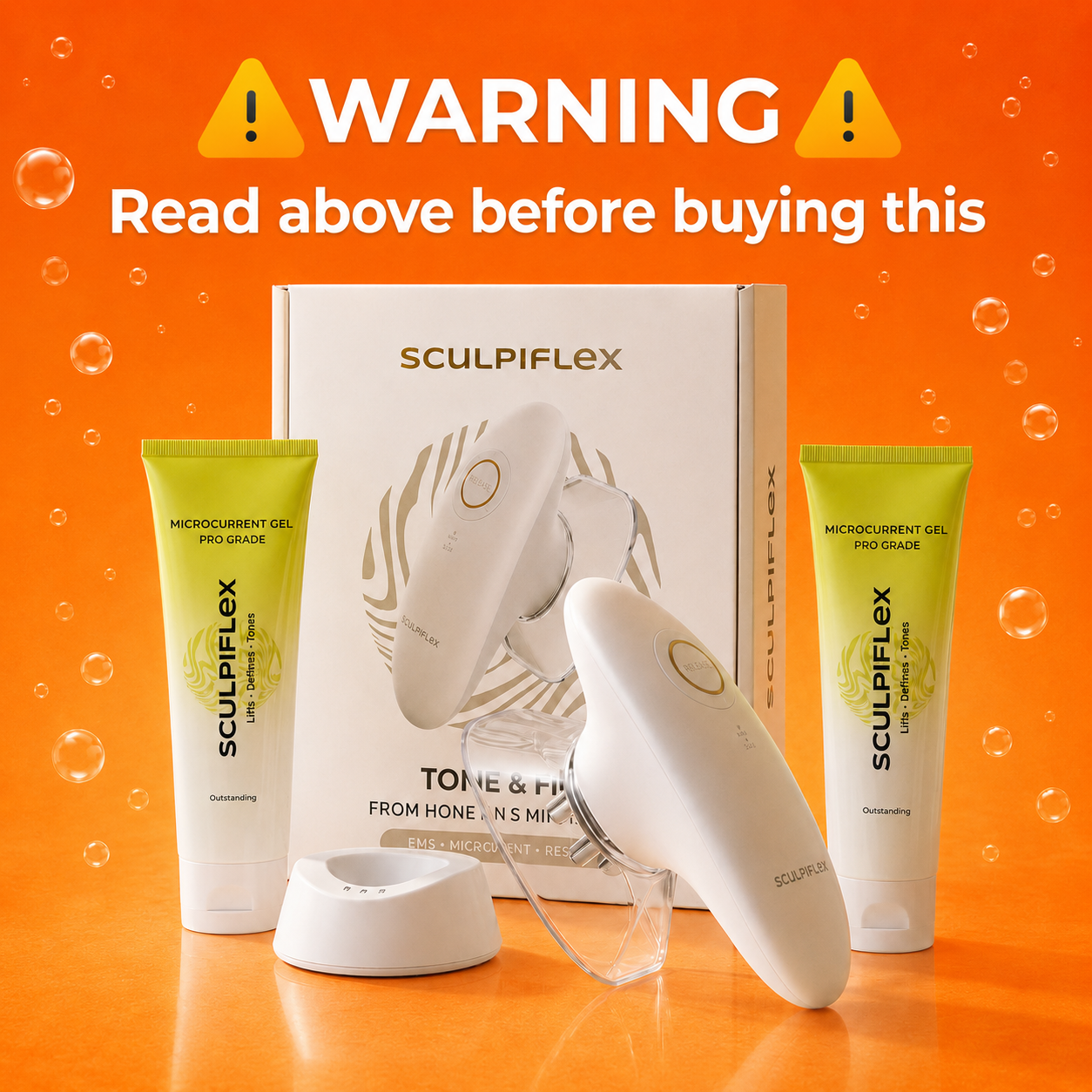
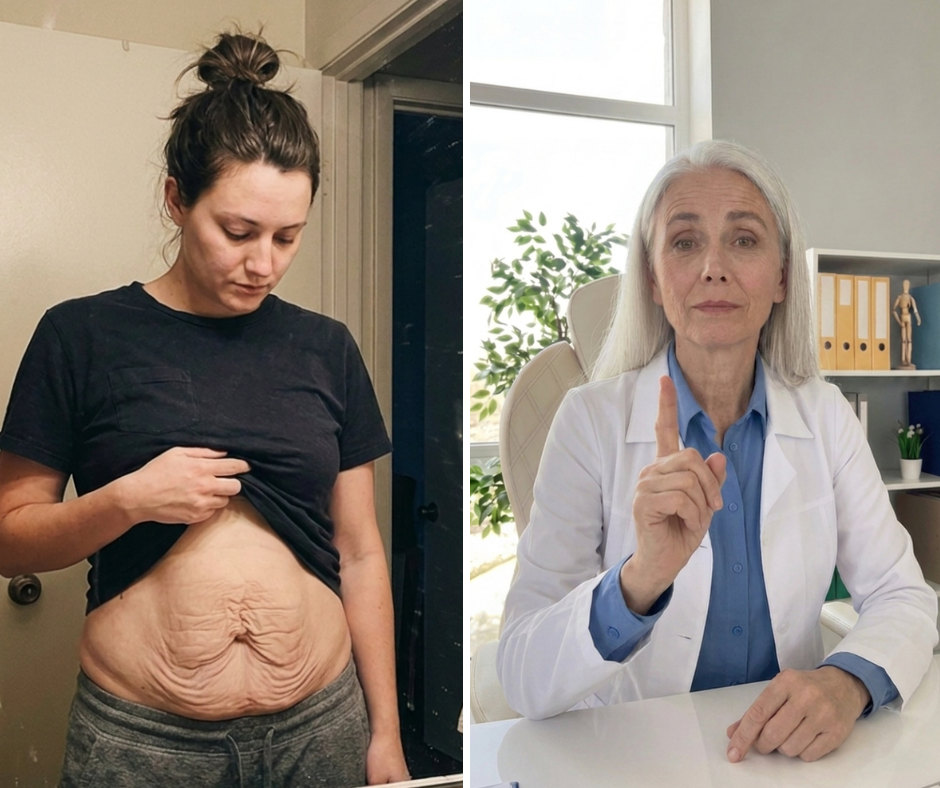
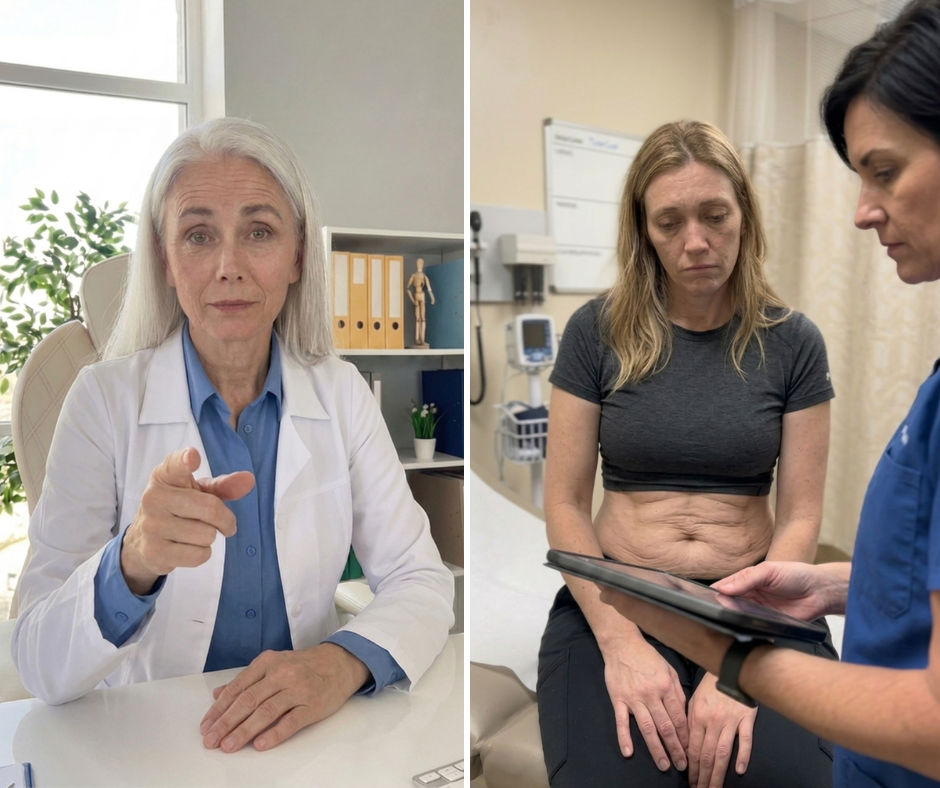
I've been a dermatologist for 19 years. And last year, I had to sit across from a patient, a 44-year-old woman who'd done everything right after her pregnancies, and tell her something I never thought I'd say out loud. "The treatments I've been recommending to you… aren't actually reaching the problem." She looked at me like I'd just admitted to practicing medicine blindfolded. Honestly? She wasn't wrong. Her name was Diane. Two kids. C-section with the second. She'd spent three years applying every firming cream I'd suggested. She'd lost 22 pounds. She did Pilates four times a week. And yet, the loose skin on her lower belly hadn't moved. Not even slightly. I remember her exact words: "I've done everything you told me to do. Why does it look worse than when I started?" Because losing weight doesn't tighten loose skin. In many cases, it makes it sag more. That's not something we talk about enough in clinical settings. And creams, including the ones I'd been recommending for years? They sit on the epidermis. The very surface. The loose skin Diane had wasn't a surface problem. It lived three layers deeper, in a tissue most topicals never touch. That was the moment I stopped pretending I had the right answer. If you're reading this, I think you already know that feeling. Not Diane's story exactly. But your version of it, the one that lives in your own mirror. The belly that never fully came back after pregnancy. Or after losing the weight you worked so hard to lose. The skin that folds when you sit down. That sags when you look sideways. That you hide under loose tops and hope nobody notices. Maybe you've already tried the creams. The collagen supplements. The exercises that tightened everything except the one place that actually bothered you. Maybe you've already priced a tummy tuck, and talked yourself out of it. The cost. The scars. The recovery. The stories you read online at 11pm when you couldn't sleep. You did everything you were supposed to do. And your belly didn't get the message. That's not a failure of effort. And as I was about to find out, it's not a problem that any surface treatment was ever designed to reach. I went back to the research. Not the marketing materials pharmaceutical reps leave on my desk. The actual peer-reviewed science on post-pregnancy skin laxity, collagen depletion, and what physically happens to the subcutaneous layer after it's been stretched. What I found changed the way I practice. The real culprit behind loose belly skin, the kind that doesn't respond to creams, workouts, or even extreme dieting, isn't a surface issue at all. It's a collapse of what researchers call Elastic Response Cells. The cells in the deep subcutaneous layer responsible for keeping skin firm and bouncy. They get damaged during pregnancy. During significant weight changes. During the slow hormonal shift that happens after 40. And they sit far below anything a topical can reach. When those cells stop functioning, the skin above them loses its scaffolding. It folds. It sags. It hangs. And no amount of collagen-boosting serum applied to the top layer will rebuild what's broken three layers down. I knew this scientifically. What I didn't know was how to fix it, without sending women into a $9,000 operating room. I'll be honest with you about what I used to recommend before I changed my mind. Radiofrequency at the clinic: $300 to $500 per session, 6 to 10 sessions to see results. That's $3,000 to $5,000 minimum, for most of my patients, completely out of reach. Tummy tuck surgery: I've seen what happens after. The scars. The swelling that lasts months. The women who came back to my office six weeks post-op still in pain, asking why they still didn't look how they imagined. One of them developed fat necrosis. She spent $10,200 and felt worse about her body than before she went under. I stopped recommending surgery for loose belly skin after her. But that left me with nothing to offer women like Diane. And there are a lot of women like Diane. Until I came across a device that does something I didn't think was possible outside a clinical setting. It combines three technologies simultaneously, the same technologies that exist in separate machines across high-end aesthetic clinics, in a single handheld device. Dynamic cupping. Microcurrent stimulation. Red light therapy. Together, they reach the dermis and the subcutaneous layer. The layers where loose skin is actually formed. The layers where Elastic Response Cells live. I was skeptical. Deeply skeptical. I'm a physician. I don't recommend things I haven't reviewed the science on. So I spent six weeks testing it. First on myself. Then, with full transparency, I introduced it to twelve of my patients, women between 38 and 61, all with post-pregnancy or post-weight-loss skin laxity. By week four, I was taking notes I didn't expect to take. Women who hadn't worn fitted clothing in years were sending me photos. Diane told me at her eight-week check-in that she'd stopped wearing shapewear under her scrubs. For the first time since her second pregnancy. She wasn't "fixed." But she looked, and felt, like herself again. That kind of result, in eight weeks, without surgery, without clinic visits, without a single side effect. Keep reading. The device is called Sculpiflex. A handheld 3-in-1 tool that delivers clinical-grade results in 15 minutes a day. No appointments. No waiting rooms. No surgical risk. Here's how it works, layer by layer. Dynamic Vacuum Cupping reaches the subcutaneous layer, the deepest one, where Alpha-2 receptor-locked fat accumulates completely untouched by diet or exercise. It breaks that physiological resistance. It also restores circulation to tissue that's been oxygen-deprived since your pregnancy or last major weight change. Red Light Therapy penetrates the dermis, the middle layer, directly where your Elastic Response Cells live. The ones that got damaged. The ones no cream has ever reached. The red light reactivates them, stimulates new collagen, and rebuilds the internal scaffolding your skin lost. Microcurrent Pulses work on the muscle layer beneath, toning and lifting from the inside out. The same technology used in high-end facial clinics, now applied to the belly wall. Three technologies. Three layers. Simultaneously. 15 minutes a day. That's why nothing before reached it. Not because you failed, because it was never designed to go that deep. In my twelve-patient study: 10 out of 12 reported visible firmness by week three. 9 out of 12 described their belly as lifted, not hanging, by week six. Every single one said the treatment was completely painless. In Sculpiflex's clinical trial of 1,000+ women: 97% felt firmer, tighter skin. 93% saw visible results within 30 days. 91% noticed a measurable reduction in stretch marks. These aren't marketing claims. They're documented outcomes from women who'd already tried everything else. I know the objection that's forming right now. "I've tried devices before. They didn't work." Here's the anatomical answer: every device you've used before, rollers, vibrating massagers, ultrasonic wands, operates at the epidermis. The surface layer. The exact same depth as the $80 creams. Sculpiflex reaches the subcutaneous layer. The dermis. The muscle beneath. That's not a tagline. It's the anatomical reason your previous attempts didn't hold, and the reason this one does. And if you're still not certain: Sculpiflex carries a full 30-day money-back guarantee. Use it every day for a month. If you don't see a measurable difference in your belly, you pay nothing. No forms. No questions. That's a brand that knows exactly what its technology does. Right now, Sculpiflex is available at 60% off the regular price. But this offer is tied to current stock, and this device has sold out three times in the past year. When this batch is gone, the next restock will not carry this pricing. For less than the cost of a single clinic session, the $300-$500 one most women can never afford to maintain, you get a tool that's yours to use at home. Every day. For as long as you need it. No recovery time. No scars. No $10,000 decision hanging over your head. Diane uses hers every morning before her shift. She told me last month she'd finally bought the dress she'd been putting off for two years. She's not the only one. If the button below is still active, the discount is live. Once this batch sells out, it's gone. P.S. I get asked the same question almost every week now, from women who've read everything above and are still hesitating: "But what if it doesn't work for me specifically?" My answer is always the same: that's exactly what the 30-day guarantee exists for. You're not being asked to believe me. You're being asked to try it, at 60% off, with a full refund if it doesn't deliver. The only thing you're actually risking is 15 minutes a day. The women who tell me they regret it aren't the ones who tried it and didn't see results. They're the ones who waited, and came back three months later to find the price had gone up, or the batch had sold out. Diane waited three years before something worked. You don't have to wait that long.
Skeptical About At-Home Body Sculpting? You Need To Hear This
Yet thousands of women around the world are ditching overpriced spa treatments and invasive surgeries… and turning to a simple handheld device that lifts, firms, and sculpts your loose skin from home in just 15 minutes a day.
SEE DETAILSLike this ad? Make it yours.
Crush rebuilds this exact creative around your product — your brand, your colors, your offer — in about a minute.