Mark Davidson
Mark Davidson Facebook ad: “I thought melatonin is safe”
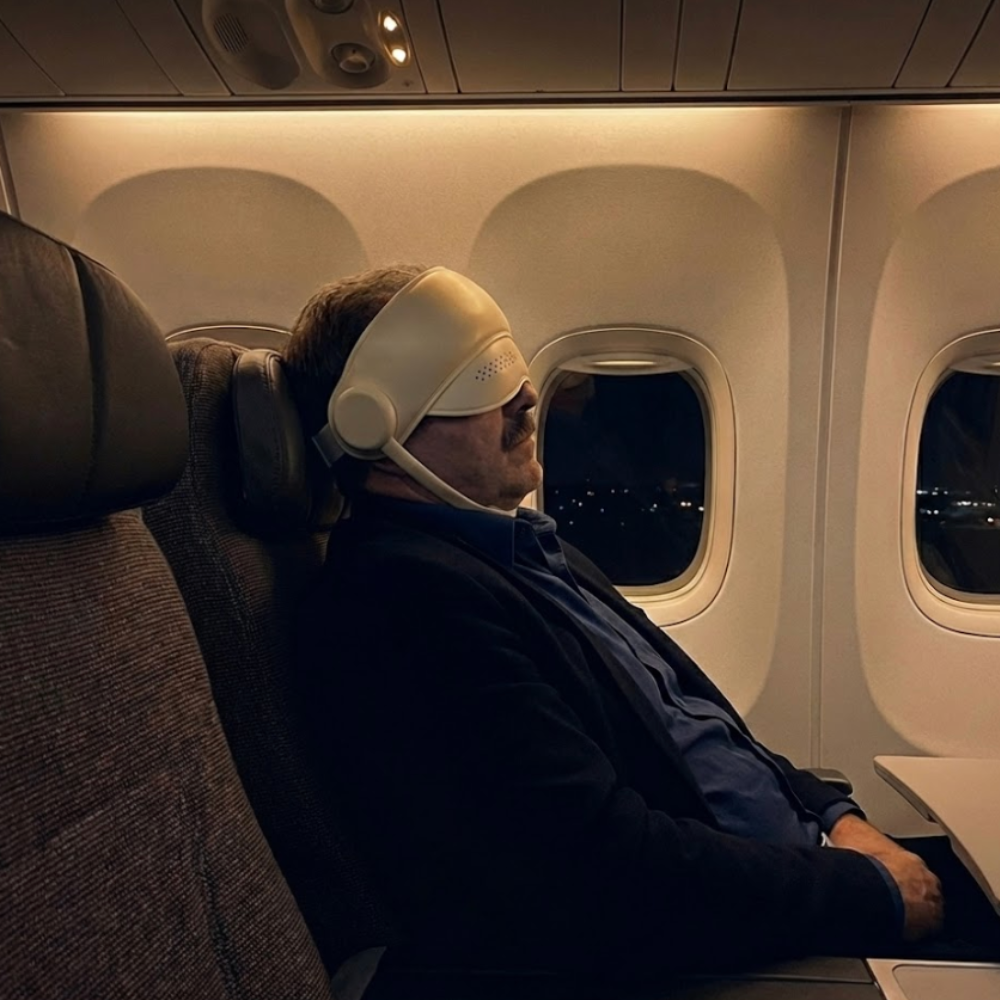
Ran for 71 days, from January 14 to March 26, 2026, the last day Crush saw it.
Run by Mark Davidson on Facebook. Crush is not the advertiser and does not verify its claims. See this ad in Meta's Ad Library(opens in a new tab)
Want an ad like this for your product?
Crush makes new ad images for your product from this ad: your logo, your product photo, your offer.
Trials from $19.95 USD, then $79.95 USD a month. Cancel anytime.
About this ad
- Meta Ad Library ID
- 863010333315298
- Platforms
- Facebook, Instagram, Audience Network, Messenger and Threads
- Relaunches
- 0
Ad text
I bought this mask for a red-eye flight. And I accidentally discovered why it worked better than 2 years of melatonin. Let me explain. I travel for work about once a month. Usually, I don't sleep on planes. I just close my eyes and suffer through the five hours hoping to doze off for maybe 20 minutes. But this time, I had a morning meeting in Boston the second I landed. I couldn't afford to show up looking like a zombie. I almost popped my usual melatonin. Then I remembered what happened last time. The vivid nightmares. The grogginess that lasted until lunch. The weird, heavy feeling like I'd slept for 12 hours but rested for none of them. That's what melatonin had become for me. It wasn't always like that. When I first started taking it two years ago, it was magic. 10mg before bed. Out within 30 minutes. I thought I'd finally solved my sleep problem. Then after about three weeks, it stopped working. So I increased the dose. 15mg. That worked for another few weeks. Then it stopped too. 20mg. Same thing. By the end of year one, I was taking 30mg every night. And it barely did anything. Except give me nightmares so vivid I'd wake up in a cold sweat thinking they were real. Except make me so groggy the next morning I couldn't think straight until noon. Except make my heart race at random times during the day. I mentioned the heart thing to my doctor. That's when she told me something that made my stomach drop. "How much melatonin are you taking?" "30 milligrams," I said. She looked at me like I'd said something dangerous. "The physiological dose is 0.5 milligrams," she said. "You're taking 60 times that." She pulled up some research on her screen. Studies linking high-dose melatonin use to increased cardiovascular risk. Research showing it can affect heart rhythm. Data suggesting it may increase blood pressure in people already taking hypertension medication. "Melatonin isn't regulated like a drug," she explained. "There's no FDA oversight. Studies have found that what's on the label is often not what's in the bottle. Some products contain 400% more melatonin than advertised." I'd been taking this stuff like candy for two years. Increasing my dose every time it stopped working. And nobody told me any of this. Not the person at the vitamin store. Not the articles I read online. Nobody. She told me to stop taking it immediately. So there I was at the airport. No melatonin. Facing a five-hour flight with a critical meeting on the other end. I walked into one of those airport shops and bought what looked like a fancy sleep mask. It had good reviews and something about "gentle massage" and "pressure points." I figured it was worth a shot. I put it on after takeoff. Turned on the gentle vibration setting. And something happened that hadn't happened in two years. My shoulders dropped. Not because I told them to. They just... released. The gentle pressure around my temples felt like someone was holding my head. Grounding me. My breathing slowed without me trying to do breathing exercises. The usual racing thoughts about my presentation, my inbox, everything I needed to do when I landed? Still there. But distant. Like background noise instead of a screaming alarm. I don't remember falling asleep. One moment I was noticing how different my body felt. The next moment, the flight attendant was telling me to put my seat up for landing. I'd slept for four hours straight. On a plane. Without any supplement. Something I hadn't done in years. But here's what shocked me most. No nightmares. No grogginess when I landed. No racing heart. I walked off that plane feeling more rested than I had after any night on melatonin. I thought it was a fluke. Maybe I was just that exhausted. But the next night, back home in my own bed, I put the mask on again. No melatonin. Same thing. Asleep in less than ten minutes. Seven hours straight. Woke up clear. No fog. No heaviness. No vivid dreams that felt more real than reality. The third night, same result. That's when I started researching what was actually happening. Because for two years, I'd been increasing my melatonin dose. And for two years, I'd been getting worse. More tired. More foggy. More dependent on a supplement that wasn't even working anymore. Here's what I learned. Melatonin doesn't fix why you can't sleep. It just makes you drowsy. There's a difference. Your body produces melatonin naturally. It's the hormone that signals "it's dark, time to wind down." When you take melatonin supplements, you're adding to what your body already makes. At first, the extra boost helps. But over time, your body adjusts. It starts producing less on its own. So you need more supplemental melatonin to get the same effect. That's why I went from 10mg to 30mg in two years. My body had become dependent. But here's the real problem. Melatonin only signals drowsiness. It doesn't address WHY you can't sleep. If your nervous system is stuck in fight-or-flight mode—if chronic stress has your body convinced that bedtime is a crisis situation—melatonin can make you drowsy, but it can't override that survival response. You'll feel tired. But your body won't actually rest. Your nervous system will stay activated. Stress hormones will keep pumping. And you'll wake up exhausted even after 8 hours. Sound familiar? That's what was happening to me. For two years. While I kept increasing my dose of a supplement that was never going to fix the actual problem. The mask was doing something completely different. The research explained that specific pressure points around your temples and scalp are directly connected to your parasympathetic nervous system. The part that controls your "rest and digest" mode. When these points receive gentle, sustained pressure—like what the mask was providing—they activate your parasympathetic nervous system. They send a physical signal to your body that it's safe. That it's okay to power down. Not a chemical signal saying "be drowsy." A physical signal saying "you're safe. You can rest now." I'd accidentally bought a mask that was doing what two years of melatonin couldn't: Interrupting the stress response at its source. Resetting my nervous system. Giving my body the signal it had been desperately waiting for. I kept using it every night. Never took melatonin again. By week two, the nightmares were gone. The brain fog lifted. The random heart racing stopped. My wife noticed first. "You're sleeping so quietly now," she said. "No more tossing. No more talking in your sleep." By week three, I walked into my doctor's office for a follow-up. She noticed immediately. "You look different," she said. "Rested. Clear." I told her I'd stopped the melatonin completely. Told her about accidentally buying a sleep mask for a flight. About discovering it worked better than two years of supplements. About learning that my problem wasn't a melatonin deficiency—it was my nervous system stuck in crisis mode. She nodded slowly. "That makes sense," she said. "Melatonin helps with drowsiness, not with stress activation. If your nervous system won't power down, all the melatonin in the world won't fix it." She asked me the name of the mask. Wrote it down. "I'm going to start recommending this before supplements," she said. "Especially for patients whose melatonin stopped working." I wish I'd known two years ago that you can't supplement your way out of a nervous system problem. I wish I'd understood that my racing thoughts weren't a melatonin deficiency. They were a symptom of a body stuck in survival mode. I wish someone had told me about the risks before I spent two years taking 60 times the physiological dose of a hormone that was never going to fix the real problem. The ironic thing is, I wasn't even looking for a solution when I found it. I just wanted to sleep on a plane. But that random airport purchase ended up solving a problem that two years and hundreds of dollars in supplements couldn't touch. Because it addressed what was actually keeping me awake. Not a hormone deficiency. A stuck nervous system. I'm sharing this because if you're taking melatonin—especially if you've been increasing your dose because it stopped working—I need you to know something. It's not your fault it failed. You're not taking the wrong brand. You're not taking the wrong dose. It failed because it was solving the wrong problem. Melatonin can make you drowsy. But it can't reset a nervous system stuck in fight-or-flight. It can't tell your body it's safe. It can't give you actual rest. And the more you take, the more your body depends on it. While potentially putting your heart at risk. You don't need a higher dose. You don't need a different brand. You don't need to add magnesium or L-theanine or CBD to the stack. You need to give your nervous system the physical signal it's been waiting for. The signal that tells it: you're safe. You can rest now. That's what finally worked for me. Not another supplement. A physical signal. I discovered this completely by accident on a red-eye flight. You don't have to. The mask is called DreamWeaver Pro. It's a fraction of what I spent on two years of melatonin bottles. A fraction of what a sleep clinic charges. A fraction of what CBTI programs cost. And it actually works. Because it addresses the real problem. Not your melatonin levels. Your nervous system. They offer a 60-night risk-free trial. Two full months to see if real sleep—not just drowsiness—is possible for you. If it doesn't work, send it back. But I don't think you'll send it back. I think you'll do what I did. You'll wake up one morning without the fog, without the nightmares, without the racing heart. And you'll finally understand what rest actually feels like.
Where the ad sends people
realsleepsolutions.co
I thought melatonin is safe
I still can't believe this happened...
Learn more: info.nubilee.co(opens in a new tab)