Reimburse Car Accidents
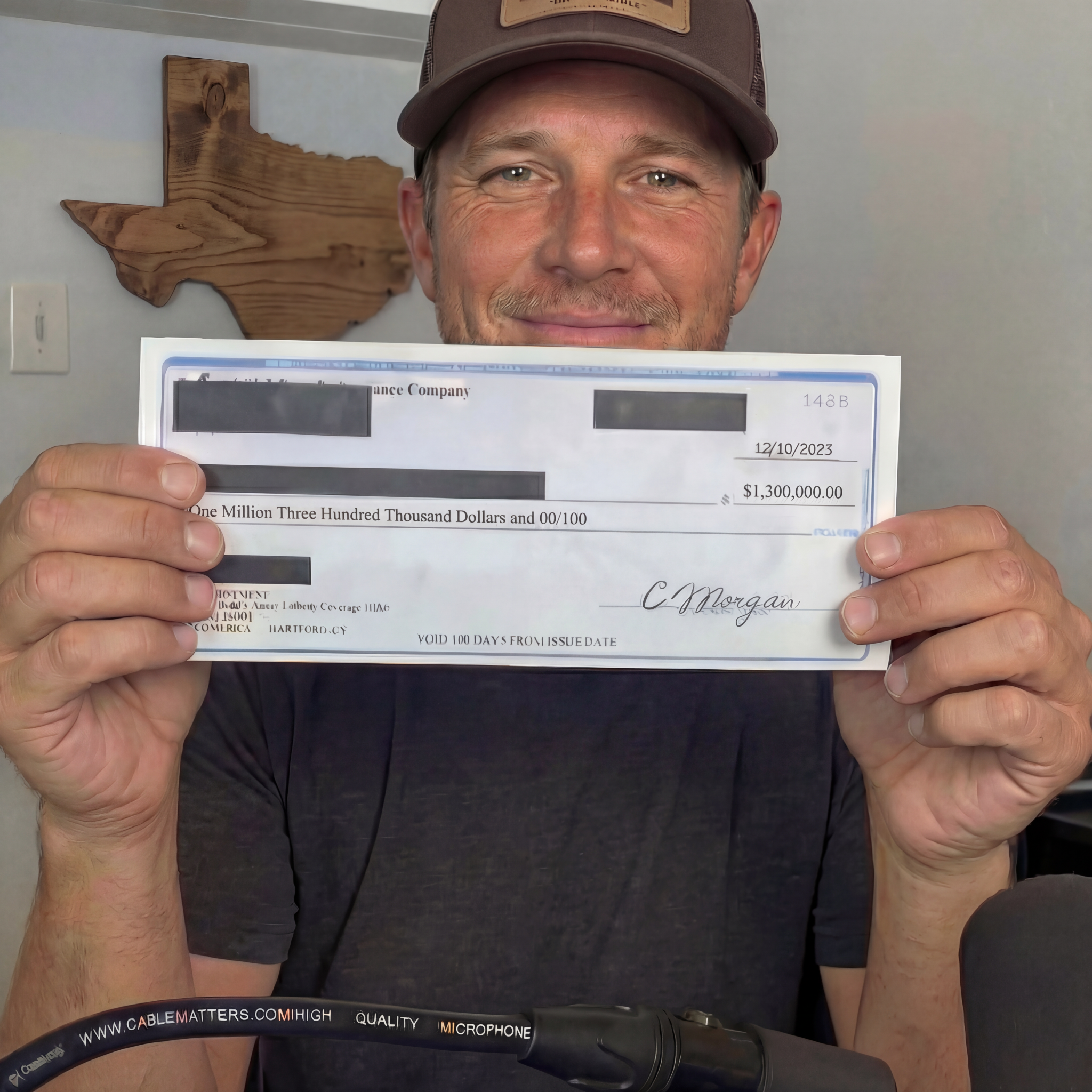
Reimburse Car Accidents Facebook ad: “The $1,000 Insult That Turned Into a $1.3 Million Judgment”
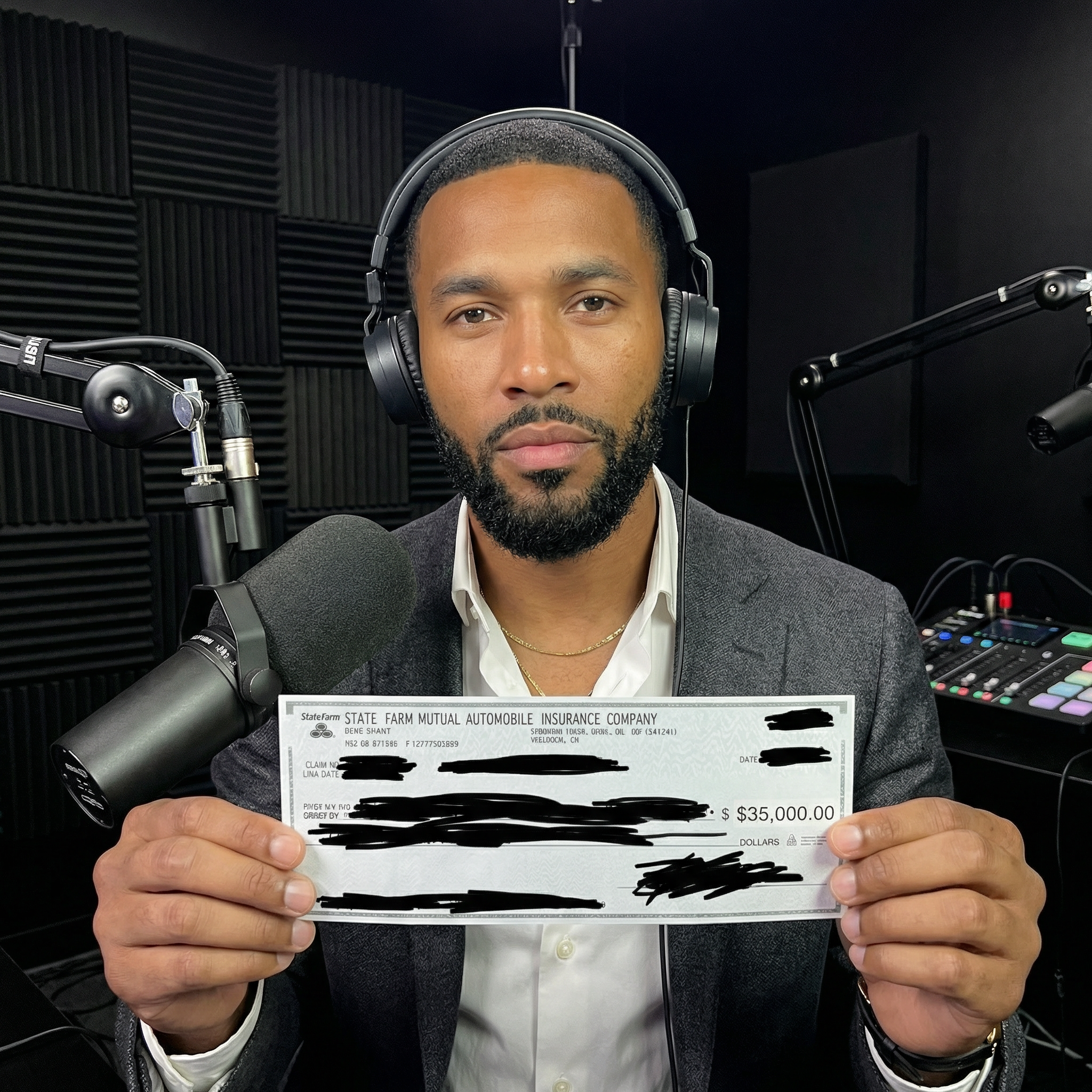
Ran for 14 days, from February 3 to February 17, 2026, the last day Crush saw it.
Run by Reimburse Car Accidents on Facebook. Crush is not the advertiser and does not verify its claims. See this ad in Meta's Ad Library(opens in a new tab)
Want an ad like this for your product?
Crush makes new ad images for your product from this ad: your logo, your product photo, your offer.
Trials from $19.95 USD, then $79.95 USD a month. Cancel anytime.
About this ad
- Meta Ad Library ID
- 868357026199063
- Platforms
- Facebook, Instagram, Audience Network, Messenger and Threads
- Relaunches
- 4
- Niche
- Insurance
Ad text
The $1,000 Insult That Turned Into a $1.3 Million Judgment Michael Mazik was driving on a highway in Riverside County, California when a car crossed the center line and slammed into him head-on. Both vehicles were traveling about 50 miles per hour. The other driver was killed instantly. Mazik survived. But his left heel bone was shattered into so many pieces that doctors couldn't even operate on it. The fracture was too severe. All they could do was splint his foot and wait for it to heal "in whatever deformed state" it ended up in. He was left with permanent damage. Severely restricted range of motion. Chronic arthritis. A visible deformity. Pain that would stay with him for the rest of his life. The other driver's insurance paid out $50,000 immediately. That was the full policy limit. But Mazik had his own underinsured motorist coverage through GEICO. A policy with $100,000 in limits. After the other driver's insurance paid out, Mazik's attorney submitted a claim to GEICO for the remaining $50,000. The medical records were included. The documentation was clear. The severity of the injuries was obvious to anyone who looked. GEICO looked. And then they offered Michael Mazik one thousand dollars. $1,000. For a shattered heel bone. For permanent damage. For a life altered forever. That wasn't a settlement offer. That was an insult designed to make him go away. But here's where the story gets interesting. And where you start to see exactly how insurance companies operate behind the scenes. When GEICO received Mazik's claim, an adjuster prepared what's called a "Claim Evaluation Summary." This document summarized Mazik's medical records and assessed values for his medical expenses, lost income, and pain and suffering. According to GEICO's own internal evaluation, the full value of Mazik's claim was between $47,000 and $52,600. Their own numbers said the claim was worth around fifty thousand dollars. So why did they offer $1,000? Because the summary the adjuster prepared deliberately left out critical information from Mazik's medical records. This wasn't an accident. This wasn't an oversight. During the trial that followed, the adjuster admitted under oath that the evaluation omitted important information. 𝗛𝗲𝗿𝗲'𝘀 𝘄𝗵𝗮𝘁 𝘁𝗵𝗲𝘆 𝗹𝗲𝗳𝘁 𝗼𝘂𝘁: Mazik was still on crutches with a cast several weeks after the accident. He had back pain despite no history of back problems. The fracture to his heel bone was described by doctors as "severe." More than five months after the accident, his symptoms were worse with walking. He had significant discomfort and was medicating with Vicodin and ibuprofen. He had limited joint motion. He was still in physical therapy. His pain only decreased when he wasn't using his foot. All of this was in the medical records GEICO received. None of it made it into the evaluation they used to justify their lowball offer. Over the next several months, GEICO inched their offer up. $𝟏,𝟎𝟎𝟎 became $𝟏𝟑,𝟖𝟎𝟎 Then $𝟏𝟖,𝟎𝟎𝟎. Then $𝟏𝟖,𝟖𝟖𝟕. Each time, the adjusters got approval from GEICO's regional liability administrator, a man named Lon Grothen. He had authority to authorize settlements up to $100,000. He had all the information. He knew the severity of Mazik's injuries. He approved the lowball offers anyway. GEICO even hired an independent medical examiner to evaluate Mazik. The examiner concluded that Mazik was "doing well" and didn't need surgery. He said the injury "does not restrict his occupation as a teacher" and that "no further medical care is indicated." This directly contradicted Mazik's own doctors, who had documented his ongoing pain, his need for specially fitted shoes just to walk, and his severely limited range of motion. But the insurance company now had a piece of paper they could point to. A reason to keep the offer low. What Happened When Mazik Fought Back Mazik refused to accept $18,887 for a permanent injury. The case went to arbitration. The arbitrator looked at the evidence. Looked at the medical records. Looked at what GEICO had conveniently left out of their evaluations. 𝐀𝐧𝐝 𝐚𝐰𝐚𝐫𝐝𝐞𝐝 𝐌𝐚𝐳𝐢𝐤 𝐭𝐡𝐞 𝐟𝐮𝐥𝐥 $𝟓𝟎,𝟎𝟎𝟎 𝐩𝐨𝐥𝐢𝐜𝐲 𝐥𝐢𝐦𝐢𝐭. GEICO paid it. But now Mazik wasn't done. He sued GEICO for bad faith. At trial, everything came out. The cherry-picked medical records. The misleading summaries. The internal evaluations that contradicted the lowball offers. The regional administrator who approved it all. The jury found that GEICO had acted in bad faith. They awarded Mazik $300,000 for emotional distress. $13,508 for the attorney fees he had to spend just to get the benefits he was owed in the first place. And $4 million in punitive damages. The judge reduced the punitive damages to $𝟭 𝗺𝗶𝗹𝗹𝗶𝗼𝗻.n. But GEICO still appealed. They lost. The California Court of Appeal affirmed the judgment, writing that GEICO had "deliberately cherry-picked medical information and disregarded unfavorable findings" and that there was "sufficient evidence for the jury to conclude that GEICO engaged in oppressive conduct by ignoring information concerning the serious and permanent nature of Mazik's injuries for the purpose of saving the company money." In the end, GEICO's attempt to settle a $50,000 claim for $1,000 cost them over $1.3 million. 𝗪𝗵𝘆 𝗧𝗵𝗶𝘀 𝗦𝘁𝗼𝗿𝘆 𝗠𝗮𝘁𝘁𝗲𝗿𝘀 𝘁𝗼 𝗬𝗼𝘂 Michael Mazik had documentation. He had medical records. He had a policy that entitled him to benefits. None of that stopped GEICO from offering him a thousand dollars. They weren't confused about the value of his claim. Their own internal evaluation said it was worth fifty thousand. They made a calculated decision to lowball him anyway. And they would have gotten away with it if Mazik had accepted that first offer. Or the second. Or the third. Most people do. Most people are exhausted. They're hurt. They're dealing with medical appointments and bills and the stress of an accident they didn't cause. When the insurance company calls with that sympathetic voice and offers to "get this resolved," it sounds like relief. That's exactly what they're counting on. The System Is Designed This Way This wasn't a rogue adjuster. This wasn't a one-time mistake. The California appeals court found that GEICO's regional administrator, the man in charge of claims across an entire region, personally approved the lowball offers. He had the authority to settle for up to $100,000. He saw the medical records. He knew what the claim was worth. He approved a $1,000 offer anyway. And then $13,800. And then $18,000. The court called it "oppressive conduct." They said GEICO adopted an "improper adversarial approach" to resolving the claim. This is what you're dealing with when you try to handle an insurance claim on your own. Not a company that wants to help you. A company with regional administrators and adjusters and evaluation summaries and negotiation strategies, all designed to close your claim for as little as possible. 𝗪𝗵𝗮𝘁 𝗧𝗵𝗶𝘀 𝗠𝗲𝗮𝗻𝘀 𝗳𝗼𝗿 𝗬𝗼𝘂 If you've been injured in a motor vehicle accident in Texas within the past 12 months, and you believe someone else was at fault, there's something you need to understand: The insurance company has a plan. They know exactly how to evaluate your claim. They know what to include and what to leave out. They know how to make a lowball offer sound reasonable. They know that most people, facing stress and bills and uncertainty, will take whatever they can get. The only question is whether you have a plan too. A free case review won't cost you anything. It won't obligate you to do anything. But it will give you something the insurance company doesn't want you to have: Information. Information about what your case might actually be worth. What factors could affect your claim. What deadlines you're working against under Texas law. What rights you have that you might not know about. Michael Mazik eventually got justice. But he had to fight for years to get it. He had to go to arbitration. Then to trial. Then through an appeal. You don't have to do it that way. But you do have to do something. Because right now, somewhere in a regional office, an adjuster is preparing an evaluation of someone's claim. They're deciding what to include and what to leave out. They're calculating a "negotiation range." They're getting approval for an offer they know is a fraction of what the claim is actually worth. That someone could be you. REQUEST YOUR FREE CASE REVIEW WITH THIS TOOL https://start.compensatecaraccidents.com/cl/m-texas *This case review is available to Texas residents who were injured in a motor vehicle, trucking, bike, or pedestrian accident within the past 12 months and believe someone else was at fault.* *Free consultation does not guarantee representation. Results vary based on individual circumstances. No fees unless your case is successful.* *Case reference: Mazik v. GEICO General Insurance Co., California Court of Appeal, Second Appellate District, Case No. B281372 (2019)*
Where the ad sends people
start.compensatecaraccidents.com
The $1,000 Insult That Turned Into a $1.3 Million Judgment
You deserve to know what your case is truly worth. Our smart calculator taps into thousands of real accident payouts to uncover what others with similar cases received. If you qualify, most people see up to 60% more — and the best part? You’ll never pay out of pocket. This is about getting you w...
Learn more: start.compensatecaraccidents.com(opens in a new tab)