Well & Woman
Well & Woman Facebook ad: “Read this if you've already tried everything for plantar…”
Ran for 10 days, from July 30 to August 9, 2026, the last day Crush saw it.
Run by Well & Woman on Facebook. Crush is not the advertiser and does not verify its claims. See this ad in Meta's Ad Library(opens in a new tab)
Want an ad like this for your product?
Crush makes new ad images for your product from this ad: your logo, your product photo, your offer.
Trials from $19.95 USD, then $79.95 USD a month. Cancel anytime.
About this ad
- Meta Ad Library ID
- 869429425976754
- Platforms
- Facebook, Instagram, Audience Network and Messenger
- Relaunches
- 0
Ad text
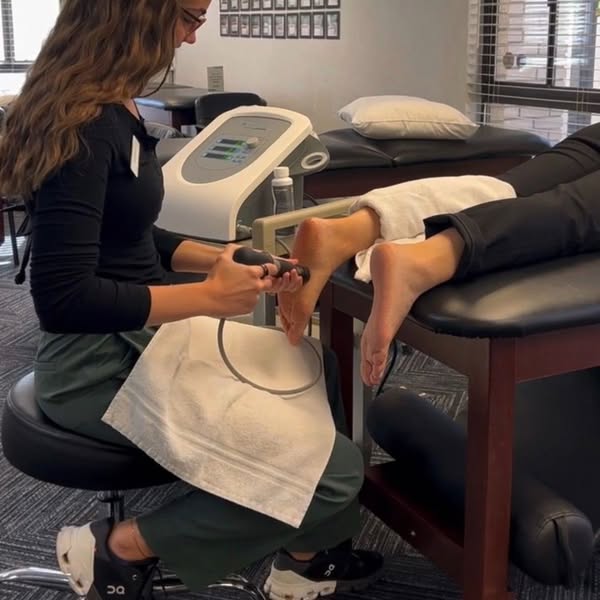
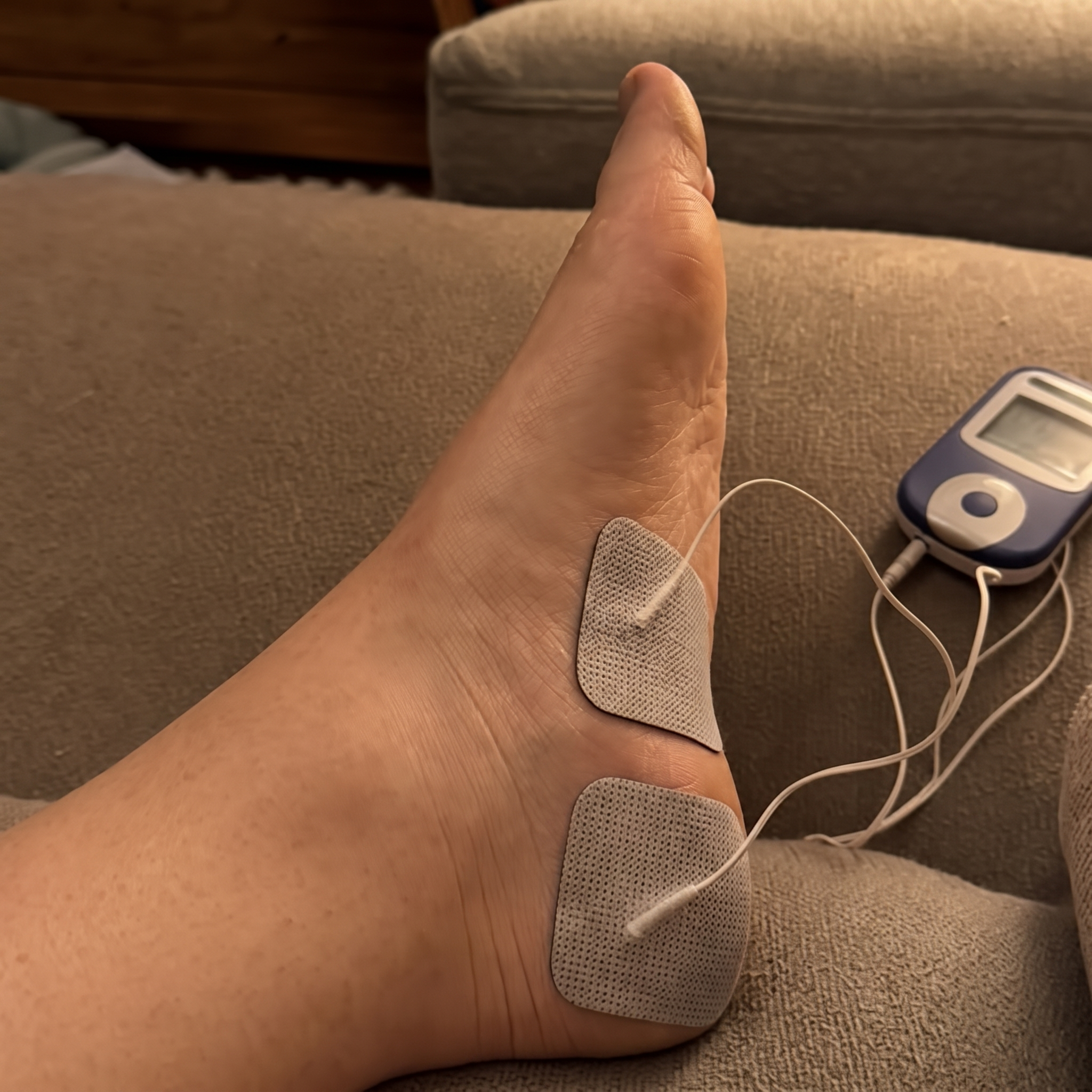
I can explain the difference between fasciitis and fasciosis. I've read the clinical studies. By now I know more about my own feet than my podiatrist does. But none of that knowledge has made my mornings any less painful. Two and a half years. That's how long I've studied this condition like it was my thesis. I can tell you the plantar fascia isn't just a band of tissue, but a dense sheet of connective tissue that constantly needs new collagen to stay elastic. I can explain why repeated cortisone injections work less and less each time. I can tell you why custom orthotics often just move the pain somewhere else instead of resolving it. I can tell you all of that — and I still grip the edge of my bedside table every morning before my feet touch the floor. My husband has stopped asking how my feet are. Not because he doesn't care. Because the answer has been the same for two and a half years, and he's tired of watching me explain something he can't fix. I turned my pain into a research project. That's how I cope. If something hurts, I study it. I take the problem apart, find the mechanism, and go at it with the right approach. That way of thinking has worked on everything else in my life. Except this. There's a shelf in the spare room. Not neatly organised — just piled up. A Strassburg sock I wore for three weeks until the velcro shredded my sheets. A frozen water bottle that lives in the freezer, because I rolled it under my arch during TV so often it became automatic. A pair of rigid custom orthotics from a sports podiatrist who watched me walk for an hour. Cost: $950 out of pocket. Three different pairs of Hokas, because someone on a forum said the Clifton was better than the Bondi for fascia problems. I wore all of them through the recommended break-in period. I tracked my pain in a notes app. Morning score. Afternoon. Evening. One to ten. The numbers never changed. Not with any of it. For twelve weeks I did eccentric heel drops on the stairs. I taped my foot. I wore a night splint. I rolled a golf ball under my arch until the tissue was so irritated I could barely stand on it the next morning. I had two cortisone injections. The first gave me nine days of relief. The second, three. Then shockwave therapy. Six sessions. The physio said to give it eight weeks. In week nine the pain was exactly where it had been in week zero. I sat in my car in the clinic car park staring at the ceiling. Two and a half years. Dozens of treatments. A perfectly documented failure. And I thought: I've approached this more intelligently than anyone I know. I've read more, spent more and worked harder at it. And I have absolutely nothing to show for it. I didn't know what else to do. So I did the only thing I ever do. I went back to the research. But this time I asked a different question. For two and a half years I'd been searching "what helps plantar fasciitis". I'd tried every answer. Nothing held. That night I searched for something else. Not what could repair the tissue, but why the tissue wasn't staying repaired. I found research on connective tissue breakdown in perimenopausal women. Not a forum thread. Not a blog post. Actual research on how oestrogen acts as a biological lubricant for tendons and fascia throughout the female body. The data was simple, and it turned everything I thought I understood upside down. Oestrogen doesn't just regulate your cycle. It directly drives collagen production in your tendons. When there's enough of it, your fascia stays hydrated, elastic, and able to repair the micro-damage that happens with every step. When oestrogen falls — as it often does quickly through perimenopause and menopause — collagen production slows. The tissue dries out. It becomes stiff and brittle. And every step creates small tears your body finds harder and harder to repair. The condition even has a name: the musculoskeletal syndrome of menopause. I stared at the screen and saw my whole timeline differently. The custom orthotics supported my arch. They never addressed why the tissue itself had stopped repairing. The Hokas cushioned the impact. They never replaced the biological lubricant that kept the fascia elastic. The cortisone injections suppressed the inflammatory response to the damage. The tissue kept deteriorating underneath. The shockwave therapy tried to stimulate repair. But you can't force repair in tissue that doesn't have the hormonal environment it needs to renew itself. Every treatment on my list targeted the fascia mechanically, after the damage had already happened. Not one addressed the reason the tissue couldn't repair. For two and a half years I'd been trying to answer the wrong question. The right question was never "how do I repair the fascia?" It was "why can't my body repair this on its own anymore?" For the next hour I searched for something that supported the hormonal mechanism. Not more arch support. Not a softer sole. Something that worked from the inside on the biological environment the fascia needed to recover. And I kept arriving at a term I'd never come across before: the estrobolome. In your gut there's a group of bacteria specifically involved in processing and recirculating oestrogen. When this system — the estrobolome — is working properly, oestrogen that would otherwise leave the body is reabsorbed and returned to the bloodstream, where it can reach the tendons and connective tissue that need it. During menopause this system often falls out of balance. A diet high in processed food, years of antibiotics and stress can all reduce the specific gut bacteria responsible for recycling oestrogen. So your body isn't just producing less oestrogen. It's also wasting some of what it still makes. Your tendons aren't only losing support because production has dropped. They're losing it because your body no longer holds on to what's left. That's when I found MAIRO™. One capsule containing Lactobacillus gasseri — a bacterial strain shown to support the reabsorption of oestrogen in the gut. A strain found naturally in fermented foods from populations where women report far less joint and tendon breakdown after menopause. The mechanism made immediate sense. It was the first thing I'd found that targeted the hormonal environment rather than just the foot. I ordered it the way I order everything these days. Sceptical. Already knowing where to find the returns instructions. The morning I started, I opened my notes app. Week one. Morning pain: 6. That was normal for me — some days a 7 or 8. I logged it. No reaction. Week two. Morning pain: 5. Some days a 4. I stood in the kitchen making coffee for twenty minutes without shifting my weight from foot to foot. I logged it. No reaction. Week three. Morning pain: 3. I walked the full loop with the dog. When I got home I realised I hadn't thought about my feet once the entire walk. I sat down and looked at my notes app. Three weeks of a clear downward line. For the first time in two and a half years the numbers were going the right way for longer than nine days. By week five, morning pain was a 2. Some days a 1. I stopped grabbing the bedside table when I got up. By week eight I stopped tracking daily. Not because I gave up, but because there was nothing left to log. The pain was essentially gone. I still have the notes. Two and a half years of flat lines, then one downward line that stayed low. That was the data. It was all I needed. It's four months on now. I don't track anything. I don't research plantar fasciitis at night. I don't read Reddit threads about orthotics at one in the morning. Last week my husband asked how my feet were. First time in months. I said, "Fine." He looked at me like I'd said it in a language he'd stopped expecting to hear. The shelf in the spare room is still there. I haven't thrown any of it out. Part of me keeps it as evidence. Not evidence of failure — evidence that I spent a very long time asking the wrong question. What finally worked cost less than any single item on that shelf. The knowledge that got me there cost three years, thousands of dollars, and a level of chronic exhaustion I didn't know was possible. I wish I could have that time back. I can't. But the pain is gone. If you've tried everything and nothing has worked, I'm not going to tell you to get your hopes up again. I know what that costs you. I'm telling you what I wish someone had told me two and a half years ago. You've been treating the foot. You need to treat the hormonal environment that foot operates in. Your plantar fascia doesn't hurt because your arch is under-supported. It hurts because the oestrogen that kept your connective tissue elastic, hydrated and self-repairing has dropped — and your body no longer recycles the little it still produces. Until that hormonal foundation is supported, no mechanical treatment of the tissue will hold. Not stretching. Not orthotics. Not injections. Not shockwave. Not Hokas. MAIRO™ supports the oestrogen your body still produces. One capsule. With a 60-day money-back guarantee. You don't have to believe me. You don't have to believe anyone. Track it yourself. Within a few weeks you'll see whether the numbers change. If they don't, you send it back.
Where the ad sends people
Mairo.com
👆 Read this if you've already tried everything for plantar fasciitis
Vitamins/supplements 3,849 people like this
Learn more: auraeandco.com(opens in a new tab)