JessicaRivera
JessicaRivera Facebook ad: “Read if you have PCOS.”
Ran for 49 days, from June 13 to August 1, 2026, the last day Crush saw it.
Run by JessicaRivera on Facebook. Crush is not the advertiser and does not verify its claims. See this ad in Meta's Ad Library(opens in a new tab)
Want an ad like this for your product?
Crush makes new ad images for your product from this ad: your logo, your product photo, your offer.
Trials from $19.95 USD, then $79.95 USD a month. Cancel anytime.
About this ad
- Meta Ad Library ID
- 869521652862457
- Platforms
- Facebook, Instagram, Audience Network, Messenger and Threads
- Relaunches
- 0
Ad text
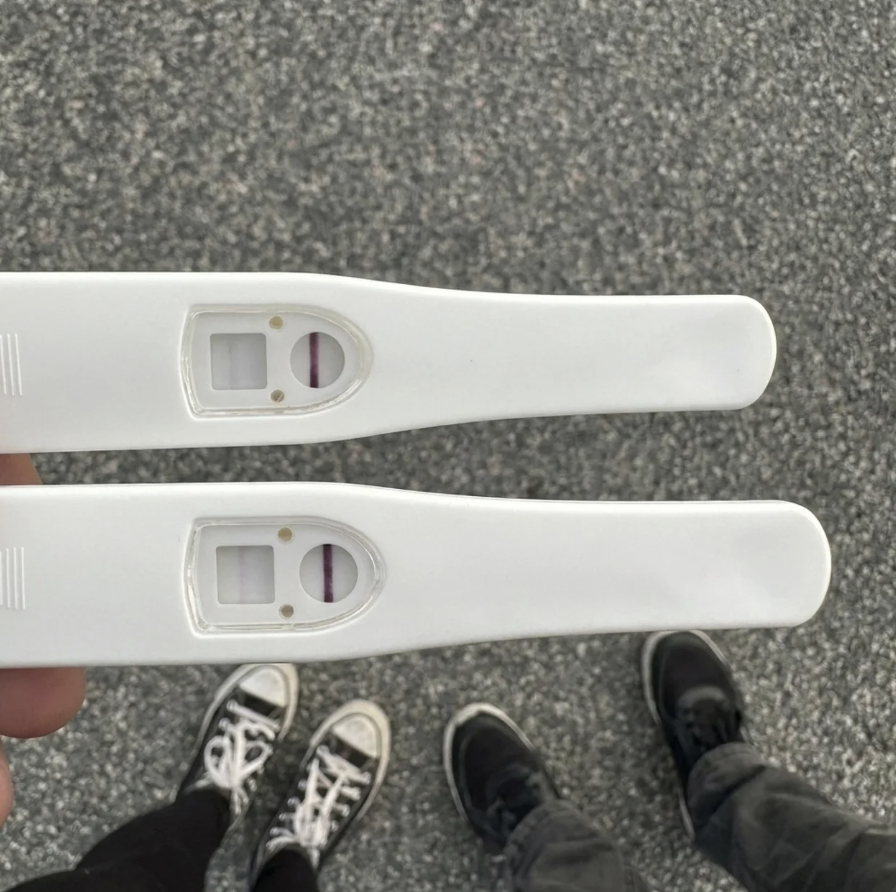
If you have PCOS and you're trying to conceive, you already know the cruelest part. It's not that your body never tries. It's that it gears up to ovulate — the cramps, the egg-white mucus, the positive strip — and then just… stalls. Every month. I spent three years and thousands of dollars treating my insulin, my weight, my hormones. Nobody ever told me why my body kept starting and never finishing. Until one doctor explained the one thing sitting underneath all of it. Let me back up. I was diagnosed with PCOS in my early twenties. For years it was just a word on a chart — some irregular periods, a bit of acne, nothing I thought much about. Then my husband and I decided to start a family, and overnight PCOS stopped being abstract and became the thing my entire life revolved around. I became an expert in my own ovulation. Cheap strips every morning, then Premom, then a Mira monitor when the lines kept confusing me. Temperature charted before my feet hit the floor. I could tell you my average cycle length, my luteal phase, the difference between a 0.5 and a 0.9 on a test line. And every month, the same story. The signs would build. The ache on one side. The egg-white mucus. A test line that finally got dark enough to call a peak. My body was gearing up. I'd let myself think — this is it, this is the month. And then nothing. No temperature shift. My progesterone never rose. A few days of brown spotting I eventually learned meant the egg never actually released. My body started the whole process every single month. And never once crossed the finish line. I did everything they told me. I went low-carb, because everyone says PCOS is about insulin and that's how you fix it. I lost some weight. My cycles got slightly more regular, then stalled out again. I took metformin until my stomach couldn't handle it. I took inositol — the gentle one every forum swears by — for months. It helped a little. Not enough. When none of it got me ovulating reliably, my doctor moved me up the ladder. Two rounds of letrozole. The first gave me one confirmed ovulation that went nowhere. The second did nothing at all. An IUI that failed. And somewhere in there, the line I'll never forget — a doctor barely glancing at my chart before saying my "most reliable option" was probably IVF, and I should start saving. Twenty-thousand dollars we didn't have. For a procedure to bypass a body that nobody had ever actually tried to understand. But the appointments weren't the hardest part. The months were. The two-week wait, every single time. The eight-days-past-ovulation stretch that had quietly become the darkest part of my life — where I'd let myself hope it had worked this time, and then watch it not. Another negative test in the bathroom trash. Another pregnancy announcement on my feed from someone who "wasn't even trying." Another friend onto her second while I was still waiting for my first. And slowly I started to believe the thing I think a lot of us secretly believe. That my body was broken. That it couldn't do the one thing it was supposed to do. Then I found the doctor who finally explained it. She was a reproductive endocrinologist. And the first thing she did was the one thing no one had done in three years — she looked at all my tracking, the gearing up, the stalling, the low progesterone, and she didn't say "that's just PCOS." She said, "Your body isn't failing to start. It's failing to finish. And that's a completely different problem." She pulled up my scans. "Look at this. You have plenty of follicles. Your eggs were never the issue. And the signal to ovulate is firing — that's the mucus, that's the positive strips you keep getting. Your body is trying, every month, exactly like you said. The problem is the last step. The follicle is supposed to mature and release — and something keeps jamming that final step." "Everyone told me it was my insulin," I said. "And it is — partly," she said. "High insulin pushes your ovaries to make too much testosterone, and that testosterone disrupts ovulation. That's real. It's why everyone treats the insulin. But here's the question almost nobody asks: what's making your cells insulin-resistant in the first place? And what keeps that last step jammed even when the insulin's handled?" She let it sit. "Underneath the insulin, there's inflammation. Not the kind you can feel — a low, chronic kind. In PCOS there's basically an inflammation switch, something researchers call NF-κB, that gets stuck in the on position. While it's stuck on, your body stays inflamed, your cells stay resistant, and that final step of ovulation stays jammed. Everyone's been treating the insulin on top, or forcing one ovulation at a time with a drug. Almost no one turns down the thing underneath that's keeping it all stuck." And three years clicked into place. The low-carb, the weight I'd lost — worked on the insulin, partway. Stalled because the inflammation underneath never moved. Metformin, inositol — nudged the insulin. Downstream of the real problem. Letrozole — tried to force a single ovulation. It didn't fix why my body couldn't get there on its own, so when it failed, I had nothing left. IVF — the plan to skip the whole thing entirely. Not one of them touched the inflammation jamming the finish. "So what do I actually do?" I asked. She told me about thymoquinone — the active compound in black seed oil. Nigella sativa, used in traditional medicine for over two thousand years, but with real modern research behind it. She mentioned a 2024 controlled trial in PCOS patients where it improved menstrual regularity, lowered testosterone, and reduced ovarian volume — and explained that it's studied specifically for the way it calms that NF-κB switch. "I'd want you on it underneath whatever we do next," she said. "Because if we don't calm the inflammation, we're just forcing a system that's fighting us." Then she told me the catch. "Most black seed oil on the shelf is useless. Thymoquinone is fragile — heat destroys it, and the cheap stuff is processed with so much heat there's barely any active compound left by the time it's bottled. That's why women try it, feel nothing, and give up. You want it cold-pressed, and standardized — so you actually know how much of the active part is in each capsule." That night I went down the rabbit hole. I found forums full of women with my exact pattern. The gearing up. The stalling. The "plenty of follicles, no baby." The "subfertile, not infertile" reframe I'd never heard but desperately needed. And one name kept coming up from women whose cycles had actually started to change. Loomi. I checked it against everything she'd told me to look for. Cold-pressed from the raw seed, so the heat never destroys the compound. Standardized to a guaranteed 2% thymoquinone. Third-party tested. One ingredient, nothing else. It matched. I ordered it. I didn't stop anything else — I added it on top. I'm not going to tell you it was overnight. The first couple of weeks, the most I noticed was that my afternoon energy stopped crashing and the sugar cravings quieted down. Then my cycle shifted. And then the thing I'd stopped believing would happen. The signs built like they always did — the mucus, the positive strip, the ache on one side. Same as every month for three years. But this time, the next morning, my temperature shifted. And stayed up. My body finished. For the first time in three years, I had actual confirmation: I ovulated. On my own. The process my body kept starting and abandoning, it finally completed. I sat on the edge of the bathtub holding that thermometer and cried the good kind of cry. The next cycle, it happened again. Then again. It wasn't a fluke. My body had found the finish line. I want to be careful here, because I know exactly how these stories read when you're three years deep and worn down. I can't promise you what your body will do. Every body is different, and I'm one woman with one story. What I can tell you is what changed for me: my cycles came back, I started ovulating on my own, and for the first time since this began, I wasn't at war with my own body. (And yes — a few months later, two lines. I'm not going to dress that up as a guarantee, because it isn't one. But it came after my body finally started finishing what it kept starting.) Here's what I wish someone had told me three years and thousands of dollars ago. PCOS usually isn't an egg problem. For most of us, it's an ovulation problem — and ovulation can come back. Your eggs were never the issue. You probably have plenty. Your body was never broken. It was stuck — inflamed, jamming the final step every month — while everyone treated the insulin on top and no one touched what was underneath. That is not your fault. So if you're where I was — tracking obsessively, watching your body gear up and stall, another negative test in the trash, a doctor telling you IVF is your only real shot — please do one thing. Ask the question they didn't. Look at what's underneath the insulin. Cold-pressed & standardized to a guaranteed 2% thymoquinone (TQ) One ingredient — no fillers, no proprietary-blend smokescreen Third-party tested Made in an FDA-registered facility 90-day money-back guarantee — use it all, then decide Your body might not be broken. It might just need the inflammation to settle so it can finish what it keeps trying to start.
Where the ad sends people
loominutrition.com
Read if you have PCOS.
Your PCOS isn't a hormone problem — it's the inflammation creating one. High-TQ black seed oil, clinically researched. 2% thymoquinone. Third Party Tested.
See details: loominutrition.com(opens in a new tab)