

Verbattle Foundation
Active· since Jul 18, 2026
- 13
- days running
- 0
- relaunches
Ad copy
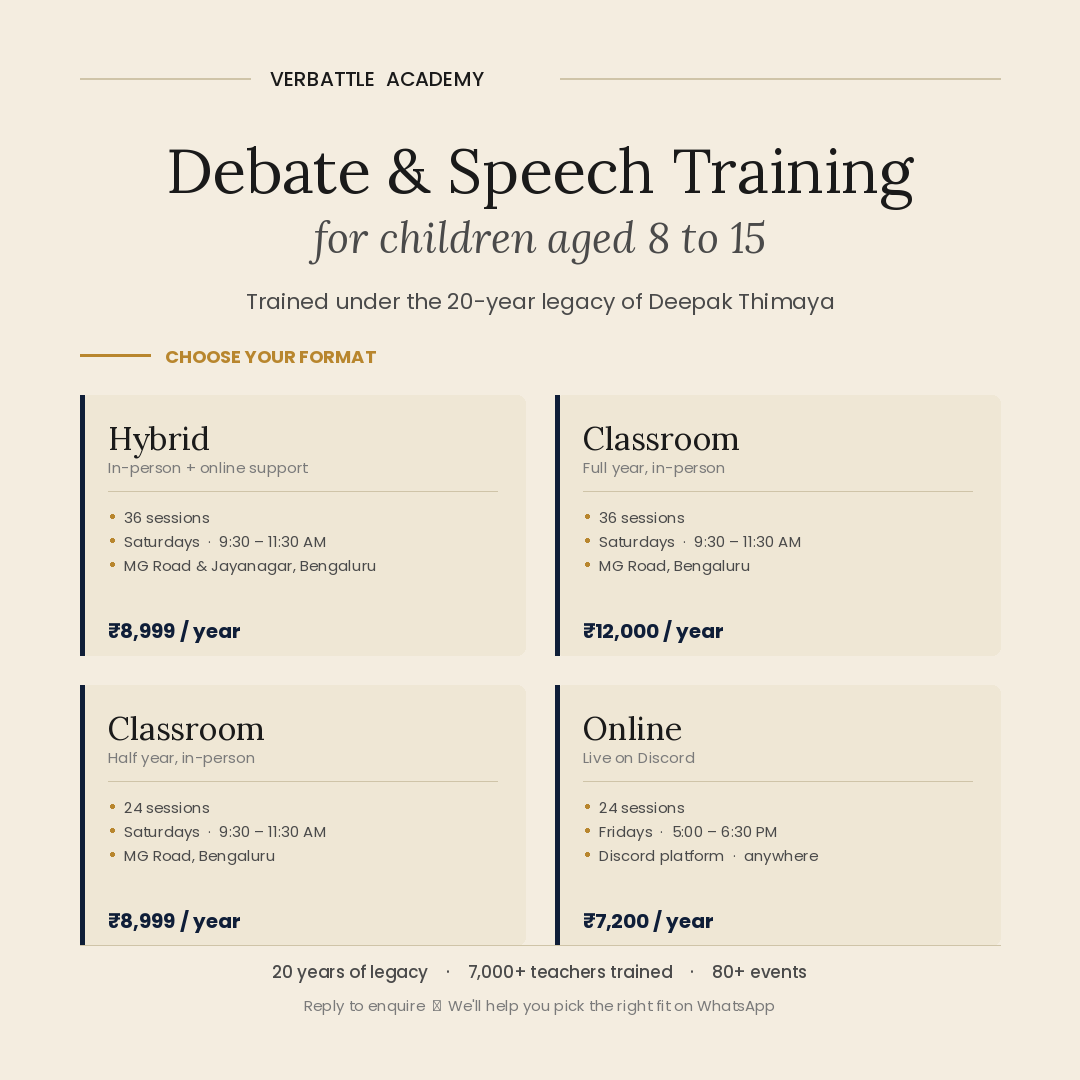
The Space Between a Thought and a Word If you spend enough time around children between the ages of eight and fifteen, you notice a quiet phenomenon that happens almost daily. A child will be sitting at the dinner table, or riding in the back of the car, eyes bright, clearly processing something complex. You can see the wheels turning. They have a question about how the world works, an observation about a book they just read, or a unique solution to a problem. But when given the floor, they hesitate. The thought stays trapped inside. They shrug, say "nothing," and look away. As parents, it is easy to assume this is just a phase, or perhaps a lack of knowledge. But more often than not, it is simply the gap between having an idea and possessing the tools to articulate it. We live in a culture that frequently mistakes loudness for confidence. We tend to believe that some children are simply born natural leaders or gifted public speakers, while others are destined to remain in the background. But child psychology tells us a very different story. True confidence is not an innate personality trait; it is a skill built through deliberate practice, repetition, and above all, a felt sense of safety. The Missing Subject in Modern Education Our schools do a remarkable job of teaching foundational academic subjects. Children learn the mechanics of mathematics, the structure of science, and the grammar of the English language. Yet, the actual application of these tools—how to present an idea, how to defend a perspective, and how to engage in respectful disagreement—is rarely given its own dedicated space. Extracurricular learning is often divided into strict categories: sports for physical agility, music for creativity, and tutoring for academic gaps. But what about the fundamental human act of communication? When a child struggles with a school presentation or feels overwhelmed by stage fear, it is rarely because they do not understand the material. It is because standing before an audience requires a completely different set of muscles. It requires an understanding of stage presence, the ability to regulate one's breathing, and the mental agility to structure thoughts in real time. Without intentional guidance, these moments can become anxiety-inducing events rather than opportunities for growth. Redefining Debate for the Next Generation When most people hear the word "debate," they picture aggressive arguments, political talk shows, or high-stakes competitions where one person must defeat another. But genuine debate—the kind that shapes young minds—is entirely different. True debate is actually an exercise in deep listening and emotional intelligence. Before you can construct a sound argument, you must first thoroughly understand the opposing viewpoint. It requires critical thinking to analyze information, reasoning to separate fact from emotion, and storytelling to make an audience care about your perspective. When children learn to debate this way, they stop viewing differences of opinion as personal attacks. They learn that you can disagree with an idea while maintaining absolute respect for the person holding it. This shift in mindset is where leadership skills are born. A leader is not someone who commands the room by shouting; a leader is someone who listens carefully, analyzes deeply, and communicates with clarity and empathy. A Safe Space to Stumble No child becomes articulate overnight. It happens incrementally, through small victories in a supportive environment. It happens when a child tries to express a complex thought, stumbles, and realizes that the world did not end. It happens when they receive gentle feedback that helps them refine their logic. Over time, this safe practice transforms how they see themselves. The child who used to look at the floor during a conversation begins to meet your eye. The student who dreaded being called on in class starts raising their hand. For the past twenty years, Verbattle Academy has focused on this exact journey. Founded on the extensive training legacy of Deepak Thimaya, the academy does not focus on creating competitive champions who win trophies. Instead, the focus is entirely on helping children think independently, express ideas clearly, and build lifelong confidence. It is about equipping them with the soft skills necessary to navigate school presentations, future interviews, Model UN forums, and eventually, the complexities of adult life. Our Programs for This Year If you would like to give your child a dedicated space to develop these essential life skills, Verbattle Academy offers structured programs designed to fit into your family's routine: Hybrid Program (In-Person + Online Support): 36 comprehensive sessions held on Saturdays from 9:30 AM to 11:30 AM. These take place at our Bengaluru centers on MG Road and Jayanagar. This program includes online catch-up support for weeks when your family is traveling or busy. The investment is ₹8,999 for the full year. Regular Classroom (36 Sessions): Held on Saturdays at our MG Road center, offering full-year immersion in communication and reasoning. The investment is ₹12,000/year. Regular Classroom (24 Sessions): A focused Saturday program at our MG Road center. The investment is ₹8,999/year. Online Program: 24 sessions held on Fridays from 5:00 PM to 6:30 PM via Discord. This is ideal for curious learners who prefer to join from the comfort of home. The investment is ₹7,200 for the full year. We invite you to learn more about how we work with children aged 8 to 15. If you are curious about our methodology or want to see if this is the right environment for your child, please request our program details. Let us help them find the words for the wonderful ideas they are already thinking.
Communication Skills for Ages 8-15
LEARN MORELike this ad? Make it yours.
Crush rebuilds this exact creative around your product — your brand, your colors, your offer — in about a minute.