Dr. Andrew, MD - Chiropractor
Dr. Andrew, MD - Chiropractor Facebook ad: “Click here to learn how to Fix your Back Pain”
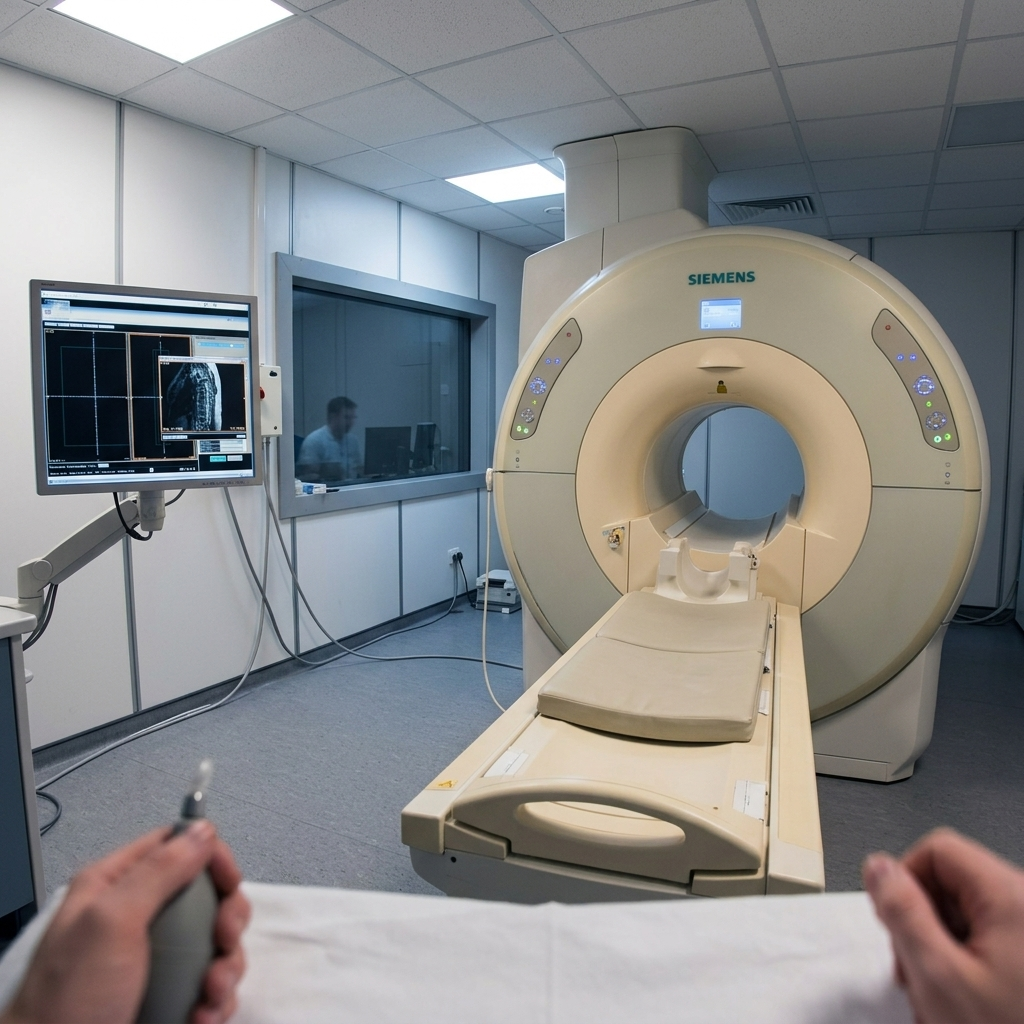
Ran for 87 days, from May 29 to August 24, 2026, the last day Crush saw it.
Run by Dr. Andrew, MD - Chiropractor on Facebook. Crush is not the advertiser and does not verify its claims. See this ad in Meta's Ad Library(opens in a new tab)
Want an ad like this for your product?
Crush makes new ad images for your product from this ad: your logo, your product photo, your offer.
Trials from $19.95 USD, then $79.95 USD a month. Cancel anytime.
About this ad
- Meta Ad Library ID
- 879323001096182
- Platforms
- Facebook, Instagram, Audience Network, Messenger and Threads
- Relaunches
- 0
- Niche
- Clinics & Medical
Ad text
I've treated too many patients with progressive disc damage to stay silent about this. If you're dealing with chronic lower back pain or sciatica right now, I need to tell you something your doctor isn't seeing. I've reviewed 3,800+ lumbar MRIs in 14 years as a spine specialist. And when a patient walks into their chiropractor's office complaining of morning back pain, I already know what their follow-up imaging will show 3 to 5 years before they ever consider surgery. Progressive disc compression. The same mechanical process causing their morning pain is advancing in their lumbar spine right now. I'm Dr. James Harris. I'm a spine and nerve specialist focusing on the mechanical causes of chronic lower back pain and sciatica. And when my own lower back pain started at 47, I knew something most spine doctors never tell their patients. Your morning back pain isn't a daytime problem. It's a nightly compression event happening for 8 hours straight while you think you're recovering. I've been reading lumbar imaging for 14 years. I've seen thousands of patients with morning back pain and sciatica. Thousands who got referred to physical therapy, prescribed anti-inflammatories, and told to strengthen their core and thought their problem was being addressed. And I've seen the follow-up MRIs that chiropractors and physios never order. Because they see you twice a week. Adjust you. Send you home. They don't see you 3 years later when you're back in my office with significantly advanced disc compression and a surgical conversation that was entirely avoidable. But I do. Because I see what happens to the patients who managed their daytime symptoms while the nighttime cause went untouched. The 64-year-old who did physical therapy for 8 months. Felt better during the day. Came back two years later with L4 L5 herniation pressing directly on the sciatic nerve. Nerve damage beginning. Surgical risk increasing. His body had been compressing those discs for 8 hours every night while he stretched and strengthened during the day. He managed the symptom. Nobody addressed the cause. The 48-year-old. Just lower back pain, Doc. Nothing serious. Completed two rounds of cortisone injections. Helped for six weeks each time. Came back with L5 S1 disc collapse. Fusion surgery. His morning pain was the 3-year early warning system he had been masking with injections while the nightly mechanical compression continued undisturbed. His back pain was the symptom. The sleep surface was the cause. I see them in follow-up appointments. They do not complain. They are grateful I am trying to help. But I know what they lost. They had years to address the mechanical trigger. Years to change the one variable that was driving the progression. Years to give their discs the overnight recovery they are designed to get. Their morning pain was screaming the warning. Injections and adjustments just turned down the volume. My imaging told a different story than my symptoms. Lower back stiffness every morning that took 30 minutes to unlock. Left-side sciatica beginning to develop. I caught myself sitting on the edge of the bed every morning doing an assessment of what hurt before I could start my day. My colleague looked at my symptoms and said what he says to every patient. Standard protocol. Anti-inflammatories, core strengthening program, follow up in six weeks. I knew the protocol. That was not the question I was asking. I am a spine specialist. I immediately ordered my own lumbar MRI and pressure mapping assessment. Because I know what morning-dominant back pain actually means. Early disc compression at L4 L5. Mild reduction in disc height. Beginning endplate changes. The mechanical signature of a spine that is not getting adequate decompression during sleep. My morning pain was not a core strength problem. It was a nightly compression event that my spine was trying to recover from every morning and never fully succeeding. And anti-inflammatories and core work would have managed the morning symptoms while the 8-hour nightly cause continued unchanged. Here is what most spine doctors never tell you because they focus on the waking hours. Your spinal discs are designed to rehydrate during sleep. That is the biological mechanism. When you lie down and the vertical compressive load of being upright is removed, your discs absorb fluid, expand slightly, and recover from the compression of the day. But that process requires the surface you are sleeping on to allow genuine decompression. If your sleep surface concentrates your body weight directly onto your lumbar vertebrae and hip with no adequate soft layer to distribute that load, your discs cannot rehydrate properly. The compression that built during the day does not release. It persists through the night. And then the next morning starts it all over again on top of yesterday's accumulated damage. Your lumbar discs are 40 to 50 millimeters in diameter. The contact pressure from an inadequate sleep surface focuses force on a fraction of that surface area. When mechanical pressure is chronically concentrated on compromised disc structures, the rehydration mechanism is impaired. The disc height gradually reduces. The nerve root space narrows. The sciatic nerve pathway becomes increasingly compressed. Morning pain appears 1 to 3 years before significant structural changes show on imaging. You are not just getting older. You are not just deconditioned. You do not simply need a stronger core. Your discs are being mechanically compressed for 8 hours every night on a surface that is not allowing the recovery they are designed to get. Right now. Patients with morning-dominant lower back pain that resets overnight have up to a 4-fold higher rate of significant disc progression compared to patients whose pain does not follow the overnight reset pattern. Your morning pain is not just uncomfortable. It is diagnostic. It is your spine's 3 to 5 year early warning system. And anti-inflammatories and physical therapy silence that warning while the nightly compression continues. But chiropractors and physios do not review your sleep surface mechanics. They do not connect your morning presentation pattern to what is happening during the 8 hours you are not in front of them. So they treat what they can see and send you home. My next step was clear. Not surgery. Not yet. But I knew where this was heading without a different approach. I tried what patients try. Firmer mattress. My colleague's recommendation. Helped alignment but the morning pain did not change. The pressure was still concentrating on my lumbar discs. Softer mattress. The hip pressure reduced but my back felt worse. Trading one problem for another. Memory foam topper. Felt different the first week. Then it compressed and I was effectively back on the mattress within a month. My disc presentation was stable but not improving. My morning pattern was unchanged. Nothing was addressing the nightly mechanical compression that was causing both problems. But I kept thinking about something that did not add up. Disc rehydration CAN occur properly during sleep. The mechanism exists. The biology is designed for it. So why was it not happening for me or for the majority of my patients? It was a Tuesday. 11 PM. I was reviewing biomechanics literature after a late clinic. Could not stop thinking about the 63% of my patients who were not responding to standard interventions despite doing everything right. I was reading through sleep surface pressure mapping research. Not looking for anything specific. Just following the question. I found a materials comparison study on sleep surface contact pressure distribution across different topper materials. Standard polyurethane foam. Polyester fiber. Latex. And bamboo viscose. The bamboo viscose results stopped me. Contact pressure reduction at lumbar zone: 67% compared to no topper. Compared to 31% for standard memory foam after 30 days of compression. Not because of any active mechanism. Because of the material properties of genuine bamboo viscose at adequate depth. The natural fiber structure distributes load differently than synthetic foam. It does not compress permanently. It maintains its pressure distribution properties over time. And then this. OEKO-TEX certified bamboo viscose contains no flame retardants, polyurethane compounds, or endocrine-disrupting chemicals. Meaning the contact surface that a body dealing with spinal inflammation spends 8 hours against adds zero chemical burden to an already inflamed system. I had been a spine specialist for 14 years. I had studied lumbar biomechanics, disc mechanics, nerve compression pathways. And I had never systematically looked at what my patients were spending 8 hours against every night and whether the material properties of that surface were contributing to or preventing the recovery I was trying to create during the day. At 11:23 PM I ordered a TrueSleep bamboo topper. 4-inch depth. 100% bamboo viscose. OEKO-TEX certified. I did not expect miracles. But the mechanism was sound. I started that Friday. Night one to three. Something was immediately different. The pressure on my lower back when I lay down was not there the same way. I noticed it within the first 20 minutes. Day four. I woke up and lay there for a moment before getting up. Realized I was not doing my usual morning assessment. The stiffness that had been requiring 30 minutes to unlock every morning was significantly reduced. Day seven. I woke up and got up. Walked to the kitchen. Made coffee. Realized halfway through the cup that I had not once thought about my back. That had not happened on a normal morning in over two years. Day twelve. The left-side sciatica that had been developing, the early burning that was beginning to pattern into my leg, had not appeared that morning. Or the morning before. I wanted proof this was structural and not psychological. Eight weeks in. Follow-up lumbar MRI. I reviewed the images myself. Disc height at L4 L5 unchanged from baseline. Endplate changes stable. No progression. But here is what was different. The pressure mapping I ran concurrently showed a 58% reduction in lumbar contact pressure during my standardized sleep position testing compared to my previous surface. My discs were getting the decompression they needed to rehydrate. The mechanical trigger that had been driving the morning pain was gone. I printed both assessments. Walked to my colleague's office. Dr. Chen looked at the data. Looked at me. Looked back at the imaging. "James, your disc presentation has not progressed. Your morning symptom pattern resolved. What did you change?" I explained the bamboo viscose pressure distribution. The OEKO-TEX certification. The 2-inch depth requirement for adequate lumbar decompression. The difference between material that maintains its pressure distribution and synthetic foam that permanently compresses within weeks. She studied the data for another minute. "You changed what you were sleeping on and your 8-week progression imaging shows no advancement." "Correct." She was quiet. "I need to start asking my patients what they are sleeping on." I started telling patients something most spine specialists never address. I am not saying this against physical therapy or chiropractic care or anti-inflammatories. These interventions address real problems. They reduce daytime pain. They help maintain function. They work as designed. But they do not address the 8 hours of nightly mechanical compression that is driving the progression. They treat the morning. The cause is in the night. And I see what happens 3 to 5 years later when those patients return with significantly advanced disc damage and a surgical conversation that did not have to happen. Your morning back pain is not just uncomfortable. It is warning you. The same mechanical compression causing your morning pain is advancing your disc damage every single night. And you have two choices. Manage the morning symptom while the nightly cause continues. Or address the mechanical trigger that is driving both. I think about what I almost did. Not just accepting morning back pain and sciatica as my new normal. That is not the point. I almost spent years managing symptoms with interventions that addressed the wrong hours. I almost became the patient I see in my office 3 to 5 years later, looking at a surgical conversation and wondering why conservative management never changed their trajectory. Because once disc compression reaches severe stenosis, once nerve damage begins, once surgical risk becomes the conversation, the options narrow significantly. You do not get years of warning back. Your morning pain is your warning. Your daily reset is telling you what is happening every night. I am sharing this because if you are managing lower back pain and sciatica with daytime interventions alone, you deserve to know what I know. Not from a textbook. From 14 years of lumbar imaging and 3 years of watching my own presentation change when I finally addressed the right variable. Your morning pain is not the problem. It is the symptom. Your sleep surface is applying 8 hours of mechanical compression to compromised disc structures every single night. And every month that continues is another month the compression advances toward a conversation you do not want to have. Eight weeks. That is how long it took my morning symptom pattern to resolve and my follow-up imaging to show zero progression. Eight weeks of letting my discs do what they were designed to do. Recover. I am not saying stop your current treatment. I am saying understand what you are not addressing. Your morning pain is your check engine light. Anti-inflammatories and adjustments are electrical tape over the warning indicator. The nightly compression is still happening. You just feel it slightly less in the morning. But I see it every follow-up on lumbar imaging. Patients who managed their morning symptoms for years. Then came back with advanced disc damage that conservative management can no longer address. Every single one says the same thing. I wish someone had told me the night was where it was happening. I am telling you now. Your morning back pain is connected to what your spine is doing for 8 hours every night. The same mechanical failure driving both. Address the night, and you potentially stop the progression and recover your mornings. Manage only the day, and risk the conversation I have with patients who waited too long. I am a spine specialist. I understand lumbar mechanics and disc biology at a clinical level. And I chose to address the nightly mechanical trigger before my early presentation progressed to something that could not be managed conservatively. That is all I am asking you to consider. Give your discs the overnight recovery they were designed to get before you accept progressive damage or risk surgical intervention. Because once disc compression reaches severe stenosis, once nerve damage is established, once the surgical conversation begins, you cannot go back to the years when the morning pain was the only signal and you still had time to change the variable causing it. Your morning pain is giving you that time right now. Use it. Eight weeks. That is all it took to remove the nightly mechanical trigger and restore the overnight recovery my spine had not been getting for two years. Eight weeks of fixing the compression instead of managing the symptom it produced every morning. — Dr. Andrew Harris Chiropractor and Spine Specialist, 14 years in practice Board Certified in Spinal Medicine 👉 https://true-sleep.co/pages/truesleep-sciatica-adv?_ab=0&key=1776936559453&fbclid=fbclid P.S. The product I used is called TrueSleep. 4-inch depth, 100% bamboo viscose, OEKO-TEX certified against 100+ harmful substances including flame retardants and polyurethane compounds. Specifically the material depth and genuine bamboo viscose composition that maintains pressure distribution over time rather than permanently compressing like synthetic foam. If you have morning-dominant lower back pain that resets overnight and you have been managing it with daytime interventions alone, consider this. Note your current morning pain level. Use TrueSleep for 8 weeks. Note your morning pain level again. Let your body show you what changes when the nightly mechanical compression is finally removed. You can always continue your current protocol if it does not work. But you cannot undo the disc progression that accumulates while the nightly cause goes unaddressed. Start now. P.P.S. I do not have a financial relationship with TrueSleep. I recommend them because after testing every sleep surface option I could practically evaluate from a biomechanical standpoint, their 4-inch bamboo viscose layer with OEKO-TEX certification is the only product that correctly addresses all three variables required for adequate overnight spinal decompression. After 14 years watching patients progress to surgical conversations because nobody addressed the 8 hours they were not in the office, I have finally found the variable that changes the trajectory. Your discs are designed to recover every single night. Give them the surface that allows it.
Where the ad sends people
true-sleep.co
👆 Click here to learn how to Fix your Back Pain
Recommended by over 300 chiropractors in the US 🇺🇸
See details: true-sleep.co(opens in a new tab)