Dr. Emily Briggs
Dr. Emily Briggs Facebook ad: “Important H3N2 Update: ER Doctors Share What They're Doing”

Started on January 19, 2026.
Run by Dr. Emily Briggs on Facebook. Crush is not the advertiser and does not verify its claims. See this ad in Meta's Ad Library(opens in a new tab)
Want an ad like this for your product?
Crush makes new ad images for your product from this ad: your logo, your product photo, your offer.
Trials from $19.95 USD, then $79.95 USD a month. Cancel anytime.
About this ad
- Meta Ad Library ID
- 880147851592930
- Platforms
- Facebook, Instagram, Audience Network, Messenger and Threads
- Relaunches
- 0
Ad text
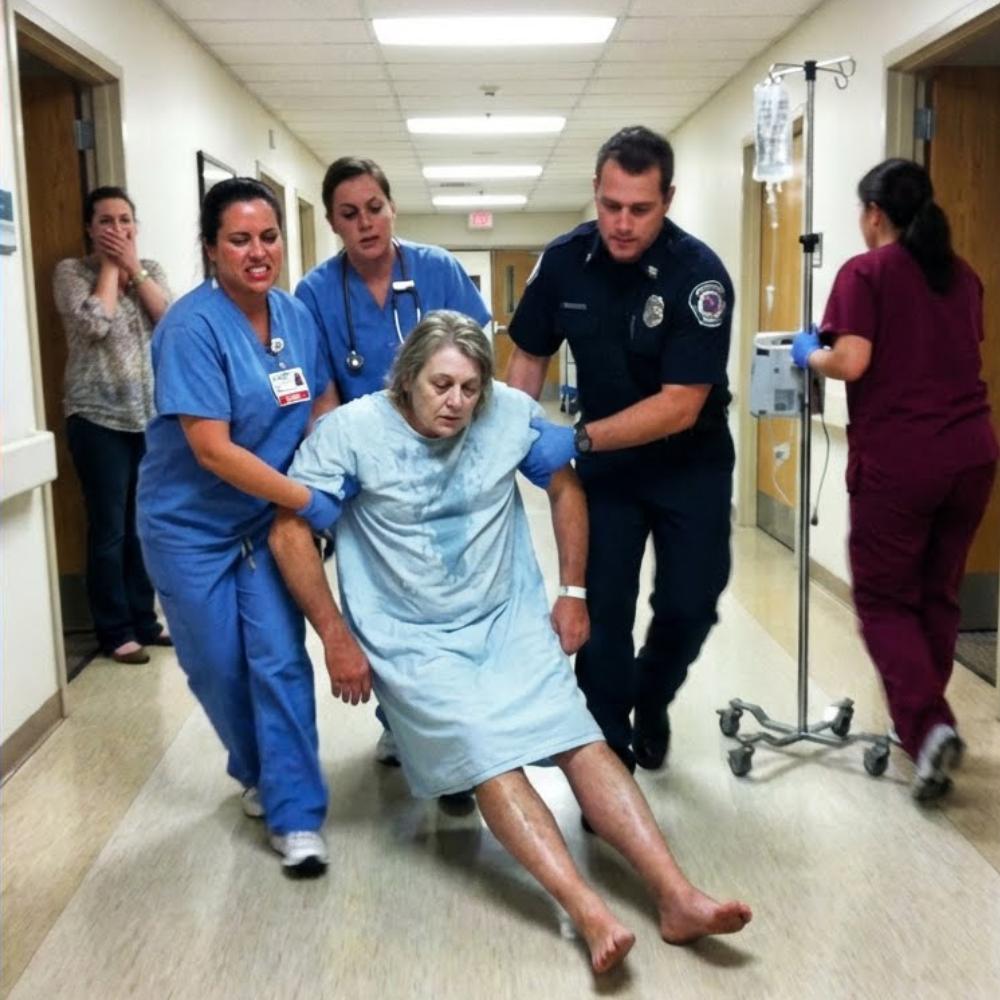
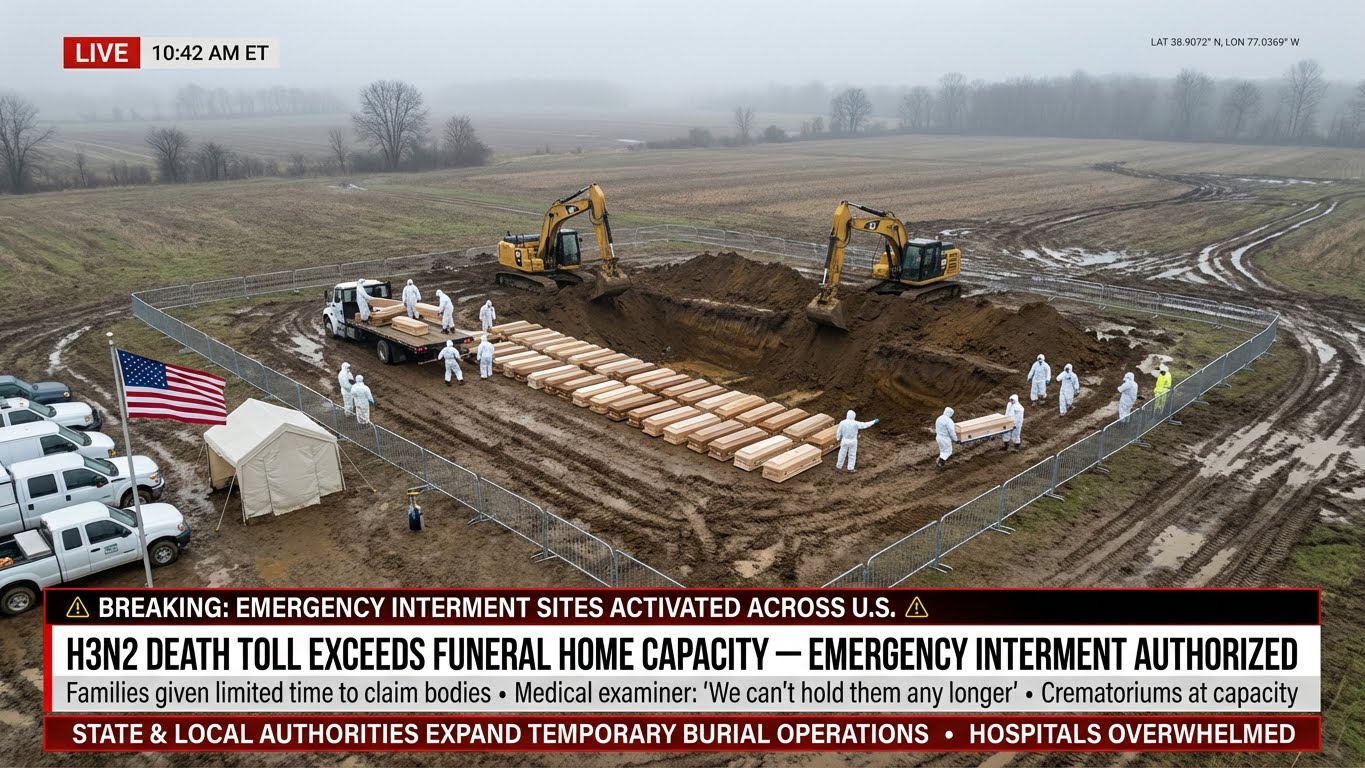
One of our ER physicians just sent us this. They asked us to share it. They said posting it could cost them their position. 42% of ER admissions last week. Just H3N2. Vaccinated people. Healthy people in their 60s and 70s who "never get seriously ill"—now on oxygen support. This year's vaccine doesn't match the strain that's actually spreading. Please read this before you or someone you love ends up in an ER waiting room for 6+ hours. We received this message from an emergency medicine physician who asked to remain anonymous. After reviewing it with our medical board, we felt it was too important not to share with our community. Please read carefully. ——— I'm about to tell you something that could cost me my job. But after what I witnessed in my ER this past week, I can't stay silent anymore. I'm an ER physician at a regional hospital in the Midwest, and what I'm seeing on the ground doesn't match what you're hearing in the news about this flu season. You need to understand what's happening with H3N2 NOW—before you're the one sitting in my waiting room on day 9, oxygen saturation dropping, asking why nobody warned you. I'm going to be direct with you in a way I can't be in hospital meetings. This flu season is different. I've been in emergency medicine for 16 years. I worked the 2017-2018 season when over 80,000 Americans died from flu. I worked through the early COVID surges. I've seen devastating winters. This is approaching those levels. And the part that keeps me up at night? Most people have no idea it's this bad. Last Tuesday, I worked a 12-hour shift. We saw 87 patients. Thirty-seven of them were Influenza A. H3N2 variant. That's 42% of our entire ER volume. Just flu. Not COVID. Not RSV. Not "general respiratory illness." H3N2. People coming in with fevers stuck at 103-104. Oxygen levels in the low 80s. Coughing so violently they've fractured ribs. Family members supporting them because they're too weak to stand. And here's what terrifies me: These are the people who waited. Who thought "it's just the flu." Who are now on day 8, day 10, day 12—and instead of improving, they're getting worse. The ones developing secondary pneumonia. The ones whose "bad flu" turned into something requiring hospitalization. I'm not supposed to say this publicly, but I'm going to: The hospital is not a safe place to be right now. Let me be very clear about what I mean. Three weeks ago, a woman came to our ER for a routine medication refill. Minor issue with her prescription. Should have been in and out. She sat in our waiting room for 4 hours because we were overwhelmed with respiratory cases. She left with her prescription and an H3N2 infection she didn't have when she arrived. Her daughter called our patient services 9 days later: "My mother came in healthy. She left with the worst illness of her life. She's been bedridden for over a week. She missed my daughter's wedding." This is happening regularly. People coming in for non-respiratory issues—orthopedic injuries, routine procedures, medication questions—and leaving with H3N2 because our waiting room is saturated with it. One of my colleagues said it perfectly last week: "We're not healing people anymore. We're just managing which illness takes them down." I didn't laugh. Because it's true. We're actively telling people: avoid the hospital unless it's truly urgent. Not because we don't want to help. But because right now, stepping into our ER is like entering a viral concentration zone. And here's what's going to frustrate you: The CDC numbers you're seeing? They're delayed. They're incomplete. And they've been softened for public messaging. I'm watching this unfold in real-time. The data they publish doesn't reflect what I'm seeing every single shift. We have a saying in emergency medicine: "Trust what the triage nurse sees, not what the press release says." Because we see the surge before it makes headlines. We see ICU beds filling before the official reports. And what I'm seeing right now is alarming. Let me tell you about a patient from three days ago. Early 60s. Active. Plays tennis twice a week. Got her flu shot in October like she was supposed to. Came to us on day 10 of symptoms. Still fevering. Couldn't stop coughing. Said it felt like her lungs were filled with concrete. We tested her. Influenza A. H3N2. "But I was vaccinated," she said. "I did everything they told me. Why am I this sick?" I had to explain what the CDC isn't emphasizing loudly enough: The H3N2 strain hospitalizing people right now mutated AFTER this year's vaccine was formulated. The vaccine was designed for the dominant strains from last season. Then over the summer, H3N2 shifted. By the time we identified the new variant, vaccines were already manufactured and distributed. So yes, the flu shot provides some protection. It can reduce severity in certain cases. It's not worthless. But it wasn't designed for what's actually circulating. It's like bringing a raincoat to a hurricane. Better than nothing. But not adequate for what you're actually facing. And people are discovering this the hard way—in my ER, on day 10, when they're too sick to work and desperate for answers. Here's what else I'm seeing that isn't being discussed: This isn't just hitting the typical high-risk populations. Yes, we're seeing elderly patients. Yes, we're seeing people with chronic conditions. But I'm also seeing marathon runners. Yoga instructors. People in their 50s and 60s with zero underlying conditions who are getting absolutely leveled by this. One of our respiratory therapists—59 years old, runs half-marathons, hasn't called in sick in two years—was out for 11 days. Came back looking like she'd been through a war. Said it was worse than any illness she'd had in her adult life. A paramedic on our unit—20 years of experience—told me yesterday: "I've never seen sustained ER volume like this outside of the 2017-2018 season. We're matching those numbers." Think about that for a moment. We're seeing flu severity comparable to the deadliest flu season in recent decades. And we're only in mid-January. Peak flu activity typically runs January through February. This will get worse before it improves. Now, I need to be very clear about something. I'm not telling you this to cause panic. I'm telling you this because the people who take action NOW—before they're symptomatic—are the ones who don't end up in my ER. And you need to understand: once you're in my ER, your options narrow significantly. We can provide IV fluids. We can manage fever. We can monitor oxygen levels. But we can't reverse time. We can't give you Tamiflu on day 10 (it only works within the first 48 hours). We can't undo the viral replication that's been occurring in your system for over a week. All we can do is manage complications. The window to act is BEFORE symptoms appear. BEFORE exposure. BEFORE you're the one in a waiting room surrounded by sick patients, breathing recirculated air for 5 hours. About three months ago, I started asking a different question. Not "how do we treat this more effectively in the ER?" but "how do I prevent people from needing the ER at all?" Because here's what I know after 16 years in emergency medicine: Every respiratory virus—H3N2, COVID, RSV, Adenovirus—enters the body through one primary route. The nasal passages. That's the first point of contact. Viruses land there, attach to the mucosa, and begin replicating. Within hours, you have millions of copies. By the time symptoms appear, the infection is established. The battle is already underway. And once it reaches your lungs, once it becomes systemic, we're managing damage. So I started researching: what if we could neutralize it at the entry point? What if we could stop the virus in the nasal cavity before it ever establishes infection? That's when I discovered the research on nasal iodine. Iodine has been used as a broad-spectrum antimicrobial for over 150 years. We use it in every surgical preparation. It's in the solutions we use before procedures. It eliminates bacteria, viruses, fungi—everything. And here's what makes it fundamentally different from vaccines: Iodine doesn't depend on strain matching. H3N2, H3N2 variants, Adenovirus, the next mutation that hasn't emerged yet—iodine neutralizes all of them through oxidative destruction. It's a chemical mechanism. Viruses cannot develop resistance to it. Studies show up to 99% viral reduction within 60-90 seconds. Sixty to ninety seconds. Compare that to the two weeks my patients spend recovering at home, or the 6-hour wait in my ER breathing everyone else's viral load. The historical challenge has been tolerability. Traditional iodine preparations irritate tissue. They cause dryness. Most people can't use them consistently. But certain formulations have solved this—properly buffered iodine that's gentle enough for daily use while maintaining antimicrobial effectiveness. I started mentioning this to colleagues. To my family. To patients who ask: "What can I actually do to avoid this?" And I'm sharing it with you now. Not because I'm compensated for this. Not because I receive anything. But because I'm exhausted from seeing people in my ER on day 12, asking why nobody told them how to prevent this. Last week, one of our senior triage nurses shared something that stayed with me. Her grandchildren are in daycare. Every winter, they bring home every virus imaginable. She used to accept that she'd be sick for weeks every season. She told me: "I started using nasal iodine spray twice daily. My grandkids still bring everything home." "I haven't been sick once this entire season. Not once. First time in years." That's not a controlled study. That's not published research. That's a nurse who sees 100+ sick patients every shift and hasn't caught what they have. Because she's protecting the entry point. I'm going to be very direct: The CDC will continue publishing weekly surveillance data. The news will keep saying "flu season is active, get vaccinated." And that's all accurate. That's all good advice. But it's not the complete picture. What they're not telling you—what I witness in my ER every single day—is that this H3N2 is more severe, more persistent, and more resistant to standard interventions than most people realize. The vaccine helps. But it's not sufficient for what's actually circulating. Tamiflu helps. But only within a narrow 48-hour window, and most people don't catch it in time. And once you're hospitalized, you're in reactive mode. The people staying healthy right now—the healthcare workers surrounded by this every day who are NOT getting sick—are the ones who've learned to protect the entry point. They're using nasal iodine protocols. Creating a hostile environment for viruses before they can establish infection. ——— The Imunity Journal recently published an extensive analysis on this exact issue—why ER physicians are warning their own families, the science behind nasal barrier protection, and what thousands of Americans over 50 are doing to protect themselves this flu season. We believe everyone should read it. 👇 Read the full investigation below:
Where the ad sends people
peaknutrients.us
⚠️ Important H3N2 Update: ER Doctors Share What They're Doing
Peak nutrients
Learn more: peaknutrients.us(opens in a new tab)